Tag: Women

  • Impact of the 2020 project: we have keep on working despite the Covid-19

    Impact of the 2020 project: we have keep on working despite the Covid-19

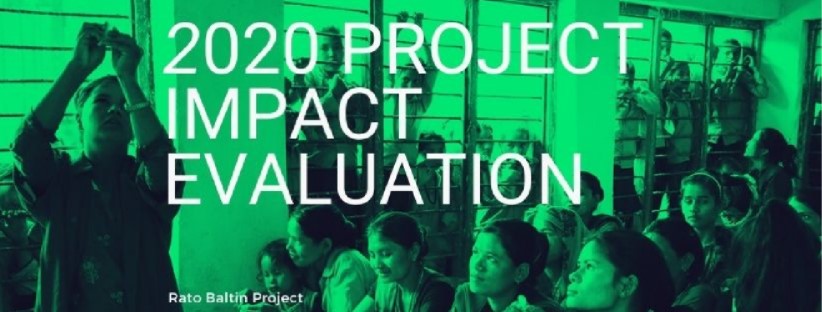
    The challenges we faced while implementing the project in 2020 were due to the Covid-19, but despite the constraints, our local trainers have shown their motivation and willingness to keep working to bring changes in their community.

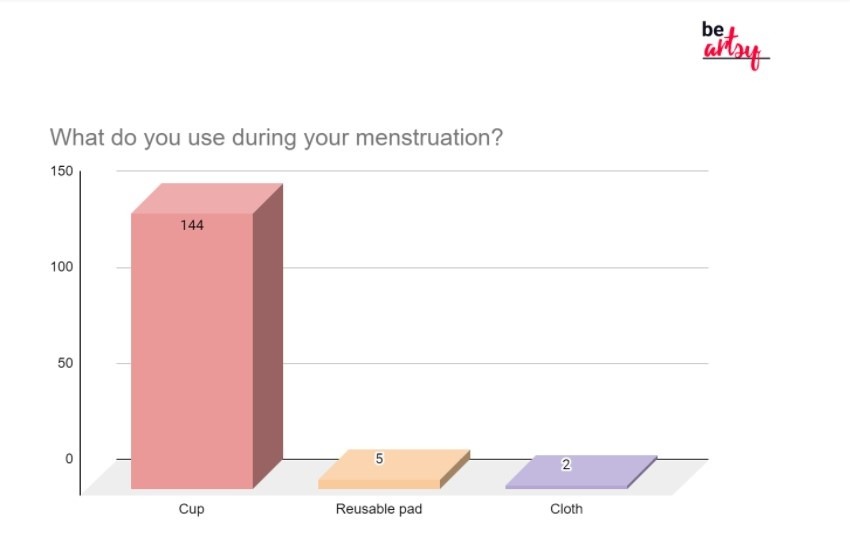
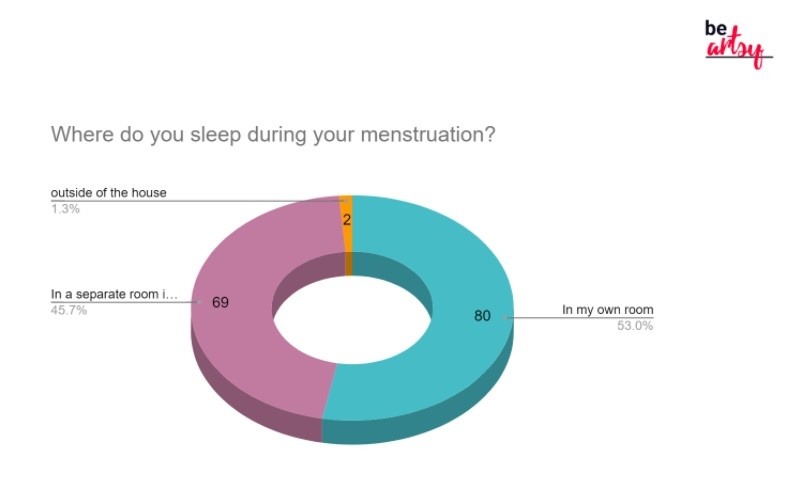
    You can read the details of the evaluation of the 2020 Rato Baltin Project, the focus, the results, the budget evaluation, the data sources and the methodology in this document.
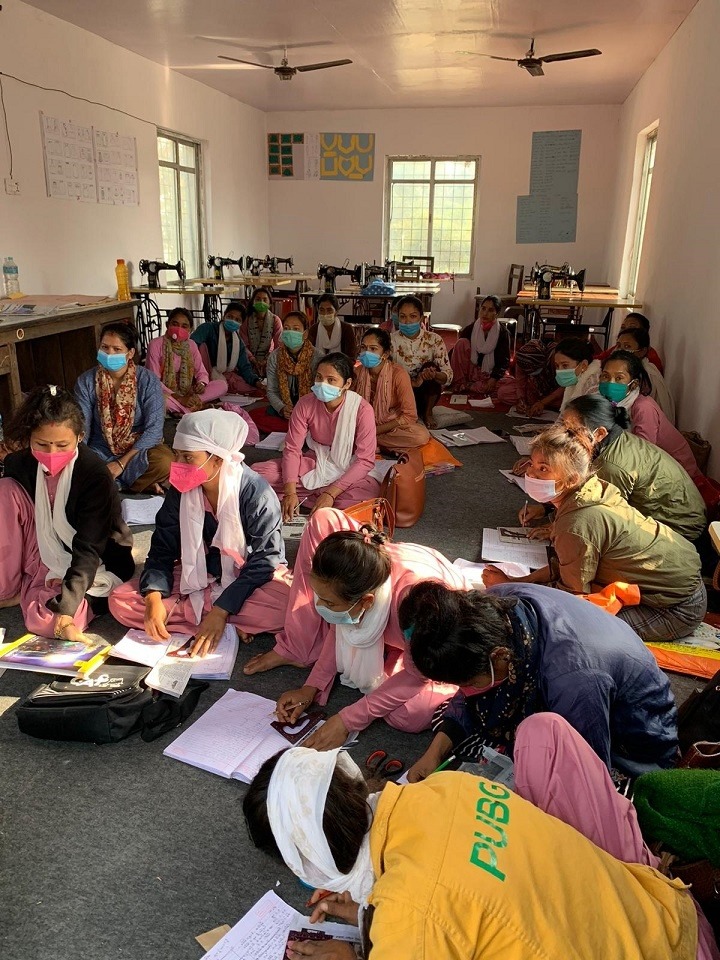
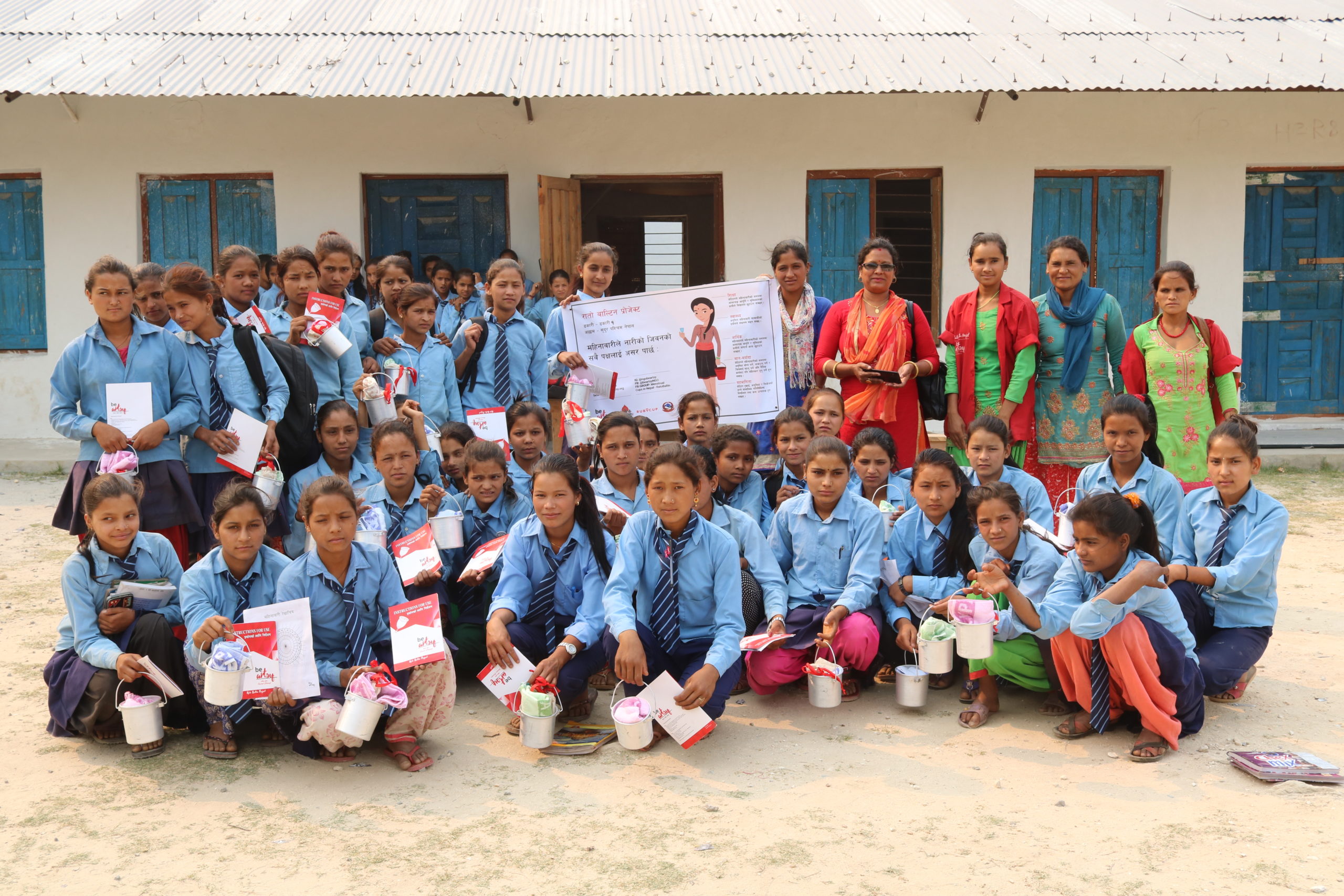
    This year 2020 we have managed to maintain the presence of our team in the fields despite the sanitary measures due to Covid-19. Thanks to the goodwill of the trainers, the follow-up of the project went well, and we were able to implement some workshops. We have seen the need to design a workshop component aimed at boys, too, in order to holistically disseminate MHM knowledge and sex education.

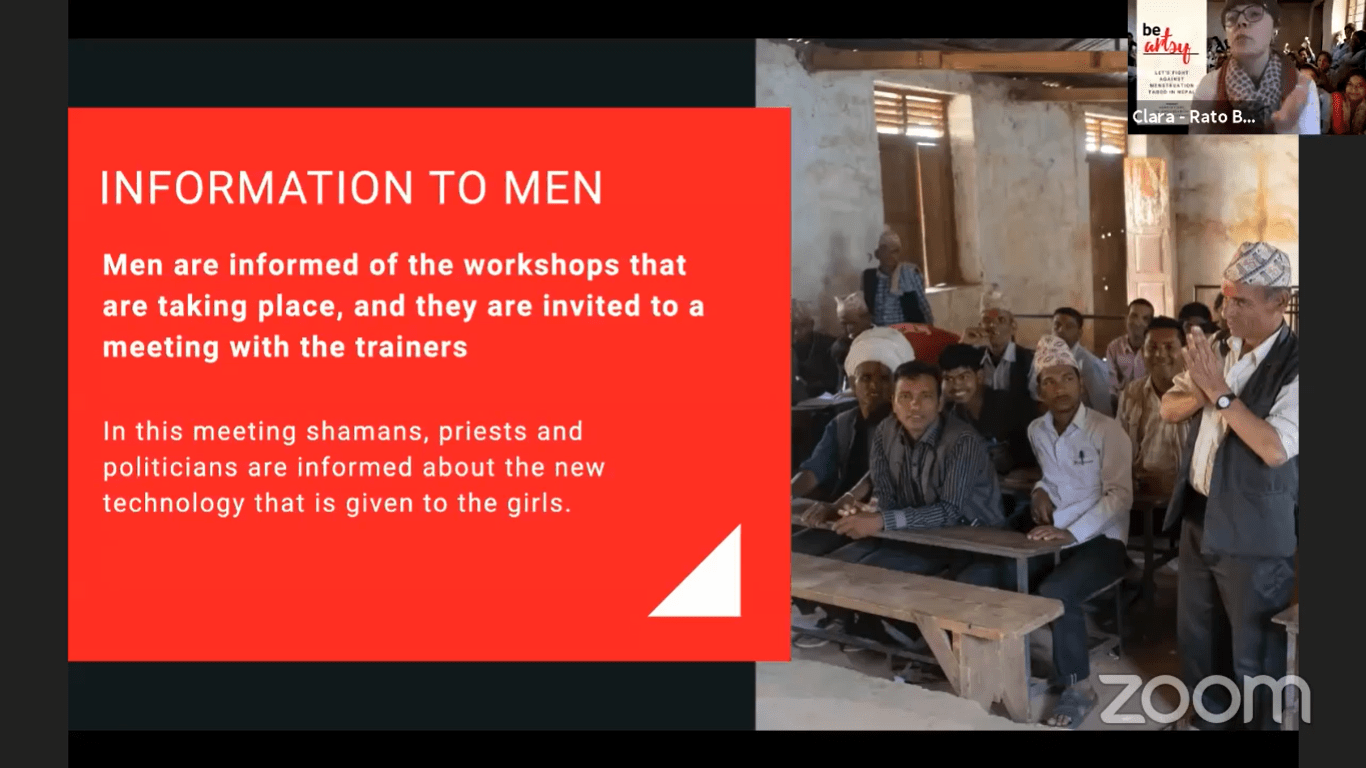
    We will pursue the implementation of a group workshop for school boys to be delivered in 2021. In every village, we also plan to organize talks with representatives of the municipalities as well as spiritual and religious leaders. Next year, the project is not going to be expanded to a lot of other villages. Instead, we will focus on having people working in the field during the whole year. We will try to reach more women and help them to stop Chhaupadi by assisting and encouraging them with the help of the mentors and training visits.

    Our plan is to have a staff made up entirely of Achham girls. We will employ at least 2 girls from each village to work as social mobilizers and assist the trainer once per month throughout the whole year. We have been working to establish a strong mentor team in Achham, that can help in the future years of the project. This year we have been working with the new social enterprise Be Artsy Nepal as a counterpart, and because they were already working in 2019 as individual volunteers in the project, so things run smoothly and easily. They could get approval with SWC and implement the local girls in Achham, and we can trust that they will work with us in the long run.

    In addition to that, we will continue to have Achham girls conduct the workshops on the field, and they will become team managers in the future. By means of these measures, the project can be managed more efficiently, and we will be able to count on the trainers in each municipality, who will take care of their menstrual cup users and foster Chhaupadi awareness year-round.


    We need your help, please.

    -Associate: – https://beartsy.org/associate / 

    –Migranodearena: https://www.migranodearena.org/en/cause/fighting-chhaupadi-the-taboo-that-is-leading-to-the-deaths-of-young-girls-

    -Teaming (1 euro/month):

    RatoBaltin: https://www.teaming.net/ratobaltinproject
    Edufem to prevent early marriage: https://www.teaming.net/edufemproject

    -Donorbox:
    https://donorbox.org/againts-chhaupadi
    https://donorbox.org/edufem

    Thanks!
  • What have we done in Accham to protect, and protect ourselves, against Covid-19?

    What have we done in Accham to protect, and protect ourselves, against Covid-19?

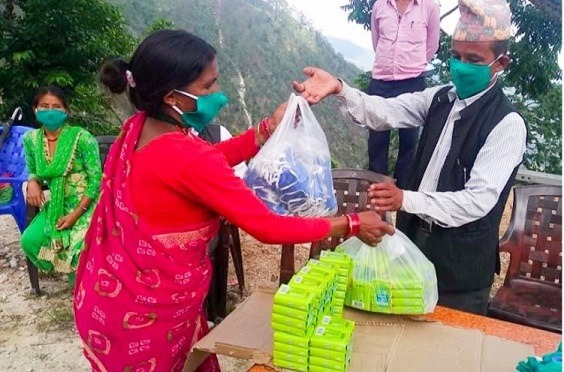
    In response to the consequences of the spread of the SARS-COV-2 infection, in early 2020, we initiated projects to distribute reusable masks, soap and information, and food for vulnerable women. We explain how it went.

    The first case of Covid-19 took place in the Chinese province of Hubei, in December 2019. In Nepal, the first reported case was on January 23, 2020, by a Nepalese man who was returning from Wuhan. The patient recovered satisfactorily and his contacts came out asymptomatic. Nepal’s risk from the Covid-19 outbreak is high, according to the Center of Disease Control and Prevention of the United States, due to the borders with China and India with low health security and high entry rate. The government deployed its limited means. The situation meant that, by working on the field with the Rato Baltin project, we helped in the fight against Covid-19. Concerned for the remote villages of Accham, where the Rato Baltin project has been taking place in recent years, and especially by local staff and project beneficiaries, with whom we regularly share close contact with, tools were needed in order to prevent the spread of the virus. Masks for Health has promoted the realization of reusable masks, the creation of jobs for local women, and the distribution of soap to guarantee a high level of hygiene, and raise awareness about the virus and how to manage it.

    Based on the work of the Achham community

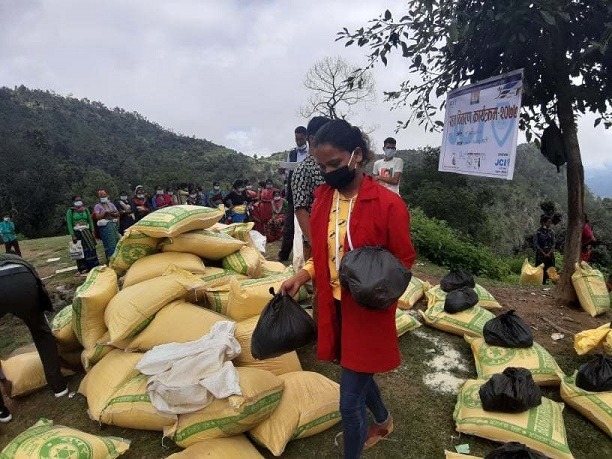
    We have done this together with local health volunteers like JCI – Achham and representatives of the local governments. Also, the representatives of the municipalities of Janalibandali, Basti and Kalagaun had asked for our help in relation to the provision of food for people that were in a more vulnerable situation. We decided to focus on households with widows and children who had no access to a place to eat and no economic resources for closure and confinement measurements: the Food for Need project was done in parallel and related to prevention activities. With the local organization JCI- Achham, our local staff and the support of local policy representatives, we have been able to carry out these actions and collected the qualitative and quantitative impact. 800 people- mainly widows with children- have benefited from the food distributed like rice, lentils, oil, salt, and sugar.

    Due to the exceptional crisis situation that we are living in due to the worldwide Covid-19 pandemic, it has not been possible to implement the Rato Baltin project as we had expected. But we have been able to bring our help to the most remote villages of the Achham district through the Mask for Health and Food for Need projects. As an organization, we think that by developing these projects we have shown the ability to act quickly in times of health and economic crisis, use the resources – human, logistical, material- generated from the trust built and deposited over these last few years from the work of the Achham community in promoting the rights of women and girls.

    Thank you to everyone who has contributed through Migranodearena and everyone who supports us. All you have worked on that too!

    You can read our report, in this link.

    Translation by Estefania Fernandez

    We need your help, please.

    -Associate: – https://beartsy.org/associate / 

    –Migranodearena: https://www.migranodearena.org/en/cause/fighting-chhaupadi-the-taboo-that-is-leading-to-the-deaths-of-young-girls-

    -Teaming (1 euro/month):

    RatoBaltin: https://www.teaming.net/ratobaltinproject
    Edufem to prevent early marriage: https://www.teaming.net/edufemproject

    -Donorbox:
    https://donorbox.org/againts-chhaupadi
    https://donorbox.org/edufem

    Thanks!
  • We are already working in the 2021 project

    We are already working in the 2021 project

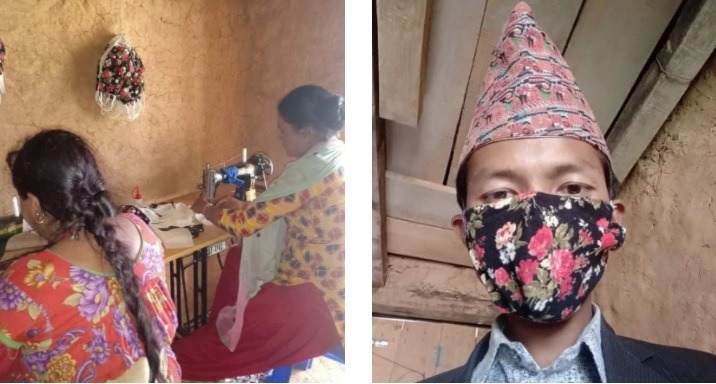
    2020 has been like a parenthesis, but work hasn’t stopped! If we look back to the last twenty years, Nepal has ratified the Beijing Platform for Action, and the Convention on the elimination of all forms of discrimination against women. The Nepalese women literacy rate has passed from the 25% in 1991 to the 57% in 2011; the maternal and infant mortality ratio decreased from 539 maternal deaths for each 100,000 live births to 170 in the same period. And the life expectancy for the women has increased from 55.5 years to 70. These statistics show the political will to improve gender equality and the quality of life for women in the country. The be artsy projects address education at a local level, against inequality towards women causing the Chhaupadi, which still prevails. And which aggravates it.

    We are working since 2017 in the Rato Baltin (Red Bucket) project, and more recently, in other parallel projects, but interrelated: Edufem, and activities against the effects of the pandemic. We have associated ourselves with local NGOs, in the remote communities in West Nepal. We have seen the need for the project, to bring it to more municipalities of Achham. The results in Achham are just the beginning, we want to reach as many villages as possible. You can see the details of the 2021 Project in this link (pdf).

    Through the creation and implementation of partnerships and workshop trainings, be artsy will pursue the project objectives via:

    ● Partnering with a socially conscious menstrual cup supplier to donate menstrual cups to the beneficiaries
    ● Partnering with ROKPA International
    ● Associating with a Nepali social enterprise with women committed to the project – Be Artsy Nepal
    ● Providing girls, schooling or out of school, with menstrual cups, hygiene kits, and adequate training in their use and upkeep.
    ● Hiring and training local trainers and mentors, to work with communities through workshops and maintain ongoing follow-ups and work as social mobilizers monthly.
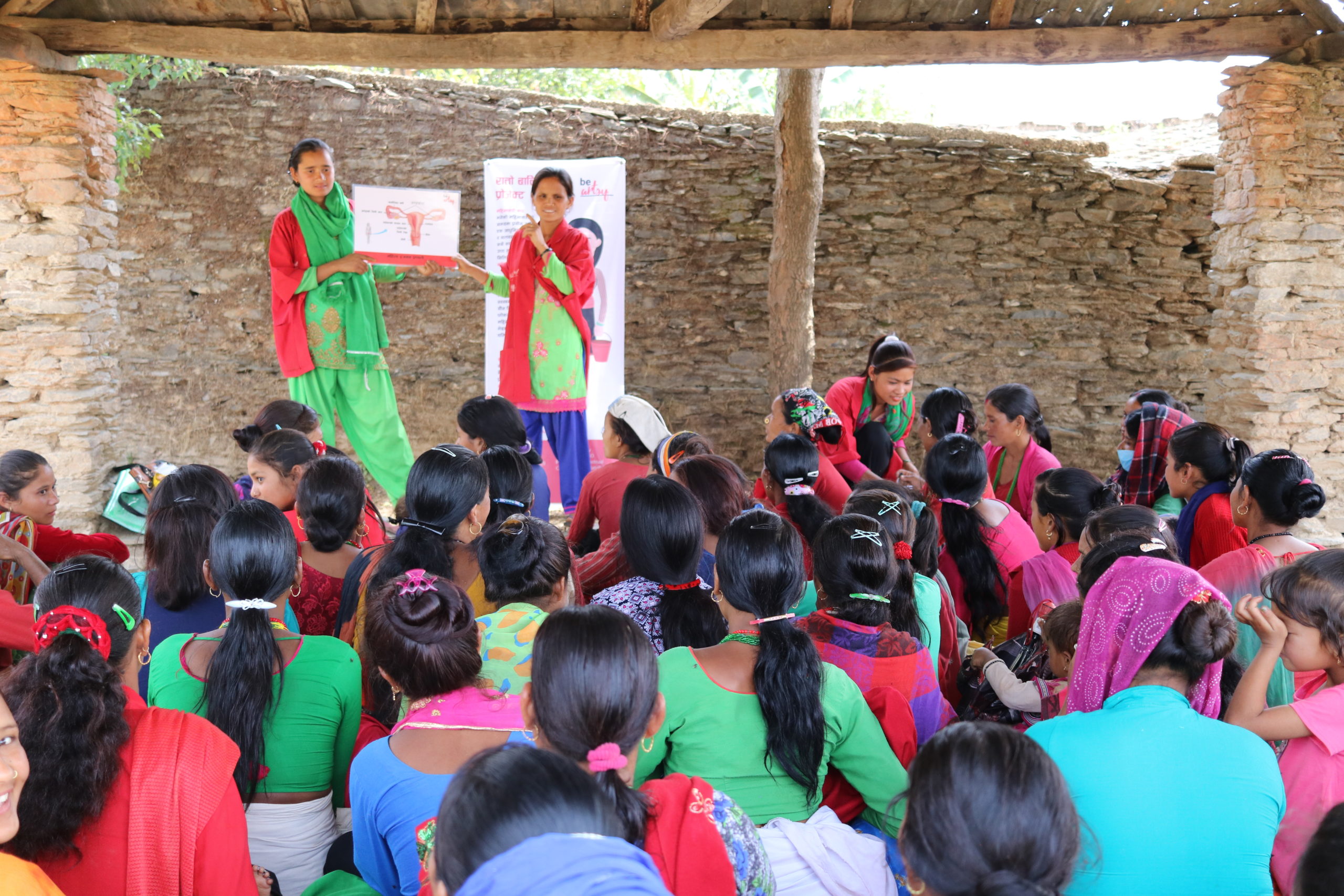
    ● Conducting workshop trainings in sex education and menstrual health for girls, women, and boys, with special emphasis on respect, dignity and self-knowledge.
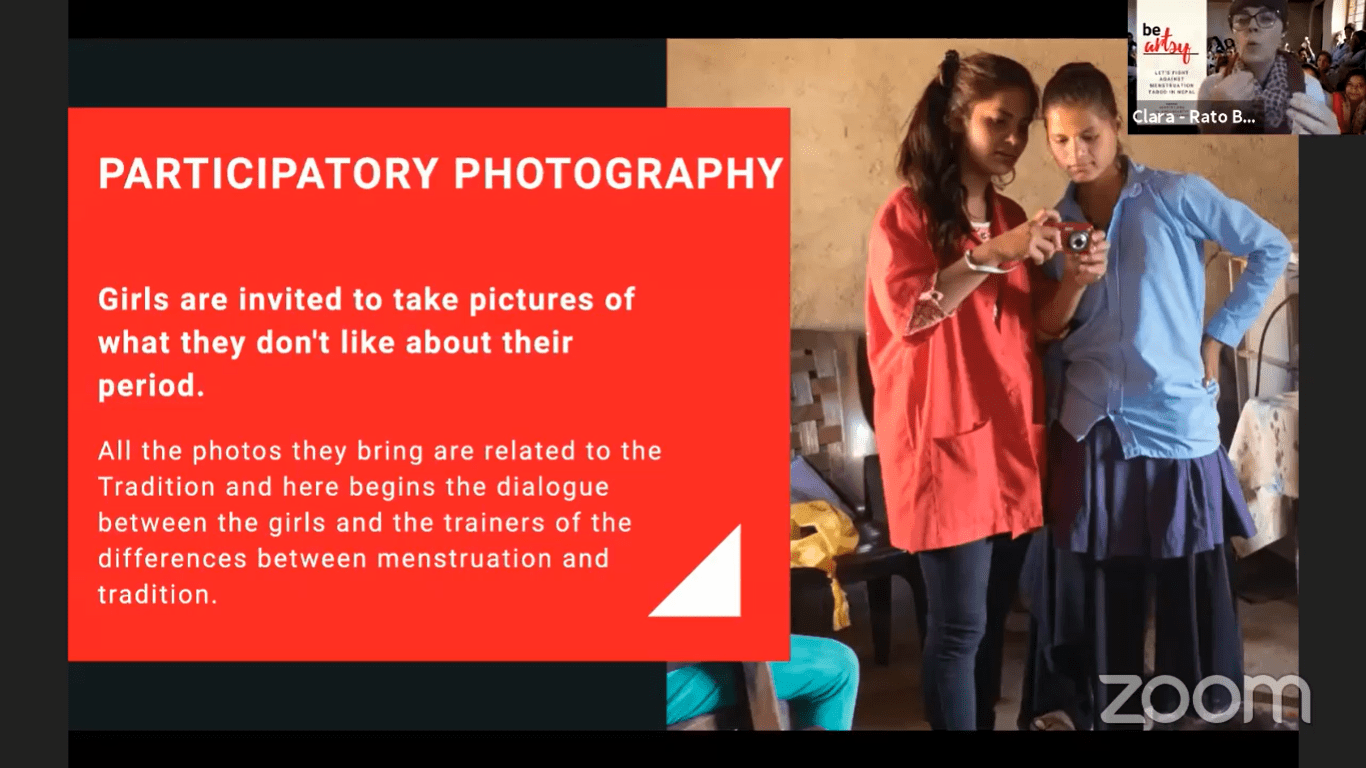
    ● Using participative photography to engage girls and communities in the topic of menstruation and what can be improved for better health and self-care during their period.

    In 2021, we will keep on working also in our own environment, and in international forums. With the World Toilet Organization, we have agreed in working to create a social enterprise and to establish a training centre in Achham. This will help women and girls who do not attend school to earn money, and, at the same time, could help to make the project more sustainable. That’s our Happy Women Project.

    In summary, we want to go back to all those villages where we have already been educating in sex and menstruation, for the girls who did not receive our training with the workshops. There are also plans for a sexual education group, only boys. And getting to 3 new villages and schools, one in each municipality where we work, making a total of 17 villages where we will carry out our Rato Baltin Project in 2021.

    Translation by Tere Salinero

    We need your help, please.

    -Associate: – https://beartsy.org/associate / 

    –Migranodearena: https://www.migranodearena.org/en/cause/fighting-chhaupadi-the-taboo-that-is-leading-to-the-deaths-of-young-girls-

    -Teaming (1 euro/month):

    RatoBaltin: https://www.teaming.net/ratobaltinproject
    Edufem to prevent early marriage: https://www.teaming.net/edufemproject

    -Donorbox:
    https://donorbox.org/againts-chhaupadi
    https://donorbox.org/edufem

    Thanks!
  • Plan Himalaya does not only care for creating unique travel experiences…

    Plan Himalaya does not only care for creating unique travel experiences…

    For John Ruskin, “mountains are the beginning and the end of all natural landscapes”. And that’s how Plan Himalaya understands it, a local agency in Nepal characterized by creating customized travel experiences: adventure, trekking, sports, circuits and routes in motorcycle, bicycle, or even paragliding!, itineraries all surrounded by the wonderful natural landscape of Nepal, Tibet, Bhutan and Sikkim.

    But, Plan Himalaya does not only care for creating unique travel experiences in the Kathmandu valley or at the foot of Mount Everest, but also does collaborate with our Rato Baltin – Red Bucket project, thanks to each of the trips their clients may want to enjoy with them.

    Thanks so much, Plan Himalaya! Many thanks for collaborating with our project!

    Text by Luisa Tejada, translation by Tere Salinero

    We need your help, please.

    Associate: – https://beartsy.org/associate / 

    Migranodearena – crowdfunding: https://www.migranodearena.org/en/cause/fighting-chhaupadi-the-taboo-that-is-leading-to-the-deaths-of-young-girls-

    Teaming (1 euro/month)

    RatoBaltin: https://www.teaming.net/ratobaltinproject

    Edufem to prevent early marriage: https://www.teaming.net/edufemproject

    Donorbox:
    – https://donorbox.org/againts-chhaupadi
    – https://donorbox.org/edufem

    Thanks!
  • Rokpa: a Tibetan word meaning ‘help’ and ‘friend’

    Rokpa: a Tibetan word meaning ‘help’ and ‘friend’

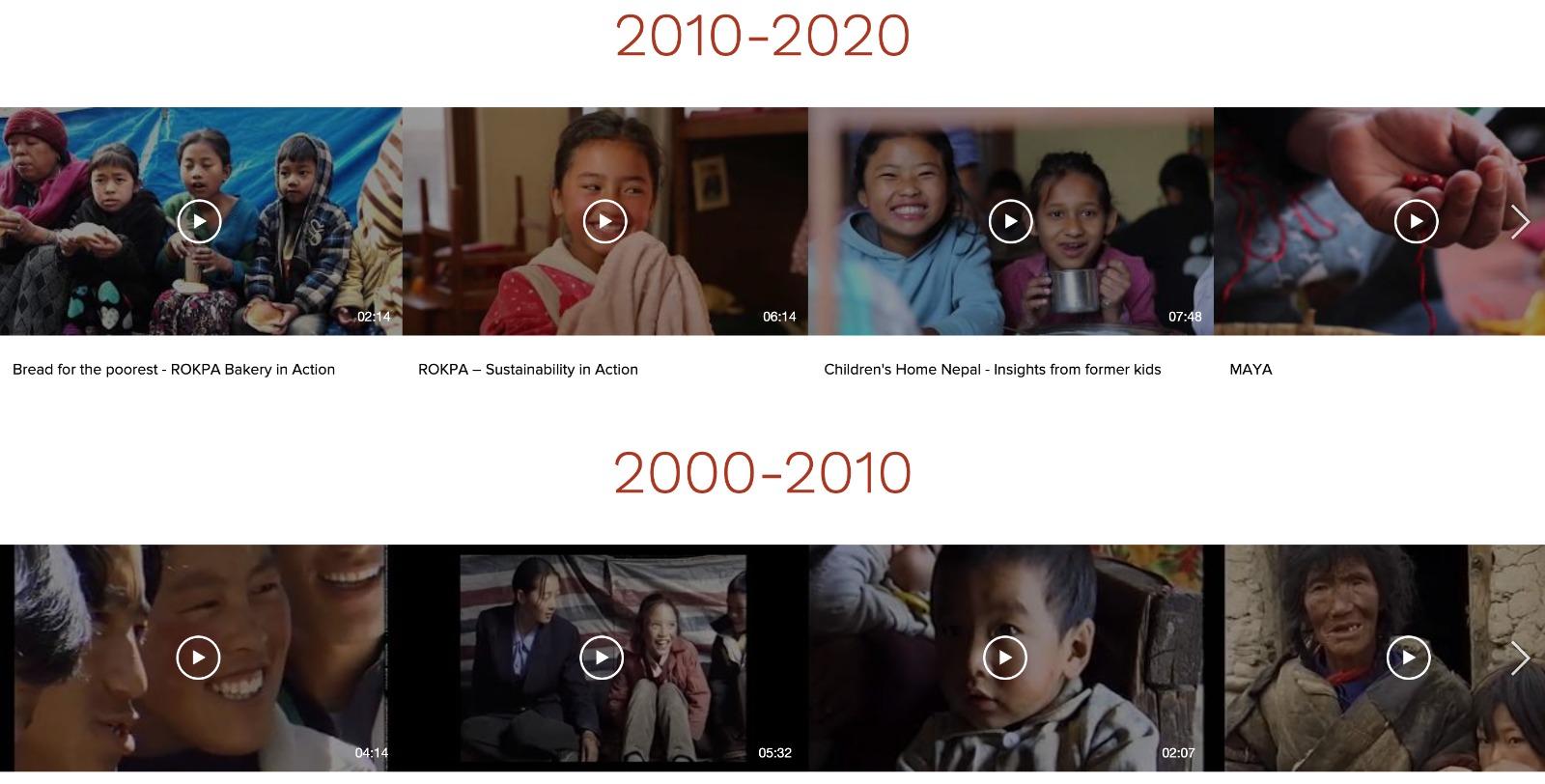
    There are areas with difficult accessibility that only organizations like ROKPA have been able to reach. Since its founding in 1980, Rokpa (A Tibetan word meaning ‘help’ and ‘friend’) is present today in Nepal, Zimbabwe, and South Africa. Rokpa was also established in the Tibetan areas of China from 1990 to 2016 and provided education, medicine and food for disadvantaged populations.

    ROKPA understands that education is a way to help overcome the barriers of poverty, and they are committed to educational plans that allow the empowerment and training of individuals. This includes: preparing children and adults for school and professional education, assisting in finding work for women through training workshops, and conducting family support programs on HIV / AIDS in Zimbabwe and South Africa.

    In addition, ROKPA is committed to bringing urgent medical aid to the communities they serve, while also covering the costs of food and subsistence for the most vulnerable families.

    Because of ROKPA’s concern for the education and health of communities and the women of Nepal in particular, ROKPA has become a wonderful “friend” who “helps” us to help others, wherever it is most needed.

    Thank you very much, ROKPA, for being an essential part of be artsy projects!!

    Text by Luisa Tejada, translation Clara Garcia i Ortés, corrections by Teresa Marx

    We need your help, please.


    Associate: – https://beartsy.org/associate / 


    Teaming (1 euro/month)

    RatoBaltin: https://www.teaming.net/ratobaltinproject

    Edufem to prevent early marriage: https://www.teaming.net/edufemproject

    Donorbox:
    – https://donorbox.org/againts-chhaupadi
    – https://donorbox.org/edufem

    Thanks!
     

  • Webinar: International Day for the Elimination of Violence against Women

    Webinar: International Day for the Elimination of Violence against Women

    Be artsy to participate in this event with MacEwan University, University of the Fraser Valley and the Asia Task Force Against Domestic Violence.

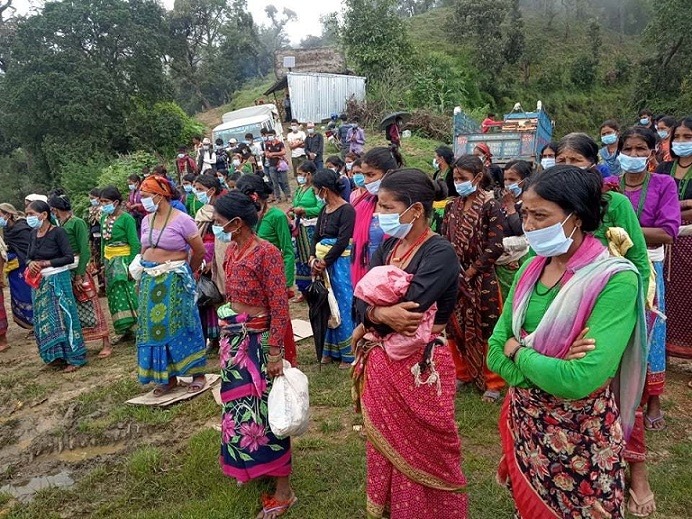
    The areas that the webinar will cover, on the International Day for the Elimination of Violence against Women, are experiences of domestic violence among South Asian Communities in Boston, USA, human trafficking for sexual exploitation in Nepal – Menstruation Taboos for Women in Nepal.

    With Clara García i Ortés (be artsy founder, CEO and executive director) will participate: Rukmini Karki, MA., LLB., senior advocate Asia Task Force against Domestic Violence (Boston, USA), Dr. Rita Dhungel, assistant professor, School of Social Work, Faculty of Health and Community Studies, MacEwan University (Alberta, Canada), and Dr. Karun K. Karki, assistant professor, School of Social Work and Human Services – University of the Fraser Valley (British Colombia, Canada).

    End violence against women UN Women

    Zoom Link: https://zoom.us/j/92287409639?pwd=ektCc3VhQjZuN21MYkpJd1NpRG4zQT09
    Meeting ID: 922 8740 9639
    Passcode: 316504
    Free Webinar: wednesday, November 25, 2020 5:00pm – 6:30 p.m. (Vancouver, Canada) 2:00am – 3:30 a.m. (Barcelona, Spain) 6:45am – 8:15 a.m. (Kathmandu, Nepal)

    We wait for your attendance!


    We need your help, please.


    Associate: – https://beartsy.org/associate / 


    Teaming (1 euro/month)

    RatoBaltin: https://www.teaming.net/ratobaltinproject

    Edufem to prevent early marriage: https://www.teaming.net/edufemproject

    Donorbox:
    – https://donorbox.org/againts-chhaupadi
    – https://donorbox.org/edufem

    Thanks!
     

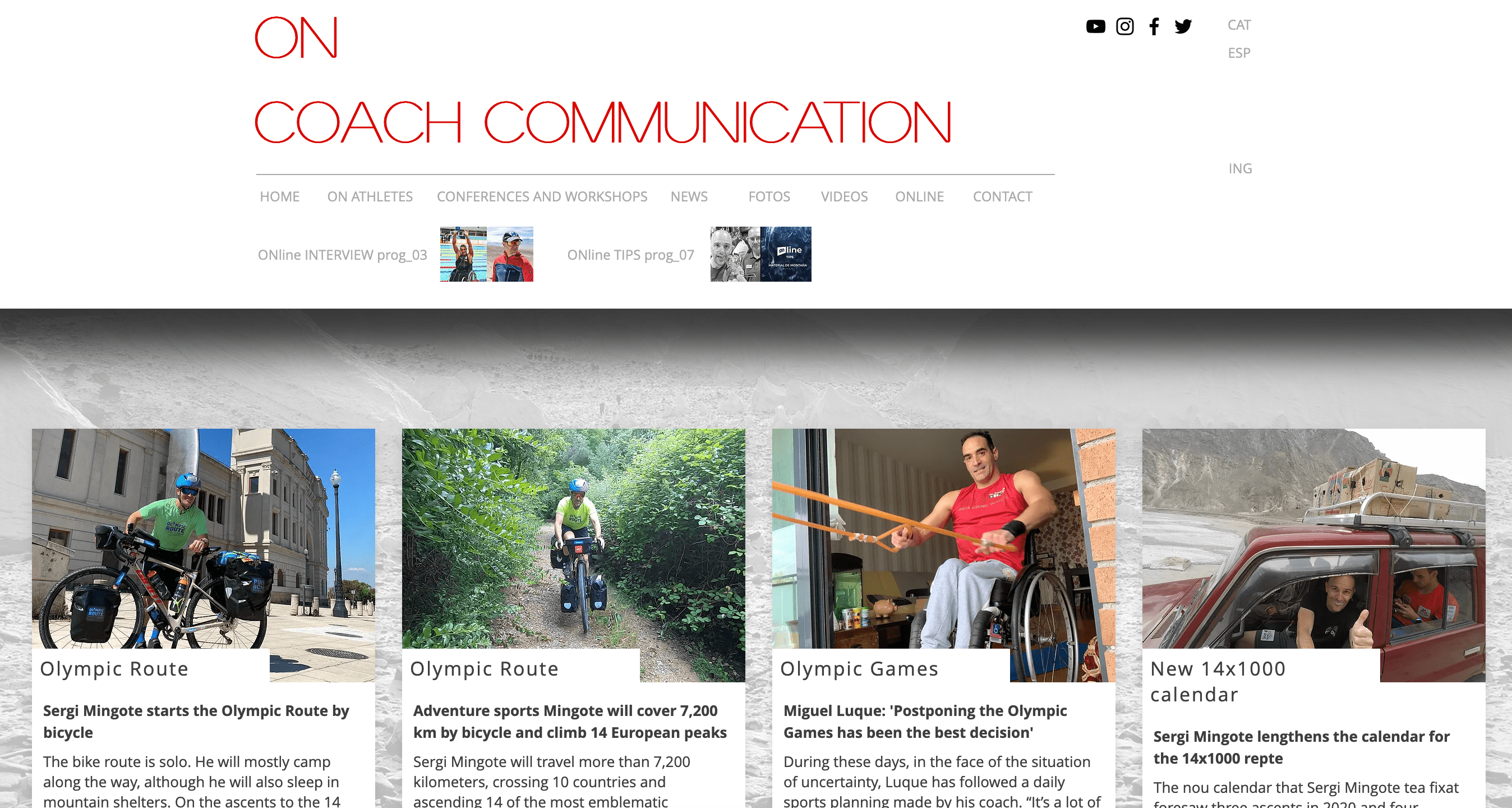
  • Word of thanks to On Coach Communication

    Word of thanks to On Coach Communication

    When we think about a coach, the first thing that comes to mind is that of a sports coach who will help us change our attitude in order to achieve our personal goals; of course, through discipline and effort, values that elite athletes know very well.

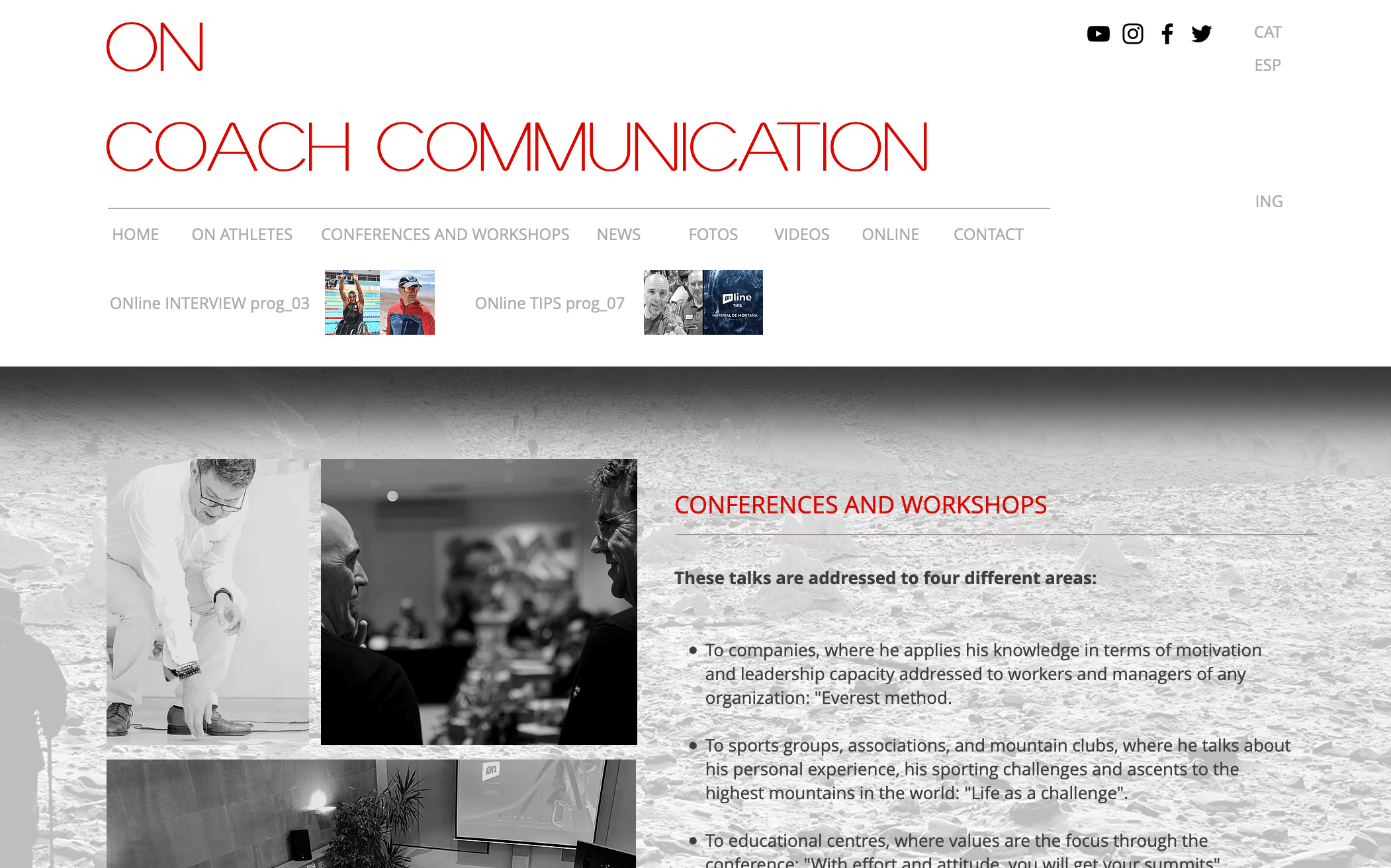
    And, from this passion for coaching and sports, is how ON COACH COMMUNICATION was born: a firm that can transfer sports values to the executive, corporate and administrative field, and what is more, under the guidance of Albert Barceló Casals and his sports team, all exceptional athletes of proven professional trajectory, who give masterclasses and motivational seminars to companies, sports organizations, mountaineering clubs, educational centres and other associations.

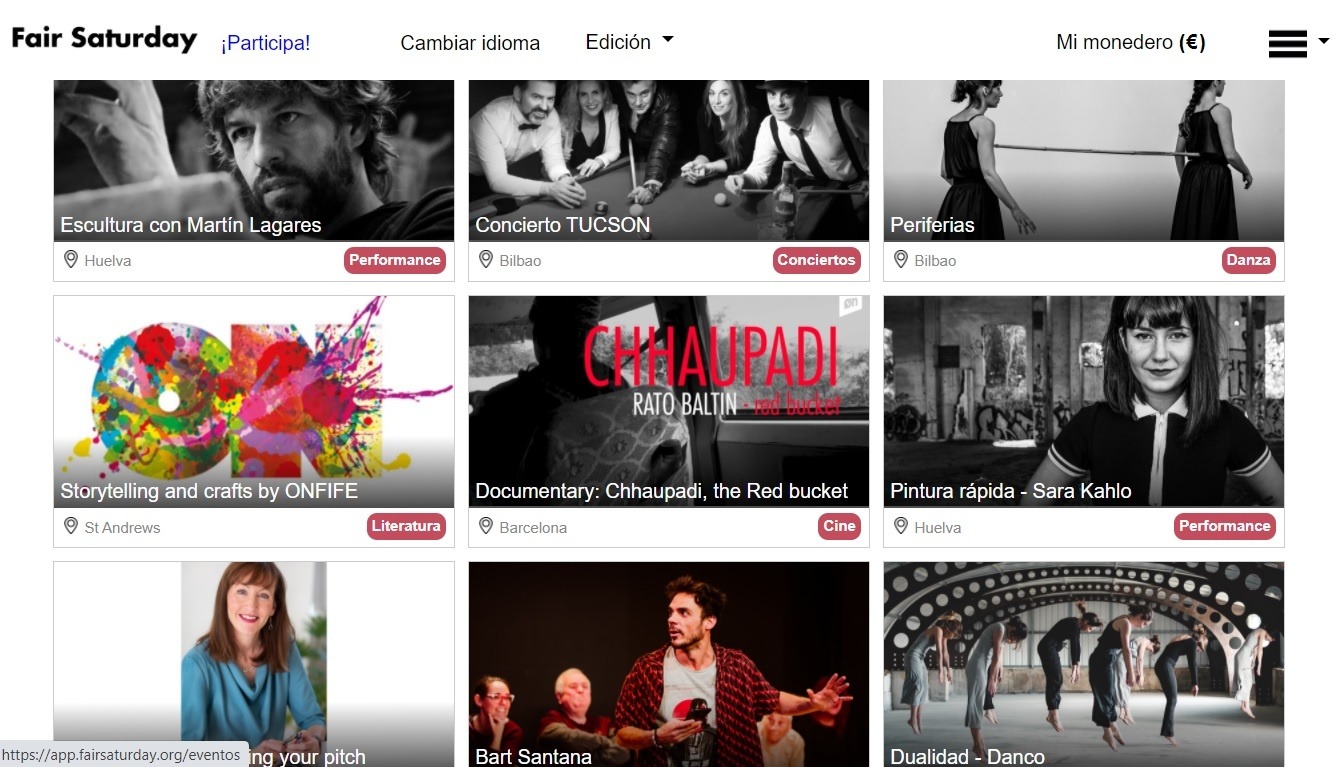
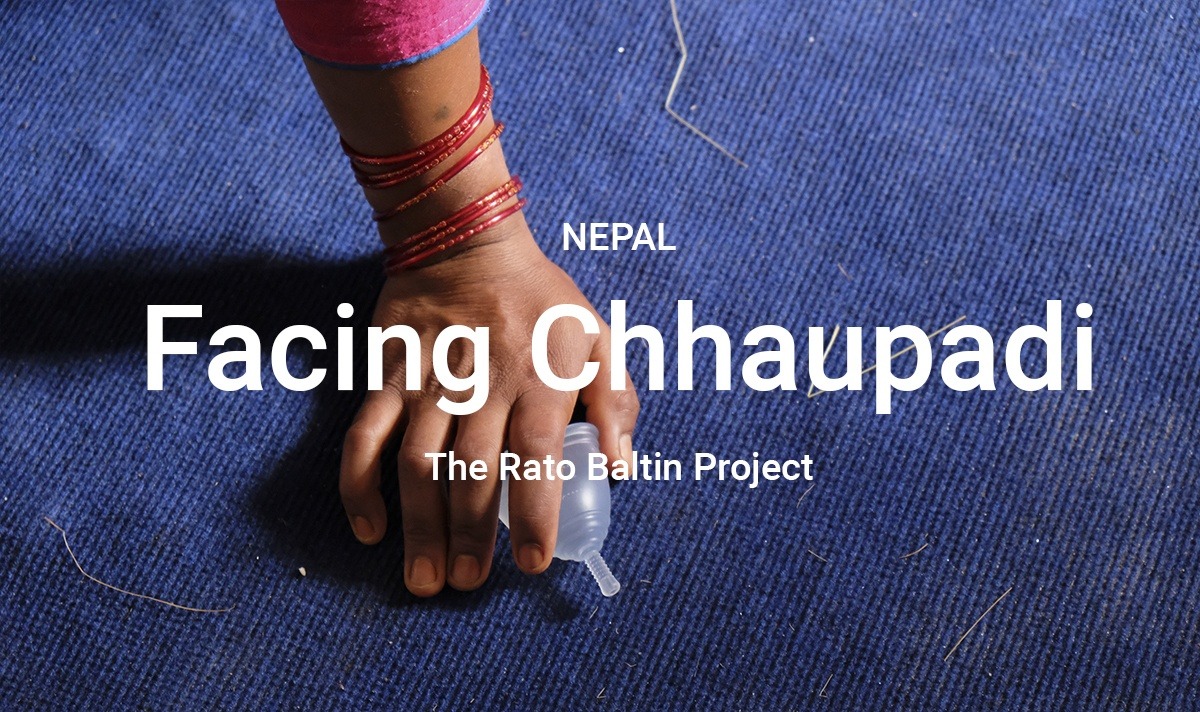
    On top of that, ON Coach Communication shares its passion for coaching and sports with values such as solidarity and social commitment, via communication campaigns, documentary films, videos or publications. And it is precisely thanks to this commitment that ON Coach Communication has prepared a documentary on our Rato Baltin (Red Bucket) Project, where they inform about our aim, our work, and the reality we face at be artsy. A splendid documentary that will be released worldwide, in three languages, on the 28th of November (Fair Saturday), in streaming: https://app.fairsaturday.org

    Many thanks, ON COACH COMMUNICATION, for collaborating with be artsy!

    By Luisa Tejada, Translation by Tere Salinero

    We need your help, please. Make your donation to the Rato Baltin and Edufem projects today.

    Crowdfunding: https://www.migranodearena.org/reto/21328/contra-el-chhaupadi-la-tradicion-nepali-que-exilia-a-las-mujeres-durante-la-menstruacion

    Teaming (1 euro/month)

    RatoBaltin: https://www.teaming.net/ratobaltinproject

    Edufem to prevent early marriage: https://www.teaming.net/edufemproject

    Associate: – https://beartsy.org/associate / 

    Donorbox: –https://donorbox.org/againts-chhaupadi – https://donorbox.org/edufem – Covid-19🦠 https://donorbox.org/mask-4-health-nepal Thanks!
  • Actions on sanitation, hygiene and health

    Actions on sanitation, hygiene and health

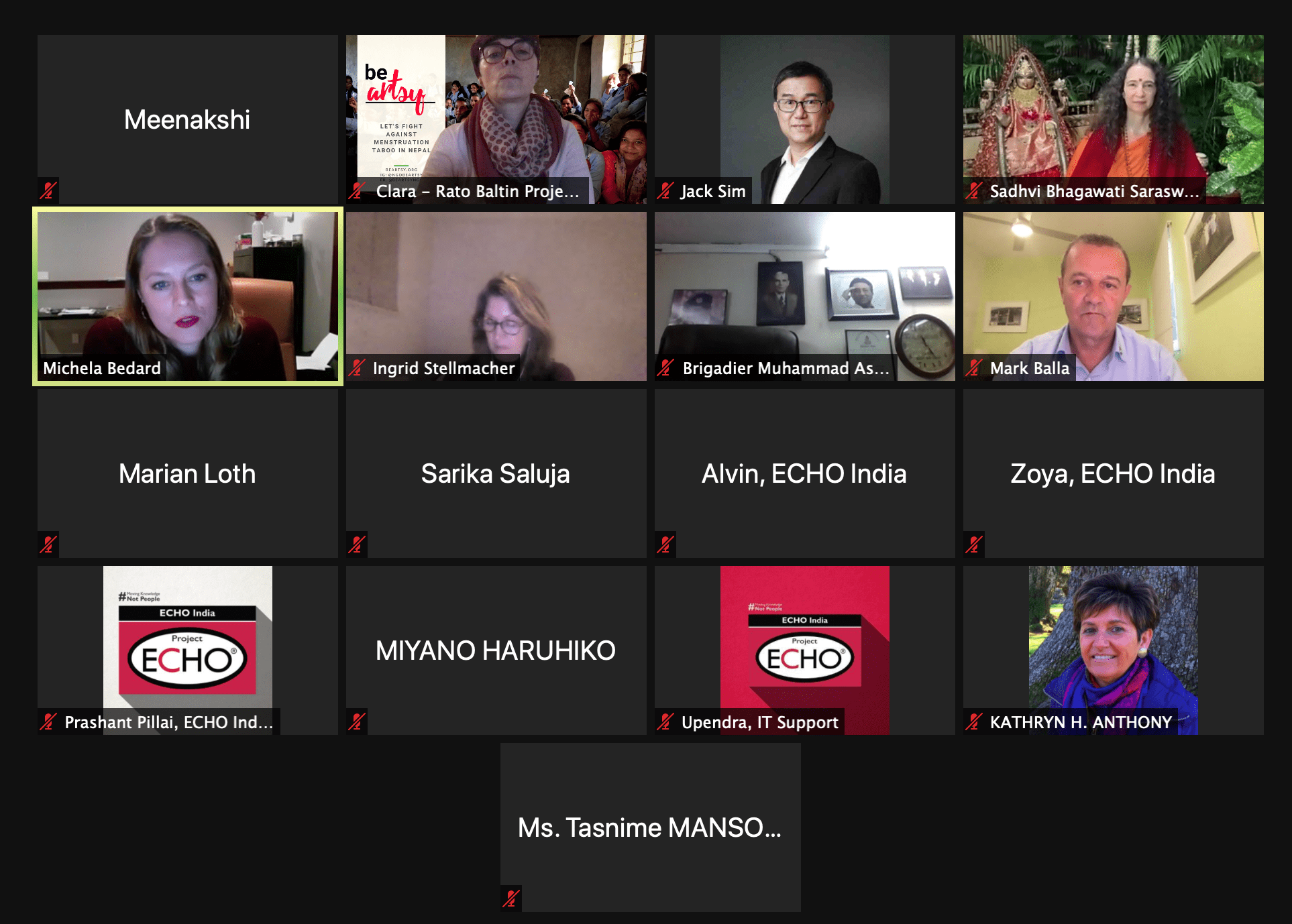
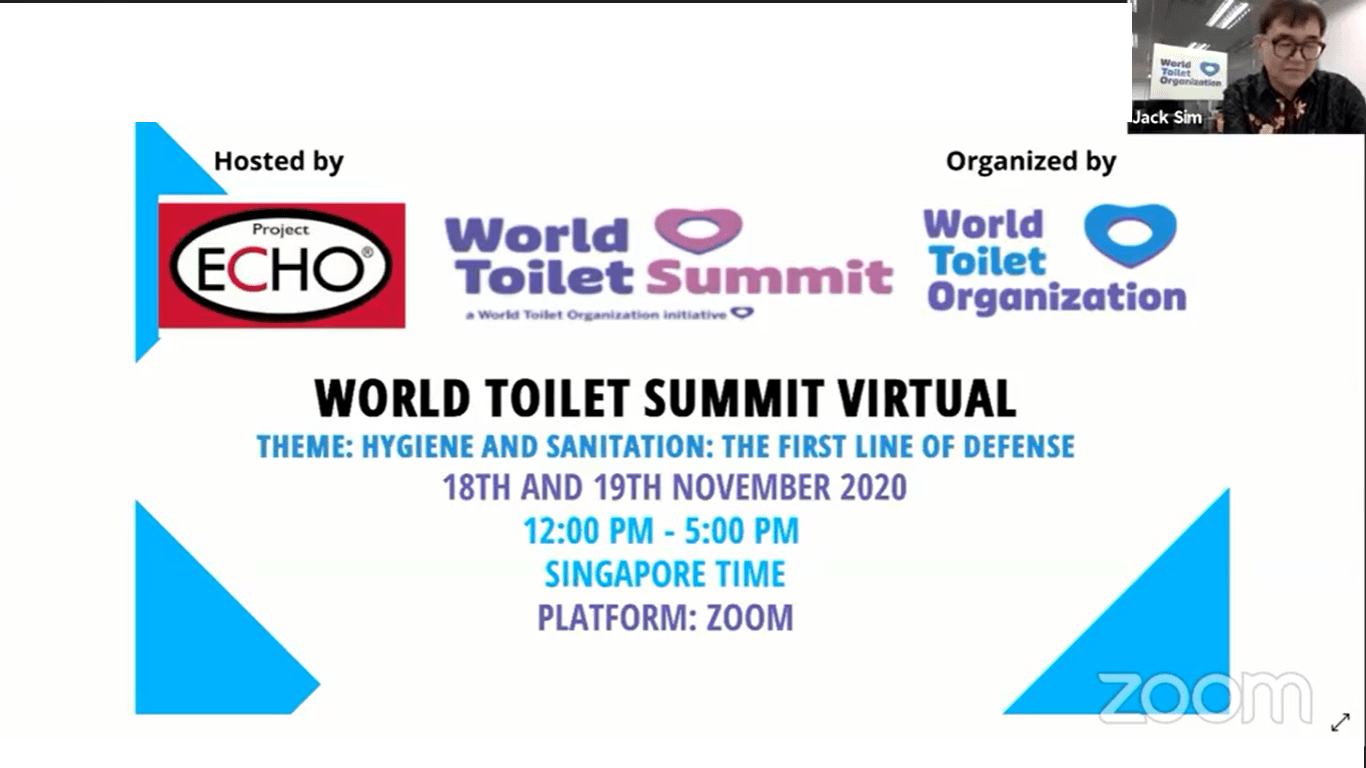
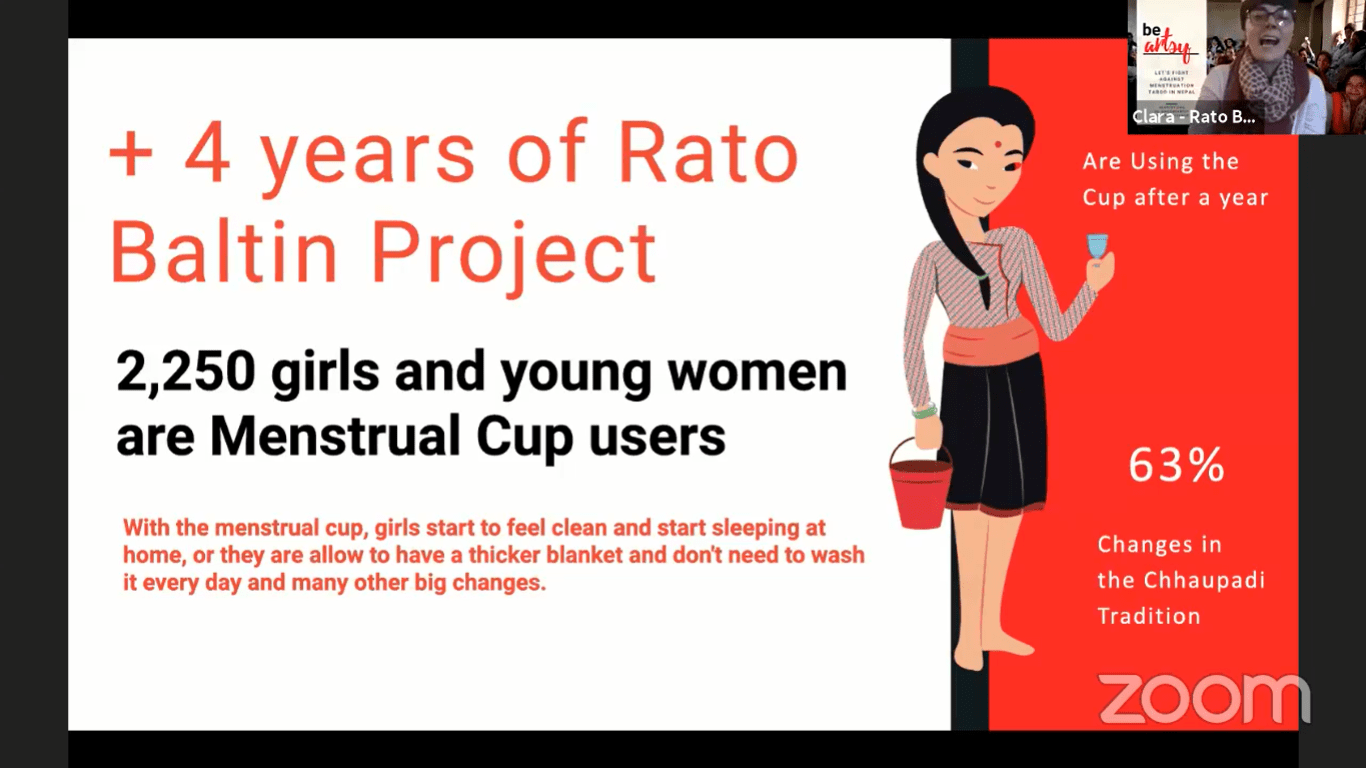
    The 20th World Virtual Toilet Summit (WTS) has invited be artsy to participate. This was done by Clara Garcia i Ortés, founder and director of the Rato Baltin project, on 19 November.

    Project ECHO and the World Toilet Organization organized the Summit with the aim to promote awareness, build political commitment and trigger action on critical water, sanitation, hygiene and health issues at all levels, to facilitate the efficient conservation, protection, development, planning, management and use of wash in all its dimensions on an environmentally sustainable basis for the benefit of the Earth. Clara Garcia participated as a panellist in the session on ‘Menstrual hygiene’.

    The WTS explains that ‘meeting the hygiene needs of all women is a fundamental issue of basic public health, basic dignity, self-esteem, and human rights. Period poverty simply means a lack of access to safe sanitary products, menstrual hygiene education, toilets, handwashing facilities and the proper waste management. More than 800 million people menstruate daily. Yet, more than 1.2 billion women lack the access to basic sanitation and hygiene care. The World Health Organization in the United Nations has recognized menstrual hygiene as a global public health and human-rights issue. Women and young girls in many developing countries are discouraged from socializing, going to school or doing certain basic activities when they menstruate. The cultural shame often attached to menstruation and a shortage of resources such as clean toilet with basic sanitary care or sanitary products stop the young girls from going to school and women from working when they menstruate. Many girls and women cannot afford menstrual products on top of lacking the use of the essential sanitation facilities make them harder to manage their monthly affair safely with dignity. These women are often torn between purchasing food and necessities, and sanitary products are not in the list. Many girls and women in developing countries still use old clothing, leaves, ash, cow dung etc. unsafe materials to absorb according to research conducted by UNICEF.

    Be artsy often finds these important shortcomings in Nepal, in the Achham area, where we work with projects that give access to hygiene and menstrual education for girls and women. Clara’s participation in the Summit made this clear, and the way we do it.

    We need your help, please. Make your donation to the Rato Baltin and Edufem projects today.

    Crowdfunding: https://www.migranodearena.org/reto/21328/contra-el-chhaupadi-la-tradicion-nepali-que-exilia-a-las-mujeres-durante-la-menstruacion

    Teaming (1 euro/month)

    RatoBaltin: https://www.teaming.net/ratobaltinproject

    Edufem to prevent early marriage: https://www.teaming.net/edufemproject

    Associate: – https://beartsy.org/associate / 

    Donorbox: –https://donorbox.org/againts-chhaupadi – https://donorbox.org/edufem – Covid-19🦠 https://donorbox.org/mask-4-health-nepal

    Thanks!
  • Meet Dambara Budha

    Meet Dambara Budha

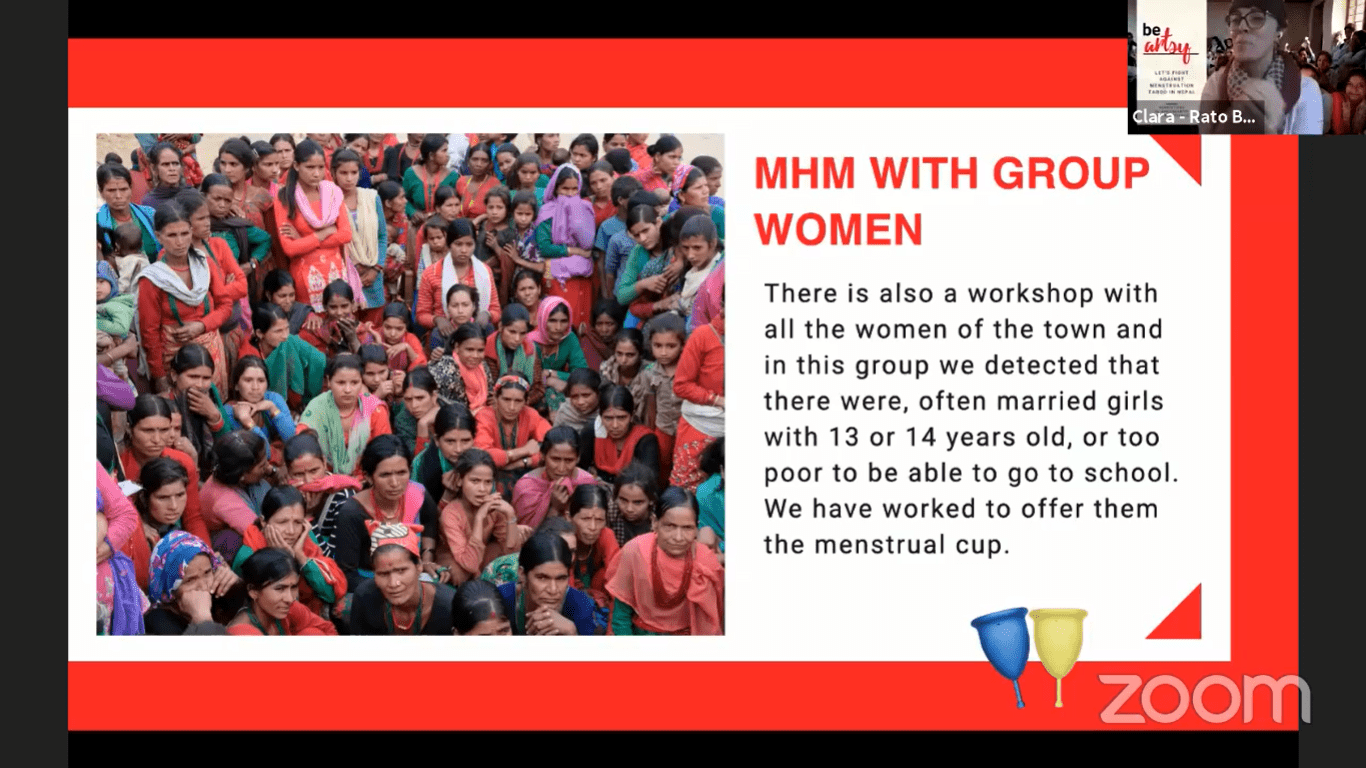
    Dambara Budha has been collaborating in the Rato Baltin project as a trainer for over two years. She was born in the Dhungachalna village, a very remote area far from the urban centre of Dhakari, in the Achham district, with a terrible telephone signal, located in the western part of Nepal.

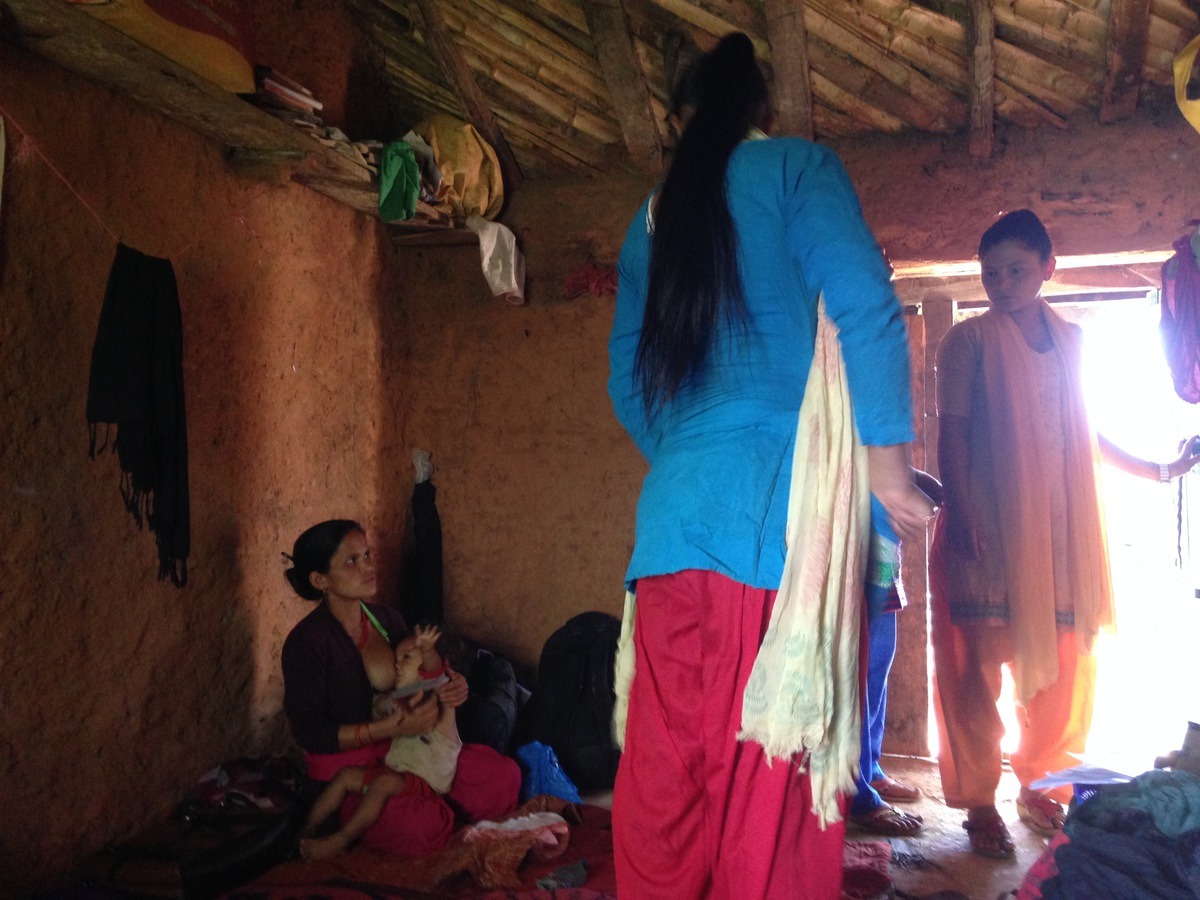
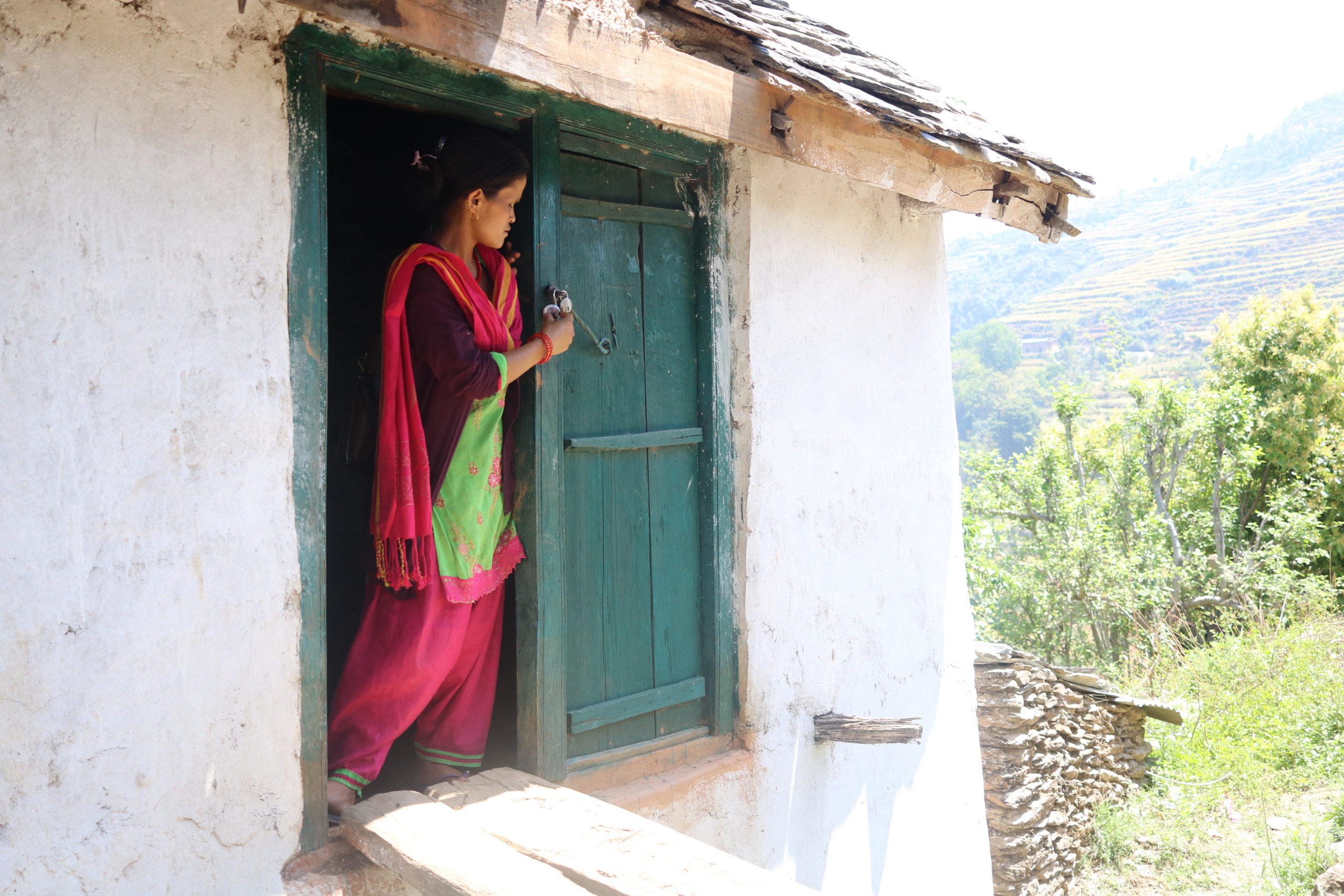
    Before participating in the project, Dambara considered herself very innocent. She was a timid speaker in public and didn’t enjoy going to places alone. Now she continuously becomes more confident as she gains new knowledge and learns much more. Her life has changed for the better. In addition to overcoming her shyness, she has learned to manage her periods more healthily. Before obtaining the knowledge about menstruation, she was asked to confine herself to a hut as she believed it was the right thing to do. Now she stays in a room inside the house and takes care of her menstrual hygiene.

    Since she is earning a little money, her vision for the future is more optimistic. She can see that her son will be able to have an education in the future, and she will be able to take care of her daughter-in-law when she has her period by providing them with nutritious food and giving her a clean and safe room to rest.

    For Clara, the founder of be artsy, Dambara was special since she started in September 2018. Dambara arrived with a month-old baby and a 10 or 12-year-old boy to take care of the baby while she was in training. It was an incredible challenge for Dambara to concentrate on the work and take care of a baby. The question, what is Dambara going to do if he doesn’t work at Rato Baltin? It was enough to give her a chance. Thanks to a group of mentors who helped her at all times, now Dambara is working very well, her self-confidence is increasing, and she does not hesitate to talk to the mayor, whoever is necessary to carry out her work. Dambara manages the house, the field, the baby and the job. The truth is that Nepalese women are superwomen.

    Text by Rupa Pandey and Clara G.O. with correction by Diya Modhera
    Photos by Anne-Laure Crepin

    We need your help, please. Make your donation to the Rato Baltin and Edufem projects today.

    Crowdfunding: https://www.migranodearena.org/reto/21328/contra-el-chhaupadi-la-tradicion-nepali-que-exilia-a-las-mujeres-durante-la-menstruacion

    Teaming (1 euro/month)

    RatoBaltin: https://www.teaming.net/ratobaltinproject

    Edufem to prevent early marriage: https://www.teaming.net/edufemproject

    Associate: – https://beartsy.org/associate / 

    Donorbox: –https://donorbox.org/againts-chhaupadi – https://donorbox.org/edufem – Covid-19🦠 https://donorbox.org/mask-4-health-nepal Thanks!
  • United Nations: ‘All this needs to change… now’

    United Nations: ‘All this needs to change… now’

    Chhaupadi: a particular form of hard violence against women. International Day to eliminate violence against women: panel discussion online and presentation with international guests who speak about women and menstruation in Nepal, entry by contributing €5 to the project.

    In the United Nations message for the International Day to eliminate violence against women, the General Secretary António Guterres, denounces the “sexual type abuse and because of being a female, violence, rape, one of the most horrible, persistent and generalized human rights violation, affecting one in every three women in the world. “The violence against women and girls is rooted in centuries of male domination. Let us not forget that the gender inequalities that fuel violence culture are essentially a question of power imbalances”. “The stigma, erroneous ideas, the lack of information and the non fulfilment of the laws, only perpetuate impunity”.

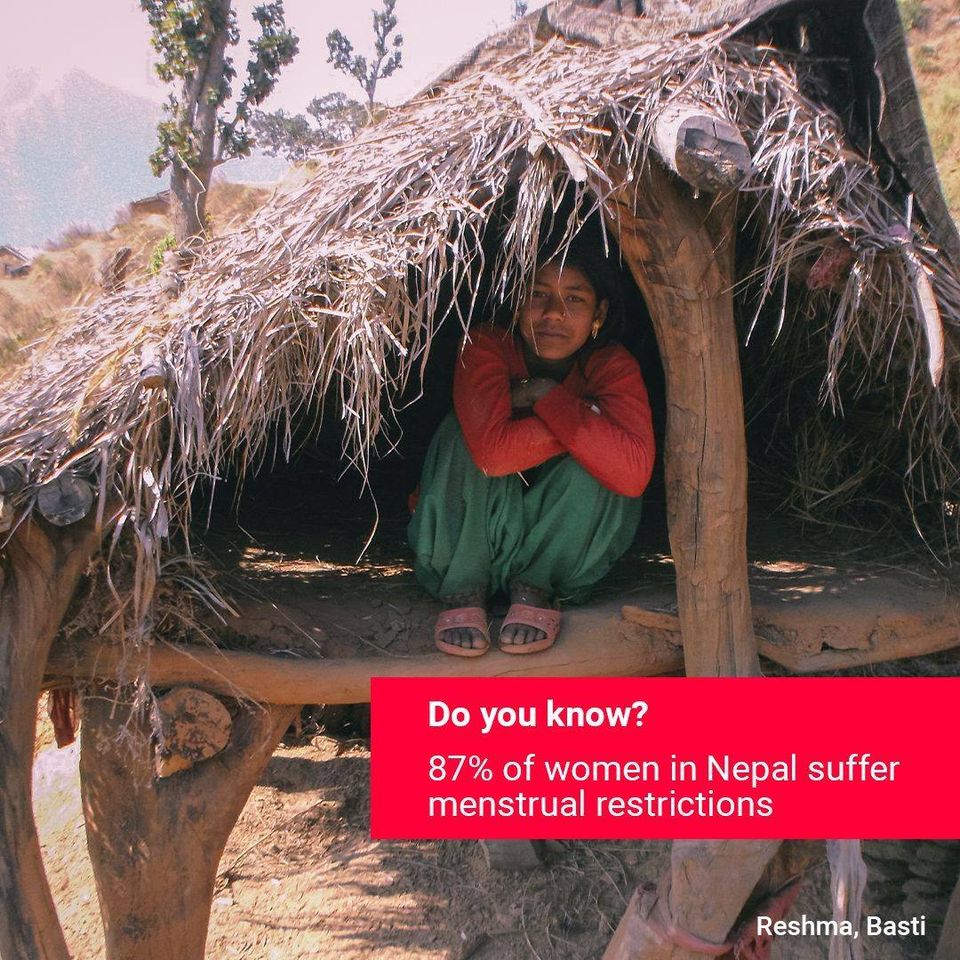
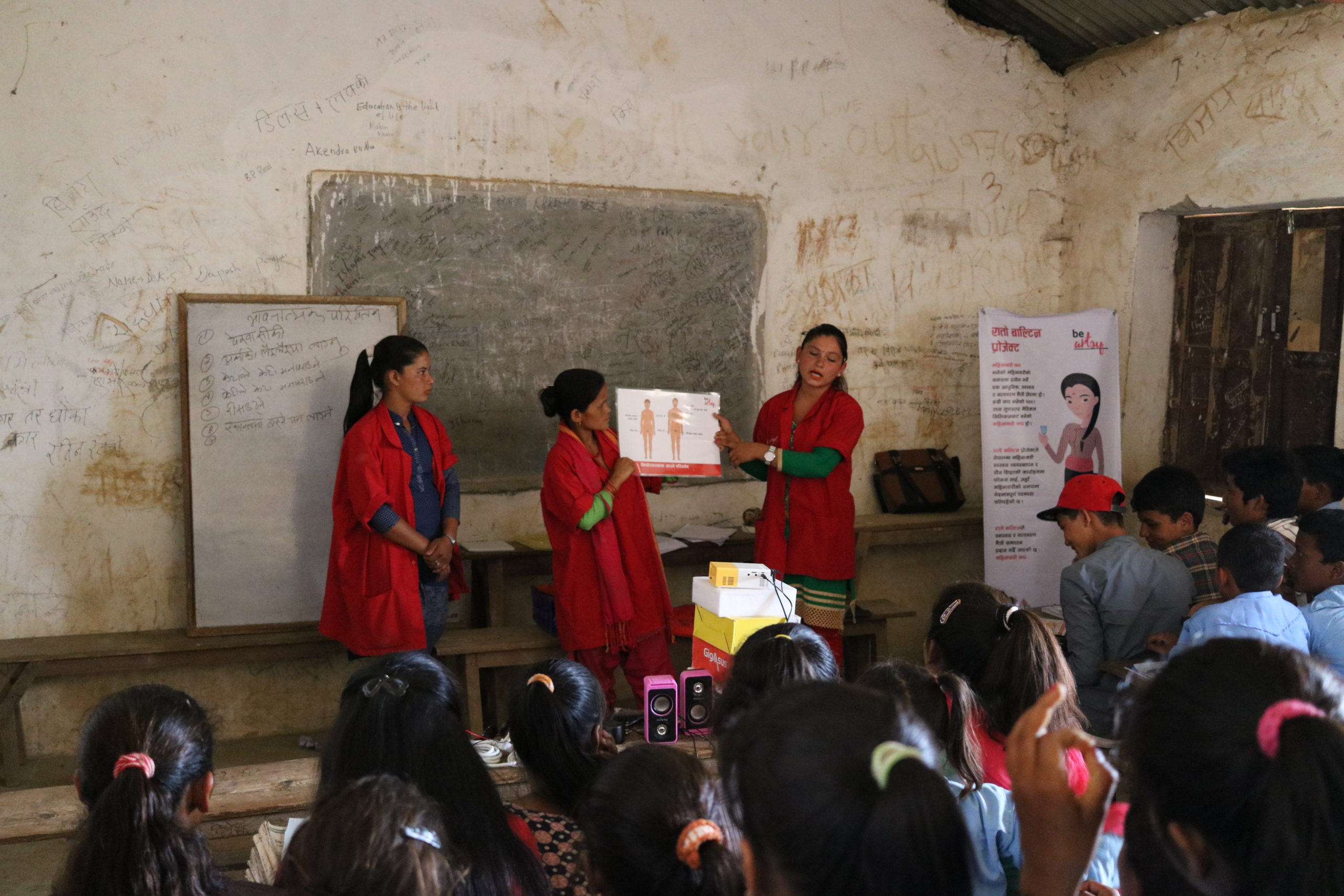
    The be artsy project has covered, by explaining about it, a lesser known form of violence against women, the Chhaupadi. Not only: we work since 2017 in an educative program that has showed its effectiveness in eradicating this practice in Nepal, based in workshops, awareness activities, participative photography, and empowerment for girls. To very much summarize what is our main project, the Rato Baltin Project, which we accompany by other interrelated parallel projects, in November, the month of the International Day to eliminate violence against women, we denounce all forms of violence, amongst them this terrible practice of extreme discrimination towards women just because they are female. We denounce, and work in situ in Nepal to eradicate this practice. Your support helps us to be effective in fighting against these forms of cultural, physical and daily violence.

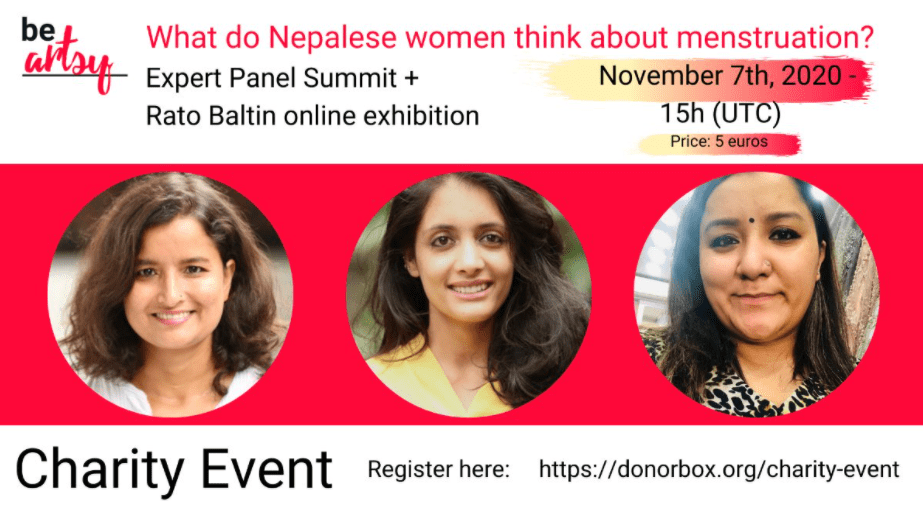
    Be artsy organizes, next Saturday the 7th of November, at 15h (UTC), an online discussion panel and exhibition, with international guests that shall speak about women and menstruation in Nepal, with entry by contributing €5 to the project: https://donorbox.org/charity-event

    In November, be artsy proposes more activities within the frame of the International Day to eliminate violence against women. On the 28th, a documentary will be released and be artsy will offer an exhibition online that can be followed in three languages, and on the 19th Clara Garcia i Ortés, co-founder and president of the association, will participate via a discussion panel, on one of the 10 subjects treated at the World Toilet Summit, about hygiene personal spaces: that about menstrual hygiene management. 2,300 million people do not have access to a bathroom offering good sanitary conditions and personal dignity, according to the United Nations.

    Translation by Tere Salinero

    We need your help, please. Make your donation to the Rato Baltin and Edufem projects today.

    Crowdfunding: https://www.migranodearena.org/reto/21328/contra-el-chhaupadi-la-tradicion-nepali-que-exilia-a-las-mujeres-durante-la-menstruacion

    Teaming (1 euro/month)

    RatoBaltin: https://www.teaming.net/ratobaltinproject

    Edufem to prevent early marriage: https://www.teaming.net/edufemproject

    Associate: – https://beartsy.org/associate / 

    Donorbox: –https://donorbox.org/againts-chhaupadi – https://donorbox.org/edufem – Covid-19🦠 https://donorbox.org/mask-4-health-nepal Thanks!