Tag: Rato Baltin

  • Don’t miss the exhibitions about Rato Baltin!

    Don’t miss the exhibitions about Rato Baltin!

    Lately we have been talking about the exhibition in networks, we want to introduce you.

    Exposició sobre Rato Baltin


    The idea of mixing the photos that girls have been taking during the Rato Baltin project with photographs of creative women from here was by Magda Gavaldà.

    The exhibition, actually 2 different exhibitions and one installation, are mixed with talks by Clara Garcia Ortés or some other person from the association.

    The first exhibition is in foam, and will hover for different libraries of Barcelona, or nearby, for a long season. It is the one that can now be seen in Poble Sec (Biblioteca Poble Sec-Francesc Boix) until December 10, and from December 11 it can be seen in Cornellà.


    The second one has the form of roll-up and did not arrive in time to Tona (Donaveu Associació de Dones de Tona – Biblioteca Caterina Figueras), which self-made an alternative and fantastic one, but if you want, you can enjoy now in the Biblioteca Volpelleres Miquel Batllori of Sant Cugat.


    Exposició sobre Rato Baltin


    The artistic commissioner of the exhibition is in charge of Alba Metzger and it has not been an easy job to link such different ideas in a single exhibition.

    So far we have had the help of Núria, Paula and Laura for the assembly. In future exhibitions, we will have more volunteers!

    You can see the installation in the windows of the Library Clot – Josep Benet (in the building of the Design Museum), until the end of December, and has been in charge of Viviana Sansone (the videos have been prepared by Marina Gallego).


    If you are in Barcelona, you can come and join us the 17th December at 18:30 h!


    Thanks so much to all the people involved, and please, if you want to get involved or host the exhibitions, installations and talks in your town, or want to help us in the assemblies, get in touch with us! info@beartsy.org

    Thank you all for the fantastic welcome!

    Join our project! We need you more than ever: https://beartsy.org/associate

    West Nepal girls need this kind of program. And we need help to continue the project!

    Paypal recurring donations:

    Select a Donation Option (EUR)

    Enter Donation Amount (EUR)

    Or if you feel like it, you can donate via bank transfer at: Banc Sabadell IBAN: ES23 0081 0900 8200 0430 1934 BIC: BSABESBB (your recurring donation will help us have a better planning of our budget to carry out the projects undertaken).

    Or take a look to others ways to donate at http://beartsy.org/get-involved-with-rato-baltin/   or https://beartsy.org/become-an-associate/
    Thank You! 🙂

  • Talk and projection about the Rato Baltin project

    Talk and projection about the Rato Baltin project

    Xerrada i projecció sobre el projecte Rato Baltin

    Barcelona – Dijous, 28/11/2019

    Coincidint amb els últims dies de l’exposició de fotografies mostrada per l’associació be artsy, la Biblioteca Francesc Boix co-organitza una xerrada i projecció.

    El 28 de novembre, a les 19.00 h a la Biblioteca Francesc Boix del Pobre Sec, a Barcelona, podeu assistir a la xerrada i projecció que Clara Garcia, fundadora del projecte Rato Baltin, farà sobre com es viu la menstruació a l’oest de Nepal.

    Fins aquest dia, es pot veure una exposició fotogràfica que mostra aquesta realitat, juntament amb la mirada de dones occidentals, i sobre com es desenvolupa el projecte d’educació que es realitza al país de forma participativa amb les nenes, dones, i les comunitats.

    Horari de l’exposició (entrada gratuïta): dilluns i divendres de 16.00 h a 21.00 h, dimarts i dijous de 10.00 h a 14.00 h, i de 16.00 h a 21.00 h, dimecres de 10.00 h a 21.00 h, dissabtes de 10.00 h a 14.00 h.
    Data:  Dijous 28 nov  Hora: 19:00
    Organitzador: Biblioteca Francesc Boix i be artsy
    Correu electrònic de l’organitzador: info@beartsy.org
  • What would it feel like to be a girl growing up in Achham, Nepal?

    What would it feel like to be a girl growing up in Achham, Nepal?

    It has been many months now since I left Nepal. My life as a volunteer for the Rato Baltin Project seems far away because a lot has happened since I left Achham, but I can still feel how being a part of this project has changed me and my life.

    When I first started to write about my experience as a volunteer, I thought I would share my point of view on the contribution of technology in development projects. In fact, most of my tasks as a volunteer were to prepare forms in this new app we used to collect data from the field. This software “Kobotoolbox” kept me busy from February until I left Kathmandu in June. I was an international cooperation student and learned the importance of getting data from the field and Kobo was an amazing technology that allowed us to get all the information we needed without being connected to the internet. With that tool, we could collect and save all our data from remote areas and download them as soon as we got back in the office with internet connection. The data is essential because it gives us information about the project’s impact and with the use of technology it protects information and avoids the loss of papers. It is also a great asset to empower the population because it is a great tool to develop new skills and get access to reliable information more quickly.

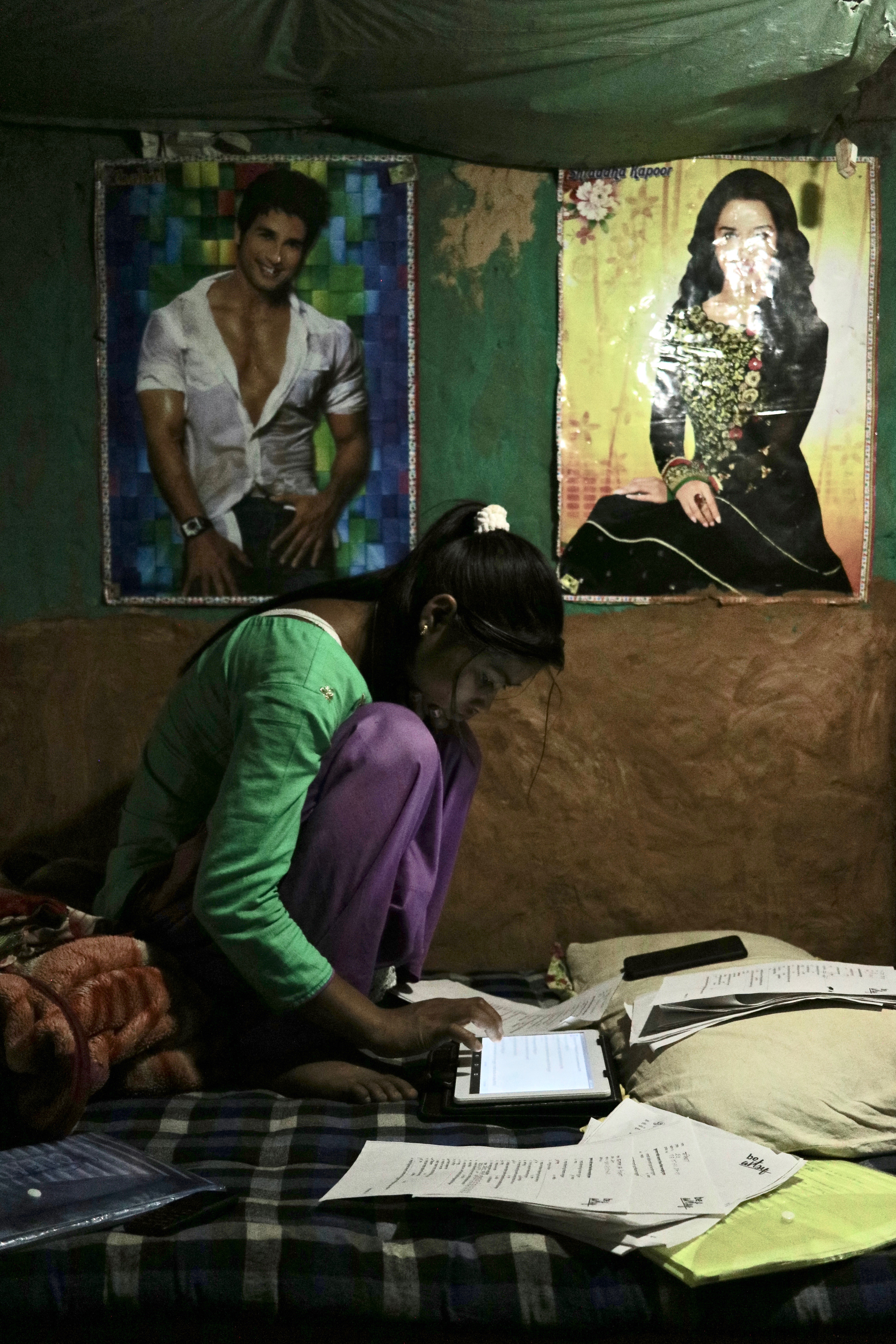
    Indeed, it was amazing to see the young mentors and trainers learning how to use the tablets. The responsibilities that came with their tasks helped them grow and gain confidence in what they were able to do in such a short amount of time. For me, the challenge was to explain to them how to use the device without speaking the same language. Patience and imagination became my best friends and I made sure to keep those qualities the whole time I was in the villages.


    A girl learning and working with a tablet, in Nepal


    As I started writing the first draft of this testimonial, I realized I wasn’t talking about what I felt about my experience in the project. I wasn’t able to express my feelings towards it because I couldn’t step back and see what it brought into my life. I was confident the project had a positive impact on the girls and women in Achham, but I couldn’t see the impact it had on my own life.

    I had to remember why I decided to go to the far west of Nepal instead of going trekking. Nepal was a destination I had been dreaming of for a long time, but I have to admit, except for the fact that it is the birth place of Buddha and that there are a lot of outdoor activities due to the mountain range, I didn’t know much about the people and the culture. So, when my friend Marisol came back from her trek in the Anapurna and told me that she had met this fantastic woman from Spain who does an incredible job for young women by fighting against the practice of Chaupadi, my only first question was, “What is Chaupadi?” I was studying international cooperation, and had analyzed all kinds of different projects on women empowerment but I had never heard of a practice so degrading and dangerous for women and girls. As I did some research and looked closer at the actions of the Rato Baltin Project, it became clear to me that I had to be part of it! I wanted to be able to use my knowledge from my two years of studies in international cooperation for a project I believed in. In addition to that, it was an opportunity for me to discover this country that I was dreaming to explore.

    My semester at university was over and I was flying and driving all the way to Sanfebagar in Achham by the middle of April. When Clara told me it would take two days by bus to reach our meeting point for the training, I have to admit I wasn’t sure where I was going and I was a little bit worried. I had to find my way there by myself since I couldn’t make it on time to leave Kathmandu with the rest of the team. This was my first encounter with the Nepali culture. I had to trust that no matter how long it took, day and night driving on bumpy roads, I would get to my destination. I had to let go of the fear of the unknown and just let myself be in the moment and know that everything would be okay. I can still remember the heat, the dust, and the noise on the road, and how awkward, tired, and lost I felt on my first day of training. But finally, I was there!

    Soon enough, I realized that being part of the project wasn’t only about me helping and sharing my knowledge. In Achham, I was mostly receiving and learning. Even though I couldn’t express myself with words, I was interacting with the girls. The young mentors Lalita, Sangita, Manisha, and Tulsi, who I shared a room with, were always concerned about my well-being because they knew that the conditions we were living in were unusual for me. In no time, I was part of their world and somehow they showed me what it was like to be a young woman in Achham.

    I was impressed by their investment in their tasks and as I was observing them prepare for class every morning, I couldn’t help but imagine what things would be like for them if they didn’t have the opportunity to be teaching the sexual education class for the Rato Baltin Project. They probably would have been in the field or helping with household tasks, but instead of that, they were proudly making changes in their community.

    In each of the three villages we visited, the lifestyle was different, but the lack of access to clean water was always the main issue. I had to get used to taking a shower from the main tap in my undergarments and being curiously observed by anyone who would come to fill up their cans.

    In Hichma, the first village, I felt at home right away. We received a warm welcome and a lot of support by the members of the community. At school, students were very open and interested in the class the girls were giving, and when our work was done, my regular evening walks allowed me to take photos of the women and the landscapes. I was taking pictures of moments that I will never forget. I thought I could understand what it feels like to be a woman from Achham by observing them and living with them, but the truth is that I could never relate to the practice of Chhaupadi. I will never be in a position where I am forced to sleep in a shed and am considered impure every month. No matter how much I study the problems associated with the practice, I will never know the fear of being alone, the feeling of injustice and rejection, the feeling of not being able to pray at the temple, or the feeling of being asked to eat separately from the rest of the family. Even if I spend time travelling and even if I stay long enough to immerse myself in the culture and traditions, I will never know what it feels like to grow up and live in an underdeveloped country. Although I never felt like I was privileged back in my own country, in the villages in Nepal I could sense how lucky I was to grow up in environment where I can be free to be the woman I have chosen to be. I am lucky because I was born in a part of the world where I can be free to do anything with my life and love whomever I want. Whether I am rich or poor, I still have the right to decide what to do with my life.


    Photo: Anne-Laure Crepin, a chhaugot


    It then became even more obvious that I should use these privileges to help those who need change in their conditions and lives. As a foreigner, it wasn’t my role to force or impose new habits or try to change their traditions. I could only set an example of how free a woman can be when she has the tools to make her period more comfortable and experience it as a natural process. For that, the menstrual cup is the best solution, and any woman can benefit from it. As a privileged individual, it is my responsibility to act and help those in need. What I came to learn is that we are responsible for our own changes. The girls, mentors, and trainers took the opportunity that was given to them. They transformed their life for a while – and probably forever, and I strongly believe that our time with the Rato Baltin Project will also have an impact on young women in Achham and make changes in their lives. As far as I am concerned, I know I will be back in Nepal and my participation in the Rato Baltin Project isn’t over yet. Today I feel grateful for the opportunity to be part of this adventure and every month when it is time to use my menstrual cup, I cannot help but remember what it was like to be woman in Achham.


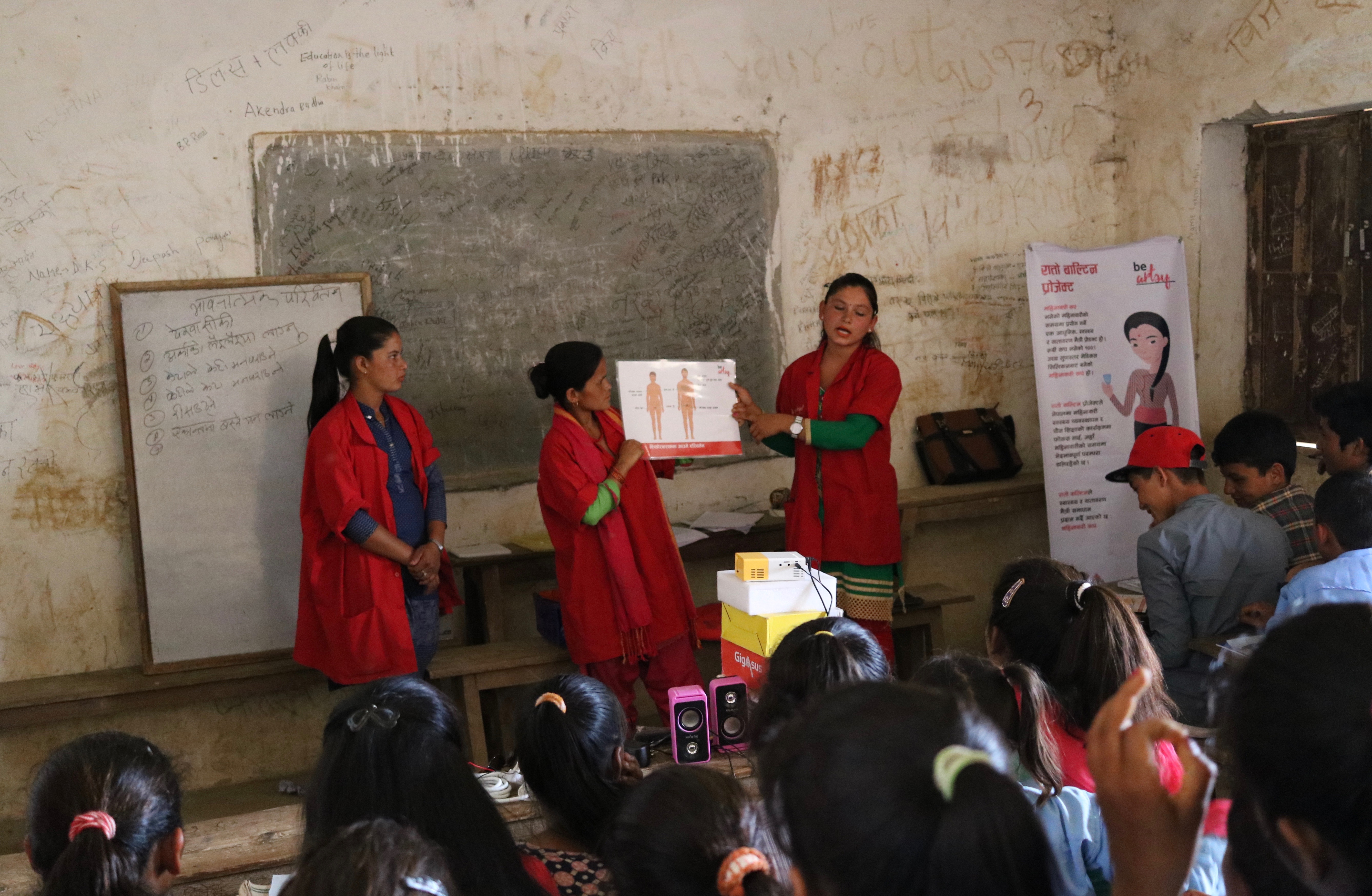
    Workshop with girls in Achham

    Written and photos by Anne-Laure Crepin, correction by Shae Marineau.
    

    West Nepal girls need this kind of program. And we need help to continue the project!

    Paypal recurring donations:

    Select a Donation Option (EUR)

    Enter Donation Amount (EUR)

    Or if you feel like it, you can donate via bank transfer at: Banc Sabadell IBAN: ES23 0081 0900 8200 0430 1934 BIC: BSABESBB (your recurring donation will help us have a better planning of our budget to carry out the projects undertaken).

    Or take a look to others ways to donate at http://beartsy.org/get-involved-with-rato-baltin/   or https://beartsy.org/become-an-associate/
    Thank You! 🙂

  • Vulvita, an entrepreneur who sews and sells cloth compresses in Cambrils

    Vulvita, an entrepreneur who sews and sells cloth compresses in Cambrils

    Beatriz San Román es la creadora de la marca “Vulvita”, la cual vende productos menstruales reutilizables para poder reducir al máximo los residuos. 

    Beatriz San Román, Vulvita, con sus productos de higiene femenina
    Beatriz San Román, Vulvita, con sus productos de higiene femenina | María Vidal 

    Reducir al máximo los residuos y trabajar en la salud menstrual. Estas son los principales propósitos que tiene Beatriz San Román para seguir adelante con sus proyectos. San Román es una emprendedora madrileña que vivió en Cambrils y que actualmente reside en Mont-Roig. Tiene en marcha tres proyectos: “Vulvita”, “La casita sanadora” y “Residuo Zero Tarragona”, todos relacionados con los objetivos nombrados.


    Actualmente, se encuentra más centrada en “Vulvita”, una marca de compresas de tela y otros productos menstruales que ella misma cose a mano. “La casita sanadora” dice que lo que siempre había querido hacer, “un proyecto donde la gente puede acercarse a mi y de alguna manera sanarse, ya sea a través del yoga, de los masajes, la terapia floral… para buscar la manera de conectar con uno mismo”, de momento es el que tiene más abandonado porque conoció la terapia menstrual y supo que eso era lo que quería hacer. El último que ha creado, junto con una amiga, es “Residuo Zero Tarragona”, donde se venden productos que intentan fabricar ellas mismas o que vengan de cerca, que no produzcan residuos. Porque se han dado cuenta que “en casa es más fácil tener una vida zero waste pero cuando viajas es más complicado”.

    El proyecto va a surgir de una necesidad propia

    La emprendedora explica que el proyecto Vulvita va a surgir de una necesidad propia, ya hacía años que ella cosía sus compresas de tela con roba reciclada que tenía en casa. Hasta que las personas de su círculo y de conocidos también le pidieron de probarlas y así es cómo se va a “profesionalizar” para venderlas, sobretodo a gente cercana. Más tarde llevó a cabo una campaña de crowdfunding  para conseguir financiación y dar a conocer el proyecto. Fue cuando hubo que poner un nombre a lo de coser compresas y como surgió “Vulvita”. Afirma que este nombre se debe al hecho que siempre le gusta “traer a la luz las cosas que están ocultas, y poner este nombre era poner en terreno público una parte del cuerpo que estaba oculta, pero tampoco muy directamente”. En la misma línea, su empresa tiene un componente reivindicativo importante, ya que reclama que la menstruación se ha de desmitificar. “La mitad de la población menstrúa y no podemos hablar de ello?”, protesta. Per este motivo también da talleres a niños, porque le da miedo “que los niños crezcan en una sociedad donde no puedan conocer ni explorar su cuerpo, ni hablar de sus procesos biológicos”.

    Los productos se pueden adquirir en diferentes ferias, en las redes sociales y en algunos establecimientos

    Hoy, los productos de “Vulvita” se pueden adquirir en diferentes ferias de la provincia de Tarragona, como es el caso de “l’Espai Niu” de la Feria Multisectorial de Cambrils, mediante las redes sociales, o en algunos establecimientos de la provincia que tienen productos ecológicos. La emprendedora afirma que hay diversos motivos por los cuales cambiar y empezar a utilizar las compresas de tela, aún que evidentemente, una de las principales razones para usarlas es para favorecer el medio ambiente, ya que permiten tener una menstruación de residuo cero. Un gran cambio respecto a la cantidad de residuos que generan las compresas habituales. Las clientes que las compran forman, forman parte de una gran abanico de edades, ya que va desde jovencitas que quieren tener alternativas al material de un solo uso o mujeres que las usan para la pérdida de orina. Por otra parte en dos ocaciones la creadora de “Vulvita” ha viajado al oeste de Nepal con el proyecto Rato Baltin de la ONG Bearsy, que tiene como objetivo dar información de salud menstrual a niñas y mujeres de la zona. El propósito de este proyecto es que ellas mismas sean consientes de los que les pasa, para poder erradicar la práctica del Chhaupadi y que las jóvenes nepalesas puedan utilizar siempre la compa menstrual.


    Finalmente, ella afirma que, especialmente el proyecto “Vulvita”, lo lleva a cabo porque “a parte de ser mujer, he sufrido lo que es ser mujer en esta sociedad”, también porque tiene mucha conciencia ecológica. Por eso, para ellas lo más importante actualmente sería reducir el residuo al máximo en cualquier ámbito – alimentación, cosmética, menstruación-, ser autosostenible y concienciar a la sociedad sobre esta tema para que comience a ser responsable de los residuos que genera.


    Imagen de las compresas de tela que confecciona Vulvita
    Imagen de las compresas de tela que confecciona Vulvita


    Por: María Vidal | Publicado en: Cambrils.cat 
  • Exploring myself (Nepali Volunteer Testimonial)

    Exploring myself (Nepali Volunteer Testimonial)

    Testimonial write in Nepali by Rupa Pandey, after the Nepali one you can read the English translation.


    Just like every other day, on January the 11th, 2019, I was checking my Facebook and suddenly a post drew my attention: that post was about the Rato Baltin Project, about the menstrual tradition “Chhaupadi”, which is still practised and deeply rooted in the Achham district, Far West part of Nepal, and explained how the project had been helping women and girls in menstruating age for two years by conducting a menstrual health management awareness program and providing health and environment friendly options to the sanitary pad, i.e. the “menstrual cup”, which makes menstruation a little easier for women and girls in Achham.

    The word “Chhaupadi” disturbed me a lot, this word is so cruel in its meaning. When mentioning Chhaupadi we only talk about Achham, but some kind of Chhaupadi is still practised in each and every village and cities of Nepal. The only difference is that menstruating women and girls in Achham are forced to sleep in the chaugoth. Except that, everything is quite similar: don’t touch this, don’t go there, don’t do this, you are impure… We have grown up with all these restrictions and heard these harsh words all our life, which is truly painful.

    After reading this post, I felt a strong impulse to help in the project so I immediately wrote a message to the Rato Baltin project in the “How can we help the project apart from with financial support?” part. The next day, on the 12th January 2019, Rato Baltin replied to my message with a “Hello, My name is Clara, you can come to our office if you want to help”, and including the location map. This was how my relationship with Rato Baltin started.

    I started to work in Rato Baltin as a volunteer from that January, and my main responsibility was to translate all the documents related to the project into Nepali. Clara asked me if I wanted to go to Achham in April for the project. At the beginning I told her that I would only go for 15 days, but later I changed my mind and wanted to go for 2 months, say the full period of the Rato Baltin Project in Achham. This decision changed my life in a very positive manner.


    When we finished all the work for the project in the Kathmandu office, we left for Achham on the 14th April 2019. After 2 days of travelling by bus and jeep, we reached Sanfebagar, municipality of Achham, where we were given a course to become trainers for 10 days. The Rato Baltin project had been working in the Mangalsen municipality for 2 years only, but from this year the project was going to work in one more municipality: Sanfebagar, and 2 rural municipalities – Dhakari and Turmakhat.

    On the 17th of April 2019, the education of the trainers started. 5 foreign volunteers were also with us to help with the project. My job during the training was to translate the training scripts, make our trainers and mentor understand the scripts, and translate their questions and curiosity to Clara. I was there as a translator because all our mentors and trainers were local girls from Achham, who had difficulties in understanding English. During the 10 days of training in Safebagar, I had the opportunity to know our mentors, trainers and foreign volunteers, and to learn to live together helping each other. Every day after the training we used to go for a coffee and a brownie. A brownie in Achham was like water in the desert. Now when I remember those moments, I realize that to be happy you don’t really need big things, as even small things can give us so much happiness.

    When the 10 days training finished, it was the moment for the teams to leave for their work destination. Every team had 1-1 foreign volunteer. Saying goodbye was really hard for me after the bonding we had formed, but I knew I would get the opportunity to meet with all the group members again because Clara and I were in the managing team.

    As the managing team, Clara and I had to visit at least one village of each team and evaluate and supervise their work. I was able to see again all the members of each team and had the opportunity to get closer and to know them more. The girls called me didi (elder sister), and they used to come to me for each and every problem they were having. At the beginning I generally taught them with anger and rudeness, but slowly I realized that I could help them with patience, care and love.

    This project has made me learn to be more patient and kinder in my personal life. The foreign volunteers also needed my help whenever they had to communicate with the girls because neither the foreign volunteers nor our girls could understand each other’s language. I was helping them to connect with each other and understand what they wanted to convey. It was my privilege to be able to help.

    I had a good relationship with all the foreign volunteers. Even though we were from different cultures and backgrounds, we were able to live as a family, helping each other and comforting each other whenever we missed our families. During the stay in the remote village of Achham, sometimes we had to sleep in same room, and at times, due to the superstition of the Chhaupadi, we had to spend the night at the school’s library. Even the simple food we ate in the village was tasty because of the affection that people showed us. We didn’t even have basic things we needed in the village, but I never felt like I was missing something. Two months in Achham has taught me a lot, and I was able to see real the Nepal. I will always thank Clara and the Rato Baltin for this opportunity.
    I consider myself very lucky to be able to help the women and girls of Achham. I felt so proud when I saw our mentors’ and volunteers’ confidence growing slowly with the Project and being empowered. In a society where menstruation is considered a taboo, when our girls describe how clean and pure the menstrual blood is, I really feel proud to be a woman. The work the Rato Baltin Project is doing for the women and girls from Achham is really significant and deserves respect. I cannot describe the happy faces of the women and girls when they were able to talk about their menstruation and when they were receiving the menstrual cups. The Rato Baltin Project is actually changing the menstruation conditions of the Achhami female population. It is priceless.


    Now, I am back to my regular life, but the 2 months in Achham will always be in my heart. Those moments are very precious to me. All those memories from Achham, like bathing in the community tap with our petit-cot, waiting in the queue for using the toilet, the evening walk to the village and through the forest being so beautiful. The simple life and the love of the people of Achham has made this place very special to my heart. I feel like Achham is my second home.

    While working with the Rato Baltin Project in Achham for 2 months I had the opportunity to learn a lot of things. I established some very precious and beautiful relationships which will always remain in my heart. The love and affection from our girls make me feel like they are my own little sisters (bahini), and I wish for their happiness and progress in their future lives.

    My confidence has grown together with that of our girls. I can feel the change in Rupa before Achham and after Achham, and this change is very positive. I had the opportunity to know myself and my capabilities. I have developed the ability to cope with and handle difficult situations, of how to live and work together in a team, and to be able to be helpful to others. The Rato Baltin Project has given me a beautiful family. I want to express my gratitude to the Rato Baltin Project and to Clara for accepting me as a member and giving me the chance to grow positively.

    Thank you so much, Clara and the Rato Baltin Project, for believing in me.

    Written by Rupa Pandey, photos © Anne-Laure Crepin, correction by Ixone Saenz and Tere Salinero.
    

    West Nepal girls need this kind of program. And we need help to continue the project!

    Paypal recurring donations:

    Select a Donation Option (EUR)

    Enter Donation Amount (EUR)

    Or if you feel like it, you can donate via bank transfer at: Banc Sabadell IBAN: ES23 0081 0900 8200 0430 1934 BIC: BSABESBB (your recurring donation will help us have a better planning of our budget to carry out the projects undertaken).

    Or take a look to others ways to donate at http://beartsy.org/get-involved-with-rato-baltin/   or https://beartsy.org/become-an-associate/
    Thank You! 🙂

  • Putting the seed of the counterpower (Volunteer Testimonial)

    Putting the seed of the counterpower (Volunteer Testimonial)

    One day, in the Facebook of the university where I am studying a degree in Cultural and Social Anthropology, I read a note where it said that they were looking for anthropologist volunteers for a project in Nepal. This name, Nepal, caught my attention; a country that I really like, that I have visited seven times and where, from my first landing in Kathmandu, not having yet gotten out from the airport, I felt like arriving to some familiar place. I was in a moment in my life when I could afford to take some months off and therefore I sent my application to the NGO.

    I spoke with Bea via Skype, who explained the project and the cultural practice, the Chhaupadi, the reason for the intervention of the NGO in the community; custom which, despite my trips to Nepal, I ignored was being applied in such a strong manner.

    Once selected, they explained to me my role as anthropologist: “to find a strategy to involve the shamans and men in the process of raising the level of awareness that was expected to be achieved with the intervention”.

    Yeah, yeah, easy (of course this is ironical, especially for an anthropologist in training), but I liked it, because it showed the full all levels approach of the NGO.

    I had never collaborated with an NGO, I have always been a bit mistrustful; therefore, I made up a plan B (yes, because I am more of having a plan B, unlike Bea, wonderful person, member of be artsy, who focuses all her energies for plan A to go to term), deciding to take with me all my mountain gear to lose myself in the powerful and energetic Himalayas in case the project would not finally be to my liking…. Well, I did some trekking alright, but at the end of the project, because I really loved this latter.

    The project tries to raise awareness in the people of the community about what the menstruation is, giving a sexual, menstrual and health workshop in schools, and offering the menstrual cup as an ecological and hygienic solution, bearing in mind that many women use rags or have on two, three pieces of underwear, instead of using pads.

    This education is important, considering that in the school curriculum there isn’t yet a section treating those subjects. Reason why the Chhaupadi practice is so deep-rooted, because they don’t know what the menstruation is in its biological sense.

    During my interviews, to the question “what is the menstruation?” the reply was Chhaupadi. That is, they make no difference between the biological process and the tradition, whose real origin is unknown but which is still being passed on from generation to generation by the elders. That superstition about women being impure is the only information teenage girls receive about what the menstruation is.
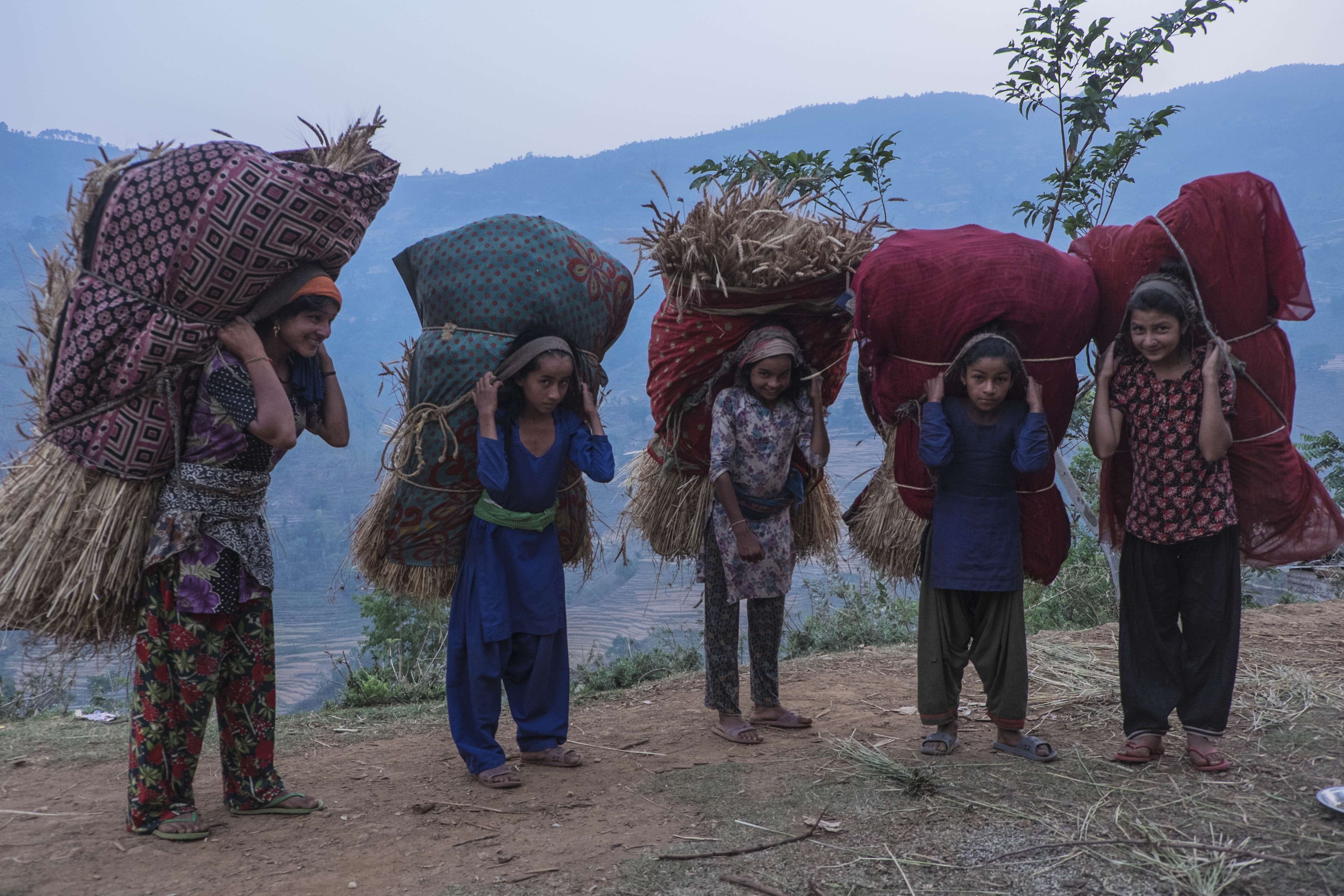


    The workshops are addressed to children and teenagers, of both sexes, who in some years will become husbands, wives and parents, potential agents of change; whereas the oldest people, both men and women, together with the shamans, are not inclined to any change in what refers to this custom. This is just a reflection of the social structure: patriarchal, where the woman occupies a subordinated role and the elders hold a lot of power. This is a custom that has no benefits of any kind for the women nor grants any service, except to support the stratification of gender in the social fabric.

    The focus is in teenagers and children, but at the same time includes the people who hold positions of power within the community: they are informed, but they are not let to be in full command.

    That is another point I like, because letting them the leadership would mean changing the form but not the substance: power and recognition would still be granted to those who already have it, leaving women in the shadows, confirming an unequal structure of power.

    The ones imparting the workshops are local girls who live in the community, concept that achieves what I have most liked of the project: be artsy is giving an opportunity to these girls, providing them with knowledge through some intensive training, paying them, and, above all, the most valuable of all: it gives them self-assurance, the chance to empower themselves and be independent. Not the negative and destructing power that society allocates to them, but the power to break the mental framework that makes them feel inferior and impure.

    This is the thing that has moved me the most: to see how girls of between 16 and 18 years old have changed, after 50 days of being together.

    Hiukala, the trainer in my group, is 18 years old, and, more than others, represents that quick and intense change. When I met her during the training she was so shy that when I asked her: “what’s your name?” she replied whispering her name and looking down; to speak in public, impossible.

    To be honest I could not picture her giving workshops in front of dozens of teenagers and speaking with the shamans, but I was mistaken. Day after day, with much effort and determination, together with Kamala, Goma and Basanti, the other girls in the group, I saw how she was becoming stronger until being able to go to her village and say to her parents that, from that moment onwards, she would not accept to be thrown out during her menstruation days.
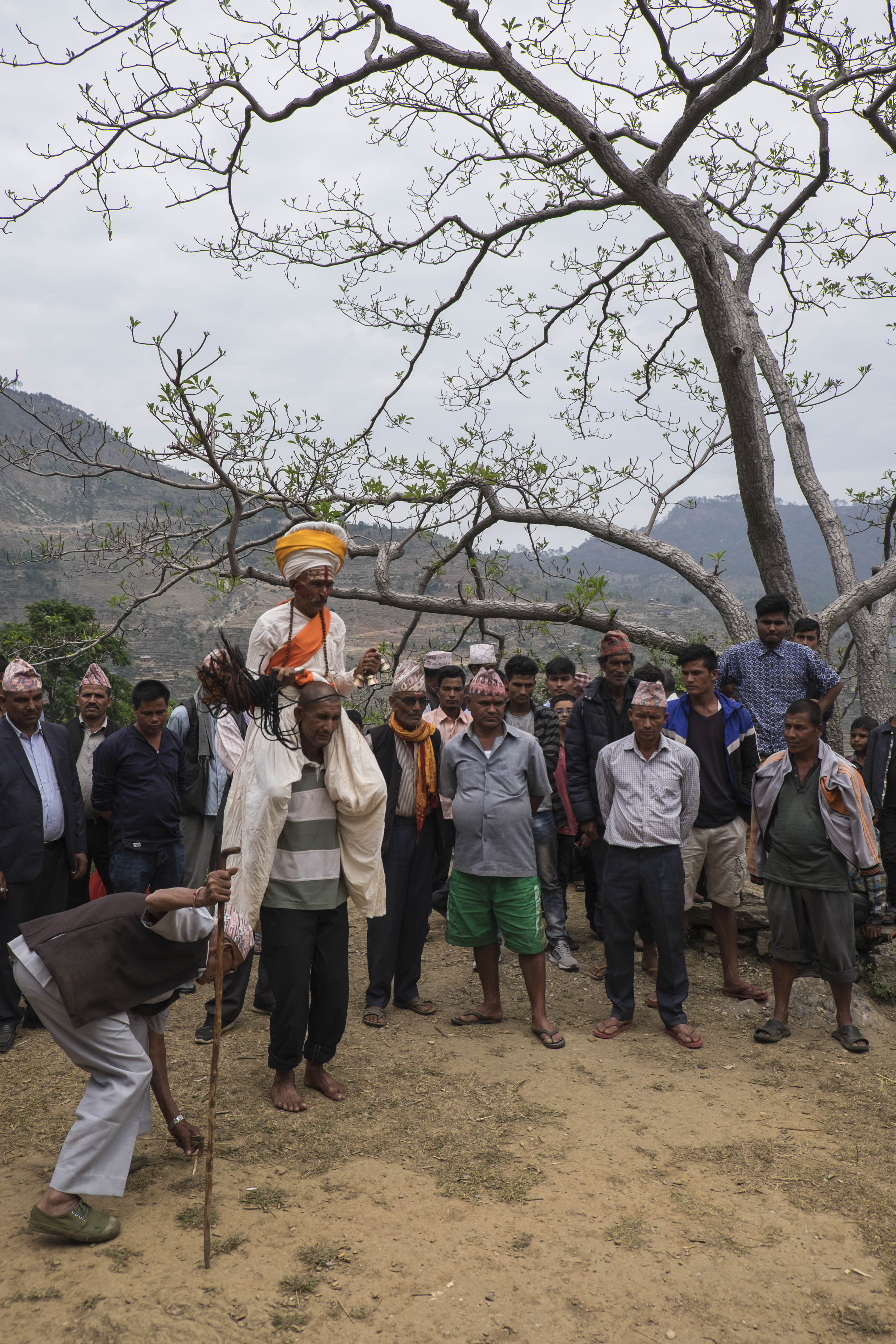


    They became a symbol for the women in her own community and above all a reference, because every two months the trainers do a follow-up with the women and girls using the cup, both to monitor the correct use of the cup as well as its impact in what regards the Chhaupadi.

    Here I introduce another point in favour of the project: by training girls from the community, they give them the necessary tools to pass on the knowledge, as well as favouring the development of a context of debate that in other case would not exist given the political (the subordination of the women), socio-cultural and financial environment, which has them all the time occupied with tasks concerning the housekeeping and family care. They build a joint space from where resistance and change can arise, but leaving the choice to the people in the community, who will activate the change if they really wish to and see it necessary.

    One form of resistance that shows up these days is only by songs describing the sufferings that the Chhaupadi brings and pleading the gods to leave them free to remain at home.

    Last, but not least, is the part of the participative photography.

    The cultural diversity is not only notorious in the external, material and visible, but also in invisible aspects like emotions, some predominating more than others.
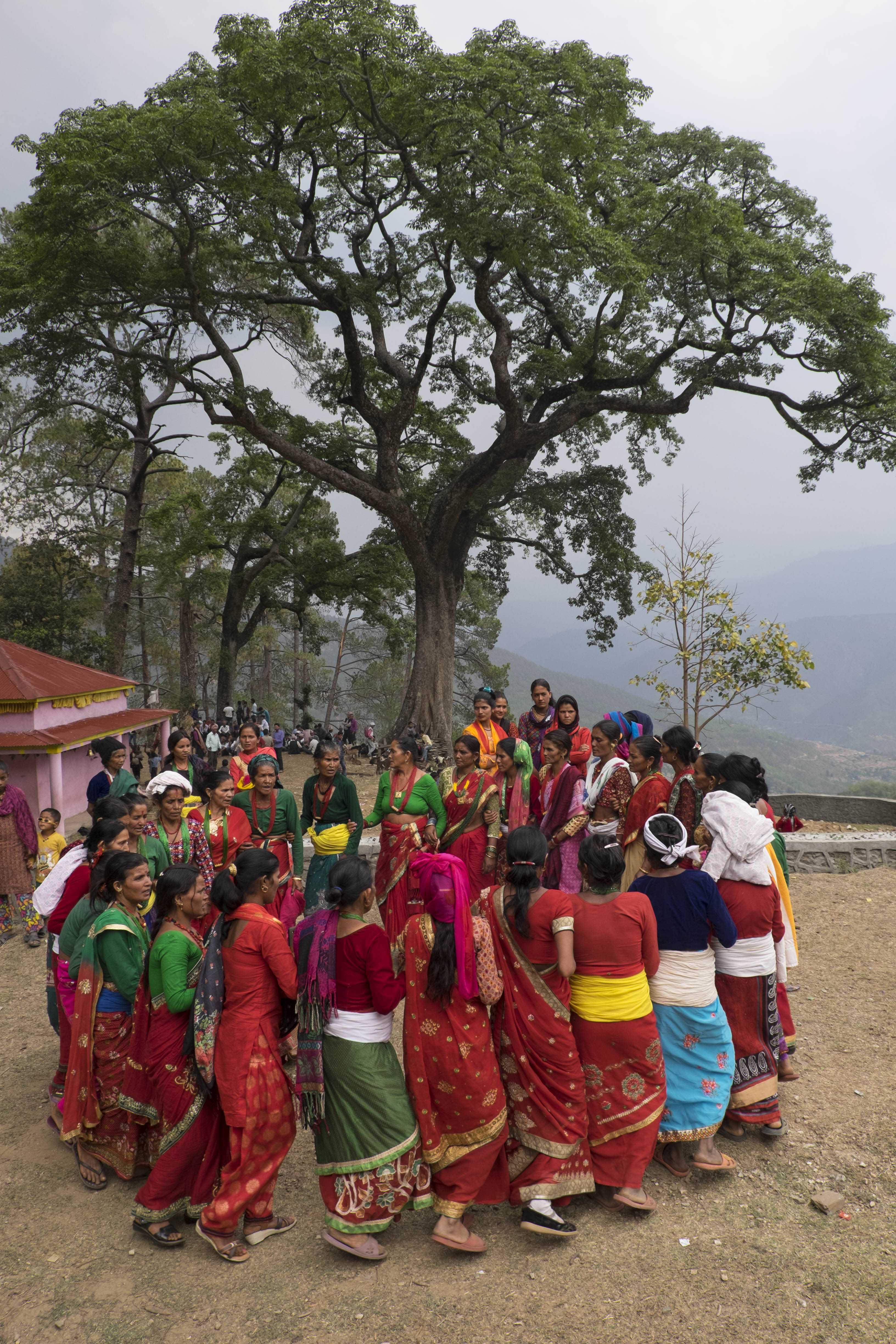


    Talking about the menstruation prevails the embarrassment over the ease, so using pictures instead of talking, as an alternative way of communication, but equally efficient, women are invited to share their opinion and experience about the menstruation, method that highlights the sensitivity of the project.

    This project has got effects not only exclusively on the people of the community, but also on the ones involved: my experience in the field has been very intense, especially from a human point of view.

    Starting by the team of be artsy, all of them wonderful people, few, but who are worth a lot, who despite the many difficulties and unforeseen issues that creep up daily to bring forward the project with determination and commitment, as volunteers and for free.

    Their work is characterized by the effort, the passion, the way of giving themselves to the cause, the trust in activism and social change, which, as I have mentioned before, is reflected in the quality of the project.

    I was surprised by the transparency in the management and the care and attention to all people involved. All of these reasons that made that my plan B would not finally happen.

    The intensity is also due to the precarious context, which requires good adaptation skills and even to be able to forget oneself, being the only person from Occident in remote locations where nobody speaks English.

    No doubt this has been the most authentic experience of all my stays in Nepal: in a warm atmosphere, waiting for them to boil water to be able to drink, eating only dal bat and forgetting about the possibility of choosing something else, but being aware of how lucky you are because you can have that at least every day, having a shower in the open air inside an uncomfortable sac called petit-cot and sharing rooms, even sometimes the bed, with people and bugs. Upon my return I had to look up the word privacy in the dictionary: it had become an obsolete word during this stay.

    They told me at the beginning that I was going to live like a Nepalese, but this was not possible, because my skin colour, together with the local hospitality, granted me always a privileged position, although my role would result uncomfortable to some villagers (men and shamans). I always enjoyed the biggest bed, the softest pillow, many times I did not have to wait in line for washing myself in the fountain, and any request I may voice aloud became matter and obligation for all the community.

    Not forgetting that I had some little angels with me: Hiukala, Kamala, Goma and Basanti, trainers and mentors of be artsly who during my stay watched over me.

    A truly unforgettable experience that strikes a cord in you: I travelled to know some villages and their cultural customs, and I ended up knowing myself much better.

    Dhanyabad!

    Written, and © photos, by Eleonora Bordogni, translated by Tere Salinero
    

    West Nepal girls need this kind of program. And we need help to continue the project!

    Paypal recurring donations:

    Select a Donation Option (EUR)

    Enter Donation Amount (EUR)

    Or if you feel like it, you can donate via bank transfer at: Banc Sabadell IBAN: ES23 0081 0900 8200 0430 1934 BIC: BSABESBB (your recurring donation will help us have a better planning of our budget to carry out the projects undertaken).

    Or take a look to others ways to donate at http://beartsy.org/get-involved-with-rato-baltin/   or https://beartsy.org/become-an-associate/
    Thank You! 🙂
  • First part of the Rato Baltin 2019 project: general assessment

    First part of the Rato Baltin 2019 project: general assessment

    Taking some days rest after coming back from Nepal, we let you know how did this first part of the Rato Baltin 2019 Project go.

    We had a risky bet, to cover as many villages as our financial resources may allow. From September 2018, we prepared everything for six municipalities, but after the trip we made in situ during January, after seeing the difficulties and taking into account the resources we seemed we had found, we decided to focus on just four municipalities.

    This decision has brought us both positive and negative things. We always say that in Nepal everything changes and anything can happen, but this year we have been able to ascertain that this is also applicable in our own country.
    In Catalan, we have a saying that goes: ‘Do not say wheat until it is in the bag and well tied’. Its equivalent in Spanish is: ‘Do not sell the skin of the bear until you have hunted it’ (what a cruel proverb). In English the same would be: ‘We must not count our chickens before they are hatched’ 🙂

    The positive things:

    We have been to 4 municipalities (16 schools/villages):

    • Sanfebagar, a municipality with a high presence of Chhaupadi, despite not being as far away as many others. This is where our partners are located for this part of the project, in Accham: 3 villages/schools.
    • Dhakari, just in the little mountain opposite our very much loved Basti: 3 villages/schools.
    • Turmakand, one of the most remote places in Accham, near the river Karnali. And where last year died the girl whose parents buried to try to hide the fact. 3 villages/schools.
    • Mangalsen, district where we have been working for the past three years and from where most of our staff comes from. 4 new villages/schools + 3 from last year. In November, during the follow-up, we will do a further two.

    In summary: in Achham, during this 2019, we have been working in 16 villages/schools and in November we will add another 2. We have reached 5,347 direct beneficiaries. With 1,353 new users of the menstrual cup.

    What we feared most about the project this year was that all the facilitators were, whether local women from each municipality, or former students from previous years. On one side, we had the security that the message would arrive best with local girls than with nurses from Kathmandu; on another side, we were afraid about if they had assimilated the information we gave them in September and the hyper-intensive training of 9 days we imparted before the start up.

    And I have to say that here laid the wonderful surprise, of which we all felt very proud: the girls absolutely rose to the occasion at all times. Where one could not reach, another would, and the groups complemented each other marvelously!

    To see those girls, so sure of themselves and empowered, has been one of the best things of the project, just for that, it has all been worth it!

    In each group there was at least one trainer (in some even two because we had six already trained) and three or four mentors (ex pupils of ours, users of the Ruby Cup), and a foreign volunteer.

    It has been a hard experience for every one of the volunteers: these girls do barely understand English. But an interesting one. Bea already wrote about the training we did in Sanfebagar, and Eleonora, Anne Laure and Maisei will do it as soon as they have some time to spare. At the same time, for each team of Nepalese girls, to have a foreigner who could not understand them has also been hard because of the difficulty to communicate, but a great help in what regards technical and safety matters. The foreign girl is like a ‘bait’ to attract the women, men and girls to the class groups!


    Rato Baltin's teams of 2019


    On another hand, Rupa and me (Clara) have been acting as managing team and trying to sort out queries and problems that may raise. Rupa is an extraordinary woman with whom I have worked really well and I think that she is the perfect Project Manager for our project in Nepal. She is an independent woman with her own import company of “Cozy Cups” menstrual cups. Quality cups that she sells at a fair price to women in Kathmandu: 1,500 rupee. In Achham, if any mother does want one, the price is 800 rupee.

    In Kathmandu, we have had our interns Raunika and Simran. Two veritable gems that will come to be fighting women, promoters of the change in their country. Both are studying for a master, one about gender studies and the other in international cooperation.

    In all, we have three angels working with us!

    We have also had the help of Pashupati Kunwar, who, as adviser in Samabikas, has assisted us in specific and difficult subjects such as how to sort out all the legal paperwork to be able to receive the donation of the 3,000 Ruby Cups, organize the accommodation and the place for the training in Sanfebagar, and she has as well helped us to ask for financial support from some municipalities. The district of Sanfebagar contributed with 100,000 rupees and the one of Mangalsen with 50,000. Mangalsen promised to provide some more funds during the next tax year.

    The negative things:

    Our Achham partner has not functioned that well. The project is very big and complicated, and it requests complete dedication that our partners could not give.

    Two big donations have failed to be finally granted. One we expect to have it still, the other we don’t count on it because we have lost all contact. This has put us between a rock and a hard place sometimes, and we have had to modify the project, spacing out the work of the facilitators and depending completely on the money we still don’t have to continue paying salaries and to undertake the follow-up after the six months.

    Faced with adversity, we always find creative solutions, but it is particularly exhausting to have to think about this all the time.

    My proposal to all of you – the continuity of the project depends on you :

    1 – Please fill in this form to become member of the NGO. We urgently need to have a regular income to be able to continue. Every donation helps.
    2 – Do become members of our Teaming group (1 Euro a month, all destined to the project), and do bring in your friends and colleagues (all the people in the company) to also collaborate. If we are 1,000 people giving €1,00 a month it represents a big help (we are now 10 members,
    and, by the way, it is deductible in your tax returns).
    3 – You may make now your donation in Gofundme  (If you are from Spain better use migranodearena), no need to wait for the end of the summer!


    We do really need cash now to send to Nepal so our facilitators can be paid their salaries.

    Something else that can help: I will be in Europe up to the end of October. We are looking for people who can assist us in planning events, lectures, expositions, shows, fundraising meals, or anything that you may think of, to raise funds!

    If any location comes up to mind or you want to organize anything, please do contact us! info@beartsy.org

    Many thanks for everything! 🙂

    Written by Clara Garcia i Ortés, translated by Tere Salinero
    

    West Nepal girls need this kind of program. And we need help to continue the project!

    Paypal recurring donations:

    Select a Donation Option (EUR)

    Enter Donation Amount (EUR)

    Or if you feel like it, you can donate via bank transfer at: Banc Sabadell IBAN: ES23 0081 0900 8200 0430 1934 BIC: BSABESBB (your recurring donation will help us have a better planning of our budget to carry out the projects undertaken).

    Or take a look to others ways to donate at http://beartsy.org/get-involved-with-rato-baltin/   or https://beartsy.org/become-an-associate/
    Thank You! 🙂

  • Testimonial for MHDay –Menstrual Hygiene Day– Walk

    Testimonial for MHDay –Menstrual Hygiene Day– Walk

    My name is Shruti, I live in Columbia, Missouri, United States. At my school we did not have free feminine products for school. So I worked with some administrators to provide free products district wide at the high schools in the bathrooms.

    It is a completely student-run initiative. Afterwards, while researching how others are impacted by this problem, a friend of mine (Olivia DeClue) found the Rato Baltin project. It was horrifying to read and learn about how girls our age go through so much more.

    We decided that if we inform more people about the problem, then maybe we can help raise funds. We started a charity walk in order to bring friends together and raise money for Rato Baltin. That’s how MHDay Walk began.

    #Menstrual Hygiene Day 2019

    We registered under the international MHDay organisation and are so proud of how far wave come. We raised over $1000 dollars, which is incredible considering it was a first time event regarding a generally taboo subject led by high scholar. Thank you so much also for Ms. Clara for continuously supporting us!

    Written by Shruti G. and friends, at MHDay Walk Como

    West Nepal girls need this kind of program. And we need help to continue the project!

    Paypal recurring donations:

    Select a Donation Option (EUR)

    Enter Donation Amount (EUR)

    Or if you feel like it, you can donate via bank transfer at: Banc Sabadell IBAN: ES23 0081 0900 8200 0430 1934 BIC: BSABESBB (your recurring donation will help us have a better planning of our budget to carry out the projects undertaken).

    Or take a look to others ways to donate at http://beartsy.org/get-involved-with-rato-baltin/   or https://beartsy.org/become-an-associate/
    Thank You! 🙂

  • Achham: Training for the trainers and mentors for the 2019 workshops

    Achham: Training for the trainers and mentors for the 2019 workshops

    We finally made our first trip to Achham. This year the team is huge. We are in Sanphebagar and we have 10 days of training for the trainers and mentors who will be providing workshops in schools in Achham this year.

    Our great 2019 team:

    · 5 foreign volunteers: Maisie, Anne, Claudia (nurse) Eleonora (anthropology student), and Beatriz (menstrual therapist)
    · 2 project coordinators in Achham: Tejana, and Manisha
    · 6 trainers: Hiunkala, Ganga, Dambara, Juna, Rohina, and Basanti
    · 12 mentors: Tulsi, Manisha, Sangita, Lalita, Kamala, Goma, Bhagwati, Nita, Urmila, Rabina, Janaki, and Krishna
    · 1 photographer: Uma
    · 2 interns: Raunika, and Rupa (CEO assistent)
    · CEO of the project: Clara

    The buckets arrived two days later than expected and the menstrual cups also arrived late, but that’s how Nepal is. Luckily, everything arrived. We took advantage of the delay to prepare the routines and processes.

    It is very important that the trainers know exactly what they will be teaching. However, they have not been to the school and have not done the workshops. It is for this reason that we have the mentors. The mentors are girls between the ages of 16 and 18 who attended the workshops in previous years in Mangalsen. They assist the trainers and are a great help.

    On the third day, we met with the mentors and trainers in a small room at the hotel where we were staying. We went over what we will do during the first day of the workshops. We will present the project and play a game to help us bond. We will then discuss puberty, anatomy, and the menstrual cycle. We watched the film Monthlies, and taught the trainers how to use the projectors.

    The next day, we went over what we would be doing on the second day of the workshops. We practiced the meditation we will do with the boys. The trainers practiced with us to gain confidence and it went very well. While the boys meditate outside, the girls will stay in class and write what they like and don’t like about menstruating. We will use this information to make a problem/solution tree. The mentors already know how to do this and will teach the trainers.

    We continue with sex education, working as openly as possible because we know that the students at school are very curious and it is important that the trainers and mentors are prepared to respond to all types of questions. We also use questions from other years like, “How does a woman masturbate?”

    We talk about sexually transmitted diseases and methods of contraception, putting emphasis on the use of condoms because in this area the HIV rate is very high. When we explain how to put condoms on, it creates a lot of laughter and helps everyone to relax.

    We also talk about sex, gender, and sexual orientation, which is a taboo topic in Nepal. It took us a day longer than expected to finish the syllabus. We spent a lot of time planning the 6 days of the workshop. We went into detail about the menstrual cycle, the changes that come with it, and the tools we can use to keep track of it. We also discussed menstrual hygiene, menstrual products, pain management, and the importance of nutrition during the menstrual cycle.

    We discussed the topic of photography with Uma, who taught the trainers so that they can later explain it to the girls at the schools.

    We also taught them about the menstrual cup: what it is, how it works, and how to explain it easily.

    Two guests from the Possible Health (a local NGO in the hospital) in Sanphebagar came to train the team in stress control and first aid. It will be the first time that some of these girls spend so much time away from home and it is important that they feel well.

    On the seventh day, the trainers explained part of the syllabus so that we could go over it together and see what needed to be corrected. In the afternoon, Anne, with the help of Rupa and Raunika as translators, explained how to use the tablet. We all helped each other learn.

    To help the team feel more confident, we went to practice at a school. The second day we practiced, everyone was less nervous and it went better. The trainers are getting more confident.

    On the day that we had to leave, there were not any jeeps for us to take, so we took advantage of the extra time to go over the use of Kotolbox, the application that allows us to digitalize the data. The mentors upload the data so that it is in the cloud and can be used.

    The last day we bought brownies for the team 🙂, there are brownies in Saphebagar!

    There is still a lot of work left. We still have to go to the villages and teach workshops using the information learned during the training days, but we know that everything we do is important for these women.


    Written by Beatriz San Roman and Clara Alberta Pinilla
    Photos by Clara Garcia Ortés. Translation by Maisei Still and Shae Citte

    West Nepal girls need this kind of program. And we need help to continue the project!

    Paypal recurring donations:

    Select a Donation Option (EUR)

    Enter Donation Amount (EUR)

    Or if you feel like it, you can donate via bank transfer at: Banc Sabadell IBAN: ES23 0081 0900 8200 0430 1934 BIC: BSABESBB (your recurring donation will help us have a better planning of our budget to carry out the projects undertaken).

    Or take a look to others ways to donate at http://beartsy.org/get-involved-with-rato-baltin/   or https://beartsy.org/become-an-associate/
    Thank You! 🙂

  • Trip to adapt the project to the conditions at the time we start the Rato Baltin 2019 execution

    Trip to adapt the project to the conditions at the time we start the Rato Baltin 2019 execution

    We are really happy at this time when are writing this note for the web. two weeks ago we did a quick travel to Achham (8 days) to see the work done by the new trainers and how were the conditions to arrive and work in the new municipalities.

    To the ones that have not read our project proposal for this 2019: we want to arrive to 6 different municipalities. In each one we want to work in 3 villages. And with that in mind, we trained last September 6 new trainers in order to have 6 different work teams at the same time in Achham district to make as much noise as possible and try to avoid any girl’s death in the next rainy season and next winter.

    If you are reading this but you don’t know what we do: you should read this page 🙂 but, summarizing, since 2016 we are working against  Chhaupadi with menstrual cups, participative photography and education. In Nepal, placing menstruating girls and women in sheds or huts is a centuries-old tradition called Chhaupadi, practised in the western parts of the Hindu-majority country.

    The practise is based on the belief that women took upon themselves part of the guilt of the Hindu god Indra for a murder he committed. Hindu literature and scriptures, including Chanakya Neeti, Manusmriti and Garuda Purana, mention that menstrual blood is impure. During their periods, women are considered impure, dirty, contaminated and bad luck.

    Menstruating women in West-Nepal are not allowed to touch nutritious food and in some places are instead offered beaten rice and salt. They can’t touch their husbands, other family members, water sources, fruit trees or cattle, among other things.

    Extreme temperatures expose them to health problems including pneumonia, diarrhea, chest and respiratory tract infection. Every year 3 or 4 women die during this banishment, because of asphyxiation, hypothermia, snakebites or other wild animal attacks, and nobody knows the true numbers of how many are raped.

    The project was prepared to cover as many municipalities as we could have money for. At this moment we have the money for just 3 municipalities, but we have been preparing ourselves for 4 minimum. We have faith that thanks to all of you we will get the money for those 4 or even 5!


    West Nepal girls need this kind of program. And we need help to continue the project!

    Paypal recurring donations:

    Select a Donation Option (EUR)

    Enter Donation Amount (EUR)

    Or if you feel like it, you can donate via bank transfer at: Banc Sabadell IBAN: ES23 0081 0900 8200 0430 1934 BIC: BSABESBB (your recurring donation will help us have a better planning of our budget to carry out the projects undertaken).

    Or take a look to others ways to donate at http://beartsy.org/get-involved-with-rato-baltin/   or https://beartsy.org/become-an-associate/
    Thank You! 🙂


    As I was explaining, we visited 4 municipalities: Turmakhand, Dhakari, Mangalsen and Sanphebagar. 9 villages within these 4 municipalities (we could not reach 3 because it had been raining cats and dogs for the 2 previous days and the roads were impossible). The other 2 municipalities (Kamalbazar and Chaurpati) are ready to begin the project if we find the money, otherwise the trainers will help in other municipality and next year they will be perfectly ready to undertake the project at home.

    The places are remote and beautiful! Each one of them has different things to offer, but all of them are of an exuberant beauty! We met 5 of the 6 trainers (the one from the rainy municipality we could not visit, but we are in contact by phone).

    We met as well one of our 3 coordinators:  menstrual cup users from the first year that in 2018 worked with us as mentor and this year has been helping to prepare the project at the same time as studying class 11 in Mangalsen.
    And we met and talked with the principals from all the government schools where we are going to work, the Chairpersons from all the municipalities, health staff, teachers and a lot of other people.

    We had really interesting conversations about what we have been doing for the lasts years and what will we do during this one and everybody is really happy, willing to help as much as they can and excited to have us in their municipalities.

    The reality is that all the Awareness Projects they do against Chhaupadi have really poor results and ours has a hight rate of girls changing the tradition! So everybody is excited to see if we can begin to change that in more places and with a more continuous presence of our trainers on the field (they are all local women).

    Written and photos by Clara Garcia Ortés,
    corrected by Tere Salinero.