Tag: Rato Baltin

  • Travel log: First week in Janalibandali (Mangalsen 6, Achham)

    Travel log: First week in Janalibandali (Mangalsen 6, Achham)

    The first week in Janalibandali has been very intense, even too much. On arrival, we had several meetings with local liders, the nurse and the teachers.

    On Saturday they organized traditional dances and music, the lyrics of which was (like in Basti) absolutely against the Chhaupadi. We have been making groups of boys and girls from grades 10 to 8, next week we will continue with 7 and 6.

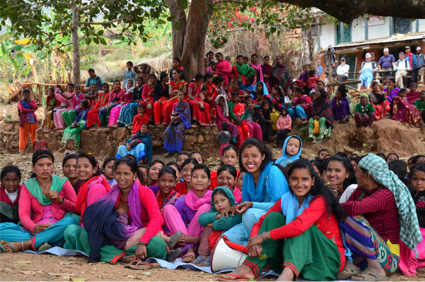
    We have around 70 in the girls group. Quite difficult to work as a team as we wanted to do this time, with the pictures. The day was somewhat chaotic, we made the groups, but the rest was very interesting. From the beginning, we noticed that the tradition, here, has started to change, they agree that is not ok (we are near the area where several deaths have happened). They explain to us that since the last three years there has been a big change, but no girl enters the kitchens… and we have discovered girls sleeping in baskets or in the open.

    We have made the biggest training ever of menstrual cups until now. 45 girls in the same class!

    We made the women group and more than 160 came up (they asked us for money for coming to the classes… as they are used to receive it from the large NGOs…). We told them no. It was a chaos, we were not expecting so many people, we did not have an appropriate place to teach them and in the end we did it in the street. Impossible to pass the videos as we lacked the necessary projector and the sound quality for such an amount of people. Whilst all of us were very happy with the girls group, none of us is with the women group.

    We were expecting around 20 or 25 for the second day, as we said that only the young girls would have a menstrual cup, and in the end (late, as usual) half the ones from the previous day appeared. Quite hectic, too.

    We have 27 cups for girls out from school and young women. The idea was having them paying 50 rupees as first choice, because if they are for free, everybody wants them. In the end, from the 160 women from the first day, of the age we had requested, there were around 35. Many tried to lie dropping down years 🙂 , but that is difficult in this area: at 34 they look like 50. Their life is very hard in this area.

    We wanted to make the training on Friday the 27th but a big storm made us leave it for the following week.

    The poor nurses are hoarse. We have requested a microphone and a loudspeaker like the one for tourist guides, to see if that way they can lower the voice. It is lear that in this area of Mangalsen the groups are very big, so we have to prepare ourselves for the areas of Oligau and Kalagaun. We have asked our “mentors” from Basti, Sunita Damai and Tejana Khanal, that they come with us as “paid volunteers” for the remaining month and a half. They have accepted gladly.

    It would be great to bring with us some local girls that have been using the menstrual cup for over a year!

    Written and photographs, with Fujifilm XT20, © by Clara Go.
    Translation by Tere Salinero

    Now you can contribute for paying one month salary to the nurse, or for some hygiene kit : https://www.gofundme.com/menstrual-cups-in-nepal-chhaupadi

    West Nepal girls need this kind of program. And we need help to continue the project!

    Or if you feel like it, you can donate via bank transfer at: Banc Sabadell IBAN: ES23 0081 0900 8200 0430 1934 BIC: BSABESBB (your recurring donation will help us have a better planning of our budget to carry out the projects undertaken).

    Or take a look others ways to donate at http://beartsy.org/donate/

    Thank You! 🙂

  • 2017- Rato Baltin Pilot Project Impact Evaluation

    2017- Rato Baltin Pilot Project Impact Evaluation

    We hope 2018 has begun with joy and harmony.
    The whole be artsy team has started the year with great enthusiasm, as we have been working hard over the last few months to analyze the data collected during our last trip to assess the impact of the 2017 Rato Baltin project. We have been encouraged by what we have found, and are more committed now than ever in the fight against chhaupadi using sexual education, participatory photography and menstrual cups.

    2017 was a great success!
    You can read about it here:

    Project Impact Evaluation rato baltin 2017 be artsy ngo nepal


    DESCRIPTION

    In West Nepal, the lack of safe sanitary options often results in health problems and school absenteeism. Menstruation is a topic touched by embarrassment, insecurity, and degrading traditions for women like chhaupadi.

    Chhaupadi is characterised by the banishment of women during menstruation from their usual residence, due to supposed ‘impurity’. It has been criticised for violating the basic human rights of women, and for associated physical and mental health impacts. Despite having been outlawed and criminalised, it continues to exist.

    The Rato Baltin Project run by the NGO be artsy is a Menstrual Health Management (MHM) and sexual education program that aims to eradicate this practice. The Project includes girls, boys, women and their communities in its design.Atb eartsy ,webelievethateducationistheonlywaytochangethesedeeplyheldbeliefs.

    The project has a four-tiered approach:

    1. Workshop which provide sex education to both male and female teenagers in local schools of targeted communities
    2. Hygienic education delivered through workshops to all women in targeted communities
    3. Menstrual cups and training provided to volunteer girls attending school in targeted communities
    4. Participatory photography workshops utilised to showcase how girls and women feel about chhaupadi and their periods, and what they would like to change about the experience

    An important component of the Rato Baltin project is the distribution of a healthy and environmentally friendly solution to MHM in rural areas of Nepal: menstrual cups. Ruby Cup, a UK based company, are the manufacturers and donors of this life changing, medical grade silicone menstrual cup of the same name.

    Twice a year, we visit remote villages to distribute menstrual cups and conduct hygiene and sexual education training. We also revisit villages to check in on those who have already received training and a cup to see what (if anything) has changed, and evaluate the results of the program.

    We have already distributed more than 250 menstrual cups to school girls in remote villages. Each girl received a cup and training in how to use it. They are also given a metal bucket (baltin) to prepare clean water, and have somewhere to boil the cup.

    Intended use of the evaluation

    The intended use of the Rato Baltin project evaluation is to measure any changes in the lives of individual participants and communities targeted in the program, and assist in reaching new project donors for be artsy to achieve its aims in::

    • ●  Educating women, girls, boys and communities on sex, biology and HMH practices
    • ●  Reducing school absenteeism of girls in targeted remote communities of West Nepal
    • ●  Providing girls and women with tools to facilitate menstrual dignity
    • ●  Achieving long term project sustainability of the programFocus of the evaluationThe principal focus of the evaluation is to address the question of:

    – What changes have occurred around the practice of chhaupadi in the lives of girls and communities after the implementation our program?

    To ensure the program is based on best practice methodology and lessons learnt, the evaluation also aims to address the questions of:

    1. How culturally accepted and sustained is the use of menstrual cups in the targeted remote communities of West Nepal?
    2. What (if any) aspects of our program can be improved in design and/or implementation?

    Data sources and methodology

    Throughout the 2017 project implementation period, we have conducted monthly telephone follow-up calls with the volunteer menstrual cup users, as well as participating volunteer local teachers and nurses.

    The be artsy Staff Nurse and volunteers have travelled to the targeted communities twice in 2017 to conduct face-to-face follow-up with the girls, in order to measure how implementation of the cup is progressing. During these trips, girls have completed surveys about changes they have experiences around chhaupadi since our first visit, and initial use of the ruby cup. Informal conversations with community members were also used to discern impressions of the use of menstrual cups and the impact of workshop training and education.

    Girls that participated in the survey are users of the donated menstrual cups. However, our program has delivered workshop training and education to more than 1000 people since its commencement, in 4 villages: Basti, Kunti Bandali, Rachuli and Chilkhaya.

    The results

    CHHAUPADI:

    Only 9 girls reported no change in their experience of the chhaupadi tradition after our program. The rest of the Ruby Cup users experienced some changes.

    Some girls reported changes concerned access to food. Indeed, some girls reported they are now allowed to eat vegetables, some can eat fruits, and some can drink milk. A number of girls reported that after participating in our workshops, their mothers allowed them to have a warm blanket in the chhaugot (Hut), while some reported that they now sleep inside the house but in a separate room or space to other members of their family. A few girls reported that since the workshop trainings they are no longer required to participate in the exclusionary practices of chhaupadi, including being able to cook food.

    Girls communicated that because they no longer bleed outside of the body when using the cup, everything is

    cleaner, and both their families and themselves feel more self-confident. They attend school during their cycle, reducing their absenteeism, and actively try to help other girls in things related with menstruation.

    Girls that did not report changes related to chhaupadi have seen their lives improve in other areas:

    “ For me it is a positive experience. In my life this has brought some changes. My blood is not smelly also it is not bleeding out. And going to school is also easy with the cup.” ~ Bhawana Upadhya (Chilkhaya)

    MENSTRUAL CUPS:

    Of the 111 cups distributed between March and June 2017 to school girls in Achcham and Kalikot, 8 were confirmed as non-users. We were unable to personally contact 14 girls, but on their last follow-up call over the phone they reported they were still using their cups. A minimum of 2 of these girls have been married and now reside in India.

    “I am happy that i got the opportunity to use the ruby cup.” ~ Binda B.K. (Rachuli)

    REASONS FOR USING THE CUP:

    • –  No fear of staining clothes
    • –  No feeling that they are menstruating
    • –  They do not have to worry about drying rags
    • –  They do not feel self-conscious of having a bad smell
    • –  It is easier to attend school as they do not need to carry any pads or replacement materials, nor hide anyrubbish
    • –  Nobody knows they are menstruating, so they can engage in regular activities such as touching tapwater
    • –  They feel cleaner than when using traditional methodsREASONS FOR NOT USING THE CUP:
    • –  They are pregnant, but after the baby’s birth they want to begin using it again
    • –  Some reported slight pain/feelings of discomfort
    • –  Having lost it
    • –  Superstitions at home:

    ▪ The house of one of the girls collapsed; a chaman told the family it was due to a bad spirit, and the family was not allowed to reenter. They were forced to leave the house, and in turn left the village. The cup user could not go inside to take their cup. When her family left she had already been married to someone in the village and now resides there. She asked us to provide her with another cup, which we did. She will continue going to school until she finishes grade 10.

    EMERGENT MYTHS:

    • –  A mother from Kunti Bandali communicated that she believes the cup will prevent girls from being raped during their menstruation, both when they are in the chhaugot and when they have to go into the jungle alone
    • –  In Basti, some people were telling users not to use the cup because it might cause cancer when it is inside themWhat the girls think about our program:All girls feel more comfortable with their bodies after our workshop. They understand the biological processes and reasoning for what is happening, and many feel that they are now able to help other girls understand.

      Most of the girls considered their participation in the program to have been a positive experience, and that their lives have changed for the better in using the cup.

      In response to the question of “What would you change about Rato Baltin?”, most girls communicated that they would not change anything. Girls also rated the workshops on a scale of 0 – 10, with 0 being bad and 10 being excellent. Respondents rated the workshops with an average score of 9.

      BUDGET EVALUATION

    Description

    Pr evist Cost

    Total Cost

    Salaries – Local staff

    Rs 243.000,00

    Rs 269.280

    Supplies and workshop resources

    Rs 121.280,00

    Rs 184.967

    Utilities

    Rs 180.000,00

    Rs 299.092

    Transportation

    Rs 227.436,00

    Rs 288.741

    Total NPR

    Rs 771.716,00

    Rs 1.042.080

    Total Euro

    6.710,57 €

    9061,56 €

    General expenses – 10% of total Euro

    671,06 €

    906,15 €

    Grand Total

    7.381,63 €

    9967,71 €

    Exchange Rate: 1 Euro = 115 NPR (Rs)

    The 2017 budget exceeded the initial proposed expenditure by 2,586 Euros. This was the case for several reasons:1.b eartsy receivedanunexpectednewdonationof160menstrualcupsfromRubyCups

    2. This donation led to the doubling of the expected amount of work and needed complementary resources, particularly in terms of the menstrual kits

    3. Difficulty in finding volunteers to travel to West Nepal without financial compensation

    4.TheneedtoprovideKathmandu-basedvolunteerswithfundsfortravelandfoodrelatedto beartsya ctivities

    5. Difficulty in contracting a staff nurse for only three to four months of the year requiring higher than expected remuneration

    Great care was taken to adjust the budget and account for the increase in work and resources required by the unexpected donation, but a substantial increase was unavoidable to deliver the new cups.

    Discussion and plan for the future

    The results of the evaluation lead us to the conclusion that project is working well. Findings from the survey reveal our initial idea that the cups can break the taboos surrounding menstruation and chhaupadi was correct. However, our evaluation of the program also illustrates a need to implement some changes in the future.

    We have seen the need to design a workshop component aimed at the men in targeted communities, in order to holistically disseminate MHM knowledge and education. We will pursue the design of a men’s group workshop to be delivered in 2018.

    To see the full scope of the impact of the project among non-Ruby Cup users in communities, we will design a survey for all girls in participating schools, as well as the participants of the women’s group. This will be implemented in 2018.

    be artsy is also aware of a large gap in the delivery of the program. The menstrual cups donated by Ruby Cup are to be disseminated among girls that attend school, as a way of addressing absenteeism and MHM. However, not every girl in targeted communities are able to attend school. For instance, some girls are married, must stay at home to assist their families with housework, or tend to family owned fields. be artsy will work to make the program and provision of menstrual cups more inclusive of all girls and their contexts. be artsy is considering implementing a chhaupadi and menstrual cup education program on college and university campuses to raise awareness of this issue, and fundraise for this component of the 2018 project. This will require the hiring of one or two persons for the entirety of 2018 to successful and sustainably implement.

    We experienced problems working with our Nepali partner organisation, the Starts Foundation, throughout every stage of the 2017 Pilot Project. These difficulties in communication and delivery of agreed human and material resources rendered the implementation and evaluation phases difficult. Although the 2017 Pilot Project was successful thanks to the hard work of be artsy volunteers and President Clara Garcia Ortes, present in Nepal for 11 months of the year, it is necessary to consider other options to ensure effectiveness and accountability.

    We have been working to establish a strong volunteer team assembled under the banner of a new Nepali NGO. This new Nepali NGO will be named: be artsy Kalaa Shakti Nepal (be artsy, the power of art).

    In conclusion, in August of 2017, the Government of Nepal passed a law that punishes those forcing women to adhere to chhaupadi-mandated exile while menstruating with a fine of 3,000 Nepalese rupees or three months jail-time. Yet we believe that these advances will not have a significant impact on its prevalence. The practice of chhaupadi is strongly embedded in social norms and cultural practices. However, it is a significant step forward in the right direction on the political level, and represents a developing social change in opinion. Combined with programs such as Rato Baltin that address education on the local grassroots level in remote areas where the practice is still prevalent, we believe that there is significant potential for change into the future.

    🙂
    Thank you very much for being with us, we will soon send you exciting news about the 2018 Rato Baltin project.

    —
    The team of be artsy’s volunteers .
    Clara Go

    Now you can contribute for paying one month salary to the nurse, or for some hygiene kits easily from : https://www.gofundme.com/menstrual-cups-in-nepal-chhaupadi

    Or If you feel like it, you can Donate:

    Banc Sabadell
    IBAN: ES23 0081 0900 8200 0430 1934
    BIC: BSABESBB

    NepalYou can follow us on  Facebook or Twitter.
    Thank you for making this possible!

    Written by kristy Davies and Clara Go.
  • Travel log – Preparation of the follow-up trip: holidays do not exist…

    Travel log – Preparation of the follow-up trip: holidays do not exist…

    By the end of June, after our trip back from Kalikot, I was impatient, for September to arrive and go back to Achham and Kalikot to check on the results.

    Each time we return to the villages, the accumulated tiredness there, and all the things I have seen and experienced do take their toll. Many times I feel depressed because I can’t do more, physically exhausted and thinking in all the work that still remains to be done.

    This time, I decided that I would take 10 or 15 days to lay back. That afterwards I would write and prepare the pictures and that I would have a quiet month of August, a quasi-holidays period. To remain at home, at rest during the rainy season. I rented a room in a guesthouse (a cheap one) in Patan, as I wanted to try if I would like to live in that area, full of expats and maybe with more connections and means for the NGO, and in my first night there I called a friend from the Putali Nepal NGO and fixed with her going to a concert, where we talked about work and our trip all the time! 🙂

    But, from the following day, yes: about ten days doing “practically” nothing. Then we start doing the follow-up of the girls via the telephone, and with the little money we had I started preparing the trip for September. Susmila, our first nurse, recovered from her surgery, was ready to come with me to Achham and Kalikot and that was the plan. To go both of us by ourselves just to do the follow-up. I wrote to Ruby Cup to tell them how things had been. I told them that we had a waiting list of 140 girls and they offered a new donation of 160 units. I jumped for joy! The girls would have their cups this year! I had told them that I could not promise anything, but that we would try to have them for spring and it happens that we would have them way before! Great!

    Ah! But wait… my happiness was short-lasted: 160 cups, that would be 160 buckets, and soaps and towels and more people to carry all… My quiet August had just gone up in smoke! Now to get money to buy all the materials! Furthermore, as if we didn’t have enough to do, we decided to buy cups to Ruby Cup to sell them here. That way we could offer here the promotion “Buy one and we will donate one for free to a girl in need”.

    The idea is to be able to give cups to those girls of 13, 14, 15, 18 years, who can’t go to school because they are too poor to pay the 300 rupee that cost the school every month, or because they were pushed to marry or they have children.

    So the whole of August and the most part of September was even more stressful than the first phase, but with the selling of cups we made contacts, we met wonderful people and we have big hopes.

    Nothing comes for free in this life, it is needed to fight hard to get anything and that’s what we did, and what we are doing. Working hard to be able to improve the quality of life of those girls who suffer the terrible tradition of the Chhaupadi, and little by little to create awareness about in those remote places in West Nepal.

    Thus arrived the 22nd of September and we went out charged with buckets, cups and materials, towards West Nepal, this time with an expedition fully made up of women! 🙂

    We will be back soon with more!

    Written, and photos with Fujifilm XT20, © by Clara Go.


    Now you can contribute for paying one month salary to the nurse, or for some hygiene kit : https://www.gofundme.com/menstrual-cups-in-nepal-chhaupadi

    Written by Clara Go. Translation by Tere Salinero

    West Nepal girls need this kind of program. And we need help to continue the project!

    Or if you feel like it, you can donate via bank transfer at: Banc Sabadell IBAN: ES23 0081 0900 8200 0430 1934 BIC: BSABESBB (your recurring donation will help us have a better planning of our budget to carry out the projects undertaken).

    Or take a look others ways to donate at http://beartsy.org/donate/

    Thank You! 🙂


  • Travel log – Women’s group in Chilkhaya

    Travel log – Women’s group in Chilkhaya

    21-8-17. Because in as Rachuli we couldn’t work  with the  group of women, here, in chilkhaya I didn’t accepted a no as answer, and i propose to do it,  even if it was only for 2 days and  at the the time that they wanted, and they accepted.

    It was not very numerous, because it was a really work time for women, it was the rise planting moment,  but it was very interesting, we were talking about measures of menstrual health and we were astonished to see the hight number of girls of 14, 15, 16 years that came to this group, ie, they were not in school.

    Just as in Rachuli we realized the need to make a group of men the next time we go to teach the full progra, (from April) Here we realized the need to get menstrual cups for these girls not schooled

    It is very hard to see that because parents do not have money to continue studying and/or they got married, they are not entitled to the same sexual hygiene as the others. They sleep in the stables of the cows like the others, they do not have access to the water like the others …. there is no right that we give menstrual cups to the girls who are lucky to study, and to those who do not have this luck, the we punished without a cup. Remember that the donations we got from ruby cup are only for school girls, to keep girls in school.

    And It is for this reason that we have launched a new part of the project. We want to get “extra” money to give these women menstrual cups, too.

    We are selling menstrual cups in Kathmandu for next year to be able to distribute menstrual cups among the youngest girls in the women’s group, and besides, we have already launched a crowdfunding so that whoever wants to collaborate in the continuity of the project can do it already and whenever they want .

    Thank you! 🙂

    Written, and photos with Fujifilm XT20, © by Clara Go. Correction by Phumzile Mpofu

    West Nepal girls need this kind of program. And we need help to continue the project!

    Now you can contribute for paying one month salary to the nurse, or for some hygiene kit : https://www.gofundme.com/menstrual-cups-in-nepal-chhaupadi

    Or if you feel like it, you can donate via bank transfer at: Banc Sabadell IBAN: ES23 0081 0900 8200 0430 1934 BIC: BSABESBB (your recurring donation will help us have a better planning of our budget to carry out the projects undertaken).

    Or take a look others ways to donate at http://beartsy.org/donate/

    Thank You! 🙂

  • Travel log –  Group of girls and Ruby cup training in Chilkhaya (Kalikot)

    Travel log – Group of girls and Ruby cup training in Chilkhaya (Kalikot)

    If at all anywhere, we had a list of girls who wanted menstrual cups, from way back, it has been in Chilkhaya.
    As we explained in the last article, the classes were a minimum of 70 participants, the majority of these being girls. In this case though, each day we had a minimum of 100 participants. We were never able to write down all the participants in the register, as they was never enough time in the one hour.

    In this village, we clearly saw, more than in any other place, the great power of the high castes above those considered to be of the lower castes. Girls from the higher castes were always at the top of the lists, while the lower caste girls, would not approach until the higher caste group was finished.

    The raffle system was absolutely necessary and we chose the class with the most boys to do it. The boys were pulling out numbers not knowing who or what they were choosing. Luck made few girls of that class have a menstrual cup, but at least they saw that the system was totally clear, and they are on the waiting list.

    The training was held at the health post, where we were able to boil the Menstrual Cups easily as they was gas to use. Anuja, the nurse, thanked it, in Rachuli had a really bad time with the smoke!

    Written, and photos, © by Clara Go. Correction by Phumzile Mpofu

    Now you can contribute for paying one month salary to the nurse, or for some hygiene kit : https://www.gofundme.com/menstrual-cups-in-nepal-chhaupadi

    West Nepal girls need this kind of program. And we need help to continue the project!

    Or if you feel like it, you can donate via bank transfer at: Banc Sabadell IBAN: ES23 0081 0900 8200 0430 1934 BIC: BSABESBB (your recurring donation will help us have a better planning of our budget to carry out the projects undertaken).

    Or take a look others ways to donate at http://beartsy.org/donate/

    Thank You! 🙂


  • Travel log – #RatoBaltin at the Chilkhaya school

    Travel log – #RatoBaltin at the Chilkhaya school

    20-7-17

    During the 10 days we have been in Chilkhaya, what has surprised us most is the number of students attending the secondary school  (from class 6 to 10).


    We attended classes with 70 students, “luckily” missing 70 or 80 more. That is, the list of students for these classes was up to 140, 150. Yet the classrooms are not big enough to accommodate all of the students if they happen to all attend class together.

    As are came at the rice planting time, many children do not go to school and instead work in the fields.

    Another thing that has surprised us about the school is that it is probably the best organized we have found so far. It looks clean, and it is easy to see that they have organised every detail. The teachers have helped us a lot, even taking notes of our classes so they can continue them when we are not there. I wish all schools were like this.

    One factor that we have not managed to schedule properly is the “extra” time for girls. Some days they ask us to hold the sessions at the school during school hours, but on others they request us to do it in the health post after school.

    However, everything has went very well and everyone was very happy to have us there.

    On our last day we had a nice homage, and received touching farewell speeches.

    They are already waiting for us to return!

    Now you can contribute for paying one month salary to the nurse, or for some hygiene kit : https://www.gofundme.com/menstrual-cups-in-nepal-chhaupadi

    Written by Clara Go. Correction by Kristy Davies

    West Nepal girls need this kind of program. And we need help to continue the project!

    Or if you feel like it, you can donate via bank transfer at: Banc Sabadell IBAN: ES23 0081 0900 8200 0430 1934 BIC: BSABESBB (your recurring donation will help us have a better planning of our budget to carry out the projects undertaken).

    Or take a look others ways to donate at http://beartsy.org/donate/

    Thank You! 🙂


  • Travel Log – Chilkhaya

    Travel Log – Chilkhaya

    10-6-17. 

    Moving 4 personal rucksacks, 2 suitcases full of materials, 1 bag of cameras and 23 metallic buckets from one village to another in these remote areas can be really complicated! From Rachuli to Cnilkhaya, according to Googlemaps, there are just 9 km. and a slope of 400 m.

    First we had to get somebody to help us bring everything down to the road (30’ downwards, between rice fields and small creeks): 3 alumni from class 10 gave us a hand. Then, we waited for a bus to pass by, with room enough to accommodate us and our junk. We were, once more, lucky, and half an hour later we were on a bus towards Chilkhaya. The bus left us in Galje and there we ate, and contracted two carriers who, to our surprise, could haul all our baggage and resources. Supposedly we needed three people, but they could not find a third one.    

    We started then our way to the village.

    Depending on who you would ask, they said it was an hour walk, or that it would be 3 hours and a half… (this is Nepal… Nobody knows…). We were quite made up to the idea that we would walk for at least 5 hours. The route was really pretty. Kalikot is full of hills from which water sprouts everywhere. And full of fruit trees and paddy fields. We went up and down the hills, stopping to chat with the girls we found along the way, and to eat plums and drink water, taking it really easy, for more than 5 hours.

    On arrival, we popped in to the Health Centre, who were already aware that we were coming, also passed by to say hello to the headmaster of the school, and went to the place which would be our home for the next 10-12 days. The feeling when arriving to that village, located amongst green terraces, was of like being in a dream. The curiosity we arose in the people, the questions, the smiles… The doubts of what would this village hide behind their façades. A while before getting there we had been already hearing music from drums. A child had been born (a male) and they were celebrating. This country will never cease amazing me.

    What we did not know is that he would be the first of 4 children (all male) who would be born during our stay in the village; the second day another was given birth, we saw the kind of rudimentary stretcher they had prepared to carry the midwife to the Health Centre, the woman in pain, in the middle of all the people celebrating the birth of the child.

    And it pained us particularly to know that that woman, together with her newborn, would pass the following 7 days in the stable. If she would have given birth to a baby girl, it would have been 10 days. That’s the Chhaupadi, this matter that impels us to continue with our educational work. So these kind of injustices and violations of the most basic women rights stop happening.


    Written by Clara Go. Photos done with FUJIFILM X-Pro1 © Clara Go.
    Translated to English by Tere Salinero.

    West Nepal girls need this kind of program. And we need help to continue the project!

    Now you can donate for paying one month salary to the nurse, or for some hygiene kit or for the menstrual cup control in September: http://beartsy.org/get-involved-with-rato-baltin

    We also have opened a funding help line at http://www.gofundme.com/menstrual-cups-in-nepal-chhaupadi

    Or If you feel like it, you can donate via bank transfer at: Banc Sabadell IBAN: ES23 0081 0900 8200 0430 1934 BIC: BSABESBB (your recurring donation will help us have a better planning of our budget to carry out the projects undertaken).

    Or take a look to others ways to donate in http://beartsy.org/donate/

    Thank You! 🙂

  • Travel log – Chhaupadi in Rachuli – Kalikot – Karnali Zone – Nepal

    Travel log – Chhaupadi in Rachuli – Kalikot – Karnali Zone – Nepal

    Photographies made by the students of the participatory photography workshop #breakthesilence © of each student.

    7-6-2017

    We have not yet found in Kalikot anybody referring to the tradition using this name, they call it “Chuii” “Chuiigoath” or “Chuiighar”. But as to existing, it does exist the same. Maybe the conditions seem better (in Rachuli, so do they think), because depending of the houses the women are in a separate “room”, on the lower floor. But it is usually an old cowshed without door or any safety measures. Some dispose of a bed, but those are the chosen few. The most usual is that they sleep in the shed on straw, next to buffalos and cows.

    Kalikot is very different to Achcham, Karmali Zone is full of men, it is not like in Achcham where most of the men head of the families work in India. Here they work at home, and the traditions regarding the women are kept by them. Male chauvinism is even more present and noticeable than in Achcham.

    We have held several conversations with fathers who said that they didn’t like what we were doing at the schools. That to explain that the girls, during their period, have to eat better and not to deprive themselves from dairy products, was against what the gods wanted and was absolutely no good.

    At school we tried to teach class without giving out our opinion. When they explain that they don’t like going to the shed, the maximum we do is to have them thinking hard about what would happen if they wouldn’t. The ideal is that they reach the conclusion themselves that this, is a superstition.

    What we actually did talk about in class is women’s rights, equality, of how not to let them enter a temple, for example, is a breach of human rights, as they are not allowed the freedom of worship and religion that men do enjoy.

    The sensation remaining from Rachuli is that we have not been able to go deeper in this matter in this villaje. We haven’t been able to form a group of women, just the one of girls, because of the high amount of work they have at this time of the year, and we have got it clear that there are many things that the girls ignore.

    In our next visit, we know that we have to do better. Now we know how the Karnali Zone works. It is clearer that, apart from the women and girls groups, we have to speak with the men. Would it be folly to prepare a workshop for them? Something to think about. Tomorrow, on our way to Chilkhaya! 🙂

    Written by Clara Go. Photographies made by the students of the participatory photography workshop #breakthesilence © of each student.
    Translated to English by Tere Salinero

    West Nepal girls need this kind of program. And we need help to continue the project!

    Now you can donate for paying one month salary to the nurse, or for some hygiene kit or for the menstrual cup control in September: http://beartsy.org/get-involved-with-rato-baltin

    Or If you feel like it, you can donate via bank transfer at: Banc Sabadell IBAN: ES23 0081 0900 8200 0430 1934 BIC: BSABESBB (your recurring donation will help us have a better planning of our budget to carry out the projects undertaken).

    Or take a look to others ways to donate in http://beartsy.org/donate/

    Thank You! 🙂


  • Life experience

    Life experience

    Writing and Photos © por Alba Parrado Puente, Spanish Nurse and Midwife, Volunteer of be artsy in Achcham.

    From one of the most chaotic Indian cities (Varanasí)  to one of the most peaceful little villages in Nepal there are around 800 km. and a four days journey by local bus, a bus as hellish as enjoyable.

    Crossing hundreds of small villages, looking through the window, sharing seats with several local people, exchanging smiles, listening to raucous and happy music, smelling a varied range or everything, tasting the dust… you can really approach to this country.

    Basti is the first village we have chosen and the one with which we want to collaborate. Basti means “city” or a similar concept in Nepalese. It is a magical place in the mountain chain of the HImalayas that not even the roads do reach… Not even the infamous Coca-Cola!

    This valley, only accesible on foot, counts with hundreds or thousands of farming terraces that picture a telltale landscape.

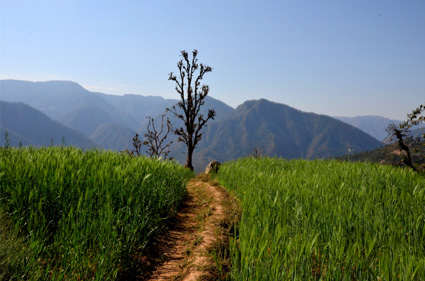
    A pure and far away place apart from progress and globalization, one of the thousands that exist here in Nepal.

    This area particularly, the Far-West,  is one of the most rural, both for being of difficult access as well as for the lack of tourists, and thanks to that it still keeps is essence.

    We don’t know exactly how many inhabitants does the village have, but we know that it is divided in 9 “bastis” or groups of dwellings that are scattered (like all villages in Nepal) and that around 150 boys and girls do assist to school, from which the main majority must walk approximately three hours to get there, as they live in those shacks you can spot far away, in the mountains…

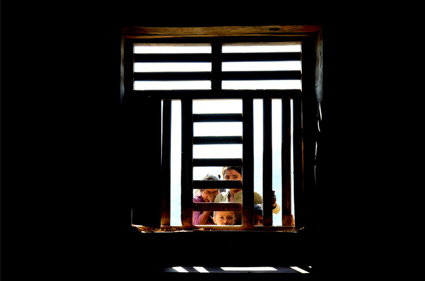
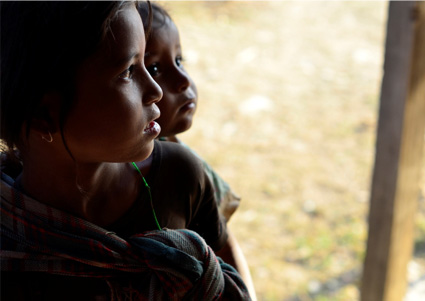
    Of the children that don’t come to school and who we see daily taking care of the goats or carriying around their younger siblings, peering curiously through the wooden windows of the class, nobody spokes, nor do they know about the percentage they suppose.

    The Government grants a financial support of 300 rupees a year (around 3 euro) to promote their assistance to school, but that does not seem to be very effective, maybe due to the petty amount that really is.
    When you accommodate to their lifestyle, eat what they eat (which is exactly the same every day, dalbat – lentils with rice -, takari – vegetables – and chapati – bread/flattened dough -), take a shower in the village fountain fully dressed (to wash it at the same time) the four hours a day that there is water, sleep like they sleep (to 4 people in frigging wooden planks!), learn to wipe your bottom without toilet paper (white gold for me from now on) and clean your nose just blowing out (like when you are in the shower), you realize the quantity of water we waste and all the things we don’t really need. And you think even harder about all the distractions and excess information, all the adverts and consumerism we just swallow without being aware. You start to surprise yourself by thinking that the three trousers and sweatshirts you carry in your backpack are even too much!

    Without really knowing what we would find in this new adventure, we came up here, six people (3 Nepalese and 3 foreigners).

    Asking for the nurse, the teachers and groups of women, we started little by little knowing the villagers. It was a nice surprise to see how do the women organize themselves here and see that apart from getting up a 4 in the morning, cook, take care of the children, and work hard chipping and carrying stones, they also allocate some of their time to share their worries and to improve their lives. This has no other name: they are SUPERWOMEN! (Point that I consider important for it is incredible: it is more than 50 kg. what they carry, and they bear it on their heads!!).
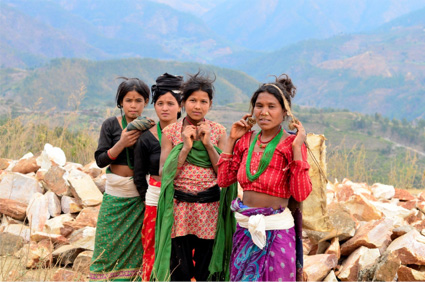
    They have also created a group of volunteers that help in the health care area and they were always open to share.

    As we could see by ourselves, the few men around (most of them are working in India) just play cards and get as drunk as possible with roxy (a Nepalese spirits). Here they do not punch but they cut! Why must it be that the women give all the money they earn to them?

    One of the details that most strikes me is that the life expectancy of the women in this region is of around 52 years, lower than the men, contrary to most countries. The day I decided to share with them the recipe for the Spanish omelette and went to cook, I started to cry. Because the smoke that the sticks they used to heat up the saucepan produced was really awful. The room they use as kitchen-lounge-bedroom has not ventilation… Now I understand that the first cause of death at such early ages is breathing problems!

    I think that the people here quickly understood why we were there, although we only spoke about sex education and critical photography. This eased that they would open up to us to share what they felt about their menstruation, the Chhaupadi and what this tradition means for them, without us having to bring up the subject.

    Our intention has always been to come and give information and resources that would enable the girls and women to empower themselves in their decisions, and not to impart precooked and westernized ideas about anything, as incomprehensible their customs may seem to us.

    In a world where most of the ONGs are bought, because the grants and financing come from international companies with very specific financial interests, where it does not mind what are you going for, but the fact that you do go… where people are not important, but the figures, and where they believe that progress, such as we understand it, must be brought to every corner of the planet. In a world where the human being has fallen so many times into the error of subduing the local population and destroying its customs and where we are still doing the same.  In a world where the commercial spirit prevails and where material success is the main moral standard, there should not really be ground for finding it surprising that the human relationships follow the same exchange frame that rules the assets and work market. In such a world, we have to tread very carefully not to fall in the trap and create colonisations of the XXI century,  because, despite the best of intentions, this can happen.

    Class with the teenagers were much better than we imagined, although I must say that with a translator, they seem a bit awkard. This about the language barrier, is a real challenge! It is one of the things that most frustrated us, because the trust we created or wanted to create was very limited. But it also had good things, like Nepalese nurses, without experience in this field, learning to trust in themselves and to love teaching as a basic pillar.
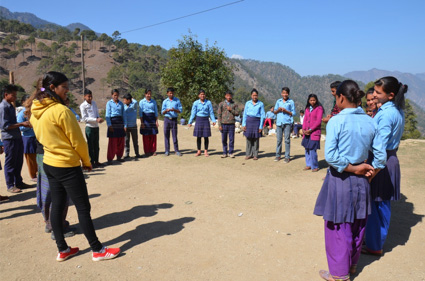
    Despite certain limitations, the women and girls could elaborate telling about their experiences with the Chhaupadi; how are they forced to sleep outside their homes when they have their period, from barns without a door in the best of cases, to corners covered with a bit of straw. How they have to undertake the works entailing more physical effort (as they cannot work in the kitchen during those days). How they are handed over the water because they are not allowed to take it themselves. How are they deprived of some food or of going to sacred places and temples.
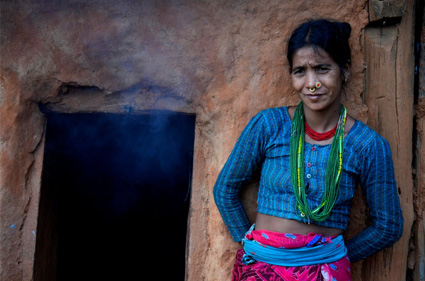
    The girls at school used to say that they did not like doing all that and that they did not want to continue and the boys said that they did not believe that anything bad would happen if they didn’t. The women said that they were all for leaving this practice… And… then? Where is the problem? Society and the old guard (usually called grandmothers) seem to be the main reason, as the men don’t seem to have nothing to do with it. Maybe the next generation would never live this and they may only hear old stories about a tradition already fallen into oblivion. That only depends on the women themselves.
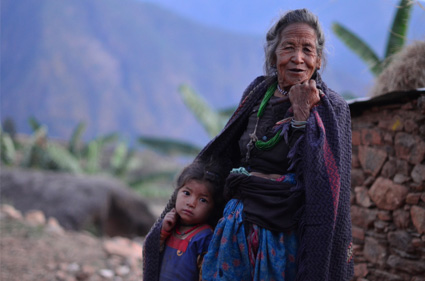
    On evening they took us to visit some of these “Chhau houses” and it surprised us to see how some of them would pose for a picture, as if doing the real thing. Apparently somebody else before us had been there to make a photograpic report about this… Now I understand how some journalists do to “catch” this crucial scenes! But, what about the women? Why would they do something like this? Do they want the outside world to know about this?

    On Women’s Day we thought about doing some event. We were very surprised when we asked and they said that they already had a program. And even more when we saw dozens of them shouting in the “village square”: We don’t want more Chhaupadi! We don’t want more violence! In the midst of it, amongs them, we spent the whole day… I don’t know very well how did we understand each other because we barely speak a couple of works in Nepalese, but the thing is that we became really excited and we danced with them, supporting them in their claims.
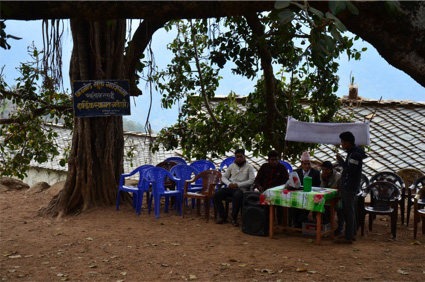
    The Government prohibited the Chhaupadi in 2005 and since then till now they have been going around the villages doing seminars and putting up signs in the “squares” that say: “Village free from Chhaupadi”, although this practice is still on in some areas in Nepal. On another hand, I thought that it was done in some very specific places, but judging by some Nepalese women from different districts with whom I have spoken, they have told me their personal experience from when they had their first periods. They were closed up in a room wihtout light for seven days, with just enough to eat and drink. Apart from may other beliefs, like that if they eat bananas during that time they became barren. And if you think about it, this last part, it is not that different from the beliefs in Spain at the time of my grandmother, when you should not water the plants or prepare certain meals.
    The last day in Basti was intense… the nurses that are usually in each “health point” had left the village and we not only had one “accident” but two. Between blood and sweat, without gloves or dressings, we stiched the finger of one of the most strong women I have ever met. I had never seen anything like it and I wish we had had a hospital nearby with a real surgeon… but here there was no other option. A little later they came searching for us because a small child had been hit in the head with a stone… here the difficult part was to stich the wound in the middle of all the screams and cries, dirty blankets and smoke, inside a small mud hut and with 12 women or so around. When we were done and we went to bed, Alba and me we held hands and then was when we gave ourselves permission to express everything. It is not only the fact of living a stressful situation like that one, for me it was more to think what would these people have done or what is it what they usually do when they are in this situation. Going to the nearest hospital means at least 6 hours walking and clearly it is not an option for the majority from a financial point of view.


    Kunti Bandali was the second village we went to. I could not say why, but when I arrived I felt that something very different to Basti was expecting us. Looking closely, I understood what the reason was: the place where we were staying, more than a village, is a bazaar-village-road (although I would say more path than road), where lived mostly men whose main objective was to keep an optimum level of alcohol in their blood, and some women and children ou of school who do what the men should be doing… an atmosphere where you can see, hear, smell and even touch this reality is difficult to digest.

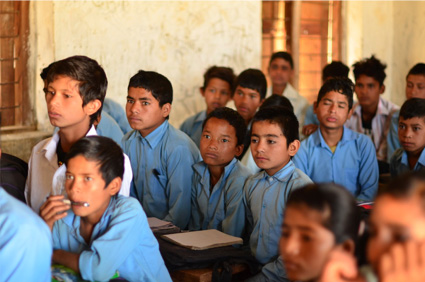
    In this school, the classes flowed in a totally different manner from each other, so our improvisation habilities were really tested. From interactive classes and open to discussion to classes where passivity and indiference ruled. Where they would speak about their menstruation freely and where they would not even mention it despite our efforts.

    We found out that Unicef had been here the previous year teaching about the VIH (as this region quite suffers its effects) and about contraceptive methods. They had the knowledge that it is passed by maintaning sexual relationships but they had no idea what sexuality is or what is a relationship, much less about using a condom. All our classes were based on the expression of the feelings and emotions that the growing into adulthood provokes in them, and the importance of expressing ourselves and having a good communication.
    The meetings with the women were not easy mainly for two reasons.

    When Unicef and other big ONGs came to this place, they paid for each session to each woman a certain amount of money so all of them would assist. Maybe to increase their statistics, not minding if the women were or not interested or maybe just so they would leave their hard work and would attend. We were not going to do the same.

    On another hand, contrary to Basti, they are more entrenched with the Chhaupadi and they are not in the way of changing, so the dialogue was little to that regard. It is curious to see the two faces of the coin and more curious still that the village more in touch with the rest of the world and with more options to information, is the one who more wishes to stay as it is.

    The menstrual cup offered to girls and women of both villages I think was well received. We believe that when the whole family lives in the same space, where they also undertake all the daily activities, the problem of menstruating without having more than a dirty cloth as sanitary pad, can be the reason why, nowadays, they still sleep outside the house. In any case, that quality of life that they can have for one week a month and that the cup can give, is simply great, as it was in my case in the case of many other.

    Regarding the picture part as the way of expressing themselves before their families and their community, did seem to me a very useful tool and with which, in some way, they could get rid of their inhibitions and enjoy themselves.

    From my point of view, we have been too little time in each village, as when we started to build confidence and to became part of their lives, we just went away. And that has not allowed us to take the maximum advantage of what both us and the others had to offer.


    Many people tells me that it is brilliant that I come and help and that I am caring and altruist… but it is not as the majority sees it. In my opinion, when you give, you also receive, and all the people who do this kind of thing is because it gives them something, even if only because they can just learn something else about the world, because it goes with their principles or for their personal growth.

    What I know is that I learn, learn and learn to unlearn, to not judge anything, to love…

    The way of travelling has changed for me or, better said, has changed me, allowing  me to see the light more clearly, what I am and I have always been. Like the song from the Nepalese Hymn that all the children must sing every morning says: “We are from the East or the West, from different casts or races, but we are all equal and part of the same, connected we are part of a precious necklace”. (I must say that I frowned at the “streching exercises” that they do in the rows before singing the hymn, as to my eyes it looked like a military service, but must also say that after knowing its meaning, my “eyesight” became more tolerant).

    For all this, to go visiting monuments, restaurants or markets full of tourists, now seems too little and uncomplete, as if you only get to that when you travel, you lose the spirit of the place, its culture, its people… and with that the comprehension and the understanding of what is around you wherever you go. The wonders you find when you look closely is not a passive action, however, it requests that we leave out our own learnings not to fall into the error of judging instead of loving.

    To have the opportunity to be here, drinking from this culture, earning in life experiences, is something that money can’t pay, indispensable and unique.

    Maybe this is not for everybody, but it sure is for me. Do travel! Follow up roads, paths and mountains! Do have a bath in sacred rivers, salt lakes, thermal waters and coral reefs.

    Do tastes and, dust and earth!

    Do climb the highest and most beautiful mountains and go down the deepest and unexplored seas!

    Do not judge! Break your limits! Love! Dream! Fly!


    West Nepal girls need this kind of program. And we need help to continue the project!

    Now you can donate for paying one month salary to the nurse, or for some hygiene kit or for the menstrual cup control in September: http://beartsy.org/get-involved-with-rato-baltin

    Or If you feel like it, you can donate via bank transfer at: Banc Sabadell IBAN: ES23 0081 0900 8200 0430 1934 BIC: BSABESBB (your recurring donation will help us have a better planning of our budget to carry out the projects undertaken).

    Or take a look others ways to donate in http://beartsy.org/donate/

    Thank You! 🙂

    Translated to English by Tere Salinero
  • Travel log – We just started #BreakTheSilence – Participatory Photography

    Travel log – We just started #BreakTheSilence – Participatory Photography

    31-5-2017.

    We already have the first results form our participatory photography workshops. Seeing how girls start freeing themselves and start explaining things through photography is exciting. The first thing that surprised us was that most of them are convinced to follow the tradition. There are few Chhaupadi huts here, most girls sleep in the cowshed or in “rooms” on the ground floor of their homes. Most don’t have a door or any safety measure, as well as all the inconvenience of Chhaupadi in Achcham. The weather is probably colder than in Achcham, it is windy, and there is water everywhere.

    Nobody has told us yet that they do it because of social pressure, which is what we were told in Achcham. Here, it really looks like they do it because of their faith. During the workshops, they spoke about “impure” blood, but they do not mention the word Chhaupadi or Chhau. They do use the word Got, but not Chhaugot, they only call it Got.

    We think it will be even more difficult to deal with the issue here. Luckily, this time we will spend longer in each town, and so far we are establishing a very beautiful relationship with girls and women. They are all very interested. Yesterday, some women who were around joined the lessons, and today we had more than 60 girls at the workshop for over 11-year-olds we do after school – this, even though it was the day they were sorting the grain from the hay! It is a day when boys work in the morning and girls help out in the afternoon (even though it is the women the ones who sow and harvest the grain).
    Let’s bear in mind that it is one of the areas in Nepal where malnutrition is highest – and, therefore, has one of the highest rates of infant mortality. They mainly live off agriculture. Now is the season for harvesting wheat, and we are witnessing how everything is done manually. This makes me think of my grandma telling me what granaries and plots were for in country houses. Here I am seeing how everyone works in the plots.

    We are hoping to find out more in the next few days, and manage to sow the seed of doubt regarding superstitions. Today we also introduced the menstrual cups and have told them we have a few for a pilot project. They are all very interested in it. I think tomorrow morning we will have a long queue to sign up on the list. The ones who do not get one will be registered in the waiting list for next time. K Garne? 😉

    Written by Clara Go. Photos done with FUJIFILM X-Pro1 © Clara Go
    Translated to English by Alba Miquel

    West Nepal girls need this kind of program. And we need help to continue the project!

    Now you can donate for paying one month salary to the nurse, or for some hygiene kit or for the menstrual cup control in September: http://beartsy.org/get-involved-with-rato-baltin

    Or If you feel like it, you can donate via bank transfer at: Banc Sabadell IBAN: ES23 0081 0900 8200 0430 1934 BIC: BSABESBB (your recurring donation will help us have a better planning of our budget to carry out the projects undertaken).

    Or take a look others ways to donate in http://beartsy.org/donate/

    Thank You! 🙂