Tag: Rato Baltin

  • Project Proposal for 2019

    Project Proposal for 2019

    In 2005 the Government of Nepal declared the practice of Chhaupadi illegal, and since 2018 has been considered a criminal offence with explicit consequences. However, there are places where belief in the tradition is stronger than that of the law.

    The risk of sexual exploitation through Chhaupadi in Western Nepal is still therefore present, but thanks to organisations such as be artsy this is beginning to change. Be artsy conducts a sex education project that tackles ideas behind the tradition which discriminates against and ostracizes women during their periods, leading to subhuman conditions and or death.


    Project Proposal for 2019


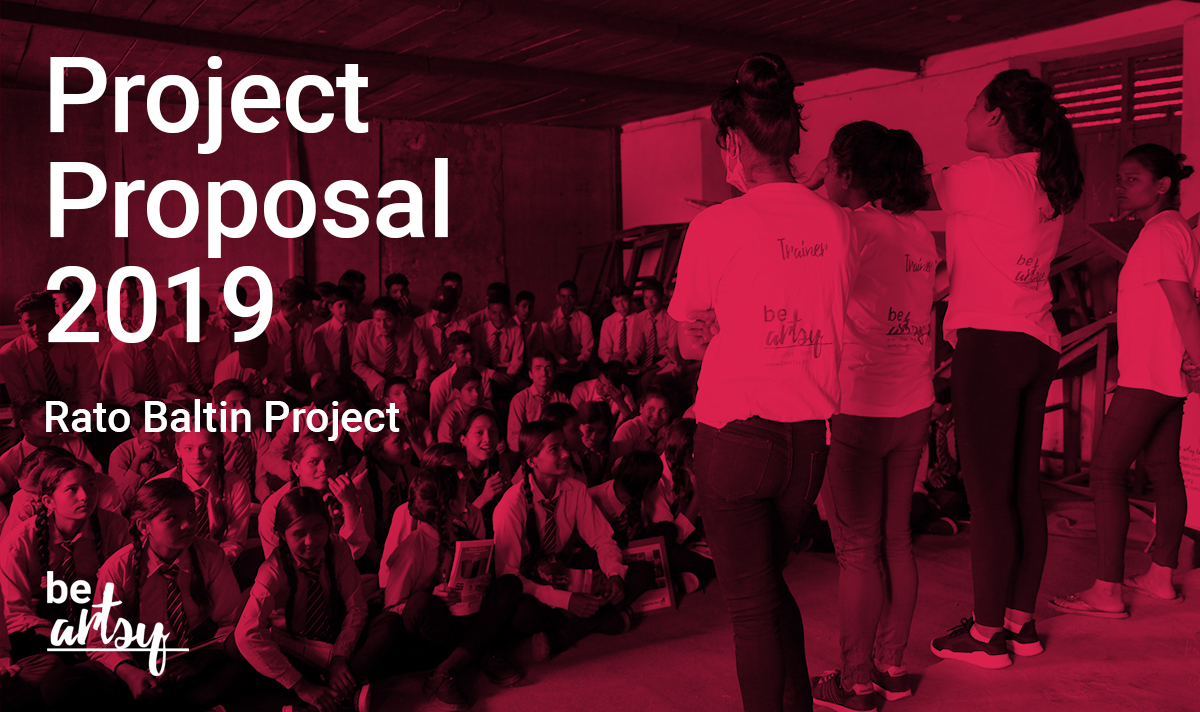
    Throughout 2019, be artsy will work in Accham with Samabikas Nepal, a local NGO, to execute the Rato Baltin (Red Bucket) project in stages. These stages range from training adolescents in sex education, conducting participative photography workshops, and disseminating 3,000 menstrual cups donated by Ruby Cup. We hope our work and commitment to training local staff in 2019 will result in Nepalese women leading the project in 2020, and into the future.

    You can read the whole project here: https://beartsy.org/wp-content/uploads/2018/12/2019-project-plan-EN.pdf

    Written by Maria Isabel García Marques, corrected by Kristy Davis.

    West Nepal girls need this kind of program. And we need help to continue the project!

    Paypal recurring donations:

    Select a Donation Option (EUR)

    Enter Donation Amount (EUR)

    Or if you feel like it, you can donate via bank transfer at: Banc Sabadell IBAN: ES23 0081 0900 8200 0430 1934 BIC: BSABESBB (your recurring donation will help us have a better planning of our budget to carry out the projects undertaken).

    Or take a look to others ways to donate at http://beartsy.org/get-involved-with-rato-baltin/   or https://beartsy.org/become-an-associate/
    Thank You! 🙂

  • 2018 Rato Baltin Project Financial Report

    2018 Rato Baltin Project Financial Report

    We’ve come to an end of another year and it’s time to properly thank the people who have helped make it a memorable year.

    Our project began with the simple idea of providing basics to a woman during her menstrual period. In Nepal’s context, it is a topic that has long needed to be addressed, a subject considered taboo, but in today’s modern world need not be. It is time for change.

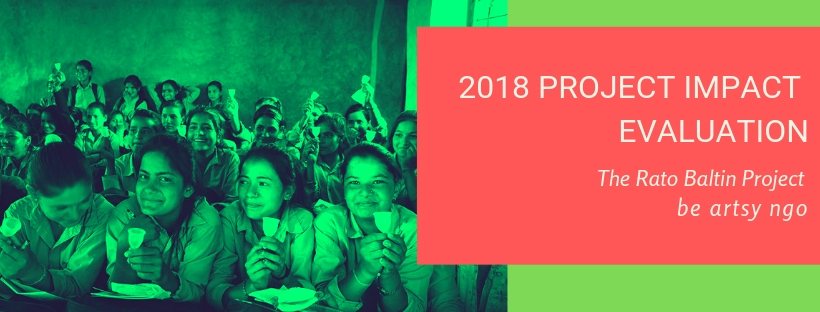
    Our project has focused on breaking down long held taboos, raising awareness about the subject, empowering the women of West Nepal, and offering real solutions. In 2018 we provided 321 Ruby cups to women and our journey is far from over!

    But first, to our donors and volunteers we would like to thank you from the depths of our heart for helping to drive positive change! Your support has been critical. You can read here the report 2018.

    Times are changing and there is no place in today’s modern world for taboos around menstruation to continue. With your continued support we will continue with our important work.

    Written by Akash Thapa, corrected by Monica Parekh

    Budget evaluation

    Description

    Estimate Cost

    Total Cost

    Salaries – Local staff

    Rs 462.000

    Rs 588.576

    Supplies and workshop resources + cups for women

    Rs 340.650

    Rs 589.934,84

    Utilities, bureaucracy + food and accommodation

    Rs 660.060

    Rs 822.951,5

    Transportation

    Rs 290.000

    Rs 323.450

    Total NPR

    Rs 1.753.250

    Rs 2.324.912,34

    Total Euro

    15.246 €

    €18.306,39

    General expenses – 10% of total Euro

    1524 €

    €1830

    Grand Total

    16.770 €

    € 20.136,39

    Exchange Rate: 1 Euro = 115 NPR (Rs)

    Exchange Rate: 1 Euro = 127 NPR (Rs)


    The 2018 budget exceeded the initial proposed expenditure by 3366,39 Euros. With a stronger than expected Euro – NPR exchange rate, which had been estimated based on the year previous, we exchanged at a rate of 127 in place of 115. If the exchange rate had stayed at 115, we would have instead exceeded the budget by 6000€ or more!

    There were four reasons for exceeding the budget to such an extent

    1 – In the first trip, we had seen the need for two nurses in place of one. Moreover, the school groups we were interacting with were large and quite difficult to manage at our then capacity. We therefore hired two older cup users as local mentors to assist the nurses.

    2 – The September follow up trip was more expensive than foreseen. As we showcased a film in the villages, we we had to buy fruits, sweets, and tea (in some case ‘iogurg’ to make banana lassi) for the communities, so that they would come to see the film and participate happily after not being present for so long.

    3 – When we saw that the Kathmandu nurses did not want to go back to Achham, no matter how much we had been paying, we decided to invest in a special training for six new Achhami trainers and six mentors. A menstrual therapist travelled from Spain to teach a more open minded way of seeing menstruation to the new trainers.

    4 – We spent more that we wanted to in official paperwork and administration in Nepal, due to the requirements of the Social Welfare Council (SJW) laws and guarantees.


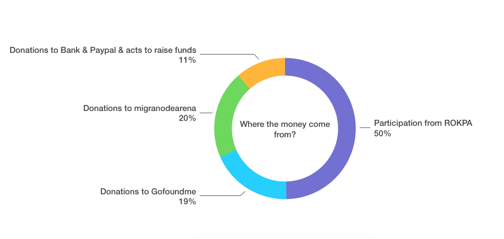
    Where did the budget come from?

    BE ARTSY 2018 PROJECT IMPACT EVALUATION. RATO BALTIN PROJECT

    50% of our Project funding came from our partner ROKPA International. The rest came from our Associates and private donors. Ruby Cup gave us 250 Cups for the Spring Project, and 150 more in August to do an earlier training to female teachers and nurses in the 2019 villages. The cost of these cups on the European market would be 10.080 €.The three main partners of this project have been collaborating similarly. Next year, Ruby Cup will a donate 3000 menstrual cups. On the European market, the 2019 donation from Ruby Cup would be 81.000€.


    West Nepal girls need this kind of program. And we need help to continue the project!

    Paypal recurring donations:

    Select a Donation Option (EUR)

    Enter Donation Amount (EUR)

    Or if you feel like it, you can donate via bank transfer at: Banc Sabadell IBAN: ES23 0081 0900 8200 0430 1934 BIC: BSABESBB (your recurring donation will help us have a better planning of our budget to carry out the projects undertaken).

    Or take a look to others ways to donate at http://beartsy.org/get-involved-with-rato-baltin/   or https://beartsy.org/become-an-associate/
    Thank You! 🙂

  • 2018 Project Evaluation Report

    2018 Project Evaluation Report

    A year has come to pass and much has changed in terms of our project development here in Nepal.

    However, Nepal and the way women are treated here still remains somewhat the same, although we can proudly say our efforts have not been in vain. We’ll talk further down the article about our operations and purpose with the Rato Baltin Project by be artsy NGO.

    To date, we have distributed 600 Ruby Cups along with complimentary much needed sexual health education. You can read our complete project evaluation here.

    Chhaupadi (menstrual exclusion i.e. the culture of keeping female members of the family outside their homes in-order to “protect” their family home from ill fates) is still ongoing and an ingrained part of culture, leading to recent tragedy.


    What are we doing?

    To tackle a subject that many Nepalis consider to be ‘taboo’, over the last 3 years we have provided sex and menstrual health education to both female and male members of villages in far-Western Nepal. Although the Government has banned the tradition and instituted jail time for those that force women and their children to stay outside in a hut for 4-5 days and nights during their cycles, nothing seems to change in such far-away places where even the Government doesn’t have effective reach. We believe that sex education can make a substantive impact to this practice and enable the rights of girls and women to live safe from harm and discrimination.

    With the help of our Donors and Volunteers, alongside the continuous hard work of the be artsy team, we have been able to understand how culture is shaping the lives of many Nepalese. This insight has led us to confidently believe there is great hope and potential for change, even though things seem rougher than ever with tragedy still occurring.

    Thank you all for your time and love.

    West Nepal girls need this kind of program. And we need help to continue the project!

    Paypal recurring donations:

    Select a Donation Option (EUR)

    Enter Donation Amount (EUR)

    Or if you feel like it, you can donate via bank transfer at: Banc Sabadell IBAN: ES23 0081 0900 8200 0430 1934 BIC: BSABESBB (your recurring donation will help us have a better planning of our budget to carry out the projects undertaken).

    Or take a look to others ways to donate at http://beartsy.org/get-involved-with-rato-baltin/   or https://beartsy.org/become-an-associate/
    Thank You! 🙂

    Written by Akash Thapa, corrected by Kristy Davies.
  • Travel log – Kalagaun is a beautiful place

    Travel log – Kalagaun is a beautiful place

    Kalagaun is a beautiful place. Green and peaceful. When we arrived everyone was very curious about us – especially the boys and girls! As usual, we were working with class 6-10. The teachers had prepared the hall for our program but everything felt like a race against time.

    The children were at school for just a few hours in the morning, as there was lots of work to do in the fields at the time we were there and they were obliged to help their families. Many also travel long distances to reach the school. So by 11am they were out at work.

    During the morning the normal 40/45 minute periods were reduced to 30/35 minutes. This meant that for our training program we had 3 periods with both the boys and girls (1 hour and 45 minutes) and 2 periods with the girls (1 hour). Normally time feels tight but it was really a challenge to fit our program into such a short amount of time!

    At the school there were many boys and girls. So there were lots of girls in the only girls workshops. In some of the groups we had large numbers of children, especially in classes  9 -10. As usual we began the workshops with the ‘ ball of thread’ game, throwing the string to each other at random, the children express something positive about their fellow classmates. We also always ask the girls what they don’t like about their menstruation before we explain our intentions and this provides an entrance to talk about chhaupadi without judgment.

    It rained so much when we were there as the monsoon had begun. Normally, During the ruby cup training every girl is given a menstrual cup and a bucket to take home with clean water then she can boil the cup at home and wash herself. But the rain meant we had to reconsider this. A fire was made at the school and in a large pot all the cups were boiled quite together and after given to the users.

    The Women´s Group was an exciting opportunity to introduce older women to the menstrual cup. This was the first time we’d had this opportunity as normally we work with young girls who are at school.

    Finally we put together our exhibiton of  10 photos that we felt were most representative of the workshops and our time there and it was time to celebrate.  Booklets and material with information on the program were handed over to the teachers so that they can continue working with the children, discussing with them menstruation and the benefits of the menstrual cup.

    For the women and girls it was an important time of the year as rice was to be planted and peaches and others fruits collected… yum!

    From Kalagaun we will have sweet memories: The best food we had till now, lot of friends, a new trainer and a new mentor! 😉

    (Photos at the bottom)

    West Nepal girls need this kind of program. And we need help to continue the project!

    Paypal recurring donations:

    Select a Donation Option (EUR)

    Enter Donation Amount (EUR)

    Or if you feel like it, you can donate via bank transfer at: Banc Sabadell IBAN: ES23 0081 0900 8200 0430 1934 BIC: BSABESBB (your recurring donation will help us have a better planning of our budget to carry out the projects undertaken).

    Or take a look to others ways to donate at http://beartsy.org/get-involved-with-rato-baltin/
    Thank You! 🙂

    Written by Clara Go and Maisie Still
    Fhotos with Fujifilm XT20, © Clara Garcia Ortés
  • The girl that could not be touched by a menstruating girl

    The girl that could not be touched by a menstruating girl

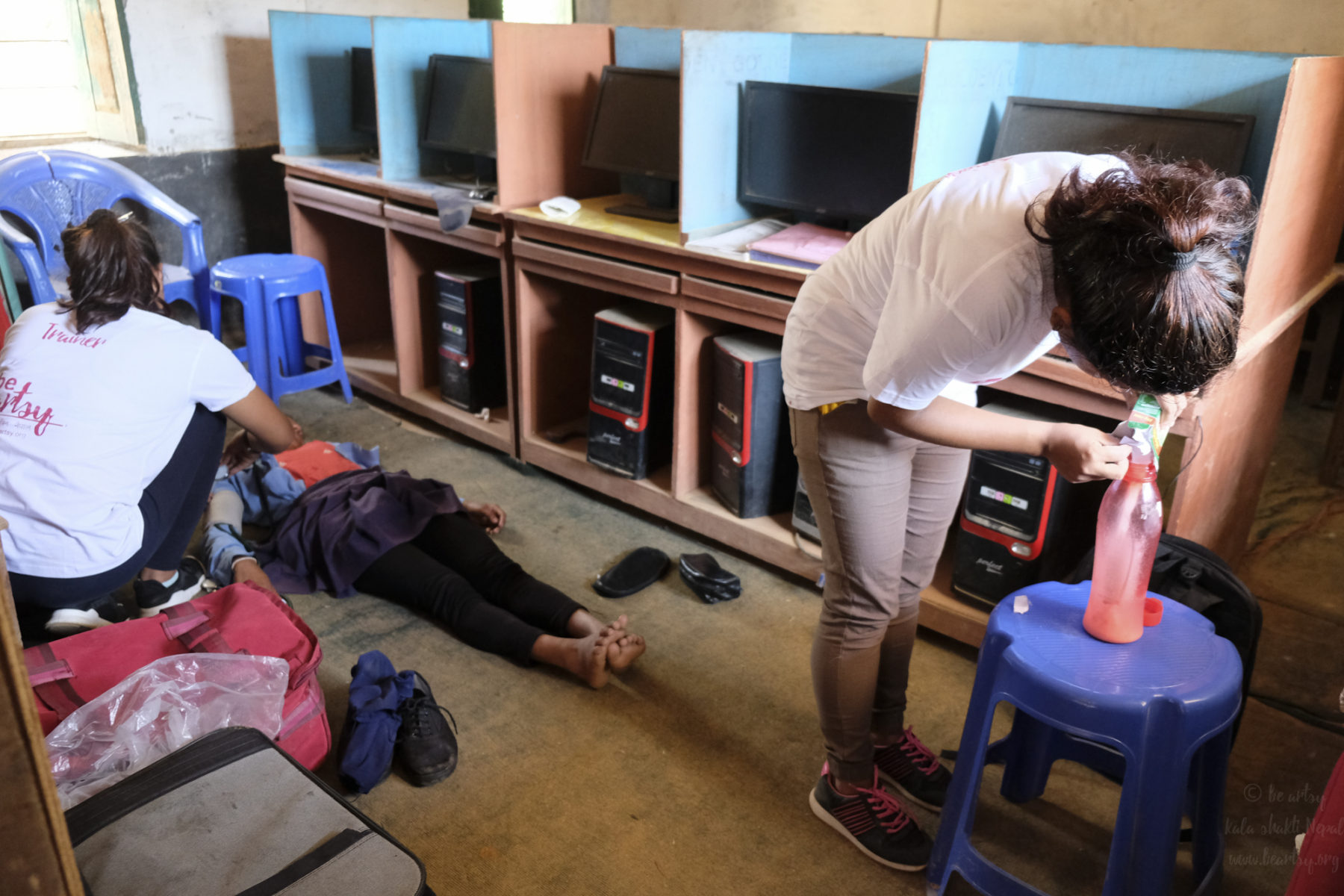
    On the first day at one of the schools we visited during the Spring 2018/2075 Rato Baltin project, when we came back from teaching class 10 boys and girls, we found a woman in the computer room where we kept our materials holding what we were thinking was an unconscious girl from class 9.

    One of our Nurses, Anju, took her vitals signs and she said she was not totally unconscious because she was responding to the environment. Afterwards, Anju asked the woman, who was the girl’s mother, about her history. She told us that it was a recurrent incident, caused when a menstruating girl touched her daughter.

    We asked if when the girl is menstruating has these kinds of episodes, and the mother told us ‘no’. It only happened when she was touched by another menstruating girl.

    We tried to give the girl Oral Rehydration Solution (ORS), but she was holding her jaw closed. We were therefore unable to give her the ORS. The mother explained that usually when she had these kinds of episodes, they would give her some drops of cow’s urine and she would wake up a moment later…

    Anju asked the mother to bring the cow urine drop’s to see what would occur, as she couldn’t find any normal explanation for the girl’s state.

    The mother arrived with some cow urine and grass. After asking for the assistance of a small girl on the school grounds who was not menstruating (Kumari, 8 years old), the girl spilt the urine soaked grass on top of the unconscious girl, who began to open her eyes. Anju asked the girl her name, which she answered correctly. She was completely back to normal.

    The pressure of beliefs from both families and wider society is so strong and convincing that girls really think that if they don’t practice chhaupadi, something wrong will occur. In this case, the girl really believes that she loses consciousness when a menstruating girl touches her.

    Written and photo © by Clara Go. Correction by Kristy Davies

    The girl that could not be touched by a menstruating girl

    Now you can contribute for paying one month salary to the nurse, or for some hygiene kit : https://www.gofundme.com/menstrual-cups-in-nepal-chhaupadi

    West Nepal girls need this kind of program. And we need help to continue the project!

    Or if you feel like it, you can donate via bank transfer at: Banc Sabadell IBAN: ES23 0081 0900 8200 0430 1934 BIC: BSABESBB (your recurring donation will help us have a better planning of our budget to carry out the projects undertaken).

    Or take a look to others ways to donate at http://beartsy.org/donate/

    Thank You! 🙂
  • Travel log: Oligaun, the most hard Achham

    Travel log: Oligaun, the most hard Achham

    The first week in a new village is always stressful. We have to get to know the people around us: teachers, health personnel, community leaders, and more importantly, the women, girls, and boys.

    In Oligaun it was no different, but we also had to get to know part of the new team. Tejana, one of our Mentors from Basti, and Manisha, one of our Mentors from Kunti, came with us. They have been using menstrual cups since the first Rato Baltin trip. Also with us was Uma Bista, a photojournalist that helped us a little with the photo workshop during part of our stay in town.

    In the health post at the first contact, we explained about the cup. They were really interested and we asked them some questions about women here. They explained to us that girls and women here were educated and nobody slept outside. When we left, one of our nurses told us: “Let’s see, I don’t think this is so”. I told them: “If they didn’t, it would be great news that in this part of Achham they have eradicated chhaupadi, but I have already seen Chhaugots on our way here”.

    The reality is that here chhaupadi is more normalised and more accepted. Like in other places, women are the ones that want to do it, but men don’t do anything to stop the practice. They speak about it like it is a joke. There is so much work to do here, but we were not really happy about what we felt we could do.

    The classes ran with some difficulties. Sometimes teachers seemed to not want to be involved, for them, the normal curriculum is the most important thing and girls needs come second. We learnt a lot here: the girls accepted chhaupadi, so, at the beginning they didn’t find learning about menstruation interesting. After they knew about the menstrual cup, this changed a little. In classes 10 and 9 girls weren’t really interested at the beginning, but by the end were really happy with the participative photography results and with our video from the closing ceremony.

    In the menstrual cup training we had 95 girls, but we couldn’t give one to every girls as we didn’t have enough. We could give 61 cups to the girls in school plus the women’s group.

    With the girls here we saw that there had been some changes in chhaupadi. Before they stayed in small goat sheds on the ground floor, but nowadays some of them are on the first floor. We saw too that the chhaugoats here are bigger than the ones in KuntiBandali, or the remaining ones in Basti.

    We have been trying to set up a men’s group, but this has still been unsuccessful. In some places a teacher may try to help us, but nothing works, the men did not come. Here in Oligaun it has been impossible to do it. However, we had small conversations with different groups of men, where we spoke about the importance of help from them to assist doctors and community leaders to stop the practice. We spoke openly about rape, about how many drunks have abused girls in the chhaugots, and I think that touched them. We told them that we are not from the community, that they were the ones that should do something about the problem. Let’s hope that they will try to do something.

    We will try to involve more girls, women and men in Kalagaun, our next village, but it is time to plant the rise and we are a little scared whether they will make time for us.

    Two months in the field is a really hard experience, but we try to have as much fun as we can. We are enjoying the simple life in the villages and the smiles from children – Sano Manche (small people), as our nurse Anju likes to call them.

    Written, and photos with Fujifilm XT20, © by Clara Go.
    Correction by Kristy Davies

    Now you can contribute for paying one month salary to the nurse, or for some hygiene kit : https://www.gofundme.com/menstrual-cups-in-nepal-chhaupadi

    West Nepal girls need this kind of program. And we need help to continue the project!

    Or if you feel like it, you can donate via bank transfer at: Banc Sabadell IBAN: ES23 0081 0900 8200 0430 1934 BIC: BSABESBB (your recurring donation will help us have a better planning of our budget to carry out the projects undertaken).

    Or take a look to others ways to donate at http://beartsy.org/donate/

    Thank You! 🙂
  • Travel Log – From 2073 to 2075. Again teaching in Basti

    Travel Log – From 2073 to 2075. Again teaching in Basti

    After Kunti Bandali, we went to Basti. This was Clara’s third time there. She explained to the team that going down is complicated, but that once you are there you don’t want to leave… It’s like another world. It’s a really remote (and hot) place, where life is hard but people are authentic and lovely.

    Some of the volunteers had problems on the way down like Clara had predicated, but once they reached the people, they fell in love with them. The day we left, some village girls were really sad because we were going, as well as some volunteers. The rest told the girls, “see you in September!” 🙂

    In Basti, we taught classes 6 and 7. We did the menstrual cup training to more than 20 new school girls, and 9 young women not in the school. It was a pity to see girls so young that had left school, in the best case, in class 5. When you ask them why they left, they usually answer: “Too much work to do, didi…”.

    In September we will do the follow up to these two villages (Basti and Kunti), with the rest of the villages we are teaching during the spring. We are planning to go with a big screen and projector and show some films to empower the girls, and do some playful programs for all the community. That way they can all enjoy our visit, and we can again speak in a different way about women’s rights and menstruation. We are planning a collaboration with Photo.circle for that.

    Let’s see how everything comes, but we have big expectations for this year and next years project! 🙂

    And now: Oligaun!


    Written, and photographs with Fujifilm XT20, © by Clara Go.
    Correction by Kristy Davies

    Now you can contribute for paying one month salary to the nurse, or for some hygiene kit : https://www.gofundme.com/menstrual-cups-in-nepal-chhaupadi

    West Nepal girls need this kind of program. And we need help to continue the project!

    Or if you feel like it, you can donate via bank transfer at: Banc Sabadell IBAN: ES23 0081 0900 8200 0430 1934 BIC: BSABESBB (your recurring donation will help us have a better planning of our budget to carry out the projects undertaken).

    Or take a look to others ways to donate at http://beartsy.org/donate/

    Thank You! 🙂
  • Empowering Women and Girls through MHM: Menstrual Hygiene Awareness Day

    Empowering Women and Girls through MHM: Menstrual Hygiene Awareness Day

    For many of the global population of women and girls, menstruation is time of stress and shame. Some women and girls not only have limited access to and knowledge of clean menstrual management resources and safe, private spaces to dispose of materials, but they consider both themselves and menstruation itself as dirty and shameful.

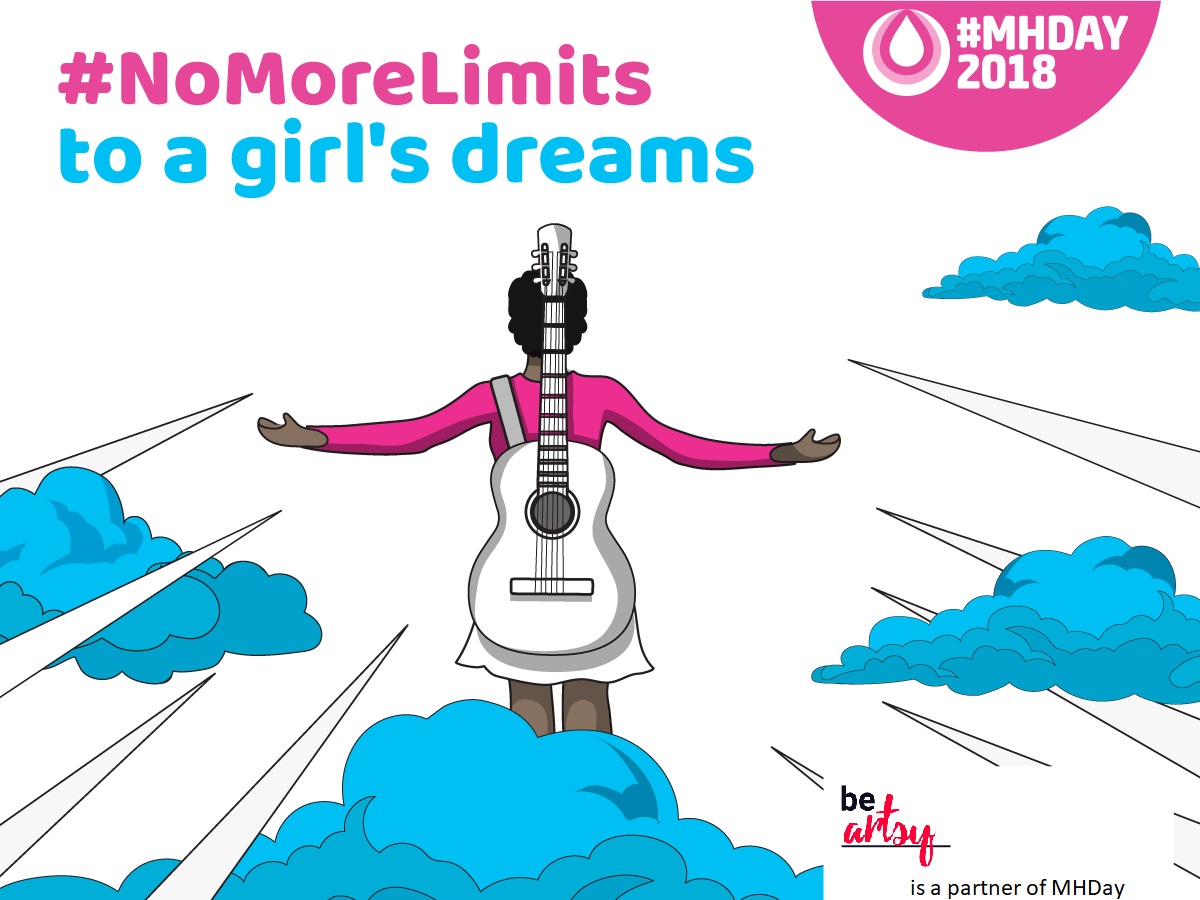
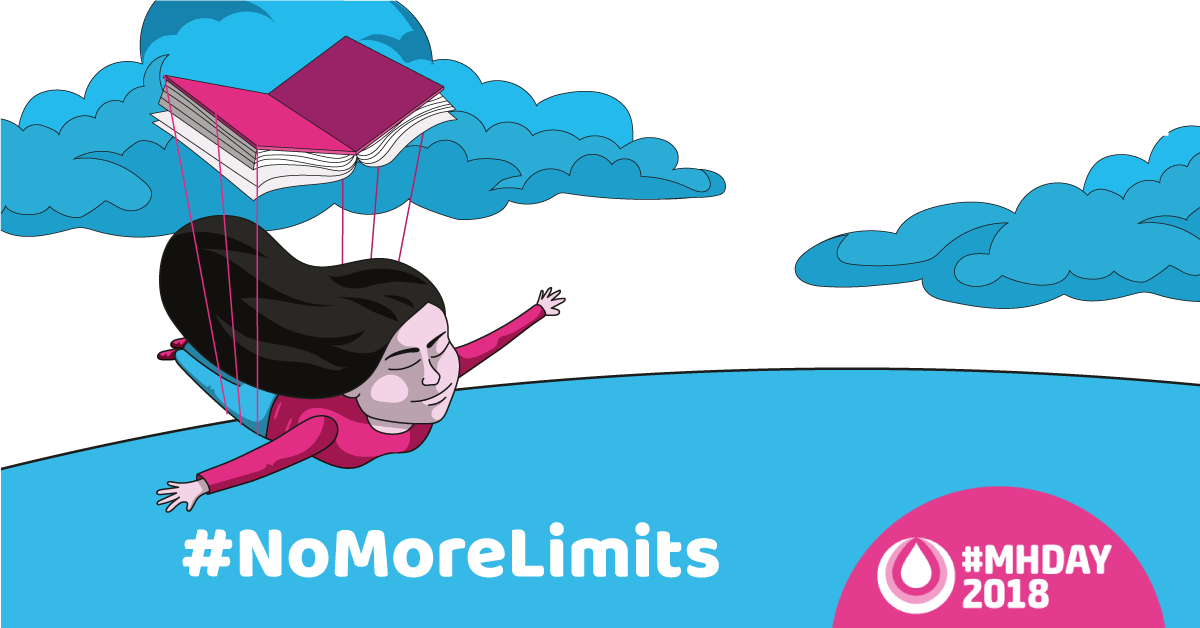
    To combat these realities and raise awareness of the challenge of menstrual health management (MHM), the 28th of May 2018 marks the fourth international Day of Menstrual Hygiene Awareness. The day was designed as a platform for the voices of individuals, organisations, businesses and the media to unite and break the silence around MHM issues faced by women and girls around the world.

    For many girls, this culture of shame combined with a lack of access to adequate resources and MHM knowledge results in issues of self-confidence and school absenteeism. Ensuring girls stay in school and fully engage in the learning process with confidence is critical to the empowerment focus within the sustainable development goals. When girls go to school and engage in the learning process, they are empowered to reach their full potential.

    In villages across Far-West Nepal where the practice of chhaupadi is still prevalent, MHM practices and the empowerment of women and girls is an important issue of focus. Chhaupadi is a deeply entrenched social practice where women and girls are considering impure during menstruation and are subject to a number of prohibitions which deprive them of their most basic needs.

    These prohibitions include being forbidden from touching food others will consume, crossing water, restricted school attendance, and entering the family home, requiring women and girls to sleep in cattle sheds or makeshift huts. Those subject to the practice risk exposure to rape, snakebites, smoke inhalation, and animal attacks. Furthermore, the restriction of girls from school during menstruation is harmful to their education. Poor MHM tools and knowledge is linked to low education outcomes, as well as broader negative effects to employment, health and overall development.

    Although the Government of Nepal declared chhaupadi illegal, the practice is deeply embedded in social norms and cultural practices. The aim of grassroots social organisations like be artsy is to empower girls in Far-West Nepal through MHM community education, and the provision of menstrual cups and hygiene kits. Ruby Cup is the donor of menstrual cups to be artsy, that also have some individual and other private donors. This approach is designed to reduce school absenteeism, improve girls’ self-confidence, and reduce the prevalence and negative impact of chhaupadi through increased knowledge of menstruation amongst communities.

    It is important that days like today exist to shine a light on the work that organisations do to enable women and girls’ empowerment through MHM education, as well as highlight what there is still left to accomplish. It is with global support and awareness combined with grassroots local engagement that true change will be achieved to the benefit of women and girls across the globe.

    We would like to remind you of the different ways to continue collaborating with us:

    Written by Kristy Davies.
  • Travel Log – From 2073 to 2075, again teaching in Kunti Bandali

    Travel Log – From 2073 to 2075, again teaching in Kunti Bandali

    After Janalibandali we travelled to Kunti Bandali, where nothing was really new. We were only there teaching for four days. The first time we came here we taught two classes at the end of 2073 (it is now the beginning of 2075).

    This time we taught classes 6 and 7, as well as a school girls group, menstrual cup training, and a young women’s group.

    The school in Kunti was (as usual) strict with or timetables and their students. In this school discipline is an everyday thing. There were three periods every day, and we had to finish on time. Something really complicated, sometimes…

    The school had finished its new building we had seen growing over our last two visits, and they now had a clean, beautiful library and hall.

    The young women’s group was really interesting, made up of young women that were not attending the school. We think the menstrual cups we buy to give to women outside of the school could get good use here. The only thing we are not happy with is that they could only join us for one day because of work, and we are quite sure that the follow up will be more complicated that usual. But both Jamuna, a nurse, and the nurse in town, took responsibility of following up on time after our phone calls.

    We completed the follow up with old users from Dashain in Jamuna’s house, which we also used to eat, sleep, and boil menstrual cups.

    Written and photographs, with Fujifilm XT20, © by Clara Go.
    Correction by Kristy Davies

    Now you can contribute for paying one month salary to the nurse, or for some hygiene kit : https://www.gofundme.com/menstrual-cups-in-nepal-chhaupadi

    West Nepal girls need this kind of program. And we need help to continue the project!

    Or if you feel like it, you can donate via bank transfer at: Banc Sabadell IBAN: ES23 0081 0900 8200 0430 1934 BIC: BSABESBB (your recurring donation will help us have a better planning of our budget to carry out the projects undertaken).

    Or take a look to others ways to donate at http://beartsy.org/donate/

    Thank You! 🙂

  • Our second week in Janalibandali was quieter than the first

    Our second week in Janalibandali was quieter than the first

    On Sunday we trained the women’s group how to use the menstrual cup. Many young married girls came to the training, but not with the profile we really wanted to target: poor girls that could not go to school because of poverty or being married.

    There are two reasons why this group may not have attended: 1 – The news did not reach them, or 2 – In this part of Achham, full of high caste people, women’s conditions are better than in other parts where we have worked.

    We had a lot of girls in the group that were studying in years 11 and 12 in Mangalsen, who were also given the menstrual cup and kit. This week, we taught years 6, 7 and 8 as well.

    On the last day, we held the photo exhibition and showed a small video with the photos the girls have produced about their menstruation over the last two weeks during the participative photography workshops. There were photos from different areas of everyday life:


    • Food and Menstruation
    • First Menstruation
    • Friendship and Menstruation
    • School and Menstruation
    • Restrictions
    • Cleanliness and Menstruation
    • Family help
    • One day in the life of a Menstruating women
    • Babies and Menstruation
    • Clothes and Menstruation


    After the photos, we showed a video about chhaupadi and encouraged girls and boys to talk with their families to try and stop the practice or at least create safer conditions.

    While the local authorities in Janalibandali have helped us a lot, they had been really worried about the message we might tell the world about the practice in this part of Accham. But at all times we told them that we would explain the reality we have seen: they expend a lot of effort to end the practice of chhaupadi, and a lot of girls just sleep in separate rooms inside of the house.

    But we have spoke to women as well as seen ourselves that many will sleep outside until the older generations within their families have passed away. We have also seen cruelties, like a girl sleeping in a “bamboo basket”.

    In Janalibandali, there are less instances of chhaupadi than in other more remote places that we have been working, but we hope that the local leaders and authorities will continue to work on the issue until no girl sleeps outside their homes while menstruating.

    For now, we did the only thing we can do: provide education and menstrual cups, to dignify their periods of menstruation overall lives.

    Written and photographs, with Fujifilm XT20, © by Clara Go.
    Correction by Kristy Davies

    Now you can contribute for paying one month salary to the nurse, or for some hygiene kit : https://www.gofundme.com/menstrual-cups-in-nepal-chhaupadi

    West Nepal girls need this kind of program. And we need help to continue the project!

    Or if you feel like it, you can donate via bank transfer at: Banc Sabadell IBAN: ES23 0081 0900 8200 0430 1934 BIC: BSABESBB (your recurring donation will help us have a better planning of our budget to carry out the projects undertaken).

    Or take a look others ways to donate at http://beartsy.org/donate/

    Thank You! 🙂