Tag: RatoBaltin

  • Nepalese women explain with images how they experience menstruation, isolated because they are impure.

    Nepalese women explain with images how they experience menstruation, isolated because they are impure.

    05/02/2020

    Les dones nepaleses expliquen amb imatges com viuen la menstruació, aïllades perquè són impures.

    L’exposició “La menstruació al Nepal: un turment cultural” es pot veure a la biblioteca del districte 2 (Bd2) fins al 28 de febrer. És un dels actes de la programació del Mes de la Pau, organitzada per la Regidoria de Solidaritat i Cooperació i la BCT Xarxa per difondre els valors de l’educació per la pau, la solidaritat i el respecte als drets humans.

    La mostra resumeix en fotografies com les dones de l’occident nepalès i les dones europees viuen el fet de tenir la regla. Al Nepal estan sotmeses a la tradició Chhaupadi, una pràctica centenària que desterra nenes i dones a cabanes o coberts durant la seva menstruació. Se les allunya perquè se les considera impures.

    L’objectiu d’aquesta entitat és mitigar les conseqüències d’aquesta tradició a través de l’educació, l’ús de copes menstruals i l’art. Be artsy és una petita ONG amb seu a Barcelona que va néixer per desenvolupar aquest projecte (Rato Baltin Projecte). A banda de la mostra, la Bd2 acollirà una xerrada sobre aquest tema el 24 de febrer a les 6 de la tarda.


    News publiched in Terrasadigital.cat
  • Conversation with Clara G.O. about the Rato Baltin Poject.

    Conversation with Clara G.O. about the Rato Baltin Poject.

    Here is the link to listen the interview to Clara G.O at Radio Santvi.

  • The fight against Chhaupadi in Nepal: We interviewed the photographer and president of the NGO Be Artsy, Clara García Ortés.

    The fight against Chhaupadi in Nepal: We interviewed the photographer and president of the NGO Be Artsy, Clara García Ortés.


    Hace exactamente 3 años, dimos a conocer un proyecto pionero de la ong Be Artsy. Bajo el nombre de Rato Baltin, la iniciativa se centra en la educación de comunidades rurales del Nepal sobre la menstruación y salud.

    Si no escuchaste el programa, repasemos un poco el contexto de esta situación que viven las mujeres nepalíes.

    En Nepal, desterrar a las niñas y mujeres que están menstruando a cobertizos o chozas es una tradición centenaria llamada chhaupadi, a pesar de que, por ley, es una práctica prohibida.

    Durante esos días, las mujeres son consideradas impuras, sucias, contaminadas y con mala suerte. No pueden tocar a su familia, pero tampoco fuentes de agua, árboles frutales o ganado, entre otras muchas cosas. La creencia de que la menstruación es impura es tan profunda que las familias pasan por alto los riesgos extremos involucrados en la práctica.

    Con esta práctica, las niñas y las mujeres quedan expuestas a problemas de salud, como neumonía, diarrea o infecciones, y a violaciones. Cada año, 3 o 4 mujeres mueren durante este destierro, debido a asfixia, hipotermia, mordeduras de serpientes u otros ataques de animales salvajes.

    La práctica es apoyada por ancianos, esposos, suegras, curanderos tradicionales y sacerdotes que tienen una profunda influencia en la comunidad, ya que la creencia de que permitir que las mujeres que menstrúan entren dentro de la casa de la familia enfurecerá a los dioses, con graves consecuencias para las familias y la comunidad, sigue todavía muy vigente.

    Ante esta situación, Be Artsy ha propuesto el Proyecto Rato Baltin, un programa de Gestión de la salud menstrual y educación sexual que tiene como objetivo erradicar esta práctica. Mediante la educación, la fotografía participativa y la copa menstrual, se ofrece una alternativa a la tradición, a la estigmatización de la menstruación, a la exclusión y a la violencia.

    Han pasado tres años desde que conocimos el tema, y ahora queremos saber cuál ha sido el recorrido del proyecto y en qué situación se encuentra, por eso hemos contactado con la fotógrafa y presidenta de la ONG Be Artsy, Clara García Ortés.


    Interview in Reenfoca2 - Versión PDF


  • Talk and projection about the Rato Baltin project

    Talk and projection about the Rato Baltin project

    Xerrada i projecció sobre el projecte Rato Baltin

    Barcelona – Dijous, 28/11/2019

    Coincidint amb els últims dies de l’exposició de fotografies mostrada per l’associació be artsy, la Biblioteca Francesc Boix co-organitza una xerrada i projecció.

    El 28 de novembre, a les 19.00 h a la Biblioteca Francesc Boix del Pobre Sec, a Barcelona, podeu assistir a la xerrada i projecció que Clara Garcia, fundadora del projecte Rato Baltin, farà sobre com es viu la menstruació a l’oest de Nepal.

    Fins aquest dia, es pot veure una exposició fotogràfica que mostra aquesta realitat, juntament amb la mirada de dones occidentals, i sobre com es desenvolupa el projecte d’educació que es realitza al país de forma participativa amb les nenes, dones, i les comunitats.

    Horari de l’exposició (entrada gratuïta): dilluns i divendres de 16.00 h a 21.00 h, dimarts i dijous de 10.00 h a 14.00 h, i de 16.00 h a 21.00 h, dimecres de 10.00 h a 21.00 h, dissabtes de 10.00 h a 14.00 h.
    Data:  Dijous 28 nov  Hora: 19:00
    Organitzador: Biblioteca Francesc Boix i be artsy
    Correu electrònic de l’organitzador: info@beartsy.org
  • Vulvita, an entrepreneur who sews and sells cloth compresses in Cambrils

    Vulvita, an entrepreneur who sews and sells cloth compresses in Cambrils

    Beatriz San Román es la creadora de la marca “Vulvita”, la cual vende productos menstruales reutilizables para poder reducir al máximo los residuos. 

    Beatriz San Román, Vulvita, con sus productos de higiene femenina
    Beatriz San Román, Vulvita, con sus productos de higiene femenina | María Vidal 

    Reducir al máximo los residuos y trabajar en la salud menstrual. Estas son los principales propósitos que tiene Beatriz San Román para seguir adelante con sus proyectos. San Román es una emprendedora madrileña que vivió en Cambrils y que actualmente reside en Mont-Roig. Tiene en marcha tres proyectos: “Vulvita”, “La casita sanadora” y “Residuo Zero Tarragona”, todos relacionados con los objetivos nombrados.


    Actualmente, se encuentra más centrada en “Vulvita”, una marca de compresas de tela y otros productos menstruales que ella misma cose a mano. “La casita sanadora” dice que lo que siempre había querido hacer, “un proyecto donde la gente puede acercarse a mi y de alguna manera sanarse, ya sea a través del yoga, de los masajes, la terapia floral… para buscar la manera de conectar con uno mismo”, de momento es el que tiene más abandonado porque conoció la terapia menstrual y supo que eso era lo que quería hacer. El último que ha creado, junto con una amiga, es “Residuo Zero Tarragona”, donde se venden productos que intentan fabricar ellas mismas o que vengan de cerca, que no produzcan residuos. Porque se han dado cuenta que “en casa es más fácil tener una vida zero waste pero cuando viajas es más complicado”.

    El proyecto va a surgir de una necesidad propia

    La emprendedora explica que el proyecto Vulvita va a surgir de una necesidad propia, ya hacía años que ella cosía sus compresas de tela con roba reciclada que tenía en casa. Hasta que las personas de su círculo y de conocidos también le pidieron de probarlas y así es cómo se va a “profesionalizar” para venderlas, sobretodo a gente cercana. Más tarde llevó a cabo una campaña de crowdfunding  para conseguir financiación y dar a conocer el proyecto. Fue cuando hubo que poner un nombre a lo de coser compresas y como surgió “Vulvita”. Afirma que este nombre se debe al hecho que siempre le gusta “traer a la luz las cosas que están ocultas, y poner este nombre era poner en terreno público una parte del cuerpo que estaba oculta, pero tampoco muy directamente”. En la misma línea, su empresa tiene un componente reivindicativo importante, ya que reclama que la menstruación se ha de desmitificar. “La mitad de la población menstrúa y no podemos hablar de ello?”, protesta. Per este motivo también da talleres a niños, porque le da miedo “que los niños crezcan en una sociedad donde no puedan conocer ni explorar su cuerpo, ni hablar de sus procesos biológicos”.

    Los productos se pueden adquirir en diferentes ferias, en las redes sociales y en algunos establecimientos

    Hoy, los productos de “Vulvita” se pueden adquirir en diferentes ferias de la provincia de Tarragona, como es el caso de “l’Espai Niu” de la Feria Multisectorial de Cambrils, mediante las redes sociales, o en algunos establecimientos de la provincia que tienen productos ecológicos. La emprendedora afirma que hay diversos motivos por los cuales cambiar y empezar a utilizar las compresas de tela, aún que evidentemente, una de las principales razones para usarlas es para favorecer el medio ambiente, ya que permiten tener una menstruación de residuo cero. Un gran cambio respecto a la cantidad de residuos que generan las compresas habituales. Las clientes que las compran forman, forman parte de una gran abanico de edades, ya que va desde jovencitas que quieren tener alternativas al material de un solo uso o mujeres que las usan para la pérdida de orina. Por otra parte en dos ocaciones la creadora de “Vulvita” ha viajado al oeste de Nepal con el proyecto Rato Baltin de la ONG Bearsy, que tiene como objetivo dar información de salud menstrual a niñas y mujeres de la zona. El propósito de este proyecto es que ellas mismas sean consientes de los que les pasa, para poder erradicar la práctica del Chhaupadi y que las jóvenes nepalesas puedan utilizar siempre la compa menstrual.


    Finalmente, ella afirma que, especialmente el proyecto “Vulvita”, lo lleva a cabo porque “a parte de ser mujer, he sufrido lo que es ser mujer en esta sociedad”, también porque tiene mucha conciencia ecológica. Por eso, para ellas lo más importante actualmente sería reducir el residuo al máximo en cualquier ámbito – alimentación, cosmética, menstruación-, ser autosostenible y concienciar a la sociedad sobre esta tema para que comience a ser responsable de los residuos que genera.


    Imagen de las compresas de tela que confecciona Vulvita
    Imagen de las compresas de tela que confecciona Vulvita


    Por: María Vidal | Publicado en: Cambrils.cat 
  • Malnourishment in West Nepal

    Malnourishment in West Nepal

    One significant problem that we have seen in our travels throughout West Nepal is the extent of childhood malnourishment.

    Sometimes this can be associated with very young mothers with little nutritional information support, but in other cases cannot. Though there are some nutritional programs that run throughout West Nepal, it can be difficult for mothers to provide the breadth and quantity of recommended food and vitamins when they only have direct access to the food grown in their fields.

    The districts in West Nepal with the highest rates of malnourishment in children under the age of five are:

    Humla        65.7%
    Bajhang     63.2%
    Achham     59.2%
    Baitadi       59.2%
    Doti            57.6%
    Surkhet     57.9%
    Kalikot       54.1%
    Jumla         54.1%

    To find out the malnourishment rates of children under five in other districts, check out this interactive map:


    Maps and numbers from: www.nepalmap.org


    In Achham, for example, the amount of food grown and accessed by mothers is usually insufficient for the number of children they care for. The father is usually in India or abroad elsewhere working to send money back to their families, and women often don’t have the knowledge and resources to manage the crisis.


    My dear friend Dr Keshav Bhattarai, who passed away last December at 31 years, was the one who introduced me to the world of women in West Nepal. He was really upset because on average, every month six women in Achham committed suicide. These women had large families with many children that they were unable to provide with sufficient food, and often did not want to use contraception, or have access to the choice or relevant education about it. In this situation, women suffer a lot of stress and pressure.

    I don’t think anything has changed in the district since he left last year to work in Humla, before his death.

    Children are the foundation that the future of Nepal rests upon. Only a proper investment in today’s children will bring us to a better tomorrow.

    But a quick glance at the child nourishment data on www.nepalmap.org shows that 40% of children under the age of five in Nepal are malnourished. This means that today, almost half of children in Nepal under five do not receive a well-balanced meal, which not only hampers their development, but in turn the nations.

    In our workshops we teach the importance of proper nutrition, balanced meals, and hydration to the girls. Although this becomes increasingly essential once their menstrual periods start, proper hydration and nutrition is critical every day of the year, from early childhood into adulthood.

    And so we wait, hoping that little by little things are changing.

    Now you can contribute for paying one month salary to the nurse, or for some hygiene kit or for the menstrual cup control in September: https://www.gofundme.com/menstrual-cups-in-nepal-chhaupadi

    Written by Clara Go. Correction by Kristy Davies
    Maps and numbers from: www.nepalmap.org

    West Nepal girls need this kind of program. And we need help to continue the project!

    Or if you feel like it, you can donate via bank transfer at: Banc Sabadell IBAN: ES23 0081 0900 8200 0430 1934 BIC: BSABESBB (your recurring donation will help us have a better planning of our budget to carry out the projects undertaken).

    Or take a look others ways to donate at http://beartsy.org/donate/

    Thank You! 🙂

  • Human trafficking in Nepal. #RatoBaltin #WorldDayAgainstTraffickinginPersons

    Human trafficking in Nepal. #RatoBaltin #WorldDayAgainstTraffickinginPersons

    illustration from United Nations Web. World Day against Trafficking in persons
    illustration from United Nations Web.

    Today is the World Day Against Trafficking in Persons. As such, we feel it is an important time to highlight the extent of this practice in Nepal. After all, it is easy to think that you will never be personally impacted by human trafficking, or know anyone who has been effected. But when be artsy volunteers are working in villages, we need to be aware that this problem may be present there and have touched the lives of the people we work with.

    Indeed, human trafficking is a growing criminal industry in Nepal, with men, women, and children subjected to forced labor and sex trafficking. Trafficking victims are often taken from rural and remote areas in Nepal to urban centers not just across borders, but within Nepal.

    Young girls and women are mainly trafficked for sexual exploitation. Sex trafficking is when someone recruits, harbors, transports or provides a person for sex, and uses coercion, force, or fraud to instigate a commercial sex act. Those who have been trafficked for sex work are more likely to be illiterate, impoverished, and have fewer family members with earning power.

    The trafficking of girls from Nepal into India for forced prostitution is perhaps one of the busiest slave trafficking routes anywhere in the world. The 1850 km of open border between Nepal and India make trafficking simple and difficult to catch. Additionally, there are no immigration controls for Nepalese migrants to India or Indians coming into Nepal under the 1950 Peace and Friendship Treaty. An estimated 5,000 to 10,000 Nepali women and girls are trafficked to India each year.

    Nepali girls are especially desirable as prostitutes in India, because they are considered more attractive due to their lighter skin color, with virgins believed to be able to cure AIDS.

    Trafficking for the purposes of forced labor is also common in Nepal. Forced labor refers to coercing people to work through violence, intimidation, or more subtle means such as accumulated debt. Victims often end up in carpet and garment factories, embroidery sweat shops, or brick kilns. One type of forced labor in Nepal is bonded labor, where individuals give themselves into slavery to repay a loan. Although outlawed in 2000, it remains an issue throughout the country. Child labor is also rampant in Nepal, with an estimated 1.6 million child workers between the ages of 5 and 17.

    The Nepali Government does not fully meet the minimum standards for the elimination of trafficking, though it is making significant efforts to do so. It has demonstrated increasing efforts through a rise in both the number of trafficking investigations and identified victims, and by doubling its budget to provide victim care services to female victims of violence, including trafficking victims. However, many government officials continue to lack adequate understanding of trafficking crimes.

    It is imperative that the Nepali Government do more to address the heinous crime of human trafficking, and protect those most vulnerable.

    Sources:
    http://www.un.org/en/events/humantrafficking/index.shtml
    https://en.wikipedia.org/wiki/Human_trafficking_in_Nepal
    https://www.state.gov/j/tip/rls/tiprpt/countries/2017/271250.htm

    Written by Phumzile Mpofu edited by Kristy Davies
  • Kunti Bandali. Trodden path.

    Kunti Bandali. Trodden path.

    Written by Alba Maria Campos, Spanish volunteer nurse, specialised in family and community health
    Translate to english by Tere Salinero corrections by Alba Miquel
    Photo done for Kamal Bhattarai with X-pro1 © Clara Go

    “I have learnt to think like I was taught to and I even got to believe that it is me who thinks. I find it difficult to understand that all I do is just start a thinking mechanism with patterns and embedded circuits. That is why it is hard for us to accept what goes against what we have previously learnt. All I have absorbed only makes me inflexible and places me, tyrannically, at the service of the cultural group that has trained me”.

    We left Basti in the direction of Kunti Bandali on Saturday the 11th of March. We passed by the house of the kid whose head had been injured the prior day. He was still bleeding a bit. The woman had gone to the hospital with her husband and we could not see her. Alba and I went ahead, silent for a good while, digesting all we had seen in Basti during the past few days. At the start, the uphill incline seemed impossibly hard… In the end, it was not that bad. We stopped to eat some hard boiled eggs, a tuna can coming from Lumbini, and a bag of raw noodles. After a three-hour walk, we stopped for a chia… We only had bagged noodles for food… I am absolutely not keen on packaged meals… I would have rather had a DalBat and Tarkari (although I had had enough of it already for a lifetime). Damned progress… Reaching even farther than the roads!!!!

    As we were finishing eating, a tractor appeared, full of drums and… Alba and I saw the light: this would be our transportation to Kunti Bandali!!! We asked Kamal to enquire if it would be possible for us to climb in the wagon to get to the place. Alba, Samita and myself shared the wagon with some of the girls from the school. To be honest, it was good fun!!! Thankfully, we didn’t have go by foot. It would have meant a few more hours walking.

    We reached the village. The houses and shops were made of tin, which didn’t make for a nice sight. We barely saw any women on the street. There was a very nice boy with a naughty face, very dirty and thin, who was forever working on something: cleaning, minding the goats… or helping the drunks get home… Below the house there was always a group of men wobbling around a big garbage bin full of bottles of Roxi. The place was horrible. Drunken men ambling around the whole day, the kid attending his chores and working for them, always looking happy, and the women carrying tons of stuff over their heads, whilst the girls walked past holding rocks in their hands “just in case”… They knew very well what they were doing by that.

    This small boy, like many others, did not attend school. So we were not reaching all the population, just the “civilised” part (this word is not to be always taken as a positive one). But there was another part of the population who would never have the “privilege” of education. We saw it in Basti more than in here, many young girls who were barely 7 or 9 would cart their young siblings around in their arms and lingered in the school playground whilst other children their age were in class.

    The teachers seemed to be more involved here than in Basti, they interacted more with us. We also encountered a couple of classrooms who were not very receptive. On the first day, we discovered that, that same year, UNICEF had been around with a project against Chhaupadi that, we gathered, had caused quite a lot of damage… The women, organised here as “health volunteers”, were distinguishable by their blue saris. They asked Clara if they would be given money for posing for the pictures and attending the lectures, like UNICEF had done. When one of them told us, we were flabbergasted. Money, really??? We also met one in a classroom, the one for the youngest girls, who was the only one who did not give any importance to how they lived the menstruation, and did not say anything either about what they may like less about their usual practices during their period… So we continued talking, sharing information on periods, sexuality and menstrual cycle, just touching very lightly on Chhaupadi… if they did not want to change things, not much to do then!!! In any case, we had the impression that they came very well trained from home.

    The women, throughout the pictures, showed different traditions when practising the Chhaupadi. Here, they could not touch any fountain or take a shower. A woman took a photograph of the moment when a baby who had slept with his mother – who was on her period – in the chaughot, was purified in the morning with a bath, and once purified, another woman took him and cared for him during the day. Another photograph showed that the cutlery they used for their meals during those days could only be used by them, not by other members of the family, and they were left outside the chaughot, never inside.

    When we left KB, I discussed with Alba Clara’s reply when we sent her the program: she said that it was too “daring”. Whereas she and Pepa laughed at the “pussies” in the signs were were going to put up in the classes, Alba and I were convinced that everything would go fine and were very happy about how we had prepared things. And thus it was, neither in Basti nor in KB we changed a single iota of the contents and on the spot we added some dynamic depending on the participation of the classroom… I must also say that Nepalese boys and girls are real stars when it comes to behaving  themselves. We have so enjoyed working with them!!! It would have been great to establish a deeper bond and share more things, which are so far from their school programs as from ours… 

    Sharing other perspectives about menstruation, sexuality or masturbation with other nurses and knowing the superstitions that they themselves also practice was also very gratifying. In the end, they will surely be generators of changes wherever they may educate. I was surprised when Susmila told me that, contrary to my belief, it was more convenient that it was us who came do the workshops than they themselves doing them, because they do have similar superstitions and traditions as well. From the youngsters point of view, apparently, us being “white”, must obviously mean we are right in what we say, and we are more convincing. At that moment I saw myself as the “symbol of the progress” that I so much rejected, and I didn’t like it a bit. We continued talking about the future, marriage and motherhood, and she extended my replies to all the women in the peninsula. I asked her not to create in her mind an image of the West just by looking at us, as it would be an erroneous one, given that we are not at all a representative part of it.

    I am very proud to have been a part of all this process. Not because of the paradox that representing the “selfishness in helping others to feel better and so my entourage acknowledges my inner goodness” thing… but because it is one of the deepest learnings life can offer you: from how to communicate with somebody who does not speak your language (not even near likely), to how you can be happy without delving into the extreme consumerism of the Western world; that happiness has nothing to do with the consumerism-driven happiness we are being sold; learn simple things like having a shower in the school fountain, do the laundry by hand, wipe your butt with your hand or throw your snot into the air as toilet paper has not yet reached these boundaries; learn to respect the values and traditions of a culture that is very much different from our own and that, really, we are nobody to impose any changes, unless they really want to do it. And I decided to soak it in as much as possible without judging it from a Western perspective.

    Learning to work in a multicultural team with the Nepalese-English-Spanish language barrier has also been a real challenge. To learn that, when you are part of a team, assuming “power roles” because it is the easiest way to manage does not lead to anything good. Because in a team, all voices must be heard, also those who remain silent because of fear, lack of confidence, shyness or the “cultural baggage” to say yes to everything and not complain. Also learning to detect barriers and try to break them down instead of making them bigger, to create new opportunities. To learn to sleep properly, to go to bed at a time I would have never imagined and then rise up early with no trouble, something that in Spain was unthinkable of; to learn to disconnect from the world, to live perfectly well without internet, to dispense with so many external stimulations and influences that are thousands of kilometres away, and see that you are much better that way than with the over-connection we are used to.

    Learning to be at peace, to take the plunge and do things that I had always wanted to do, like percussion instruments, macramé, writing and developing my introspective skills, to evolve and know myself better, or simply enjoy an Indian biri whilst I admire the views… Something for which I did not have time in Barcelona. Or to learn to trust in myself and, above all, learn to adapt to any, and I insist, any, event.

    I think that we are developing a really huge adaptive capacity… from plan changes concerning Nepal that forced us to reshape everything at the last minute, to difficult temperatures, food and odd smells.

    “To withstand uncertainty”… I will never forget this sentence…

    Thus, this capacity of adaptation and acceptance of given circumstances is something we should accept from this culture. There are times when this “conformist” or “passive” attitude is seen as something “negative”… So what, is the nonconformity and self-demanding level of us Westerners better? To want more and more from everything every passing day? To compete constantly to fulfil the needs they create in us? There is still a lot of room for reflection…  And we haven’t got any right to judge. 

    Kunti Bandali. Trodden path.

    Please remember we still need your help to raise funds to continue with our project. You can donate at: https://www.migranodearena.org/en/challenge/13821/rato-baltin-nepal—facing-chhaupadi-with-menstrual-education/

    You may make a one-off donation or become a regular contributor by making regular transfers (monthly, quarterly or annual) for the amount you wish.

    Bank transfer to the following bank account:

    Account Holder: Associació be artsy

    Bank: Banc Sabadell

    IBAN: ES23 0081 0900 8200 0430 1934

    BIC: BSABESBB

    Re: One-off donation / Regular donation (whichever applies).
    (Your Recurring donation will help us have a better planning of our budget to carry out the projects undertaken.)

  • Finishing touches to the Project – In Nepal everything is unforseeable!

    Finishing touches to the Project – In Nepal everything is unforseeable!

    Namaste!

    6 days left to go to Nepal, and the project is ever more outlined and clear. However, difficulties are also fast approaching.

    The original idea was to go West by the end of February to be there during March until mid-April. We had to change the plan (as usual in Nepal) and adapt to current events. And we will most likely have to change plans again!

    The government of Nepal, after signing the constitution last year, reformed the educational curriculum and, as of today, neither teachers nor students in the area we are going to know which day the holidays start. They don’t know exam dates either or the date the school year will start.

    Finishing touches to the Project – In Nepal everything is unforseeable!
    © Clara Go – Finishing touches to the Project – In Nepal everything is unforseeable!

    Therefore, we have decided that on our first trip at the end of February and March, we will offer our workshops in just two villages in the Achcham Disctrict (the area with the most Chhaupadi-related deaths this winter). In April local staff take their annual end-of-year holidays, so we will wait until the new school year starts, by the end of April or beginning of May, when we will go to Kalikot to work in two more villages.

    This made us rethink most of the project and face new expenses and challenges. The temperature is not the same in April as in May. In May the heat is suffocating and the monsoon rains may start anytime. We will have double the expenses to take all the staff to the area. Moreover, some volunteers who could have made it in April will not be able to in May, so we will have to find others.

    But that’s how Nepal is. Unpredictable. Their typical saying is: “Nobody knows”… and “What are we to do”? (K garne). And this is something we must not forget.


    © Clara Go – Nepal is like this. Let’s put a smile back on our faces and carry on…

    Many thanks to all of you for making your donations to the project’s fundraiser at: http://www.migranodearena.org/en/challenge/13821/higiene-menstrual-en-nepal—chhaupadi—rato-baltin/
    
We do really need it more than ever! 🙂

    ¡Many thanks!

    Namaste!

    Translated by our volunteer team.
  • Why I fought being banished to a hut during my period

    Why I fought being banished to a hut during my period

    We have copied and translated the following article – originally published at BBC News – because we consider it important that our Catalan and Spanish-speaking readers understand the text properly.
    — be artsy team

    An ancient Hindu tradition in which menstruating women are banished to an outhouse is under the spotlight in Nepal after the death of a 15-year-old girl. The practice was banned in 2005 but still continues in western areas. BBC Nepali reporter Krishnamaya Upadhayaya, 24, describes how she has fought against the tradition, known as chhaupadi.

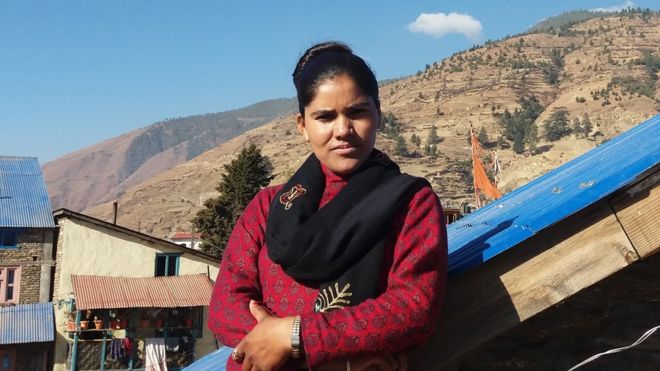
    Krishnamaya in her village, where she has challenged traditional attitudes to menstruating women - be artsy
    Krishnamaya in her village, where she has challenged traditional attitudes to menstruating women


    I started menstruating when I was 12. My mother, sisters and sisters-in-law used to stay outdoors in a mud hut when they were menstruating so I started staying there too. I was always afraid of what would happen. I was scared of insects and wild animals.

    I was told it was a sin to touch books during menstruation so I did not go to school during the three days of my period. I used to wonder why I was not allowed to touch books. I missed school and I wasn’t the only one. Many girls in my village faced the same problem.

    Even today, menstruating women are not allowed to enter their courtyard for seven days and are not allowed to consume dairy products like milk, butter, yoghurt etc. I was very hurt when I was not allowed to enter my own courtyard. During your period, people don’t hand you food, they fling it at you. The belief that you must not touch your elders during menstruation still persists.

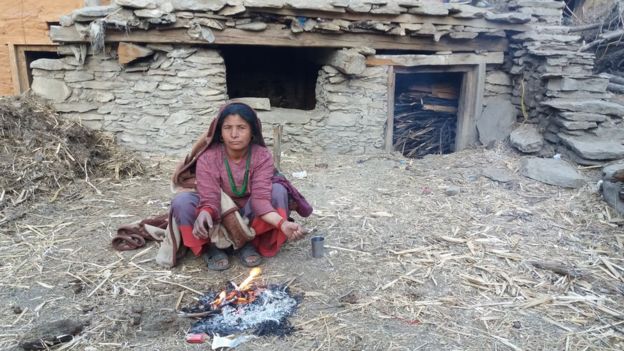
    Image caption A menstruating woman crouches outside a mud hut in Krishnamaya's home village
    A menstruating woman crouches outside a mud hut in Krishnamaya’s home village


    And I still had to deal with it when I moved from Kutari village to Khalanga, the capital of Jumla district, to go to college when I was 17.

    When I went looking for a room to rent, the landlord asked me if I had begun menstruating. When I truthfully replied that I had, I was turned away. I wanted to cry, I did not know what to do. If I went back home, I would miss my studies but it looked like I would not find a room to rent.


    Period taboos

    • In many world religions, women are seen as impure during their period
    • They are restricted from entering places of worship and following religious rites
    • The chhaupadi tradition followed by Hindus in western Nepal is the most extreme version where women are banished outside during their monthly cycle
    • In India, women are not allowed enter some Hindu temples and Muslim mosques while menstruating but there have been court cases to overturn this
    • In southern India, a girl reaching puberty is celebrated with a party and presents
    • In the Dogon tribe in Mali, women of the village also live in a hut during their period

    Finally, I found a room where the landlord said he would allow me to live on the ground floor, but not on the first floor of the house. I agreed to live on the ground floor (as far away from the others and as close to the door as possible).

    But there were problems. I was not allowed to touch the water tap during my period so someone would have to give me water. I had read that you should maintain hygiene during your period so I used the inside toilet, even though the landlord asked me not to and wanted me to go outside.

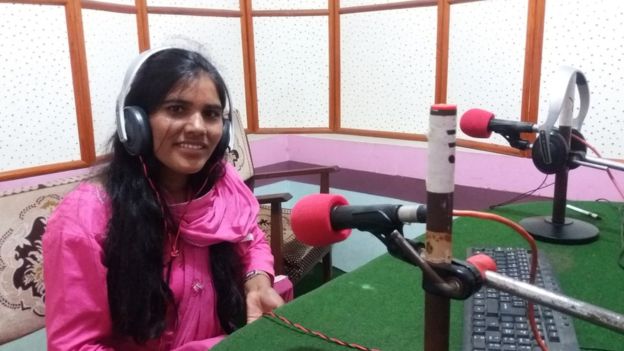
    Image caption Krishnamaya has educated herself about chhaupadi through her work as a radio journalist
    Krishnamaya has educated herself about chhaupadi through her work as a radio journalist

    After spending a month in Khalanga, I started working in radio. I learned more and more about menstruation. When my landlord complained that my menstruation was creating problems for him, I moved. Usually women are not allowed to rent the upper floor in Jumla because they menstruate. This belief persists even among educated people.

    It has been six years since I started working in radio. I stay in my room during my period. But I do not tell anyone, including my landlord, that I am menstruating, because I am afraid that I will be sent to a shed. One person cannot end a social ill that has been passed down for generations. Change cannot happen unless society accepts it.

    When I go home to my village, I stay in the house during my period. I stay in my own room. I do not enter the kitchen and prayer room. After protesting many times to my family, I have been able to stay inside the house rather than outside in a mud hut. I hope that one day the chhaupadi tradition, like the Sati tradition (of a widow immolating herself on her husband’s pyre), will end.

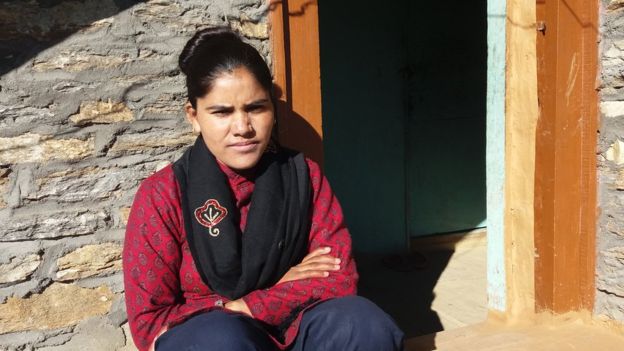
    Image caption Krishnamaya in front of her rented room where she is not allowed live on the first floor
    Krishnamaya in front of her rented room where she is not allowed live on the first floor

    I am very sad to hear of women losing their lives due to the chhaupadi tradition in the mid and far western regions of Nepal. Even in my district, a lot of women live in sheds, so the same thing could happen here too. The government needs to do more to educate people. Chhaupadi is banned but mindsets have not changed.


    Please remember that we are still raising funds for Rato Baltin at http://www.migranodearena.org/en/challenge/13821/higiene-menstrual-en-nepal—chhaupadi—rato-baltin/

    Every donation helps!