Author: Clara GO

  • #RatoBaltin’s First stage has been a total success

    #RatoBaltin’s First stage has been a total success

    All the photos in this mail were made by the girls during the Participatory Photography workshop #BreakTheSilence #MaunataTodau. Soon we will put them on sale, and the money will be for the authors.

    We have not been in touch for a while, but time flies and work has been pressing, both in Nepal and in Barcelona.
    We are writing a short notice to let you know we have you in mind and that we will soon post about everything that has been going on in the past really intense  months.

    For now, just a quick recap: the volunteer Spanish nurses, the Nepalese staff and Clara have already brought the project in 2 towns of Achcham (Nepal). It has been a complete success: women are especially satisfied with the menstrual hygiene training. Girls are really grateful for the menstrual cups donated by Ruby Cup – which we have been distributing in a pilot project. There is even a waiting list for the next batch! Both girls and women were really excited about the participatory photography workshops. They really needed to talk about Chhaupadi! We did not mention the word once, they were the ones who started bringing pictures of the huts and the deprivations they suffer when they menstruate.
    After the workshops, many of them decided to change some of the things they did up until now. We are sure that – slowly but surely –  change will happen.

    Alba, together with the rest of the volunteers, has been working on social media management and translations, as well as setting up an exhibition which opened on March 17th.
    For those of you in or around Barcelona, in case you are interested in visiting it and buy a picture or two, it is held at Greenage Club Barcelona: ​​Rosello, 254, 08037 Barcelona. Both Àsia 14-16 and the winner of the Photogenic Festval 2016 – SPECIAL are exhibited there. Since this is a private club,you must become members in order to get in. The good news is, however, that if you say you are going to visit the exhibition you will get a 50% discount on the annual membership: it will only cost you €10 and €5 out of these will be donated to be artsy! So by visiting the exhibition you will be donating to us!

    For those of you who have not donated yet, a friendly reminder: there are only 9 days left for our fundraiser. We still need funds for the next villages in Karnali Zone, at the Kalikot Disctrict. Would you please consider donating today? 🙂

    For the rest of you: could you please share the link to the fundraiser on social media in order to help us get the final momentum? We need as much help as we can get!

    Thank you very much for everything. We will keep in touch!

    Remember the donation link in English is this one: http://www.migranodearena.org/en/challenge/13821/higiene-menstrual-en-nepal—chhaupadi/

    The link to the English-version website is as follows: http://beartsy.org/rato-baltin-project-chhaupadi-red-bucket-project/
    Web: http://beartsy.org/
    Facebook: https://www.facebook.com/beartsyNGO/

    Written by Clara Go - Translate to english by Alba Miquel - Photos ©: Its authors, Girls from Basti and Kunti Bandali
  • Finishing touches to the Project – In Nepal everything is unforseeable!

    Finishing touches to the Project – In Nepal everything is unforseeable!

    Namaste!

    6 days left to go to Nepal, and the project is ever more outlined and clear. However, difficulties are also fast approaching.

    The original idea was to go West by the end of February to be there during March until mid-April. We had to change the plan (as usual in Nepal) and adapt to current events. And we will most likely have to change plans again!

    The government of Nepal, after signing the constitution last year, reformed the educational curriculum and, as of today, neither teachers nor students in the area we are going to know which day the holidays start. They don’t know exam dates either or the date the school year will start.

    Finishing touches to the Project – In Nepal everything is unforseeable!
    © Clara Go – Finishing touches to the Project – In Nepal everything is unforseeable!

    Therefore, we have decided that on our first trip at the end of February and March, we will offer our workshops in just two villages in the Achcham Disctrict (the area with the most Chhaupadi-related deaths this winter). In April local staff take their annual end-of-year holidays, so we will wait until the new school year starts, by the end of April or beginning of May, when we will go to Kalikot to work in two more villages.

    This made us rethink most of the project and face new expenses and challenges. The temperature is not the same in April as in May. In May the heat is suffocating and the monsoon rains may start anytime. We will have double the expenses to take all the staff to the area. Moreover, some volunteers who could have made it in April will not be able to in May, so we will have to find others.

    But that’s how Nepal is. Unpredictable. Their typical saying is: “Nobody knows”… and “What are we to do”? (K garne). And this is something we must not forget.


    © Clara Go – Nepal is like this. Let’s put a smile back on our faces and carry on…

    Many thanks to all of you for making your donations to the project’s fundraiser at: http://www.migranodearena.org/en/challenge/13821/higiene-menstrual-en-nepal—chhaupadi—rato-baltin/
    
We do really need it more than ever! 🙂

    ¡Many thanks!

    Namaste!

    Translated by our volunteer team.
  • Why I fought being banished to a hut during my period

    Why I fought being banished to a hut during my period

    We have copied and translated the following article – originally published at BBC News – because we consider it important that our Catalan and Spanish-speaking readers understand the text properly.
    — be artsy team

    An ancient Hindu tradition in which menstruating women are banished to an outhouse is under the spotlight in Nepal after the death of a 15-year-old girl. The practice was banned in 2005 but still continues in western areas. BBC Nepali reporter Krishnamaya Upadhayaya, 24, describes how she has fought against the tradition, known as chhaupadi.

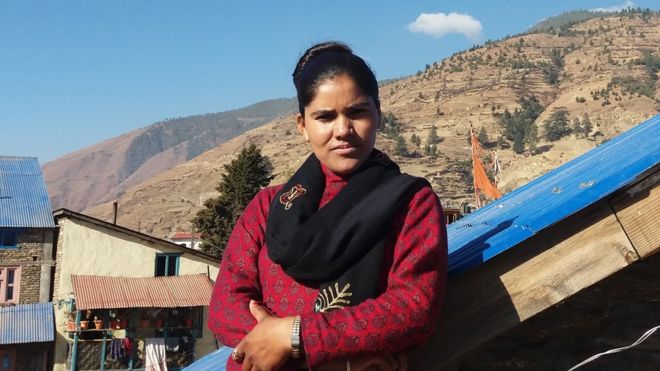
    Krishnamaya in her village, where she has challenged traditional attitudes to menstruating women - be artsy
    Krishnamaya in her village, where she has challenged traditional attitudes to menstruating women


    I started menstruating when I was 12. My mother, sisters and sisters-in-law used to stay outdoors in a mud hut when they were menstruating so I started staying there too. I was always afraid of what would happen. I was scared of insects and wild animals.

    I was told it was a sin to touch books during menstruation so I did not go to school during the three days of my period. I used to wonder why I was not allowed to touch books. I missed school and I wasn’t the only one. Many girls in my village faced the same problem.

    Even today, menstruating women are not allowed to enter their courtyard for seven days and are not allowed to consume dairy products like milk, butter, yoghurt etc. I was very hurt when I was not allowed to enter my own courtyard. During your period, people don’t hand you food, they fling it at you. The belief that you must not touch your elders during menstruation still persists.

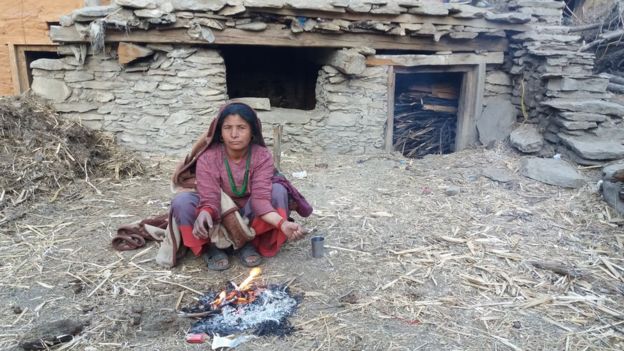
    Image caption A menstruating woman crouches outside a mud hut in Krishnamaya's home village
    A menstruating woman crouches outside a mud hut in Krishnamaya’s home village


    And I still had to deal with it when I moved from Kutari village to Khalanga, the capital of Jumla district, to go to college when I was 17.

    When I went looking for a room to rent, the landlord asked me if I had begun menstruating. When I truthfully replied that I had, I was turned away. I wanted to cry, I did not know what to do. If I went back home, I would miss my studies but it looked like I would not find a room to rent.


    Period taboos

    • In many world religions, women are seen as impure during their period
    • They are restricted from entering places of worship and following religious rites
    • The chhaupadi tradition followed by Hindus in western Nepal is the most extreme version where women are banished outside during their monthly cycle
    • In India, women are not allowed enter some Hindu temples and Muslim mosques while menstruating but there have been court cases to overturn this
    • In southern India, a girl reaching puberty is celebrated with a party and presents
    • In the Dogon tribe in Mali, women of the village also live in a hut during their period

    Finally, I found a room where the landlord said he would allow me to live on the ground floor, but not on the first floor of the house. I agreed to live on the ground floor (as far away from the others and as close to the door as possible).

    But there were problems. I was not allowed to touch the water tap during my period so someone would have to give me water. I had read that you should maintain hygiene during your period so I used the inside toilet, even though the landlord asked me not to and wanted me to go outside.

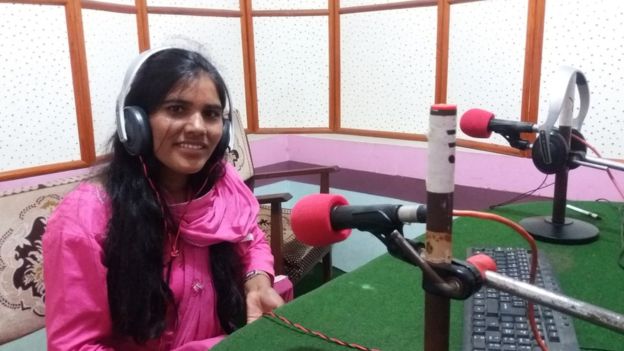
    Image caption Krishnamaya has educated herself about chhaupadi through her work as a radio journalist
    Krishnamaya has educated herself about chhaupadi through her work as a radio journalist

    After spending a month in Khalanga, I started working in radio. I learned more and more about menstruation. When my landlord complained that my menstruation was creating problems for him, I moved. Usually women are not allowed to rent the upper floor in Jumla because they menstruate. This belief persists even among educated people.

    It has been six years since I started working in radio. I stay in my room during my period. But I do not tell anyone, including my landlord, that I am menstruating, because I am afraid that I will be sent to a shed. One person cannot end a social ill that has been passed down for generations. Change cannot happen unless society accepts it.

    When I go home to my village, I stay in the house during my period. I stay in my own room. I do not enter the kitchen and prayer room. After protesting many times to my family, I have been able to stay inside the house rather than outside in a mud hut. I hope that one day the chhaupadi tradition, like the Sati tradition (of a widow immolating herself on her husband’s pyre), will end.

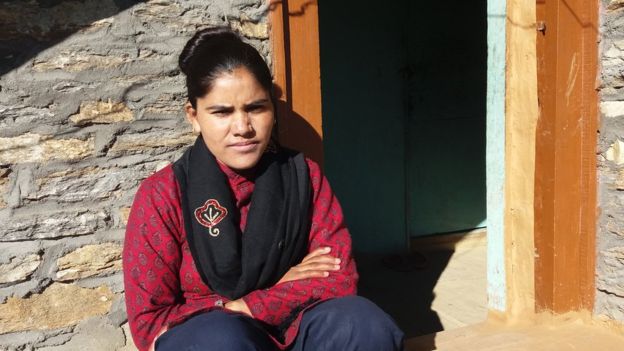
    Image caption Krishnamaya in front of her rented room where she is not allowed live on the first floor
    Krishnamaya in front of her rented room where she is not allowed live on the first floor

    I am very sad to hear of women losing their lives due to the chhaupadi tradition in the mid and far western regions of Nepal. Even in my district, a lot of women live in sheds, so the same thing could happen here too. The government needs to do more to educate people. Chhaupadi is banned but mindsets have not changed.


    Please remember that we are still raising funds for Rato Baltin at http://www.migranodearena.org/en/challenge/13821/higiene-menstrual-en-nepal—chhaupadi—rato-baltin/

    Every donation helps!


  • When I first started my period my mother said I had become untouchable

    When I first started my period my mother said I had become untouchable

    We have copied and translated the following article – originally published at The Guardian – because we consider it important that our Catalan and Spanish-speaking readers understand the text properly.
    —  be artsy team

    I was 13 years old with a red ribbon cascading on my oiled hair when I got my first period. I thought I had dysentery. When I asked my mother about it, she slammed a bunch of rags in my hand and said “nani ta nachune bhais” – my daughter, you become untouchable [you are menstruating]. She pulled me inside my brother’s room. I remember it was dark and creepy.

    Then came a list of restrictions: “Do not touch the kitchen and worshiping area”, and “Stay away from your father and other relatives”. I had to stay alone in brother’s room for a week. What hurt the most was not able to see my father or any male members of my family during those days.

    I asked my mother several times: “Why can’t I go outside the room?” But she stayed silent. The crippling sensation running deep in my entire body, the red blood was a sin. The same red blood that represents me as a woman. In a fit of rage, I would enter the kitchen and touch everything that my mother restricted. I would eat pickles from refrigerator, singing and touching everything.

    The second time I menstruated I kept it a secret. It was just a normal day for me. I woke up, went to the kitchen and did whatever I liked. Then when everybody knew I was on my period and touching everything it turned into a heated debate. I was lucky enough that my father was progressive and supported my move.

     ‘Women around the country are not as lucky as me. The situation of women living at the rural areas of Nepal is terrible,’ says Pragya Lamsal (pictured).

    ‘Women around the country are not as lucky as me. The situation of women living at the rural areas of Nepal is terrible,’ says Pragya Lamsal (pictured).


    But women around the country are not as lucky as me. The situation of women living at the rural areas of Nepal is terrible. The practice of isolating women during their period exists across the country in differing forms. In some places, women cannot be in their own homes. While in others, women can be in the house but not in the kitchen and worship room. They are also forbidden from touching other people (especially male members of the family), cattle and growing fruit and vegetables.

    In Nepal, menstruation is associated with stigmatising traditions and restrictions for women. I’m calling for an end to the – sometimes deadly – suffering.

    The most extreme form of seclusion is practised in the western part of the country. Chhaupadi banishes menstruating women to live in sheds outside the houses. Recently, two young women died in menstrual huts in Achham, a hilly district in far-west Nepal, in less than a month. On 18 November, Dambara Upadhyay, 21 from Timilsen village was discovered dead in the shed while a fifteen-year-old girl Roshani Tiruwa of Gajra died on 17 December. They are not the first and sadly we can’t say for sure that they will be the last. The exact numbers are not available but it is believed that dozens of women die every year in the name of tradition, as if menstruating women do not deserve basic human rights.

    Chhaupadi was outlawed by the supreme court of Nepal in 2005. But the police often see menstruation as a private family issue. The government’s indifference is taking toll on women’s lives. How many more women must die before taboos and stigmas surrounding menstruation come to an end?

    Further, little attention has been paid to the other severe health impacts associated with menstrual taboos and stigmas. Women suffer from pneumonia, diarrhoea, suffocation and respiratory tract infections while they are in seclusion. During my visits to remote areas of the country, women tell me they are not looked after properly by family during menstruation.

    Speaking up against menstrual taboos is not easy. There are many initiatives across the country but the tradition is deeply rooted. For example, the villages where young women recently died had been declared a menstrual-hut free area. Families had pledged to discontinue the practice after shed-demolishing campaigns. But they resorted back to the practice and the newly-built sheds were found to be even worse than the previous ones.

    Another challenge is that women themselves believe the traditions. A schoolgirl in Udaypur, eastern Nepal, once told me that God will curse her if she doesn’t follow the rules of seclusion during her period. Girls continue the practice because they fear God will be angry with them and they will bring misfortune on the family.

    The government needs to take a new approach to this issue. Legal initiative and awareness campaigns must go hand-in-hand. I have long been advocating that it is not cultural issue. It is a human rights issue. It is not a part of religion but part of superstition. It is against women’s rights. It is also a legal issue.

    But it’s not a matter for Nepal only, smashing menstrual taboos should be part of international initiatives. Women’s right are ensured by the Convention on the Elimination of all Forms of Discrimination against Women and the Universal Declaration of Human Rights. As the UN and countries around the world agreed to the 2030 agenda and sustainable development goals, it is a matter of concern for the whole world. It is time to ensure a world where women are entitled the right to live with dignity and respect.

  • A Visit from Aunt Flo in Nepal

    A Visit from Aunt Flo in Nepal

    This article is a testimonial written by a friend from France (Delphine) who experienced what Chhaupadi is first hand. This was in the more urban part of Western Nepal. We will do the Rato Baltin project in the more rural and remote ares. Originally published in: https://seedstoplants.wordpress.com/2016/09/29/a-visit-from-aunt-flo-in-nepal/

    A little while back, a friend of mine, Clara, asked me if I could help with a prospective project and write about a rather interesting experience I had when I first arrived in Nepal- when I had a visit from Aunt Flo(w) in Far West Nepal.

    Clara, whom I travelled most of Southern India with, continues to bravely and creatively lead photography workshops in many Asian countries in order to support different community projects with young monks, orphans, women, etc…  From February 2017, she will go back to Nepal and work collaboratively with local nurses in Far and Mid West Nepal, in order to raise awareness regarding menstruation and its management and hopefully decrease chhaupadi.  Chhaupadi, which literally means ‘untouchable beings’- is a tradition where women are banished from their homes and social interactions for the duration of their period as their blood is deemed ‘impure’.  This originally religious tradition  (Hinduism) was outlawed in 2005 by Nepal’s supreme court.  However the strongly ingrained believes and superstitions surrounding menses are still present in parts of Nepal, especially remote areas of Far West Nepal region.

    For my part I did not know of this tradition until last year, when I travelled to Far West Nepal with my Nepali Couchsurfer Zach in order to trek to the nationally famous and highly regarded Rara Lake during the auspicious Dashain Festival season.

    I had only been in Nepal for a handful of days when Zach invited me to join him on the trek, first stopping by Dhangadhi, a  large-ish town in the southern part of the Far West Region, to greet his uncle, aunties and cousins.  We started our journey in Kathmandu where we jumped on a rickety bus and stayed on for over 28 hours.  During that rather adventurous bus journey, my periods started and little did I know that that common monthly affair was going to give me an insight into a part of Hindu culture I yet had to discover.

    On our arrival to his family house, we were warmly greeted, my hand was shaken by several people and tea and biscuits were offered from a common plate.  The atmosphere was festive and many questions were asked until I got up to go the toilet.  At that moment, Zach asked me to wait whilst he exchanged a few words with his family.  Although I could not understand the language, I could feel that the tone had  changed and I saw his aunty’s face literally fall.  Zach approached me and asked me if I had my periods- he must have seen me gearing up for the toilet each time the bus stopped.  As I nodded, the air tangibly shifted, as if the faster pace in people’s breathe actually influenced the outside air.  From there a new order was set: I got given access to ‘my own’ toilet (the good one in honour of the visiting Westerner) and was then showed to a small adjacent room to the house where to my surprise I found a young lady sitting on a chair with her feet on a single bed, typing away on her mobile phone.  Anjali, one of Zach’s cousins, travelled home from Kathmandu where she goes to school for the festival and was also on her menses- day 2.

    Anjali could speak some English and was quite happy to have company and an opportunity to improve her English, and for me to learn some Nepali.  The bus journey had been long and I also used the unexpected opportunity of being ‘in quarantine’ to have a nap for a little while.  However after waking up, what I wanted most was to get my stiff legs out for a nice long walk and I asked Anjali if she fancied to join me to the nearby river that I had just been told creates a natural barrier between Nepal and India.  A suggestion  I naively thought would be easy became a negociation which was granted.  I indeed learnt later that Anjali would not have been allowed out of the room until day 5 of her periods if it had not been for an overseas visitor ‘pushing’ cultural boundaries.

    For me, started an internal conflict between politeness and willingness to accept cultural norms but also a complete disapproval with the custom that tells all women that during their periods they are dirty and shoudl be kept away.  Indeed women (and I) are not allowed to interract socially,  receive tikka, nor to access any kitchens, touch people, share a plate, a toilet or any thing that their ‘impure’ body may have touched.

    What I learnt though was that Zach’s family was not everyone.  Zach had told me that his aunties were more conservative than most families in that neighbourhood but that there were also much harsher practices in the area where we were to trek, such as girls left in barns in any seasons throughout their periods.

    I came to an internal agreement that I would respect some of the customs, mostly as a way to experience this custom first hand, but that I would also use the exceptional status I had as a Westerner and take regular leave of the room to visit more broad-minded or simply curious neighbours who invited me in their homes for food.  I even joined Zach and his male friends for a beer out in the community, thing that I know is not usual for any woman and certainly not during her menses.  As a matter of fact I did not sleep in the little bed with Anjali at night as I was offered to sleep in another home by two young ladies living in New Deshi and home for the festival.  On my last day in Dhanghadi and ‘day 4’ of my periods, a lovely neighbour made an exception and gave me tika– a blessing that should normally not be done before ‘day 5’ minimum.

    I made an exceptional friend during that time, Oshin, who to this day continues to share with me thoughts on many aspects of our cultures.  She helped me a lot to comprehend the different customs and the slow but definate change parts of Nepal is seeing in terms of women’s rights. Chhaupadi has no place to be in this world but I also think that a man-initiated law to ban Chhaupadi is not enough to compete with the all-seeing omnipotent gods that guard many beliefs in Nepal, mainly in more remote parts.

    From my limited experience, I feel that a change is slowly coming thanks to technology and school programs.  Young educated people are starting to challenge a few grim and irrational practices and will hopefully and with time see periods as a healthy cycle of life rather than a shameful aspect of a woman’s life.  Projects such as Clara’s could lead in the long term to reduce and hopefully eradicate the fear and superstitions surrounding this custom.

    To end, I would strongly recommend the following links:

    If nothing else, please watch the Ted Talk by Adipi Gupta on periods and the taboos surrounding it.

    http://www.nomoretaboo.org/blog/chhaupadi  : article and documentaries

    http://borgenproject.org/menstrual-hygiene-remains-challenge-Nepal/  : article

    http://www.irinnews.org/report/93404/nepal-emerging-menstrual-quarantine : article

    https://swordandflute.wordpress.com/2013/07/19/three-days-of-impurity-menstruation-and-inauspiciousness/  : It is a long article but I recommend it (along with the comment section).  A more balanced ‘grey’ view than in other articles (mostly written by ‘Westerners’) brought up on this page.   The author, Sarika Persaud (Hindu living in the US), has written many articles on Hinduism and customs on Word Press.  In this article, she makes an attempt to understand the origins of the practices surrounding menstruation in Hinduism.

  • Exhibition Asia 14-16 at Manlleuet – Manlleu – Catalonia

    Exhibition Asia 14-16 at Manlleuet – Manlleu – Catalonia

    From the end of November to end of January the photos from the exhibitionn Asia 14-16 can be seen and bought at Restaurant Manlleuet, at Plaça Fra Bernadí 23, in Manlleu (province of Barcelona).

    The photos can be booked right there at €25 and sent home, or at our online shop, where they will cost you a bit more. The total cost is €25 + postage, but since the cost up to 2kg are the same, you might as well buy some more!

    We hope you pop into the exhibition or our online shop and enjoy the photos! 🙂


    Since we are at it, please remember that up until end of January the exhibition “SPECIAL” will be in Can Basté (Barcelona) and the photos can also be bought online.

    Finally, we also launched a fundraiser. These are all directed towards the same goal: project Rato Baltin, to aid girls in Nepal!

    Onwards and upwards!

  • Rato Baltin Project – (Red Bucket) Crowdfunding  – #RatoBaltin

    Rato Baltin Project – (Red Bucket) Crowdfunding – #RatoBaltin

    The crowdfunding of our project aimed at girls in Nepal is finally ready.
    Remember: Rato Baltin Project (Red Bucket) consists of a menstrual and hygienic education program in West Nepal’s remotest areas. Through participatory photography workshops, we will offer menstrual and hygienic education training led by local nurses – with the aim to foster women’s rights and wellbeing. We also expect to be able to introduce the use of menstrual cups as a hygienic, healthy and safe means for them.

    I guess you’ll already know that in several areas of Nepal, especially in the West, there is a practice called Chhaupadi: a cruel and devastating tradition. Girls and women, simply because they menstruate, are considered dirty and impure and are isolated from their community, with limited or no access to basic hygienic services, and exposed to harassment and sexual abuse.
    The impact of said situation often implies missing school, humiliation and sex exploitation.

    You can make your donation here: http://www.migranodearena.org/en/challenge/13821/higiene-menstrual-en-nepal—chhaupadi/

    And please, feel free to share the link with your friends, we need to reach as many people as possible to bring the project to a good end.
    Thank you very much from all the team at be artsy. 🙂

  • SPECIAL, part of the Creativity Photo Project, at the Fòrum fotogràfic Can Basté

    SPECIAL, part of the Creativity Photo Project, at the Fòrum fotogràfic Can Basté

    Consisting of photographs taken during the Creativity Photo Project in Asia, project SPECIAL (a portrait series Clara G.O. made at the Manawala Centre in Amristar (India) to boys with special needs), have been exhibited at the Fòrum fotogràfic Can Basté 2016 , and will still be shown up until year end in this same venue.

    The photography space of Can Basté makes a yearly selection of photographers – both amateur and professional – and, this year, the Creativity Photo Project, within the framework of be artsy, was selected and had 9 items exhibited. The photographs can also be seen online – along with various other pictures printed on different materials – and bought at be artsy’s solidarity shop.

    The sale of said items will be invested into the NGO’s next project in Nepal: photography workshops, hygienic training (emphasising menstrual hygiene) to mitigate Chhaupadi – a “tradition” according to which girls and women are isolated from their community,  deprived of basic hygienic measures and left vulnerable to assault while they are menstruating.

    This is project Rato Baltin (red bucket), which will be carried out in the most remote Western areas of Nepal from February 2017. One way of helping is by buying solidary art!

  • We have a suggestion for you: #GivingTuesday

    We have a suggestion for you: #GivingTuesday

    #GivingTuesday is a global movement with the aim to encourage and multiply good deeds. The goal is devoting one day worldwide to celebrate the action of giving, be it food, money, time (volunteering), second-hand objects, etc.


    We would like to ask for your donation to help us buy the hygienic material we need for the girls whom we will be delivering the menstrual cup to on our “Rato Baltin” project.

    kit-beartsy- Rato baltin projectThis will be a kit consisting of a metal bucket; soap; a towel; a journal to write down their monthly experiences – and so have a way to let us know how they are doing while we are not around -; a pen; and a leaflet with instructions on menstrual Ruby cup usage  (the company which donated the cups to us)?, FAQ, queries that may arise during its use, and general menstrual hygiene – this will be translated to Nepalese and printed on good-quality paper so it lasts longer.

    You can donate €18 by credit card  with your Paypal account (which charges us commissions on every single transaction); or by transfer to our current account:

    Associació be artsy

    IBAN: ES23 0081 0900 8200 0430 1934

    BIC: BSABESBB

    If you make a transfer, would you please send confirmation of the transaction to: info@beartsy.org ? 🙂

    On Wednesday we will let you know how many kits we managed to fund through this action!


    P.S.: Please feel free to share this post!

  • Raising funds for Nepal

    Raising funds for Nepal

    Would you help us raise funds for our project aimed at girls in Nepal?
    Now we have launched this challenge:


    Or If you feel like it, you can Donate:


    Data protection: Associació be artsy (G66869694) will record the donation and meet legal obligations. PayPal processes the payment. You can exercise your privacy rights at info@beartsy.org. Privacy Policy.

    Please remember: Our aim is to bring hygienic, menstrual and sex education to the most remote areas in West Nepal. There, girls are considered impure while they menstruate and are deprived of their most basic needs during 7 to 10 days.
    We will complement this with the introduction and distribution of menstrual cups in the area, which we will implement with the help of creative photography workshops. This will enable the girls to find out and express what can be improved in their environment while they are menstruating.
    The final long-term goal is to reduce Chhaupadi.

    paypal-donation