Tag: Travel Log

  • Travel log: 2076/2019 follow-up trip, adapting and planning for the future

    Travel log: 2076/2019 follow-up trip, adapting and planning for the future

    We were in Kathmandu, nearly ready to start our journey to Achham.

    This time the team that travelled from Kathmandu was composed by Rupa: Project Manager; Simran: student of International Cooperation in training; Sharmila: community health, although she came as translator; Rita: journalist, who joined the project to take pictures in person of what is happening there and thus round up a story on the work we do; Clara: Managing Director of the Project; and Bea: menstrual therapist.

    On arrival to Mangalsen the girls were waiting for us: Tejana and Manisha as Project Coordinators, Hiunkala and Rohina as trainers, and Tulsi, Manisha, Kamala, Rabina and Janaki as mentors.

    The first point in the agenda was arriving to Mangalsen and prepare the trainers and the mentors on how would the follow-up take place. It was important that all of them knew what was expected from them.

    As always, getting to Mangalsen was a real adventure, a mixture of buses and jeeps, interspersed with stops for tea and snacks to survive the 2 days journey (we have shortened it by one day!!).

    In a single day we explained the whole team how to do the follow up, the routines, times and materials, and divided ourselves into groups to cover the 12 villages we had to visit. In each team there were girls for whom this wasn’t the first time they we are doing a follow up, and they knew the annual routine.

    We were 3 teams, each of which, as first task, visited a village in the Sanphebagar municipality (Patalkot, Sirkot y Kalsen), and then we would have to visit the three villages in each of the other municipalities: Turmakhand, Dhakari and Mangalsen.

    We split up and started with the follow up. We spent 3 nights in each village and during that time we had to find all the women in the village and all the girls from school who were using the menstrual cup, undertake the follow up, and the day before leaving show everybody in the village the film from Mira Rai.

    Luckily, we had divided the tasks within the group, so we worked together as efficiently as possible, something that, in Nepal, sometimes seems quite impossible!

    We noticed immediately that locating all the women was very difficult, most of them were out in the fields, working, and they had no time to come to the school to do the follow up. So, as the saying goes, “If Muhammad will not come to the mountain, then the mountain must go to Muhammad”: we swept the whole village and surroundings looking for women, knocking on all doors, asking the people we found in the roads…

    After this first village, we all met in Sanphebagar, to comment about the visit, discuss the problems we may have had, and any arising queries. We had lunch together and shared our first impressions. Rupa’s health had been quite poor during those first days and seeing that she wasn’t improving, we decided that it was better if she went back to Kathmandu with Rita by plane from Dhangadhi.

    In the three villages things had only gone so-so, which made us think that somebody had been disrupting the work, and we had our suspicions on whom this was (and more than just suspicions…).

    During the following days, our 3 groups visited the 9 remaining villages: Jupu, Banatoli and Mangalsen, three from the Mangalsen municipality; Dhamali, Toshi and Raniban, from the municipality of Turmakhad; and Hichma, Dhungachalna and Dhakari from the municipality of Dhakari.

    We did not find all the users, so it was clear that the job was not finished, and we decided that the trainers would continue at the beginning of December. We needed to know if each user of the cup had been using it, if they were happy with it, if they needed anything, if thanks to the use of the cups and the workshops we did in May their relationship with the menstruation had improved, and if anything had changed in how they live their period days; and the most important thing, are they still subject to the Chhaupadi?

    All this information is crucial for the continuation of the project. We finished with the last village on the 15th of November, brought all the remaining material to Mangalsen and got ready to go back to Kathmandu.

    The Achham girls will undergo a further training of the menstrual cup in February, and the team will return in May from Kathmandu for the 2020 Project.

    We continue working, with all our heart and enthusiasm put in the project. Thank you for supporting it!

    Text & photos© by Bea San Román - Traslation by Tere Salinero


    Please become a member. It is important. We need you.

    You can become a teamer donating 1€ to Rato Baltin Proyect or Edufem Proyect.

    Or take a look to others ways to donate at https://beartsy.org/donate/
    Thank You! 🙂

  • Putting the seed of the counterpower (Volunteer Testimonial)

    Putting the seed of the counterpower (Volunteer Testimonial)

    One day, in the Facebook of the university where I am studying a degree in Cultural and Social Anthropology, I read a note where it said that they were looking for anthropologist volunteers for a project in Nepal. This name, Nepal, caught my attention; a country that I really like, that I have visited seven times and where, from my first landing in Kathmandu, not having yet gotten out from the airport, I felt like arriving to some familiar place. I was in a moment in my life when I could afford to take some months off and therefore I sent my application to the NGO.

    I spoke with Bea via Skype, who explained the project and the cultural practice, the Chhaupadi, the reason for the intervention of the NGO in the community; custom which, despite my trips to Nepal, I ignored was being applied in such a strong manner.

    Once selected, they explained to me my role as anthropologist: “to find a strategy to involve the shamans and men in the process of raising the level of awareness that was expected to be achieved with the intervention”.

    Yeah, yeah, easy (of course this is ironical, especially for an anthropologist in training), but I liked it, because it showed the full all levels approach of the NGO.

    I had never collaborated with an NGO, I have always been a bit mistrustful; therefore, I made up a plan B (yes, because I am more of having a plan B, unlike Bea, wonderful person, member of be artsy, who focuses all her energies for plan A to go to term), deciding to take with me all my mountain gear to lose myself in the powerful and energetic Himalayas in case the project would not finally be to my liking…. Well, I did some trekking alright, but at the end of the project, because I really loved this latter.

    The project tries to raise awareness in the people of the community about what the menstruation is, giving a sexual, menstrual and health workshop in schools, and offering the menstrual cup as an ecological and hygienic solution, bearing in mind that many women use rags or have on two, three pieces of underwear, instead of using pads.

    This education is important, considering that in the school curriculum there isn’t yet a section treating those subjects. Reason why the Chhaupadi practice is so deep-rooted, because they don’t know what the menstruation is in its biological sense.

    During my interviews, to the question “what is the menstruation?” the reply was Chhaupadi. That is, they make no difference between the biological process and the tradition, whose real origin is unknown but which is still being passed on from generation to generation by the elders. That superstition about women being impure is the only information teenage girls receive about what the menstruation is.
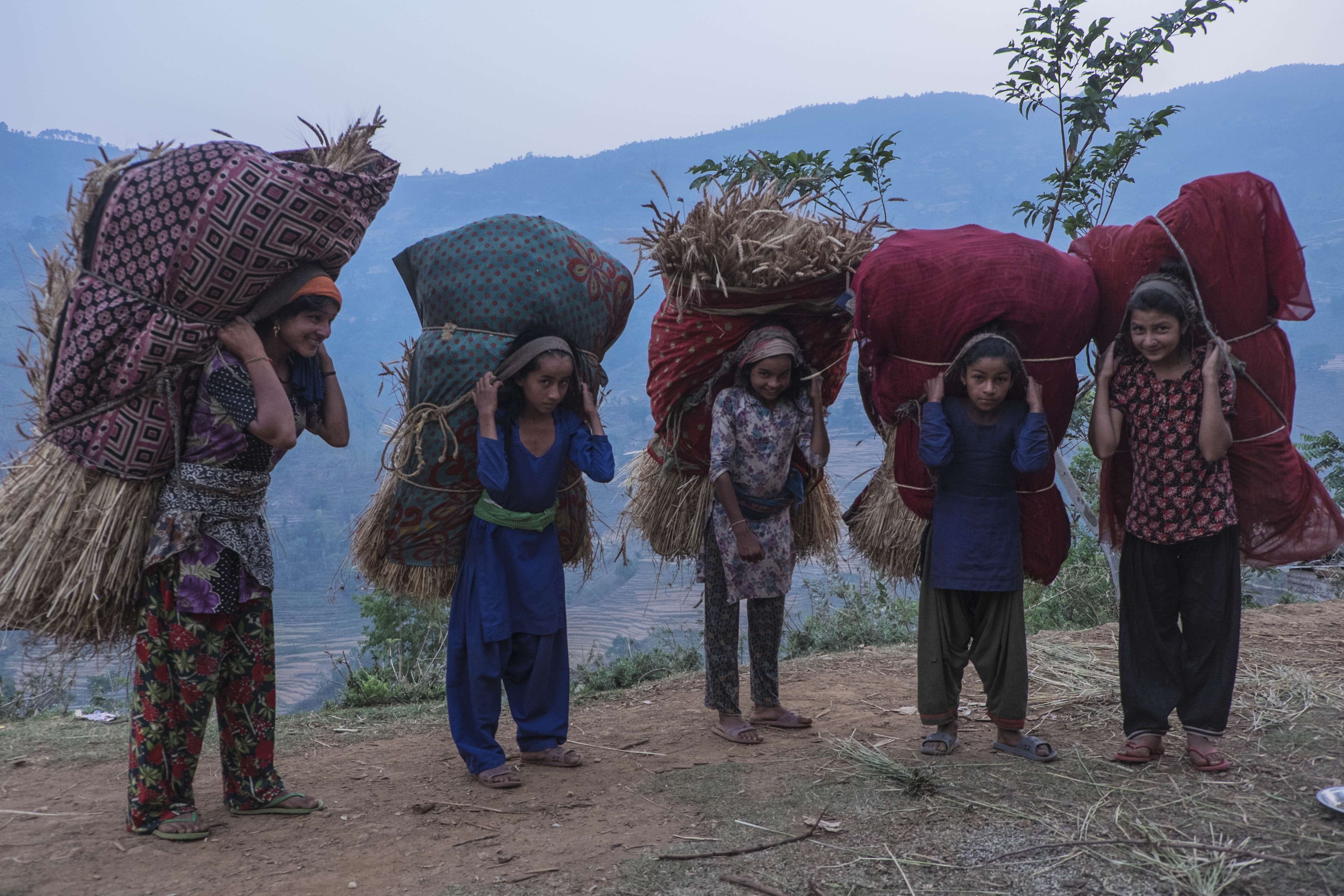


    The workshops are addressed to children and teenagers, of both sexes, who in some years will become husbands, wives and parents, potential agents of change; whereas the oldest people, both men and women, together with the shamans, are not inclined to any change in what refers to this custom. This is just a reflection of the social structure: patriarchal, where the woman occupies a subordinated role and the elders hold a lot of power. This is a custom that has no benefits of any kind for the women nor grants any service, except to support the stratification of gender in the social fabric.

    The focus is in teenagers and children, but at the same time includes the people who hold positions of power within the community: they are informed, but they are not let to be in full command.

    That is another point I like, because letting them the leadership would mean changing the form but not the substance: power and recognition would still be granted to those who already have it, leaving women in the shadows, confirming an unequal structure of power.

    The ones imparting the workshops are local girls who live in the community, concept that achieves what I have most liked of the project: be artsy is giving an opportunity to these girls, providing them with knowledge through some intensive training, paying them, and, above all, the most valuable of all: it gives them self-assurance, the chance to empower themselves and be independent. Not the negative and destructing power that society allocates to them, but the power to break the mental framework that makes them feel inferior and impure.

    This is the thing that has moved me the most: to see how girls of between 16 and 18 years old have changed, after 50 days of being together.

    Hiukala, the trainer in my group, is 18 years old, and, more than others, represents that quick and intense change. When I met her during the training she was so shy that when I asked her: “what’s your name?” she replied whispering her name and looking down; to speak in public, impossible.

    To be honest I could not picture her giving workshops in front of dozens of teenagers and speaking with the shamans, but I was mistaken. Day after day, with much effort and determination, together with Kamala, Goma and Basanti, the other girls in the group, I saw how she was becoming stronger until being able to go to her village and say to her parents that, from that moment onwards, she would not accept to be thrown out during her menstruation days.
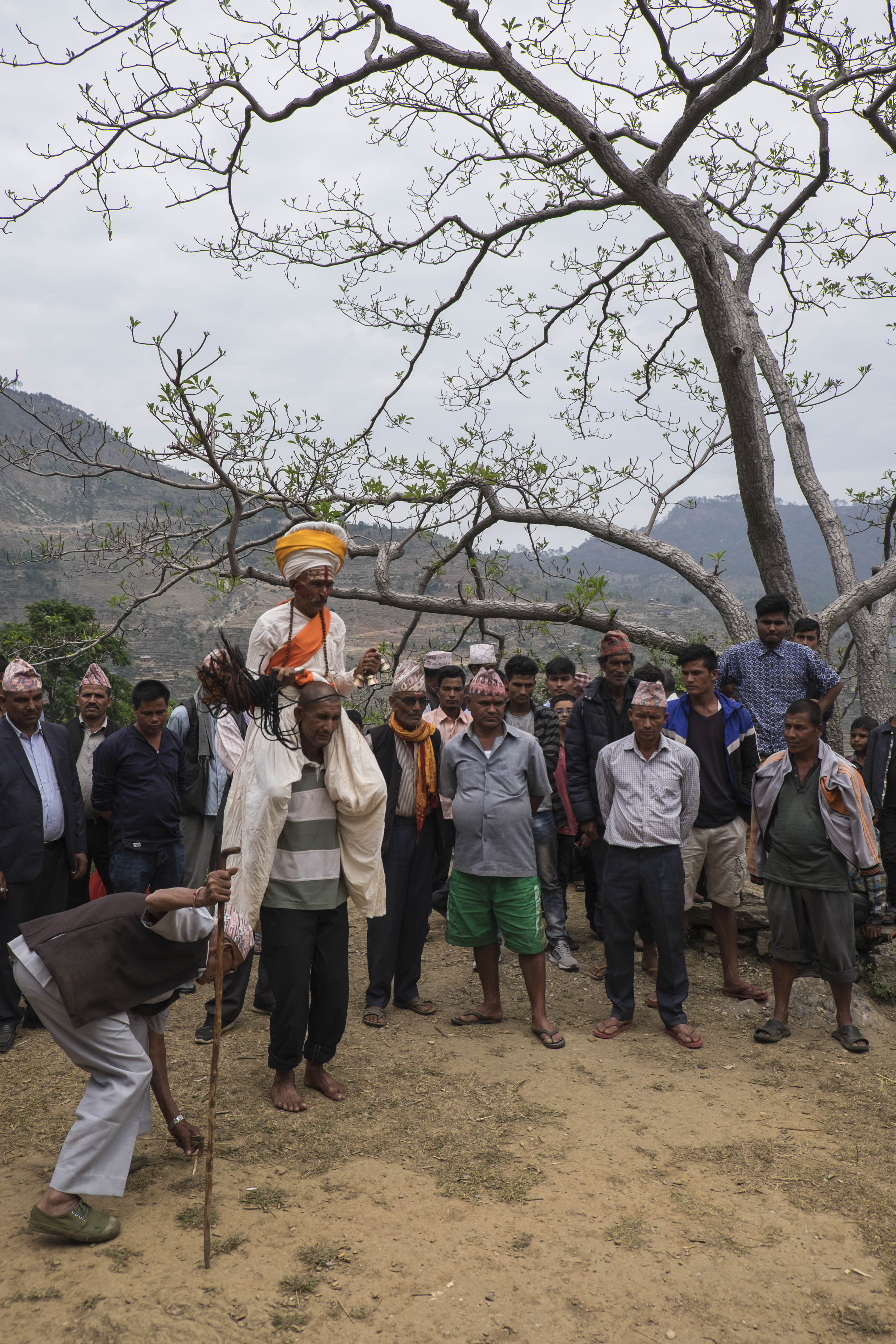


    They became a symbol for the women in her own community and above all a reference, because every two months the trainers do a follow-up with the women and girls using the cup, both to monitor the correct use of the cup as well as its impact in what regards the Chhaupadi.

    Here I introduce another point in favour of the project: by training girls from the community, they give them the necessary tools to pass on the knowledge, as well as favouring the development of a context of debate that in other case would not exist given the political (the subordination of the women), socio-cultural and financial environment, which has them all the time occupied with tasks concerning the housekeeping and family care. They build a joint space from where resistance and change can arise, but leaving the choice to the people in the community, who will activate the change if they really wish to and see it necessary.

    One form of resistance that shows up these days is only by songs describing the sufferings that the Chhaupadi brings and pleading the gods to leave them free to remain at home.

    Last, but not least, is the part of the participative photography.

    The cultural diversity is not only notorious in the external, material and visible, but also in invisible aspects like emotions, some predominating more than others.
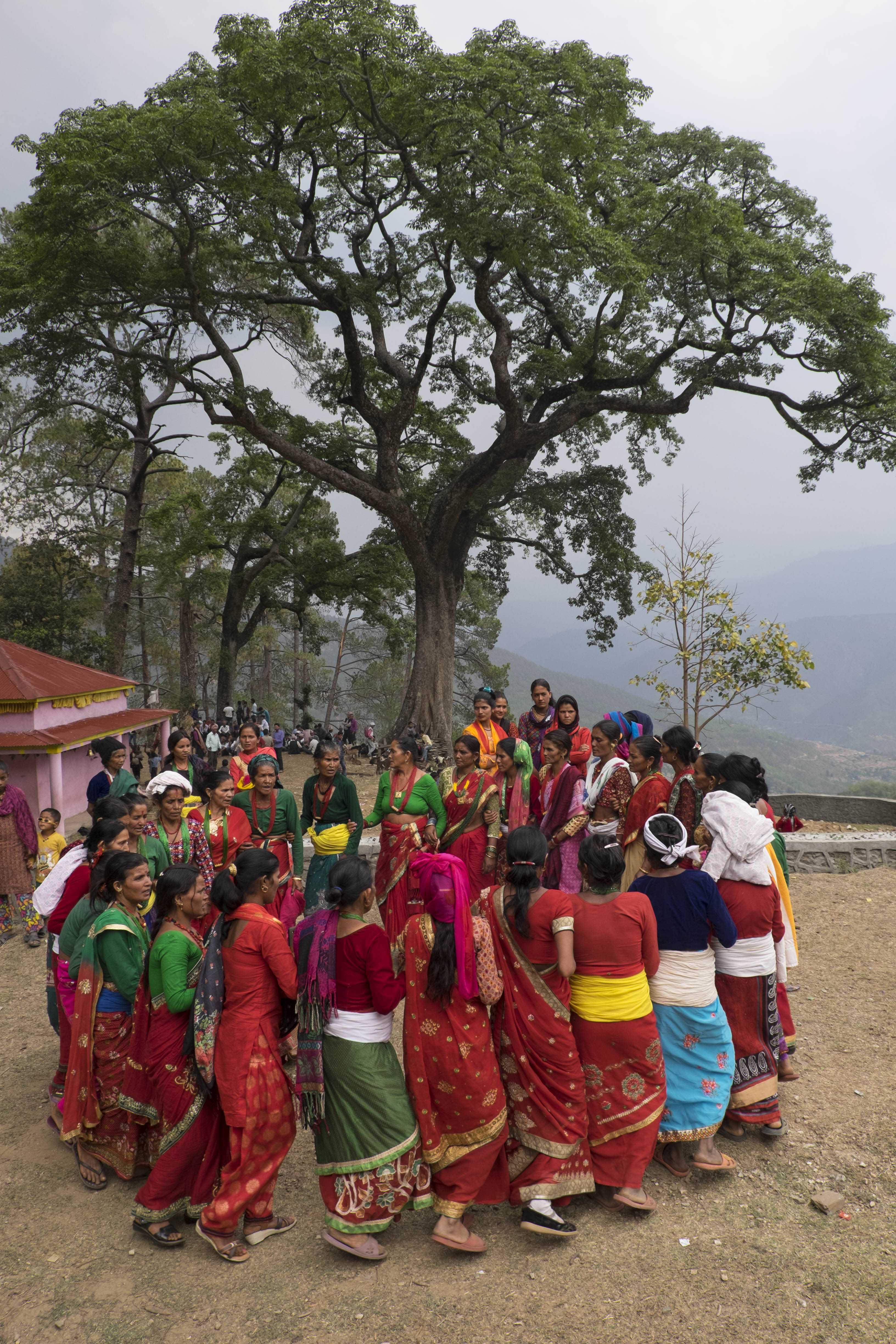


    Talking about the menstruation prevails the embarrassment over the ease, so using pictures instead of talking, as an alternative way of communication, but equally efficient, women are invited to share their opinion and experience about the menstruation, method that highlights the sensitivity of the project.

    This project has got effects not only exclusively on the people of the community, but also on the ones involved: my experience in the field has been very intense, especially from a human point of view.

    Starting by the team of be artsy, all of them wonderful people, few, but who are worth a lot, who despite the many difficulties and unforeseen issues that creep up daily to bring forward the project with determination and commitment, as volunteers and for free.

    Their work is characterized by the effort, the passion, the way of giving themselves to the cause, the trust in activism and social change, which, as I have mentioned before, is reflected in the quality of the project.

    I was surprised by the transparency in the management and the care and attention to all people involved. All of these reasons that made that my plan B would not finally happen.

    The intensity is also due to the precarious context, which requires good adaptation skills and even to be able to forget oneself, being the only person from Occident in remote locations where nobody speaks English.

    No doubt this has been the most authentic experience of all my stays in Nepal: in a warm atmosphere, waiting for them to boil water to be able to drink, eating only dal bat and forgetting about the possibility of choosing something else, but being aware of how lucky you are because you can have that at least every day, having a shower in the open air inside an uncomfortable sac called petit-cot and sharing rooms, even sometimes the bed, with people and bugs. Upon my return I had to look up the word privacy in the dictionary: it had become an obsolete word during this stay.

    They told me at the beginning that I was going to live like a Nepalese, but this was not possible, because my skin colour, together with the local hospitality, granted me always a privileged position, although my role would result uncomfortable to some villagers (men and shamans). I always enjoyed the biggest bed, the softest pillow, many times I did not have to wait in line for washing myself in the fountain, and any request I may voice aloud became matter and obligation for all the community.

    Not forgetting that I had some little angels with me: Hiukala, Kamala, Goma and Basanti, trainers and mentors of be artsly who during my stay watched over me.

    A truly unforgettable experience that strikes a cord in you: I travelled to know some villages and their cultural customs, and I ended up knowing myself much better.

    Dhanyabad!

    Written, and © photos, by Eleonora Bordogni, translated by Tere Salinero
    

    West Nepal girls need this kind of program. And we need help to continue the project!

    Paypal recurring donations:

    Select a Donation Option (EUR)

    Enter Donation Amount (EUR)

    Or if you feel like it, you can donate via bank transfer at: Banc Sabadell IBAN: ES23 0081 0900 8200 0430 1934 BIC: BSABESBB (your recurring donation will help us have a better planning of our budget to carry out the projects undertaken).

    Or take a look to others ways to donate at http://beartsy.org/get-involved-with-rato-baltin/   or https://beartsy.org/become-an-associate/
    Thank You! 🙂

  • Achham: Training for the trainers and mentors for the 2019 workshops

    Achham: Training for the trainers and mentors for the 2019 workshops

    We finally made our first trip to Achham. This year the team is huge. We are in Sanphebagar and we have 10 days of training for the trainers and mentors who will be providing workshops in schools in Achham this year.

    Our great 2019 team:

    · 5 foreign volunteers: Maisie, Anne, Claudia (nurse) Eleonora (anthropology student), and Beatriz (menstrual therapist)
    · 2 project coordinators in Achham: Tejana, and Manisha
    · 6 trainers: Hiunkala, Ganga, Dambara, Juna, Rohina, and Basanti
    · 12 mentors: Tulsi, Manisha, Sangita, Lalita, Kamala, Goma, Bhagwati, Nita, Urmila, Rabina, Janaki, and Krishna
    · 1 photographer: Uma
    · 2 interns: Raunika, and Rupa (CEO assistent)
    · CEO of the project: Clara

    The buckets arrived two days later than expected and the menstrual cups also arrived late, but that’s how Nepal is. Luckily, everything arrived. We took advantage of the delay to prepare the routines and processes.

    It is very important that the trainers know exactly what they will be teaching. However, they have not been to the school and have not done the workshops. It is for this reason that we have the mentors. The mentors are girls between the ages of 16 and 18 who attended the workshops in previous years in Mangalsen. They assist the trainers and are a great help.

    On the third day, we met with the mentors and trainers in a small room at the hotel where we were staying. We went over what we will do during the first day of the workshops. We will present the project and play a game to help us bond. We will then discuss puberty, anatomy, and the menstrual cycle. We watched the film Monthlies, and taught the trainers how to use the projectors.

    The next day, we went over what we would be doing on the second day of the workshops. We practiced the meditation we will do with the boys. The trainers practiced with us to gain confidence and it went very well. While the boys meditate outside, the girls will stay in class and write what they like and don’t like about menstruating. We will use this information to make a problem/solution tree. The mentors already know how to do this and will teach the trainers.

    We continue with sex education, working as openly as possible because we know that the students at school are very curious and it is important that the trainers and mentors are prepared to respond to all types of questions. We also use questions from other years like, “How does a woman masturbate?”

    We talk about sexually transmitted diseases and methods of contraception, putting emphasis on the use of condoms because in this area the HIV rate is very high. When we explain how to put condoms on, it creates a lot of laughter and helps everyone to relax.

    We also talk about sex, gender, and sexual orientation, which is a taboo topic in Nepal. It took us a day longer than expected to finish the syllabus. We spent a lot of time planning the 6 days of the workshop. We went into detail about the menstrual cycle, the changes that come with it, and the tools we can use to keep track of it. We also discussed menstrual hygiene, menstrual products, pain management, and the importance of nutrition during the menstrual cycle.

    We discussed the topic of photography with Uma, who taught the trainers so that they can later explain it to the girls at the schools.

    We also taught them about the menstrual cup: what it is, how it works, and how to explain it easily.

    Two guests from the Possible Health (a local NGO in the hospital) in Sanphebagar came to train the team in stress control and first aid. It will be the first time that some of these girls spend so much time away from home and it is important that they feel well.

    On the seventh day, the trainers explained part of the syllabus so that we could go over it together and see what needed to be corrected. In the afternoon, Anne, with the help of Rupa and Raunika as translators, explained how to use the tablet. We all helped each other learn.

    To help the team feel more confident, we went to practice at a school. The second day we practiced, everyone was less nervous and it went better. The trainers are getting more confident.

    On the day that we had to leave, there were not any jeeps for us to take, so we took advantage of the extra time to go over the use of Kotolbox, the application that allows us to digitalize the data. The mentors upload the data so that it is in the cloud and can be used.

    The last day we bought brownies for the team 🙂, there are brownies in Saphebagar!

    There is still a lot of work left. We still have to go to the villages and teach workshops using the information learned during the training days, but we know that everything we do is important for these women.


    Written by Beatriz San Roman and Clara Alberta Pinilla
    Photos by Clara Garcia Ortés. Translation by Maisei Still and Shae Citte

    West Nepal girls need this kind of program. And we need help to continue the project!

    Paypal recurring donations:

    Select a Donation Option (EUR)

    Enter Donation Amount (EUR)

    Or if you feel like it, you can donate via bank transfer at: Banc Sabadell IBAN: ES23 0081 0900 8200 0430 1934 BIC: BSABESBB (your recurring donation will help us have a better planning of our budget to carry out the projects undertaken).

    Or take a look to others ways to donate at http://beartsy.org/get-involved-with-rato-baltin/   or https://beartsy.org/become-an-associate/
    Thank You! 🙂

  • Trip to adapt the project to the conditions at the time we start the Rato Baltin 2019 execution

    Trip to adapt the project to the conditions at the time we start the Rato Baltin 2019 execution

    We are really happy at this time when are writing this note for the web. two weeks ago we did a quick travel to Achham (8 days) to see the work done by the new trainers and how were the conditions to arrive and work in the new municipalities.

    To the ones that have not read our project proposal for this 2019: we want to arrive to 6 different municipalities. In each one we want to work in 3 villages. And with that in mind, we trained last September 6 new trainers in order to have 6 different work teams at the same time in Achham district to make as much noise as possible and try to avoid any girl’s death in the next rainy season and next winter.

    If you are reading this but you don’t know what we do: you should read this page 🙂 but, summarizing, since 2016 we are working against  Chhaupadi with menstrual cups, participative photography and education. In Nepal, placing menstruating girls and women in sheds or huts is a centuries-old tradition called Chhaupadi, practised in the western parts of the Hindu-majority country.

    The practise is based on the belief that women took upon themselves part of the guilt of the Hindu god Indra for a murder he committed. Hindu literature and scriptures, including Chanakya Neeti, Manusmriti and Garuda Purana, mention that menstrual blood is impure. During their periods, women are considered impure, dirty, contaminated and bad luck.

    Menstruating women in West-Nepal are not allowed to touch nutritious food and in some places are instead offered beaten rice and salt. They can’t touch their husbands, other family members, water sources, fruit trees or cattle, among other things.

    Extreme temperatures expose them to health problems including pneumonia, diarrhea, chest and respiratory tract infection. Every year 3 or 4 women die during this banishment, because of asphyxiation, hypothermia, snakebites or other wild animal attacks, and nobody knows the true numbers of how many are raped.

    The project was prepared to cover as many municipalities as we could have money for. At this moment we have the money for just 3 municipalities, but we have been preparing ourselves for 4 minimum. We have faith that thanks to all of you we will get the money for those 4 or even 5!


    West Nepal girls need this kind of program. And we need help to continue the project!

    Paypal recurring donations:

    Select a Donation Option (EUR)

    Enter Donation Amount (EUR)

    Or if you feel like it, you can donate via bank transfer at: Banc Sabadell IBAN: ES23 0081 0900 8200 0430 1934 BIC: BSABESBB (your recurring donation will help us have a better planning of our budget to carry out the projects undertaken).

    Or take a look to others ways to donate at http://beartsy.org/get-involved-with-rato-baltin/   or https://beartsy.org/become-an-associate/
    Thank You! 🙂


    As I was explaining, we visited 4 municipalities: Turmakhand, Dhakari, Mangalsen and Sanphebagar. 9 villages within these 4 municipalities (we could not reach 3 because it had been raining cats and dogs for the 2 previous days and the roads were impossible). The other 2 municipalities (Kamalbazar and Chaurpati) are ready to begin the project if we find the money, otherwise the trainers will help in other municipality and next year they will be perfectly ready to undertake the project at home.

    The places are remote and beautiful! Each one of them has different things to offer, but all of them are of an exuberant beauty! We met 5 of the 6 trainers (the one from the rainy municipality we could not visit, but we are in contact by phone).

    We met as well one of our 3 coordinators:  menstrual cup users from the first year that in 2018 worked with us as mentor and this year has been helping to prepare the project at the same time as studying class 11 in Mangalsen.
    And we met and talked with the principals from all the government schools where we are going to work, the Chairpersons from all the municipalities, health staff, teachers and a lot of other people.

    We had really interesting conversations about what we have been doing for the lasts years and what will we do during this one and everybody is really happy, willing to help as much as they can and excited to have us in their municipalities.

    The reality is that all the Awareness Projects they do against Chhaupadi have really poor results and ours has a hight rate of girls changing the tradition! So everybody is excited to see if we can begin to change that in more places and with a more continuous presence of our trainers on the field (they are all local women).

    Written and photos by Clara Garcia Ortés,
    corrected by Tere Salinero.


  • Travel Log: 2075/2018 Follow-Up Trip, Adapting and Planning for the Future

    Travel Log: 2075/2018 Follow-Up Trip, Adapting and Planning for the Future

    This years follow up trip with the girls was really different to last year.
    Firstly, as planned, we decided to do all of the menstrual cup donations and trainings during the first trip to Achham in the Spring. We wanted to use the September trip solely for the “follow ups”, with more time for the menstrual cup users to identify any issues with their cups as well as detect any changes to the chhaupadi tradition.
    Secondly, we decided that after the experiences of the last two years, the most effective choice for the project was to hire only Achhami women to work on the project. As we wanted to visit more places at the same time, at the beginning of the follow up trip we did two days of intensive training with six new Achhami Trainers and six of our Mentors in villages. Our mentors are older cup users that have been -or will be- helping us as volunteers.
    Finally, for first time in our Projects history, we completed a program in every village for all its members, not only women.
    Thanks to a collaboration with the Nepali NGO Photo Circle, we were able to showcase the film ‘Mira‘, about the runner Mira Rai. We showed the film in every village as a way to empower villagers, especially girls, to help them to see that even if they are from very remote areas, they can become what they want.
    On the first of September, we left to travel to Mangalsen. On the Kathmandu team was Beatriz San Roman, Spanish Menstrual Therapist and Associate from be artsy; Anju Mahato and Yamkala Khatri, staff nurses; and myself, Clara Garcia i Ortés, Founder and Project Manager of be artsy. Once there, we meet our volunteers and new Project Coordinators: Tejana, Manisha, Sunita, and the rest of the mentors and new trainers.
    Over two very intense days, we trained our new Trainers and mentors how to conduct trainers themselves within villages.
    However, we know that these trainers will not be enough. From the coming January until mid-April, we will conduct the Project in six municipalities (18 villages). During this time, we’ll be in Achham to conduct more trainings and prepare for the Project.
    To select Trainers, we had a great amount of help from Pashupati Kunwar, an Adviser from Samabikas NGO. Next year,  we may work collaboratively with this Achhami NGO! Let’s see!
    After finishing up in Mangalsen, we began to venture out to the villages for the follow ups. Three volunteer Mentors accompanied us to the villages to help ease our arrival and connect with the girls there.
    We did the school girls follow up together with a play to show how unique and beautiful every one of them is. We concluded our follow up with the women’s group by showing the movie ‘Mira’.
    In the first village, we tried to do this outside, but we had problems with electricity and people wanting to go home early. So, in the next villages, we used either class rooms or halls to show several screenings of the film, from 12 to 5pm. A minimum of six times in every village! (I have seen the film a minimum of 30 times, and it was in Nepali without subtitles.)
    After the film we served fruits, &tea, or banana lassi, without using any plastic. Instead, we used tree leaf plates and paper cups! It would have been easy to serve cookies and juice, but we didn’t want to generate too much garbage. Around 1,700 people attended our screenings, which would have been a lot of plastic! We feel like we made the best choice with healthy snacks, and low waste options. 
    People loved the film ‘Mira’, and said that they found it really inspiring. Many also congratulated us on our work in the villages.
    It was really inspiring, too, how our Mentors were empowered to continue to support the Project in larger capacities and  were able to confidently talk in public within villages that they didn’t know.
    When we finished the follow ups, we saw more than ever the need to work from within Achham, not from Kathmandu, particularly to coordinate all of the trainings that help prepare Trainers and Mentors to work on the Project.
    We have looked at how it will be possible for our volunteer Mentors to continue with their studies through classes 11 and 12, as well as assist with the Project. We understand that it is difficult for them as they must have a room in Mangalsen, but it is so expensive for their families. We decided to offer to sponsor them in “exchange”· of their help!
    We sponsor a room for the three girls in Mangalsen, as well as pay for extra English classes and assist with food, and they help us to coordinate and prepared for the Project. The idea for the future is do the same with next years Mentors. We will analyse the financial situation of every volunteer, to determine those not able to continue with their studies and willing to take on the challenge to study and act as Mentors.
    One year of studies can delay their marriage by two years, and that is important! We want the girls in school, to be able to learn and have every opportunity for the future!
    We will update you soon about the results of the follow up trip! The cups are working well in combination with the trainings to address chhaupadi, and the girls that are using them are really happy. We know that we are on the right track, and look forward to increasing our efforts next year!

    (Photos & Video at the bottom)

    Text & Photos ©  Clara Garcia Ortés ,  Fujifilm TX20, Text Correction: Kristy Davis
    

    West Nepal girls need this kind of program. And we need help to continue the project!

    Paypal recurring donations:

    Select a Donation Option (EUR)

    Enter Donation Amount (EUR)

    Or if you feel like it, you can donate via bank transfer at: Banc Sabadell IBAN: ES23 0081 0900 8200 0430 1934 BIC: BSABESBB (your recurring donation will help us have a better planning of our budget to carry out the projects undertaken).

    Or take a look to others ways to donate at http://beartsy.org/get-involved-with-rato-baltin/
    Thank You! 🙂


  • Travel log: Oligaun, the most hard Achham

    Travel log: Oligaun, the most hard Achham

    The first week in a new village is always stressful. We have to get to know the people around us: teachers, health personnel, community leaders, and more importantly, the women, girls, and boys.

    In Oligaun it was no different, but we also had to get to know part of the new team. Tejana, one of our Mentors from Basti, and Manisha, one of our Mentors from Kunti, came with us. They have been using menstrual cups since the first Rato Baltin trip. Also with us was Uma Bista, a photojournalist that helped us a little with the photo workshop during part of our stay in town.

    In the health post at the first contact, we explained about the cup. They were really interested and we asked them some questions about women here. They explained to us that girls and women here were educated and nobody slept outside. When we left, one of our nurses told us: “Let’s see, I don’t think this is so”. I told them: “If they didn’t, it would be great news that in this part of Achham they have eradicated chhaupadi, but I have already seen Chhaugots on our way here”.

    The reality is that here chhaupadi is more normalised and more accepted. Like in other places, women are the ones that want to do it, but men don’t do anything to stop the practice. They speak about it like it is a joke. There is so much work to do here, but we were not really happy about what we felt we could do.

    The classes ran with some difficulties. Sometimes teachers seemed to not want to be involved, for them, the normal curriculum is the most important thing and girls needs come second. We learnt a lot here: the girls accepted chhaupadi, so, at the beginning they didn’t find learning about menstruation interesting. After they knew about the menstrual cup, this changed a little. In classes 10 and 9 girls weren’t really interested at the beginning, but by the end were really happy with the participative photography results and with our video from the closing ceremony.

    In the menstrual cup training we had 95 girls, but we couldn’t give one to every girls as we didn’t have enough. We could give 61 cups to the girls in school plus the women’s group.

    With the girls here we saw that there had been some changes in chhaupadi. Before they stayed in small goat sheds on the ground floor, but nowadays some of them are on the first floor. We saw too that the chhaugoats here are bigger than the ones in KuntiBandali, or the remaining ones in Basti.

    We have been trying to set up a men’s group, but this has still been unsuccessful. In some places a teacher may try to help us, but nothing works, the men did not come. Here in Oligaun it has been impossible to do it. However, we had small conversations with different groups of men, where we spoke about the importance of help from them to assist doctors and community leaders to stop the practice. We spoke openly about rape, about how many drunks have abused girls in the chhaugots, and I think that touched them. We told them that we are not from the community, that they were the ones that should do something about the problem. Let’s hope that they will try to do something.

    We will try to involve more girls, women and men in Kalagaun, our next village, but it is time to plant the rise and we are a little scared whether they will make time for us.

    Two months in the field is a really hard experience, but we try to have as much fun as we can. We are enjoying the simple life in the villages and the smiles from children – Sano Manche (small people), as our nurse Anju likes to call them.

    Written, and photos with Fujifilm XT20, © by Clara Go.
    Correction by Kristy Davies

    Now you can contribute for paying one month salary to the nurse, or for some hygiene kit : https://www.gofundme.com/menstrual-cups-in-nepal-chhaupadi

    West Nepal girls need this kind of program. And we need help to continue the project!

    Or if you feel like it, you can donate via bank transfer at: Banc Sabadell IBAN: ES23 0081 0900 8200 0430 1934 BIC: BSABESBB (your recurring donation will help us have a better planning of our budget to carry out the projects undertaken).

    Or take a look to others ways to donate at http://beartsy.org/donate/

    Thank You! 🙂

  • Travel Log – From 2073 to 2075. Again teaching in Basti

    Travel Log – From 2073 to 2075. Again teaching in Basti

    After Kunti Bandali, we went to Basti. This was Clara’s third time there. She explained to the team that going down is complicated, but that once you are there you don’t want to leave… It’s like another world. It’s a really remote (and hot) place, where life is hard but people are authentic and lovely.

    Some of the volunteers had problems on the way down like Clara had predicated, but once they reached the people, they fell in love with them. The day we left, some village girls were really sad because we were going, as well as some volunteers. The rest told the girls, “see you in September!” 🙂

    In Basti, we taught classes 6 and 7. We did the menstrual cup training to more than 20 new school girls, and 9 young women not in the school. It was a pity to see girls so young that had left school, in the best case, in class 5. When you ask them why they left, they usually answer: “Too much work to do, didi…”.

    In September we will do the follow up to these two villages (Basti and Kunti), with the rest of the villages we are teaching during the spring. We are planning to go with a big screen and projector and show some films to empower the girls, and do some playful programs for all the community. That way they can all enjoy our visit, and we can again speak in a different way about women’s rights and menstruation. We are planning a collaboration with Photo.circle for that.

    Let’s see how everything comes, but we have big expectations for this year and next years project! 🙂

    And now: Oligaun!


    Written, and photographs with Fujifilm XT20, © by Clara Go.
    Correction by Kristy Davies

    Now you can contribute for paying one month salary to the nurse, or for some hygiene kit : https://www.gofundme.com/menstrual-cups-in-nepal-chhaupadi

    West Nepal girls need this kind of program. And we need help to continue the project!

    Or if you feel like it, you can donate via bank transfer at: Banc Sabadell IBAN: ES23 0081 0900 8200 0430 1934 BIC: BSABESBB (your recurring donation will help us have a better planning of our budget to carry out the projects undertaken).

    Or take a look to others ways to donate at http://beartsy.org/donate/

    Thank You! 🙂

  • Travel Log – From 2073 to 2075, again teaching in Kunti Bandali

    Travel Log – From 2073 to 2075, again teaching in Kunti Bandali

    After Janalibandali we travelled to Kunti Bandali, where nothing was really new. We were only there teaching for four days. The first time we came here we taught two classes at the end of 2073 (it is now the beginning of 2075).

    This time we taught classes 6 and 7, as well as a school girls group, menstrual cup training, and a young women’s group.

    The school in Kunti was (as usual) strict with or timetables and their students. In this school discipline is an everyday thing. There were three periods every day, and we had to finish on time. Something really complicated, sometimes…

    The school had finished its new building we had seen growing over our last two visits, and they now had a clean, beautiful library and hall.

    The young women’s group was really interesting, made up of young women that were not attending the school. We think the menstrual cups we buy to give to women outside of the school could get good use here. The only thing we are not happy with is that they could only join us for one day because of work, and we are quite sure that the follow up will be more complicated that usual. But both Jamuna, a nurse, and the nurse in town, took responsibility of following up on time after our phone calls.

    We completed the follow up with old users from Dashain in Jamuna’s house, which we also used to eat, sleep, and boil menstrual cups.

    Written and photographs, with Fujifilm XT20, © by Clara Go.
    Correction by Kristy Davies

    Now you can contribute for paying one month salary to the nurse, or for some hygiene kit : https://www.gofundme.com/menstrual-cups-in-nepal-chhaupadi

    West Nepal girls need this kind of program. And we need help to continue the project!

    Or if you feel like it, you can donate via bank transfer at: Banc Sabadell IBAN: ES23 0081 0900 8200 0430 1934 BIC: BSABESBB (your recurring donation will help us have a better planning of our budget to carry out the projects undertaken).

    Or take a look to others ways to donate at http://beartsy.org/donate/

    Thank You! 🙂

  • Our second week in Janalibandali was quieter than the first

    Our second week in Janalibandali was quieter than the first

    On Sunday we trained the women’s group how to use the menstrual cup. Many young married girls came to the training, but not with the profile we really wanted to target: poor girls that could not go to school because of poverty or being married.

    There are two reasons why this group may not have attended: 1 – The news did not reach them, or 2 – In this part of Achham, full of high caste people, women’s conditions are better than in other parts where we have worked.

    We had a lot of girls in the group that were studying in years 11 and 12 in Mangalsen, who were also given the menstrual cup and kit. This week, we taught years 6, 7 and 8 as well.

    On the last day, we held the photo exhibition and showed a small video with the photos the girls have produced about their menstruation over the last two weeks during the participative photography workshops. There were photos from different areas of everyday life:


    • Food and Menstruation
    • First Menstruation
    • Friendship and Menstruation
    • School and Menstruation
    • Restrictions
    • Cleanliness and Menstruation
    • Family help
    • One day in the life of a Menstruating women
    • Babies and Menstruation
    • Clothes and Menstruation


    After the photos, we showed a video about chhaupadi and encouraged girls and boys to talk with their families to try and stop the practice or at least create safer conditions.

    While the local authorities in Janalibandali have helped us a lot, they had been really worried about the message we might tell the world about the practice in this part of Accham. But at all times we told them that we would explain the reality we have seen: they expend a lot of effort to end the practice of chhaupadi, and a lot of girls just sleep in separate rooms inside of the house.

    But we have spoke to women as well as seen ourselves that many will sleep outside until the older generations within their families have passed away. We have also seen cruelties, like a girl sleeping in a “bamboo basket”.

    In Janalibandali, there are less instances of chhaupadi than in other more remote places that we have been working, but we hope that the local leaders and authorities will continue to work on the issue until no girl sleeps outside their homes while menstruating.

    For now, we did the only thing we can do: provide education and menstrual cups, to dignify their periods of menstruation overall lives.

    Written and photographs, with Fujifilm XT20, © by Clara Go.
    Correction by Kristy Davies

    Now you can contribute for paying one month salary to the nurse, or for some hygiene kit : https://www.gofundme.com/menstrual-cups-in-nepal-chhaupadi

    West Nepal girls need this kind of program. And we need help to continue the project!

    Or if you feel like it, you can donate via bank transfer at: Banc Sabadell IBAN: ES23 0081 0900 8200 0430 1934 BIC: BSABESBB (your recurring donation will help us have a better planning of our budget to carry out the projects undertaken).

    Or take a look others ways to donate at http://beartsy.org/donate/

    Thank You! 🙂

  • Travel log: First week in Janalibandali (Mangalsen 6, Achham)

    Travel log: First week in Janalibandali (Mangalsen 6, Achham)

    The first week in Janalibandali has been very intense, even too much. On arrival, we had several meetings with local liders, the nurse and the teachers.

    On Saturday they organized traditional dances and music, the lyrics of which was (like in Basti) absolutely against the Chhaupadi. We have been making groups of boys and girls from grades 10 to 8, next week we will continue with 7 and 6.

    We have around 70 in the girls group. Quite difficult to work as a team as we wanted to do this time, with the pictures. The day was somewhat chaotic, we made the groups, but the rest was very interesting. From the beginning, we noticed that the tradition, here, has started to change, they agree that is not ok (we are near the area where several deaths have happened). They explain to us that since the last three years there has been a big change, but no girl enters the kitchens… and we have discovered girls sleeping in baskets or in the open.

    We have made the biggest training ever of menstrual cups until now. 45 girls in the same class!

    We made the women group and more than 160 came up (they asked us for money for coming to the classes… as they are used to receive it from the large NGOs…). We told them no. It was a chaos, we were not expecting so many people, we did not have an appropriate place to teach them and in the end we did it in the street. Impossible to pass the videos as we lacked the necessary projector and the sound quality for such an amount of people. Whilst all of us were very happy with the girls group, none of us is with the women group.

    We were expecting around 20 or 25 for the second day, as we said that only the young girls would have a menstrual cup, and in the end (late, as usual) half the ones from the previous day appeared. Quite hectic, too.

    We have 27 cups for girls out from school and young women. The idea was having them paying 50 rupees as first choice, because if they are for free, everybody wants them. In the end, from the 160 women from the first day, of the age we had requested, there were around 35. Many tried to lie dropping down years 🙂 , but that is difficult in this area: at 34 they look like 50. Their life is very hard in this area.

    We wanted to make the training on Friday the 27th but a big storm made us leave it for the following week.

    The poor nurses are hoarse. We have requested a microphone and a loudspeaker like the one for tourist guides, to see if that way they can lower the voice. It is lear that in this area of Mangalsen the groups are very big, so we have to prepare ourselves for the areas of Oligau and Kalagaun. We have asked our “mentors” from Basti, Sunita Damai and Tejana Khanal, that they come with us as “paid volunteers” for the remaining month and a half. They have accepted gladly.

    It would be great to bring with us some local girls that have been using the menstrual cup for over a year!

    Written and photographs, with Fujifilm XT20, © by Clara Go.
    Translation by Tere Salinero

    Now you can contribute for paying one month salary to the nurse, or for some hygiene kit : https://www.gofundme.com/menstrual-cups-in-nepal-chhaupadi

    West Nepal girls need this kind of program. And we need help to continue the project!

    Or if you feel like it, you can donate via bank transfer at: Banc Sabadell IBAN: ES23 0081 0900 8200 0430 1934 BIC: BSABESBB (your recurring donation will help us have a better planning of our budget to carry out the projects undertaken).

    Or take a look others ways to donate at http://beartsy.org/donate/

    Thank You! 🙂