Author: Clara GO

  • Sewing Training for Women’s Economic Autonomy in Nepal

    Sewing Training for Women’s Economic Autonomy in Nepal

    Sewing training to start again

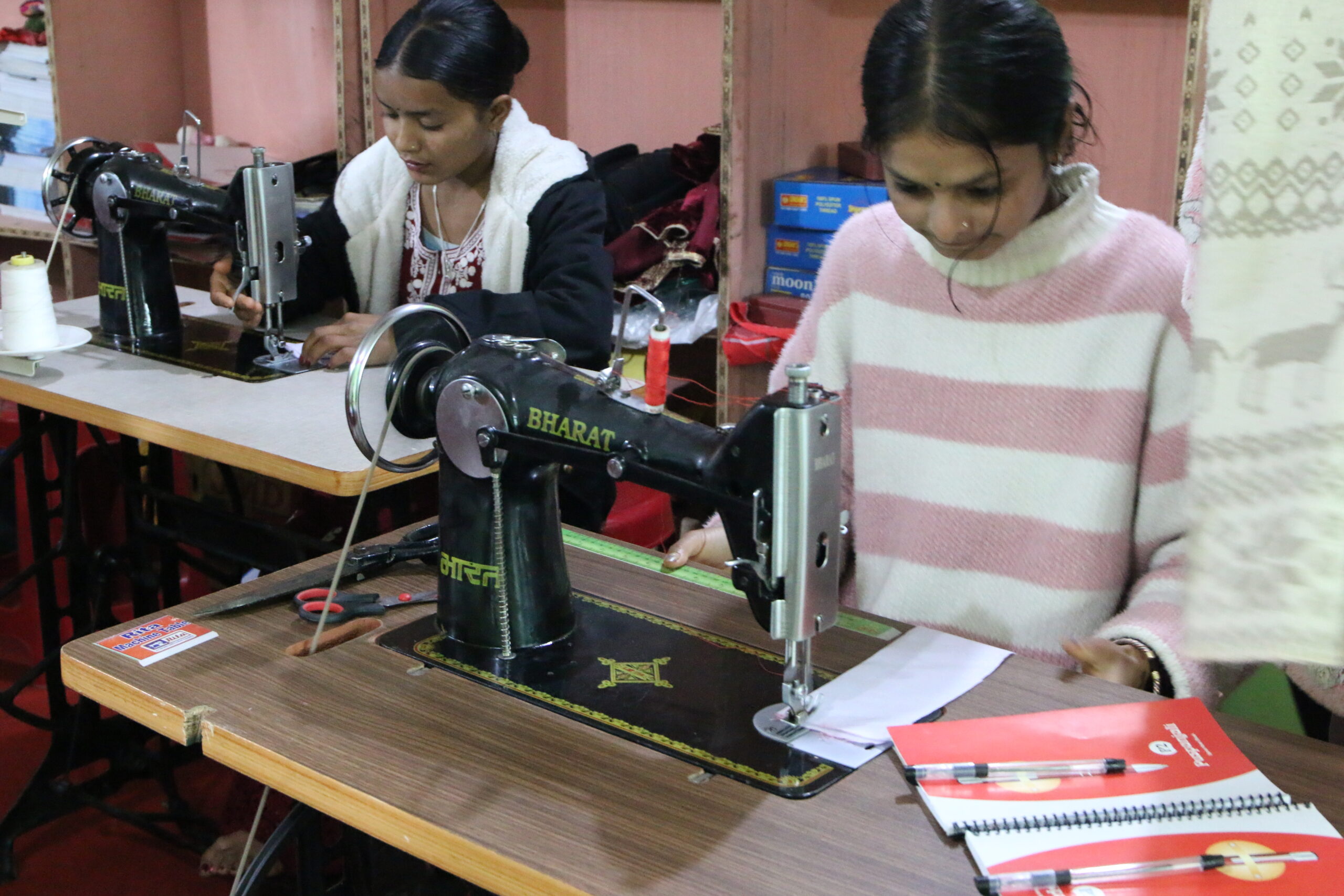
    A few months ago, we started a sewing training with a group of women in Achham, in western Nepal. These are women who have lived through very difficult situations: survivors of child marriage, domestic violence, women on their own, widows or abandoned women.

    We did not want to offer just another course. We wanted this training to become a real tool for them to start generating income, gain a little more autonomy and open a new door in a context where opportunities for women are still very limited.

    When we work in Achham, we always have to keep the rural calendar in mind. Most of the participants live in communities that survive through subsistence farming. This means they cannot leave their agricultural work at any time: the training has to adapt to the rhythms of the land, the harvests and the planting seasons.

    That is why we held the first month of training in the period between the wheat harvest and the beginning of the rice planting season. It was a moment when the women could dedicate some days to learning without putting at risk the basic work that sustains their families.

    This August, we will resume the training with a second month of work. It will take place during the monsoon season, when there is less work in the fields and it is more possible for the participants to continue the process.

    During the training, be artsy also covers food, accommodation and all the necessary materials. Because if a woman has to leave her home for a few days to receive training, this should not become an extra burden for her.

    When they complete this second part, each participant will receive a sewing machine and all the materials needed to start working: fabrics, threads, needles and the basic supplies to put into practice what they have learned.

    The idea is simple, but important: they should not leave this process only with training completed, but with a concrete tool in their hands.

    A sewing machine may seem like a small thing, but in a rural area of Achham it can mean a lot. It can mean being able to repair clothes, sew for other people, take small orders, start earning some money and, above all, have a little more room to make decisions.

    This project is part of the path we are building with Rato Baltin. Because when we talk about menstrual health, education and women’s rights, we are also talking about economic autonomy. We are talking about time, possibilities and the chance to imagine a life with more options.

    We still need support to complete this training and deliver all the planned sewing machines and materials. That is why our MiGranoDeArena campaign is still active.
    Every contribution helps us continue to accompany these women, not only with words, but with real resources so they can start again.

  • Light the path this Christmas — support the Rato Baltin project in Nepal

    Light the path this Christmas — support the Rato Baltin project in Nepal

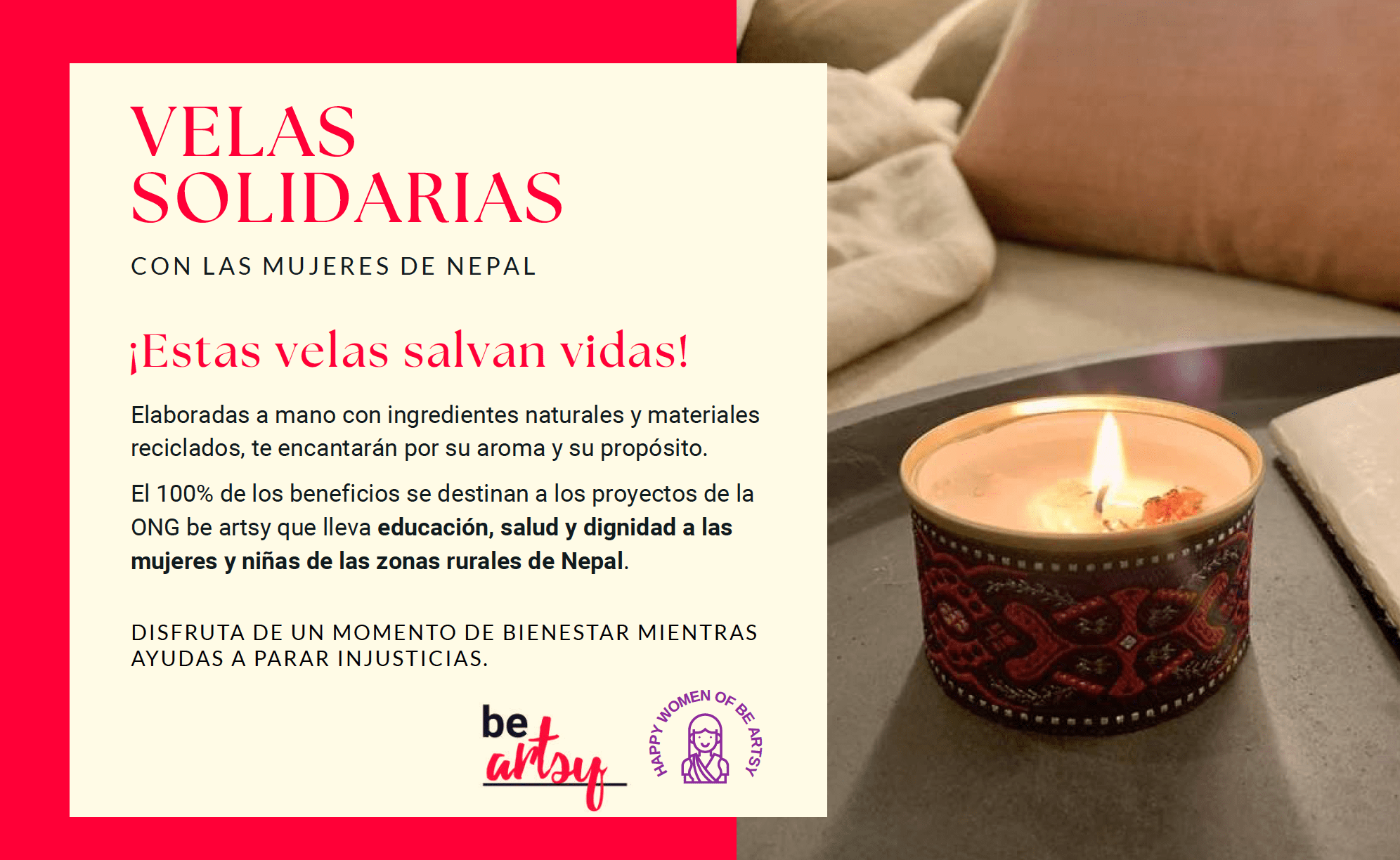
    This Christmas, if you are in Spain, help us bring light, dignity, and education to women in rural Nepal through be artsy’s Solidarity Candles.
    Each candle is handmade with 100% natural soy wax, essential oils, and recycled materials, making it a meaningful and sustainable gift.

    All proceeds go directly to the Rato Baltin Project, which fights against chhaupadi —the tradition that isolates women during menstruation— through menstrual health education, reusable cups, and participatory photography workshops.

    Our candle campaign is currently available for supporters in Spain (mainland only), since international shipping is expensive and delicate — soy wax melts at around 50ºC!

    💛 If you live abroad, you can still light the way by donating for an “imaginary candle” to support Rato Baltin:
    👉 Donate via Donorbox

    ⚠️ If you are in Spain, Order early! Supplies are limited, and we want to make sure you receive your candles in time for Christmas.

    Your donation helps bring light, knowledge, and dignity to women and girls in rural Nepal.

  • The Rato Baltin project continues: three more deaths show that chhaupadi still kills

    The Rato Baltin project continues: three more deaths show that chhaupadi still kills

    Despite years of work, Rato Baltin remains essential. In 2025, at least three new deaths have been reported as a result of chhaupadi, the practice that forces women and girls to isolate themselves during menstruation or childbirth.

    On 29 August 2025, Nim Khanal (28) and Kabita Bhandari (7) died in the village of Serapani, Panchadewal Binayak Municipality 8 (Achham), when a large rock fell on the semi-collapsed chhaupadi hut where they were sleeping. The girl’s mother survived but had to be hospitalized in Surkhet.

    A few weeks earlier, on 12 July 2025, Kamala Aauji (28) died after being bitten by a snake while sleeping in a menstrual hut. A mother of three, she lived alone while her husband worked in India. Her family initially tried to hide the case, claiming the bite occurred at home, but police confirmed that she had been sleeping in a chhaugoth because she was menstruating.

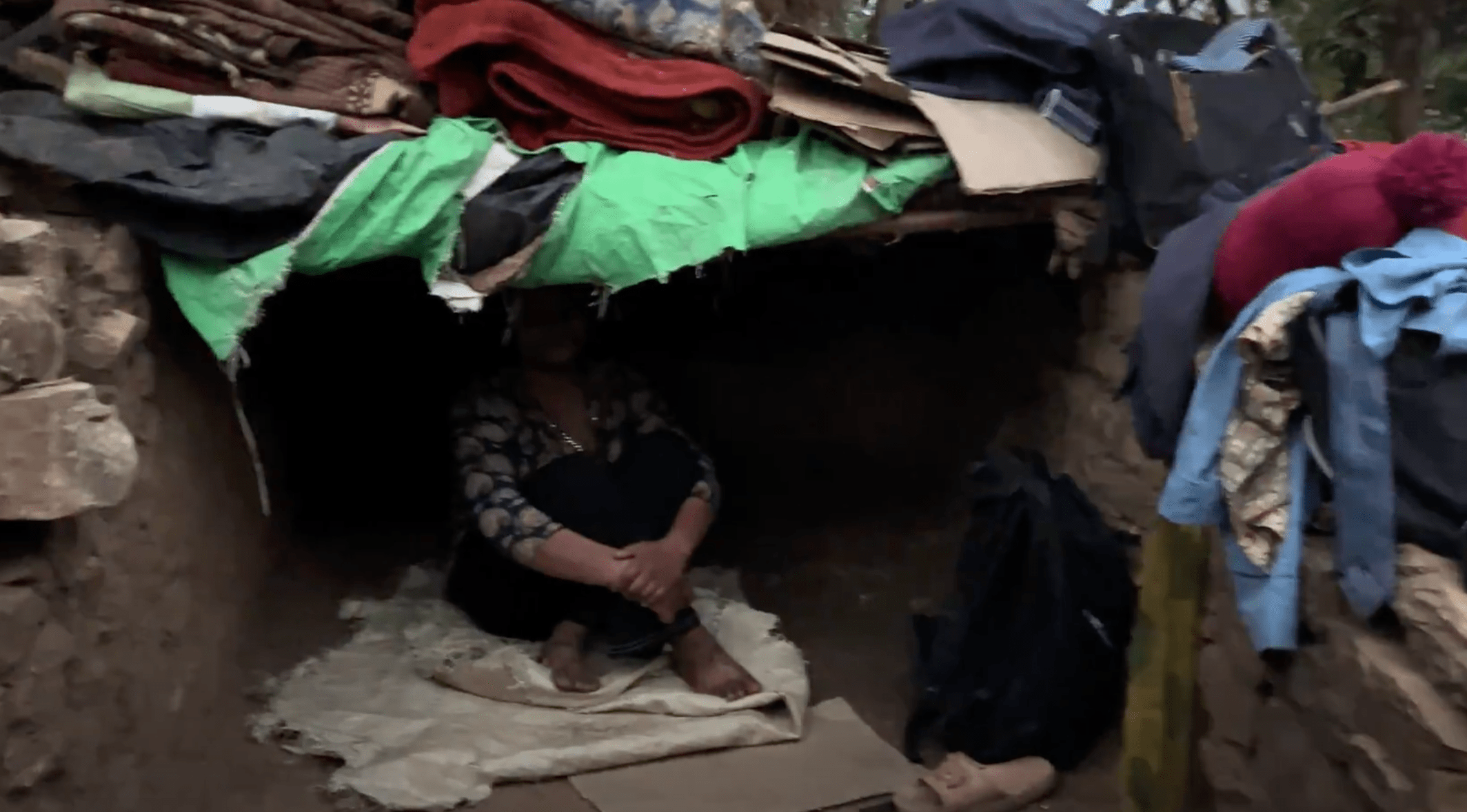
    In the municipality where be artsy and Unnati have been working this year, the team found that the practice not only persists but has worsened. Former huts that were destroyed are now being reused without roofs and in even more degrading conditions, forcing women and girls to spend cold nights in wet clothes, exposed to illness, animals, and severe health and safety risks.

    be artsy remains deeply committed to working alongside local communities through education, participation, and dialogue to end chhaupadi and ensure that no woman or girl dies because of an unjust tradition.

    👉 Please, if you can, consider making a donation to the project at: https://lareglamata.org

  • From the classroom to the field: two Basque psychology students share their experience in Nepal

    From the classroom to the field: two Basque psychology students share their experience in Nepal

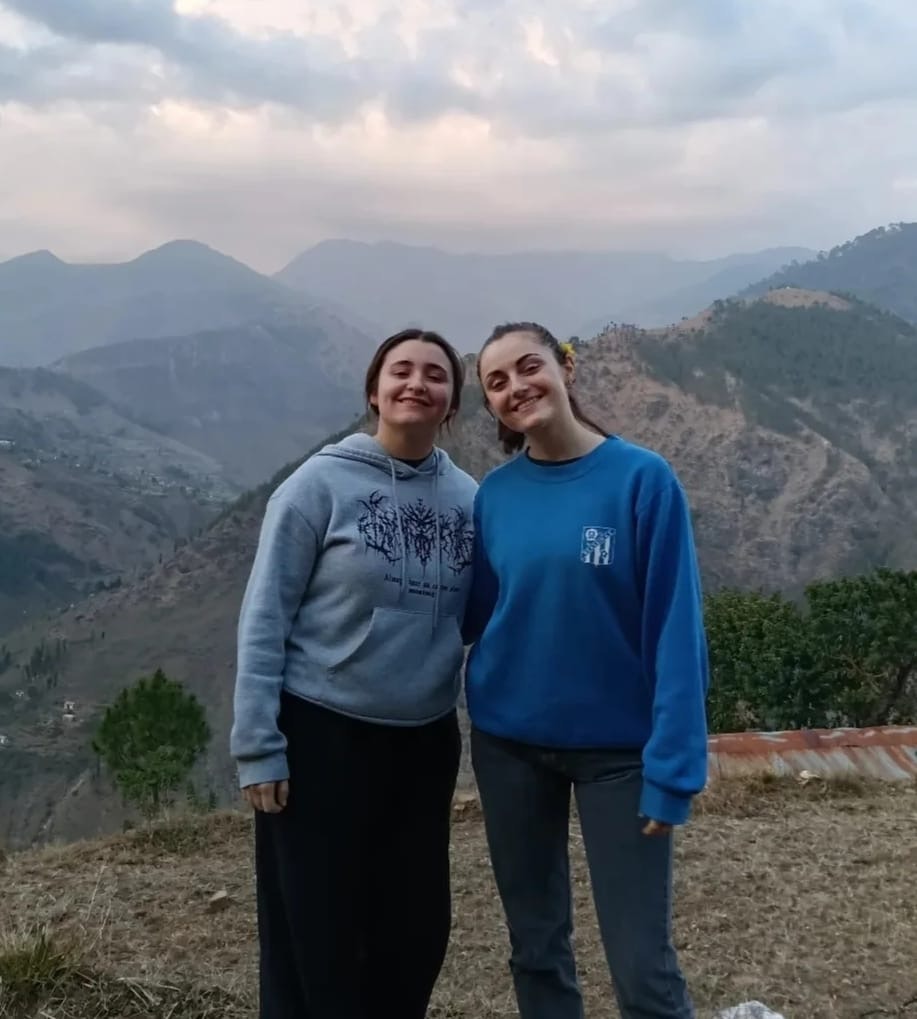
    For three months, Nahia and Loraine, final-year Psychology students from the Basque Country, took part in the Rato Baltin project of be artsy in the Achham district of Nepal.
    Before leaving, they wrote a note full of expectations, curiosity, and a little nervousness about the adventure ahead. Now, after returning home, they share how this experience has changed their way of seeing the world.

    “One of our expectations for this trip was to take off a little of the Eurocentric mask that we unconsciously wear… We wanted to get to know this culture up close and personally, and free ourselves from some prejudices.”

    With that open attitude, they arrived to Nepal, where they lived and worked alongside the local team, taking part in educational workshops and learning from the community. After three months, they both recognise that the cultural and emotional impact was profound, but also deeply enriching.

    “Living with the people of Achham, listening to their stories and sharing their daily lives made us rethink many things and look at the world through different eyes.”

    They also emphasise that their time as volunteers was an important professional learning experience, allowing them to grow both as psychologists and as individuals:

    “Working with a different team, with distinct values and a different work ethic, made us grow… Achham has taught us about empathy, respect, and the power of small actions.”

    Their reflections reveal how an internship abroad can transform the way we understand cooperation and global justice — when approached with humility, empathy, and a genuine desire to learn.

    At be artsy, we deeply value the involvement of young people like Nahia and Loraine, who approach Nepal’s reality with openness and respect. Experiences like theirs strengthen the bridge between universities, students, and transformative projects, helping to build connections of knowledge and empathy across cultures.

    Read their full stories:

    Acknowledgements

    Many thanks to the Faculty of Psychology of the University of the Basque Country (Donostia) and to Professor and be artsy member Luixa Reizabal for their support in making this collaboration possible.

  • be artsy receives support from the ACCD to strengthen its work in Catalonia

    be artsy receives support from the ACCD to strengthen its work in Catalonia

    be artsy has received a €12,305.30 grant from the Catalan Agency for Development Cooperation (ACCD) of the Government of Catalonia, for the project Rato Baltin: Strengthening our presence in Catalonia to transform lives in Nepal.

    The project aims to strengthen Catalan organisations working in international cooperation, by consolidating be artsy’s social base, improving communication, and reinforcing its financial sustainability — so it can continue transforming lives in Nepal through the Rato Baltin project.

    At be artsy, we deeply appreciate the trust of the ACCD and are proud to continue working towards a transformative cooperation between Catalonia and Nepal.

    With the support of the Catalan Agency for Development Cooperation – Government of Catalonia.

  • be artsy receives support from Dipsalut for the Rato Baltin project

    be artsy receives support from Dipsalut for the Rato Baltin project

    be artsy has received a €6,000 grant from Dipsalut for the project Rato Baltin – Promoting menstrual health in Western Nepal. Stop menstrual evictions.

    The project achieved a very high score according to the call’s evaluation criteria, recognising its quality and impact on promoting menstrual health and dignity in rural areas of Western Nepal.

    At be artsy, we deeply appreciate Dipsalut’s trust and are proud to continue working along this path to build a fairer and healthier future for all.

    With the support of Dipsalut.

  • New University Collaborations to Boost Our Projects

    New University Collaborations to Boost Our Projects

    This year, we are strengthening our impact with three major university partnerships.

    Eco-Friendly Powder Soap with Institut Químic de Sarrià (IQS)

    Together with IQS, we are researching the use of soap nuts (Riita in Nepali). These nuts release saponin, a natural component that can be used to make soap. Our goal is to develop a simple chemical process so that women’s groups in rural Nepal can produce powdered soap. This will help them create small cooperatives and reduce plastic waste and harmful chemicals. We want a replicable model to empower more women.

    Visibility with the University of Girona (UdG)

    Through the Coordinadora d’ONG Solidàries de Girona, communication students from UdG will produce two 30-second TV spots. Their goal is to raise awareness and reach a wider audience.

    Internships in Nepal with the University of the Basque Country (UPV/EHU)

    Two Psychology students from UPV/EHU will complete a three-month internship in our Rato Baltin project. They will work directly with our trainers, supporting key activities that empower women and girls.

    Renewing Our Collaboration with 180 Degrees Consulting

    This semester, we are once again partnering with 180 Degrees Consulting (180DC), the world’s largest student-run consultancy for non-profits. Over the years, we have worked with different student groups from 180DC, receiving strategic advice to enhance the impact of our projects.

    We continue to innovate and collaborate to create change. Thanks to all the universities and students making this possible!

  • Thank you for lighting up the Rato Baltin project! 

    Thank you for lighting up the Rato Baltin project! 

    We want to start this message with a huge THANK YOU to everyone who participated in this year’s candle campaign. Together, we’ve raised €1,058 for the Rato Baltin project!

    Of this amount, €528 came from online and phone orders, and €530 was raised during the days our candle stand was at Jocs L’Escala.


    A special thank you goes to  Ubet de l’Escala and Jocs L’Escala por pensar en nosotros y dejarnos montar el puesto. Vuestra colaboración ha sido imprescindible para hacer de esta campaña un éxito. 💫

    for thinking of us and allowing us to set up our stand. Your collaboration was essential in making this campaign a success. 💫

    If you haven’t yet tried these unique, natural, and solidarity-driven candles—or if you’d like more—we still have some available! Each candle is handmade with essential oils, recycled materials, and lots of love. And, as always, 100% of the proceeds go to the Rato Baltin project to support women in Nepal.


    If you’d like to order, just let me know at info@beartsy.org which scents you’d like! If you are for outside the European Union countries, may be some customs charges.

    Thank you for being part of this light that shines so far.

    Warm regards,
    The Rato Baltin Team and Clara

  • Josep V. Marín: A Legacy of Dedication and Friendship

    Josep V. Marín: A Legacy of Dedication and Friendship

    With sadness, we want to share with you that our dear friend, volunteer, and member of be artsy, Josep V. Marín, passed away before Christmas.

    Josep was a key figure from the very beginning of our journey. He wrote nearly all the articles on our website and also contributed on our behalf to Xarxanet, totalling over 400 articles in 3 languages. He also helped us find volunteers, organize exhibitions, and eventually became an active member of the NGO. His dedication and enthusiasm were essential in growing this project.

    On a personal way, for me, Clara Garcia i Ortés, who met Josep in 2006 while working at iwith.org, he was much more than a collaborator: he was a sincere friend and a constant support. We will deeply miss not only his involvement, but also the exceptional person he was.

    His legacy will always be a part of be artsy and our hearts. If you knew him, we invite you to share your memories or thoughts in the comments so we can honour him together.

    Thank you for everything, Josep. We will always remember you.

    With love,
    The be artsy team.

  • The Cost of Menstruation: Girls Are Still Dying Because of Chhaupadi in Nepal

    The Cost of Menstruation: Girls Are Still Dying Because of Chhaupadi in Nepal

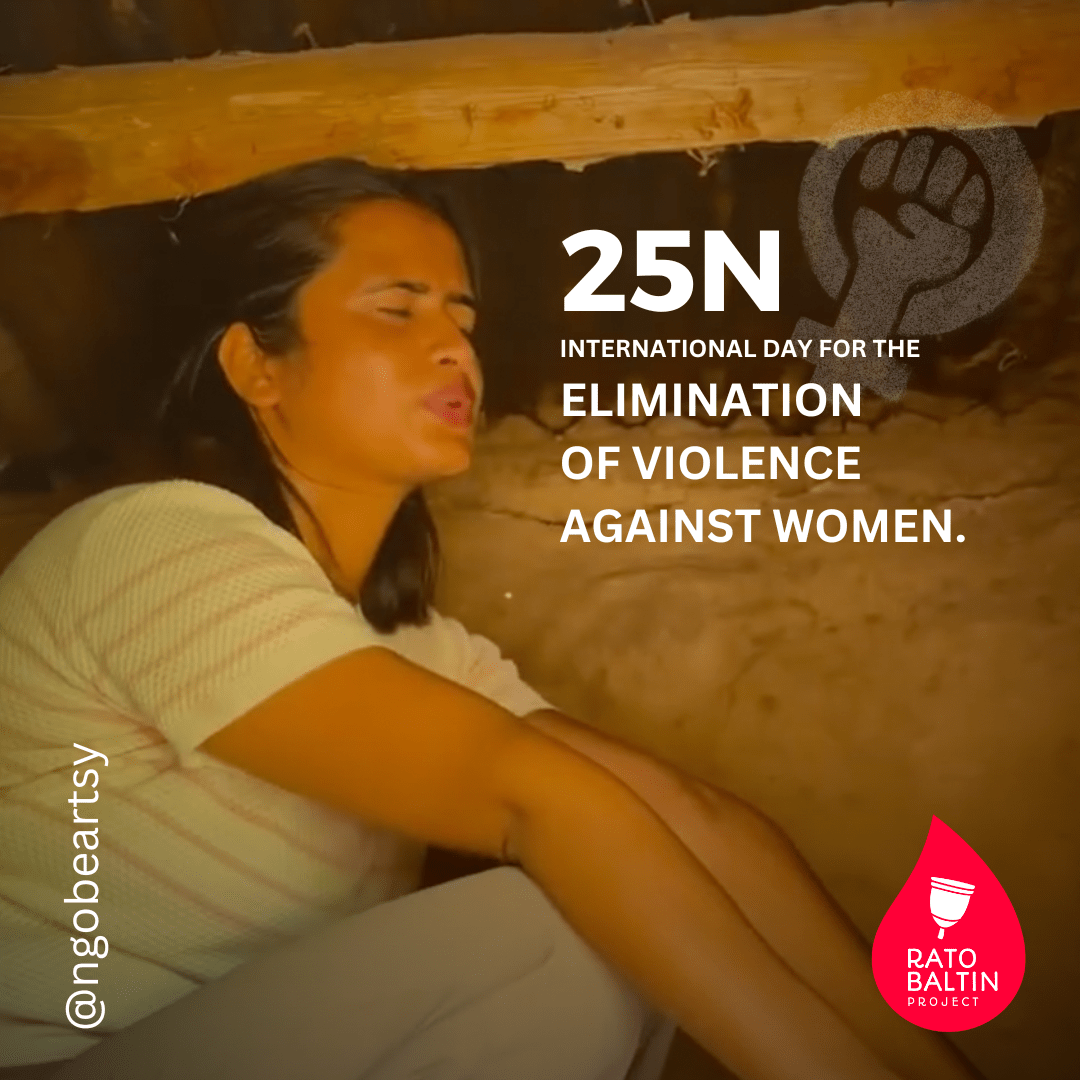
    Chhaupadi promotes violence against women by isolating them, making them vulnerable to abuse, and reinforcing inequality by labelling them as impure during menstruation. On the occasion of November 25th — International Day for the Elimination of Violence against Women — we want to call for this issue not to be forgotten

    Unfortunately, compiling a complete list of the names of all women who have died due to the practice of chhaupadi in Nepal is a challenging task, as there is no publicly available comprehensive data. Many of these deaths occur in remote areas of Nepal and often go unreported, or the victims’ names are not recorded due to a lack of official reports. Also because families may not want to report such incidents for fear of social shame. Frequently, these deaths are not directly linked to chhaupadi because the causes, such as pneumonia or hypothermia, manifest days after their menstrual exile ends.

    The practice of chhaupadi was banned by Nepal’s Supreme Court in 2005 and criminalized in 2017, but enforcement of the law remains poor, particularly in rural areas. Since then, several deaths of women and girls have been reported, mostly caused by suffocation (from lighting fires in confined spaces to stay warm), hypothermia, and animal attacks while staying in the small huts designated for chhaupadi.

    At the end, we share a video recorded this year by our friend Menuka Dhungana, journalist and anti-chhaupadi activist, showing how small and suffocating these huts can be.

    Among the reported victims are:

    • Anita Chaud (16 years old): Bitten, in August 2023, by a venomous snake a Tuesday night, and died the next day while banished to a chhaupadi hut.
    • Parbati Bogati (21 years old): Died on February 2, 2019, in Sanphebagar, Achham, due to suffocation after lighting a fire to stay warm in her hut.
    • Parbati Budha (18 years old): Died in Thurmakhand while sleeping in a hut with her friend Radhika.
    • Parbati Budha Rawat (21 years old): Died from smoke inhalation after lighting a fire in her stone and mud hut.
    • Amba Bohara (35 years old) and her sons (9 and 12 years old): Died from suffocation in a windowless hut while sleeping.
    • Gauri Budha (22 years old): A student married to a police officer who died of suffocation in a hut.
    • Roshani Tiruwa (15 years old): Died in December 2016 under similar circumstances; her mother escaped the hut that same night and saved herself.
    • Dambara Upadhyay: Died in November 2016; her family said she refused to stay home out of fear of breaking traditional rules.
    • Sarmila Bhul (15 years old): Died in Dailekh in 2013 while practicing chhaupadi. An autopsy was not conducted due to a lack of medical resources.

    These stories represent just a fraction of the deaths caused by chhaupadi. According to Nepal’s National Human Rights Commission, at least 15 women and girls died from chhaupadi in the Achham and Dailekh regions between 2005 and 2019, with the actual number believed to be higher.

    Beyond Deaths: Sexual Assaults

    Many women and girls also face sexual violence while practising chhaupadi. Social stigma prevents them from reporting these abuses, as it could render them “unworthy” of marriage. The most recent known assault occurred in November 2024 in Binayak, a municipality where the Rato Baltin project has recently started working.

    How to Help

    These girls need help, and our association needs your support to raise funds, reach more villages, distribute menstrual cups, and help eradicate this dangerous tradition.

    Donate via our migranodearena platform and help us continue this work.

    Thank you so much,
    Clara García i Ortés
    Founder of the Rato Baltin project