Tag: Kunti Bandali

  • Meet Manisha

    Meet Manisha

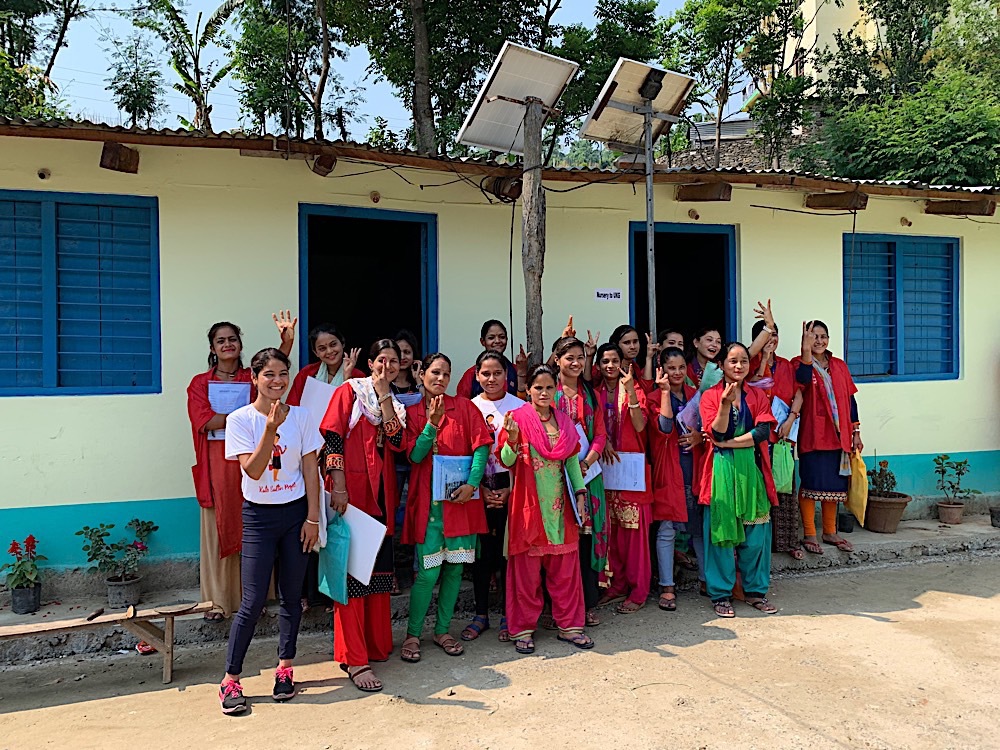
    Manisha Kumari Nath is from Kuntibandali, a small town in the Achham region of western Nepal.

    She lives with her father, mother and two little sisters in the house. As like most rural areas of Nepal, her family is very humble, her mother sells vegetables and thus can pay for the education of her daughters.

    After she finished her final exam, she was asked to participate in the Rato Baltin Project, so right now Manisha is teaching other girls to use the menstrual cup, to have more knowledge about their own body, to know what the menstrual cycle implies, and to be able to differentiate between the Chhaupadi tradition and menstruation.

    Before participating in the project, Manisha had never been in a different environment than her town and never had the opportunity to understand how different it can be to live elsewhere. Working on this project is helping her gain experience and learn new skills. Also thanks to the project she can continue with her higher education.

    When we asked Manisha what her life was like since she was part of the project, she told us: ‘I was never concerned about learning new things and was also not aware that I could do something good to change the society. Since I joined the project, my life has been very good since. I have learned to be helpful and responsible. Yes, my vision towards my future has changed. I can see myself growing in this project’.

    Clara, CEO and co-founder of be artsy witnessed Manisha’s evolution, and she said ‘When we first met her, she was a young, carefree girl, but now she is a responsible young woman who is in charge of her life and cares about the lives of others. And now in Nepal people are facing a health and a food emergency, and people can help us’.

    Text by Carmen Alcañiz, photos by Clara Garcia i Ortés.

    There are several ways in which you can get involved with our projects and help girls in Achham:

    Teaming Group: 1 euro a month – become part of Rato Baltin Project!

    Teaming Group: 1 euro a month – become part of the team and get your friends to help you sponsor her and avoid early marriage!!


    Regular donation: to https://donorbox.org/againts-chhaupadi

    Become a member: https://beartsy.org/associate/

    🙂 Thanks!

  • Travel Log – From 2073 to 2075, again teaching in Kunti Bandali

    Travel Log – From 2073 to 2075, again teaching in Kunti Bandali

    After Janalibandali we travelled to Kunti Bandali, where nothing was really new. We were only there teaching for four days. The first time we came here we taught two classes at the end of 2073 (it is now the beginning of 2075).

    This time we taught classes 6 and 7, as well as a school girls group, menstrual cup training, and a young women’s group.

    The school in Kunti was (as usual) strict with or timetables and their students. In this school discipline is an everyday thing. There were three periods every day, and we had to finish on time. Something really complicated, sometimes…

    The school had finished its new building we had seen growing over our last two visits, and they now had a clean, beautiful library and hall.

    The young women’s group was really interesting, made up of young women that were not attending the school. We think the menstrual cups we buy to give to women outside of the school could get good use here. The only thing we are not happy with is that they could only join us for one day because of work, and we are quite sure that the follow up will be more complicated that usual. But both Jamuna, a nurse, and the nurse in town, took responsibility of following up on time after our phone calls.

    We completed the follow up with old users from Dashain in Jamuna’s house, which we also used to eat, sleep, and boil menstrual cups.

    Written and photographs, with Fujifilm XT20, © by Clara Go.
    Correction by Kristy Davies

    Now you can contribute for paying one month salary to the nurse, or for some hygiene kit : https://www.gofundme.com/menstrual-cups-in-nepal-chhaupadi

    West Nepal girls need this kind of program. And we need help to continue the project!

    Or if you feel like it, you can donate via bank transfer at: Banc Sabadell IBAN: ES23 0081 0900 8200 0430 1934 BIC: BSABESBB (your recurring donation will help us have a better planning of our budget to carry out the projects undertaken).

    Or take a look to others ways to donate at http://beartsy.org/donate/

    Thank You! 🙂

  • Life experience

    Life experience

    Writing and Photos © por Alba Parrado Puente, Spanish Nurse and Midwife, Volunteer of be artsy in Achcham.

    From one of the most chaotic Indian cities (Varanasí)  to one of the most peaceful little villages in Nepal there are around 800 km. and a four days journey by local bus, a bus as hellish as enjoyable.

    Crossing hundreds of small villages, looking through the window, sharing seats with several local people, exchanging smiles, listening to raucous and happy music, smelling a varied range or everything, tasting the dust… you can really approach to this country.

    Basti is the first village we have chosen and the one with which we want to collaborate. Basti means “city” or a similar concept in Nepalese. It is a magical place in the mountain chain of the HImalayas that not even the roads do reach… Not even the infamous Coca-Cola!

    This valley, only accesible on foot, counts with hundreds or thousands of farming terraces that picture a telltale landscape.

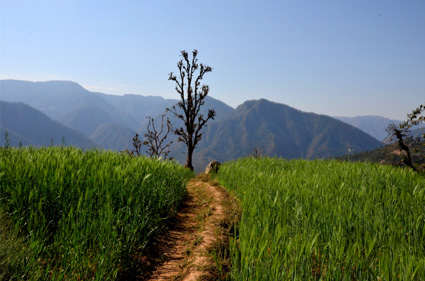
    A pure and far away place apart from progress and globalization, one of the thousands that exist here in Nepal.

    This area particularly, the Far-West,  is one of the most rural, both for being of difficult access as well as for the lack of tourists, and thanks to that it still keeps is essence.

    We don’t know exactly how many inhabitants does the village have, but we know that it is divided in 9 “bastis” or groups of dwellings that are scattered (like all villages in Nepal) and that around 150 boys and girls do assist to school, from which the main majority must walk approximately three hours to get there, as they live in those shacks you can spot far away, in the mountains…

    Of the children that don’t come to school and who we see daily taking care of the goats or carriying around their younger siblings, peering curiously through the wooden windows of the class, nobody spokes, nor do they know about the percentage they suppose.

    The Government grants a financial support of 300 rupees a year (around 3 euro) to promote their assistance to school, but that does not seem to be very effective, maybe due to the petty amount that really is.
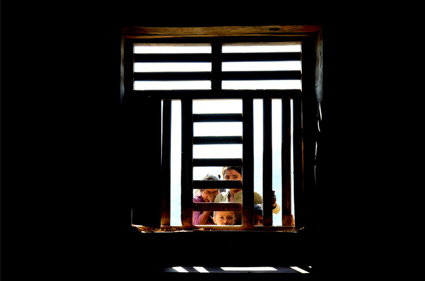
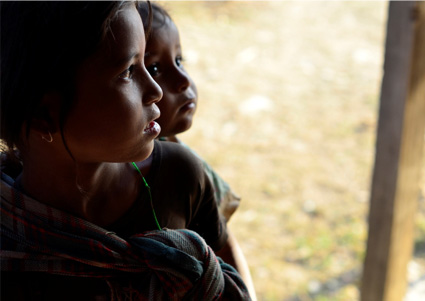
    When you accommodate to their lifestyle, eat what they eat (which is exactly the same every day, dalbat – lentils with rice -, takari – vegetables – and chapati – bread/flattened dough -), take a shower in the village fountain fully dressed (to wash it at the same time) the four hours a day that there is water, sleep like they sleep (to 4 people in frigging wooden planks!), learn to wipe your bottom without toilet paper (white gold for me from now on) and clean your nose just blowing out (like when you are in the shower), you realize the quantity of water we waste and all the things we don’t really need. And you think even harder about all the distractions and excess information, all the adverts and consumerism we just swallow without being aware. You start to surprise yourself by thinking that the three trousers and sweatshirts you carry in your backpack are even too much!

    Without really knowing what we would find in this new adventure, we came up here, six people (3 Nepalese and 3 foreigners).

    Asking for the nurse, the teachers and groups of women, we started little by little knowing the villagers. It was a nice surprise to see how do the women organize themselves here and see that apart from getting up a 4 in the morning, cook, take care of the children, and work hard chipping and carrying stones, they also allocate some of their time to share their worries and to improve their lives. This has no other name: they are SUPERWOMEN! (Point that I consider important for it is incredible: it is more than 50 kg. what they carry, and they bear it on their heads!!).
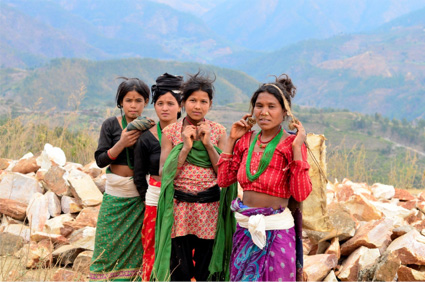
    They have also created a group of volunteers that help in the health care area and they were always open to share.

    As we could see by ourselves, the few men around (most of them are working in India) just play cards and get as drunk as possible with roxy (a Nepalese spirits). Here they do not punch but they cut! Why must it be that the women give all the money they earn to them?

    One of the details that most strikes me is that the life expectancy of the women in this region is of around 52 years, lower than the men, contrary to most countries. The day I decided to share with them the recipe for the Spanish omelette and went to cook, I started to cry. Because the smoke that the sticks they used to heat up the saucepan produced was really awful. The room they use as kitchen-lounge-bedroom has not ventilation… Now I understand that the first cause of death at such early ages is breathing problems!

    I think that the people here quickly understood why we were there, although we only spoke about sex education and critical photography. This eased that they would open up to us to share what they felt about their menstruation, the Chhaupadi and what this tradition means for them, without us having to bring up the subject.

    Our intention has always been to come and give information and resources that would enable the girls and women to empower themselves in their decisions, and not to impart precooked and westernized ideas about anything, as incomprehensible their customs may seem to us.

    In a world where most of the ONGs are bought, because the grants and financing come from international companies with very specific financial interests, where it does not mind what are you going for, but the fact that you do go… where people are not important, but the figures, and where they believe that progress, such as we understand it, must be brought to every corner of the planet. In a world where the human being has fallen so many times into the error of subduing the local population and destroying its customs and where we are still doing the same.  In a world where the commercial spirit prevails and where material success is the main moral standard, there should not really be ground for finding it surprising that the human relationships follow the same exchange frame that rules the assets and work market. In such a world, we have to tread very carefully not to fall in the trap and create colonisations of the XXI century,  because, despite the best of intentions, this can happen.

    Class with the teenagers were much better than we imagined, although I must say that with a translator, they seem a bit awkard. This about the language barrier, is a real challenge! It is one of the things that most frustrated us, because the trust we created or wanted to create was very limited. But it also had good things, like Nepalese nurses, without experience in this field, learning to trust in themselves and to love teaching as a basic pillar.
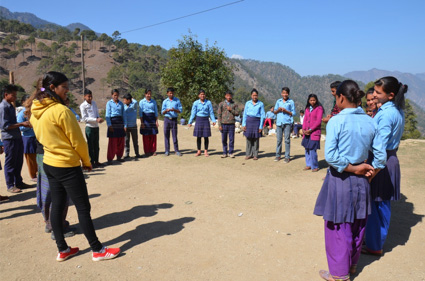
    Despite certain limitations, the women and girls could elaborate telling about their experiences with the Chhaupadi; how are they forced to sleep outside their homes when they have their period, from barns without a door in the best of cases, to corners covered with a bit of straw. How they have to undertake the works entailing more physical effort (as they cannot work in the kitchen during those days). How they are handed over the water because they are not allowed to take it themselves. How are they deprived of some food or of going to sacred places and temples.
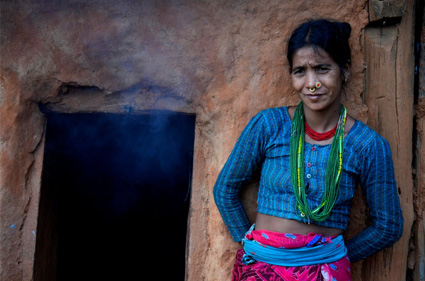
    The girls at school used to say that they did not like doing all that and that they did not want to continue and the boys said that they did not believe that anything bad would happen if they didn’t. The women said that they were all for leaving this practice… And… then? Where is the problem? Society and the old guard (usually called grandmothers) seem to be the main reason, as the men don’t seem to have nothing to do with it. Maybe the next generation would never live this and they may only hear old stories about a tradition already fallen into oblivion. That only depends on the women themselves.
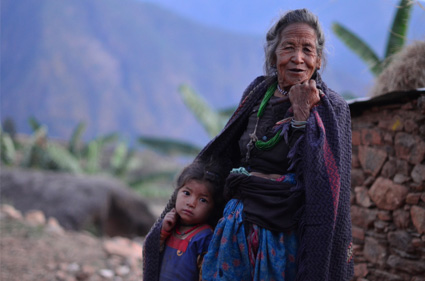
    On evening they took us to visit some of these “Chhau houses” and it surprised us to see how some of them would pose for a picture, as if doing the real thing. Apparently somebody else before us had been there to make a photograpic report about this… Now I understand how some journalists do to “catch” this crucial scenes! But, what about the women? Why would they do something like this? Do they want the outside world to know about this?

    On Women’s Day we thought about doing some event. We were very surprised when we asked and they said that they already had a program. And even more when we saw dozens of them shouting in the “village square”: We don’t want more Chhaupadi! We don’t want more violence! In the midst of it, amongs them, we spent the whole day… I don’t know very well how did we understand each other because we barely speak a couple of works in Nepalese, but the thing is that we became really excited and we danced with them, supporting them in their claims.
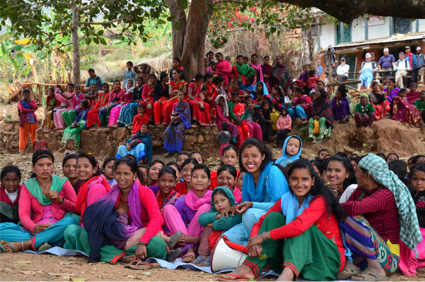
    The Government prohibited the Chhaupadi in 2005 and since then till now they have been going around the villages doing seminars and putting up signs in the “squares” that say: “Village free from Chhaupadi”, although this practice is still on in some areas in Nepal. On another hand, I thought that it was done in some very specific places, but judging by some Nepalese women from different districts with whom I have spoken, they have told me their personal experience from when they had their first periods. They were closed up in a room wihtout light for seven days, with just enough to eat and drink. Apart from may other beliefs, like that if they eat bananas during that time they became barren. And if you think about it, this last part, it is not that different from the beliefs in Spain at the time of my grandmother, when you should not water the plants or prepare certain meals.
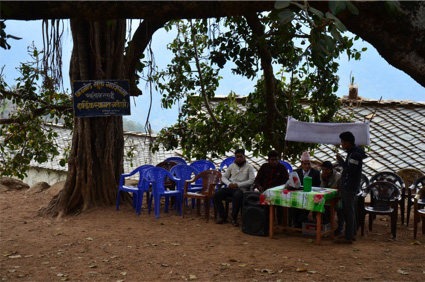
    The last day in Basti was intense… the nurses that are usually in each “health point” had left the village and we not only had one “accident” but two. Between blood and sweat, without gloves or dressings, we stiched the finger of one of the most strong women I have ever met. I had never seen anything like it and I wish we had had a hospital nearby with a real surgeon… but here there was no other option. A little later they came searching for us because a small child had been hit in the head with a stone… here the difficult part was to stich the wound in the middle of all the screams and cries, dirty blankets and smoke, inside a small mud hut and with 12 women or so around. When we were done and we went to bed, Alba and me we held hands and then was when we gave ourselves permission to express everything. It is not only the fact of living a stressful situation like that one, for me it was more to think what would these people have done or what is it what they usually do when they are in this situation. Going to the nearest hospital means at least 6 hours walking and clearly it is not an option for the majority from a financial point of view.


    Kunti Bandali was the second village we went to. I could not say why, but when I arrived I felt that something very different to Basti was expecting us. Looking closely, I understood what the reason was: the place where we were staying, more than a village, is a bazaar-village-road (although I would say more path than road), where lived mostly men whose main objective was to keep an optimum level of alcohol in their blood, and some women and children ou of school who do what the men should be doing… an atmosphere where you can see, hear, smell and even touch this reality is difficult to digest.

    In this school, the classes flowed in a totally different manner from each other, so our improvisation habilities were really tested. From interactive classes and open to discussion to classes where passivity and indiference ruled. Where they would speak about their menstruation freely and where they would not even mention it despite our efforts.

    We found out that Unicef had been here the previous year teaching about the VIH (as this region quite suffers its effects) and about contraceptive methods. They had the knowledge that it is passed by maintaning sexual relationships but they had no idea what sexuality is or what is a relationship, much less about using a condom. All our classes were based on the expression of the feelings and emotions that the growing into adulthood provokes in them, and the importance of expressing ourselves and having a good communication.
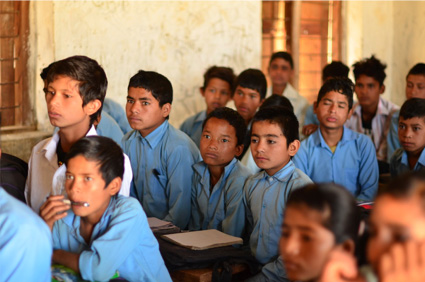
    The meetings with the women were not easy mainly for two reasons.

    When Unicef and other big ONGs came to this place, they paid for each session to each woman a certain amount of money so all of them would assist. Maybe to increase their statistics, not minding if the women were or not interested or maybe just so they would leave their hard work and would attend. We were not going to do the same.

    On another hand, contrary to Basti, they are more entrenched with the Chhaupadi and they are not in the way of changing, so the dialogue was little to that regard. It is curious to see the two faces of the coin and more curious still that the village more in touch with the rest of the world and with more options to information, is the one who more wishes to stay as it is.

    The menstrual cup offered to girls and women of both villages I think was well received. We believe that when the whole family lives in the same space, where they also undertake all the daily activities, the problem of menstruating without having more than a dirty cloth as sanitary pad, can be the reason why, nowadays, they still sleep outside the house. In any case, that quality of life that they can have for one week a month and that the cup can give, is simply great, as it was in my case in the case of many other.

    Regarding the picture part as the way of expressing themselves before their families and their community, did seem to me a very useful tool and with which, in some way, they could get rid of their inhibitions and enjoy themselves.

    From my point of view, we have been too little time in each village, as when we started to build confidence and to became part of their lives, we just went away. And that has not allowed us to take the maximum advantage of what both us and the others had to offer.


    Many people tells me that it is brilliant that I come and help and that I am caring and altruist… but it is not as the majority sees it. In my opinion, when you give, you also receive, and all the people who do this kind of thing is because it gives them something, even if only because they can just learn something else about the world, because it goes with their principles or for their personal growth.

    What I know is that I learn, learn and learn to unlearn, to not judge anything, to love…

    The way of travelling has changed for me or, better said, has changed me, allowing  me to see the light more clearly, what I am and I have always been. Like the song from the Nepalese Hymn that all the children must sing every morning says: “We are from the East or the West, from different casts or races, but we are all equal and part of the same, connected we are part of a precious necklace”. (I must say that I frowned at the “streching exercises” that they do in the rows before singing the hymn, as to my eyes it looked like a military service, but must also say that after knowing its meaning, my “eyesight” became more tolerant).

    For all this, to go visiting monuments, restaurants or markets full of tourists, now seems too little and uncomplete, as if you only get to that when you travel, you lose the spirit of the place, its culture, its people… and with that the comprehension and the understanding of what is around you wherever you go. The wonders you find when you look closely is not a passive action, however, it requests that we leave out our own learnings not to fall into the error of judging instead of loving.

    To have the opportunity to be here, drinking from this culture, earning in life experiences, is something that money can’t pay, indispensable and unique.

    Maybe this is not for everybody, but it sure is for me. Do travel! Follow up roads, paths and mountains! Do have a bath in sacred rivers, salt lakes, thermal waters and coral reefs.

    Do tastes and, dust and earth!

    Do climb the highest and most beautiful mountains and go down the deepest and unexplored seas!

    Do not judge! Break your limits! Love! Dream! Fly!


    West Nepal girls need this kind of program. And we need help to continue the project!

    Now you can donate for paying one month salary to the nurse, or for some hygiene kit or for the menstrual cup control in September: http://beartsy.org/get-involved-with-rato-baltin

    Or If you feel like it, you can donate via bank transfer at: Banc Sabadell IBAN: ES23 0081 0900 8200 0430 1934 BIC: BSABESBB (your recurring donation will help us have a better planning of our budget to carry out the projects undertaken).

    Or take a look others ways to donate in http://beartsy.org/donate/

    Thank You! 🙂

    Translated to English by Tere Salinero
  • Travel log – Kunti Bandali – Mangalsen Municipality – Achcham

    Travel log – Kunti Bandali – Mangalsen Municipality – Achcham

    We had it very clear that getting out from Basti wasn’t going to be easy, the descent we did the day we arrived had as all quite scared.
    On my side, I found a walking stick and decided not to follow the same path we used to go down; following the blood track left by a wounded buffalo, I started to climb the same way the animals use to go down. A real winner. Much more kind on my knees and legs. We took around two hours to reach the top (less than going downhill).
    When we arrived to the Kunti Bandali track, we saw a tractor that had come to bring fuel for the bulldozer they are using to build the road, and the Spanish nurses saw it clear: to the tractor! It had to go back to Kunti Bandali, so despite the reluctancy on the part of Kamal and the Nepalese nurses, the asked the driver. He said yes, and, furthermore, then arrived some of our students from Basti who were going to Mangalsen to celebrate Holi, who of course joined the party.
    We were lucky for the tractor, it would have been three more hours walking our feet off!


    On arrival there were Krishna and Maya waiting for us, in the house where we would sleep, and it was more or less the same scenario as in Basti. Very few beds, and very few blankets. The place where we would take our meals was a little way up and we had to cross the bazaar area, where every day we passed by the same drunken men, any time of the day. At that moment, we had it clear that Basti was really good compared to this.
    In Kunti Bandali the atmosphere was bleaker and cold, more difficult than in Basti. Except for the girls, who are a real love in any place! 🙂


    About the women group, the first day we were all thinking that the Health Volonteers and the presidents of the different women groups would attend, but more than 70 arrived. At that moment we thought that we should prepare several workshop groups with the women, but a little bit later we discovered what was happening: they asked us how much were we going to pay them to assist to our classes. And we went like What? Paying? :-O Unicef and other big ONGs do play that game in order to be able to show later pictures of workshops full of people. They pay from 500 to 1000 rupees per day. They can show photographs of classes bursting with people that are not really listening or anything, they are just there for the money they will receive at the end of the day.
    We told them very clearly that we were not going to pay anything, and in fact, in Kunti Bandali we didn’t even offer them some tea. If they wanted to come to the workshops, it should be because they wanted to teach.
    The following day, the women were less, just around 45/50, but all quite eager to learn.
    For the pictures, it was similar to Basti, only some of them did make videos and we could see that the Chhaupadi was different: they could not go to any water source and they always depended on others to drink, have a shower or go to the bathroom (if they wanted any water).
    At the school, everything went fine. The girls were very keen in learning and they were very excited with the pictures project and the menstrual cups. Same as in Basti, we have a waiting list to obtain a Ruby Cup.
    For us, to be nearly for a month in the Far-West was hard; during the last day we looked at the tractors whilst we waited for our jeep, which was late, wishing for it to arrive so we could get out of there. To be surrounded by drunken men the whole day is nobody’s cup of tea. Next time we go back to Kunti Bandali, we have to find a better place to sleep, even if that means to walk long every day to get to school.

    Written by Clara Go. Photos done with FUJIFILM X-Pro1 © Clara Go
    Translated to english by Tere Salinero
    Edited by Josep V. Marín

    West Nepal girls need this kind of program. And we need help to continue the project!

    Now you can donate for paying one month salary to the nurse, or for some hygiene kit or for the menstrual cup control in September: http://beartsy.org/get-involved-with-rato-baltin

    Or If you feel like it, you can donate via bank transfer at: Banc Sabadell IBAN: ES23 0081 0900 8200 0430 1934 BIC: BSABESBB (Your Recurring donation will help us have a better planning of our budget to carry out the projects undertaken.)
    or take a look others ways to donate in http://beartsy.org/donate/

    Thank You! 🙂

  • Kunti Bandali. Trodden path.

    Kunti Bandali. Trodden path.

    Written by Alba Maria Campos, Spanish volunteer nurse, specialised in family and community health
    Translate to english by Tere Salinero corrections by Alba Miquel
    Photo done for Kamal Bhattarai with X-pro1 © Clara Go

    “I have learnt to think like I was taught to and I even got to believe that it is me who thinks. I find it difficult to understand that all I do is just start a thinking mechanism with patterns and embedded circuits. That is why it is hard for us to accept what goes against what we have previously learnt. All I have absorbed only makes me inflexible and places me, tyrannically, at the service of the cultural group that has trained me”.

    We left Basti in the direction of Kunti Bandali on Saturday the 11th of March. We passed by the house of the kid whose head had been injured the prior day. He was still bleeding a bit. The woman had gone to the hospital with her husband and we could not see her. Alba and I went ahead, silent for a good while, digesting all we had seen in Basti during the past few days. At the start, the uphill incline seemed impossibly hard… In the end, it was not that bad. We stopped to eat some hard boiled eggs, a tuna can coming from Lumbini, and a bag of raw noodles. After a three-hour walk, we stopped for a chia… We only had bagged noodles for food… I am absolutely not keen on packaged meals… I would have rather had a DalBat and Tarkari (although I had had enough of it already for a lifetime). Damned progress… Reaching even farther than the roads!!!!

    As we were finishing eating, a tractor appeared, full of drums and… Alba and I saw the light: this would be our transportation to Kunti Bandali!!! We asked Kamal to enquire if it would be possible for us to climb in the wagon to get to the place. Alba, Samita and myself shared the wagon with some of the girls from the school. To be honest, it was good fun!!! Thankfully, we didn’t have go by foot. It would have meant a few more hours walking.

    We reached the village. The houses and shops were made of tin, which didn’t make for a nice sight. We barely saw any women on the street. There was a very nice boy with a naughty face, very dirty and thin, who was forever working on something: cleaning, minding the goats… or helping the drunks get home… Below the house there was always a group of men wobbling around a big garbage bin full of bottles of Roxi. The place was horrible. Drunken men ambling around the whole day, the kid attending his chores and working for them, always looking happy, and the women carrying tons of stuff over their heads, whilst the girls walked past holding rocks in their hands “just in case”… They knew very well what they were doing by that.

    This small boy, like many others, did not attend school. So we were not reaching all the population, just the “civilised” part (this word is not to be always taken as a positive one). But there was another part of the population who would never have the “privilege” of education. We saw it in Basti more than in here, many young girls who were barely 7 or 9 would cart their young siblings around in their arms and lingered in the school playground whilst other children their age were in class.

    The teachers seemed to be more involved here than in Basti, they interacted more with us. We also encountered a couple of classrooms who were not very receptive. On the first day, we discovered that, that same year, UNICEF had been around with a project against Chhaupadi that, we gathered, had caused quite a lot of damage… The women, organised here as “health volunteers”, were distinguishable by their blue saris. They asked Clara if they would be given money for posing for the pictures and attending the lectures, like UNICEF had done. When one of them told us, we were flabbergasted. Money, really??? We also met one in a classroom, the one for the youngest girls, who was the only one who did not give any importance to how they lived the menstruation, and did not say anything either about what they may like less about their usual practices during their period… So we continued talking, sharing information on periods, sexuality and menstrual cycle, just touching very lightly on Chhaupadi… if they did not want to change things, not much to do then!!! In any case, we had the impression that they came very well trained from home.

    The women, throughout the pictures, showed different traditions when practising the Chhaupadi. Here, they could not touch any fountain or take a shower. A woman took a photograph of the moment when a baby who had slept with his mother – who was on her period – in the chaughot, was purified in the morning with a bath, and once purified, another woman took him and cared for him during the day. Another photograph showed that the cutlery they used for their meals during those days could only be used by them, not by other members of the family, and they were left outside the chaughot, never inside.

    When we left KB, I discussed with Alba Clara’s reply when we sent her the program: she said that it was too “daring”. Whereas she and Pepa laughed at the “pussies” in the signs were were going to put up in the classes, Alba and I were convinced that everything would go fine and were very happy about how we had prepared things. And thus it was, neither in Basti nor in KB we changed a single iota of the contents and on the spot we added some dynamic depending on the participation of the classroom… I must also say that Nepalese boys and girls are real stars when it comes to behaving  themselves. We have so enjoyed working with them!!! It would have been great to establish a deeper bond and share more things, which are so far from their school programs as from ours… 

    Sharing other perspectives about menstruation, sexuality or masturbation with other nurses and knowing the superstitions that they themselves also practice was also very gratifying. In the end, they will surely be generators of changes wherever they may educate. I was surprised when Susmila told me that, contrary to my belief, it was more convenient that it was us who came do the workshops than they themselves doing them, because they do have similar superstitions and traditions as well. From the youngsters point of view, apparently, us being “white”, must obviously mean we are right in what we say, and we are more convincing. At that moment I saw myself as the “symbol of the progress” that I so much rejected, and I didn’t like it a bit. We continued talking about the future, marriage and motherhood, and she extended my replies to all the women in the peninsula. I asked her not to create in her mind an image of the West just by looking at us, as it would be an erroneous one, given that we are not at all a representative part of it.

    I am very proud to have been a part of all this process. Not because of the paradox that representing the “selfishness in helping others to feel better and so my entourage acknowledges my inner goodness” thing… but because it is one of the deepest learnings life can offer you: from how to communicate with somebody who does not speak your language (not even near likely), to how you can be happy without delving into the extreme consumerism of the Western world; that happiness has nothing to do with the consumerism-driven happiness we are being sold; learn simple things like having a shower in the school fountain, do the laundry by hand, wipe your butt with your hand or throw your snot into the air as toilet paper has not yet reached these boundaries; learn to respect the values and traditions of a culture that is very much different from our own and that, really, we are nobody to impose any changes, unless they really want to do it. And I decided to soak it in as much as possible without judging it from a Western perspective.

    Learning to work in a multicultural team with the Nepalese-English-Spanish language barrier has also been a real challenge. To learn that, when you are part of a team, assuming “power roles” because it is the easiest way to manage does not lead to anything good. Because in a team, all voices must be heard, also those who remain silent because of fear, lack of confidence, shyness or the “cultural baggage” to say yes to everything and not complain. Also learning to detect barriers and try to break them down instead of making them bigger, to create new opportunities. To learn to sleep properly, to go to bed at a time I would have never imagined and then rise up early with no trouble, something that in Spain was unthinkable of; to learn to disconnect from the world, to live perfectly well without internet, to dispense with so many external stimulations and influences that are thousands of kilometres away, and see that you are much better that way than with the over-connection we are used to.

    Learning to be at peace, to take the plunge and do things that I had always wanted to do, like percussion instruments, macramé, writing and developing my introspective skills, to evolve and know myself better, or simply enjoy an Indian biri whilst I admire the views… Something for which I did not have time in Barcelona. Or to learn to trust in myself and, above all, learn to adapt to any, and I insist, any, event.

    I think that we are developing a really huge adaptive capacity… from plan changes concerning Nepal that forced us to reshape everything at the last minute, to difficult temperatures, food and odd smells.

    “To withstand uncertainty”… I will never forget this sentence…

    Thus, this capacity of adaptation and acceptance of given circumstances is something we should accept from this culture. There are times when this “conformist” or “passive” attitude is seen as something “negative”… So what, is the nonconformity and self-demanding level of us Westerners better? To want more and more from everything every passing day? To compete constantly to fulfil the needs they create in us? There is still a lot of room for reflection…  And we haven’t got any right to judge. 

    Kunti Bandali. Trodden path.

    Please remember we still need your help to raise funds to continue with our project. You can donate at: https://www.migranodearena.org/en/challenge/13821/rato-baltin-nepal—facing-chhaupadi-with-menstrual-education/

    You may make a one-off donation or become a regular contributor by making regular transfers (monthly, quarterly or annual) for the amount you wish.

    Bank transfer to the following bank account:

    Account Holder: Associació be artsy

    Bank: Banc Sabadell

    IBAN: ES23 0081 0900 8200 0430 1934

    BIC: BSABESBB

    Re: One-off donation / Regular donation (whichever applies).
    (Your Recurring donation will help us have a better planning of our budget to carry out the projects undertaken.)

  • Travel log: On our way to Nepal’s Far West

    Travel log: On our way to Nepal’s Far West

    We set off Kathmandu on February 26th at 3pm: Kamal, our Nepalese project manager; Susmila, the nurse we hired to deliver the Ruby Cup and menstrual hygiene trainings, and I (Clara GO).

    After getting the 40 buckets and suitcases full of material we were carrying on the bus, we set out to Dhangadhi, feeling both excited and nervous. We had been working towards this moment for so many months that the trip became longer and rougher than usual.
    Leaving Kathmandu tends to be difficult, depending on the time of day it can take as much as 6 or 7 hours… which is how long it took us that day. The road to Chitwan, which was under construction 6 months ago, has barely progressed. It looks set to become one of the many unfinished roads in this country.

    When we finally made it to Chitwan, at the end of the roadworks, the bus’ windscreen broke after being hit – nobody really knows how – by a lorry driving the opposite way – which sped away. The Nepalese are usually very calm and quiet, but this day we had a driver who, without giving it a second thought, u-turned and started chasing the lorry for one hour… heading back to Kathmandu! Eventually, after stopping a few times and talking to several police officers, the lorry was found hiding, its driver agreed to pay for the windscreen and the bus turned back towards Dhangadhi, where we got after 12pm the following day. A 22-hour bus ride.

    We then headed to the hotel where we had arranged to meet another local nurse and the volunteer Spanish nurses:  one midwife, and one specialised in family and community health. Together, we had a meeting with one of the teachers at the Seti Makali Nursing Campus. Once the whole team had gathered, we started planning how to carry out all the work we intended to do.

    The following day, February 28th, after a terrifying 12-hour Jeep ride – in which most of us got sick – we got to Mangalsen. There a journalist friend of mine and his family were waiting for us. They had kindly prepared dinner for us and let us sleep in their home (in their own bed: Thank You, Krishna and Maya).

    March 1st: Mangalsen woke up cloudy. The way to Basti are 8 hours on foot; or 2 by jeep plus 2 more walking. We opted for the jeep. The rain made us consider staying there one more day, but it eventually stopped raining and we set off by jeep until the point where 4 women porters were waiting for us to help us with all our luggage. After a 3-hour descent along a very steep path, we made it to Basti: a town that seemed to have been taken out of a film. Beautiful and genuine. But we all knew life there was not as ideal as it seemed.
    Please remember we still need your help to raise funds to continue with our project. You can donate at: https://www.migranodearena.org/en/challenge/13821/rato-baltin-nepal—facing-chhaupadi-with-menstrual-education/
    Rato Baltin Project.


    Written by Clara Go - Translate to english by Alba Miquel - Photos from different cameras and phones ©: Clara Go
  • #RatoBaltin’s First stage has been a total success

    #RatoBaltin’s First stage has been a total success

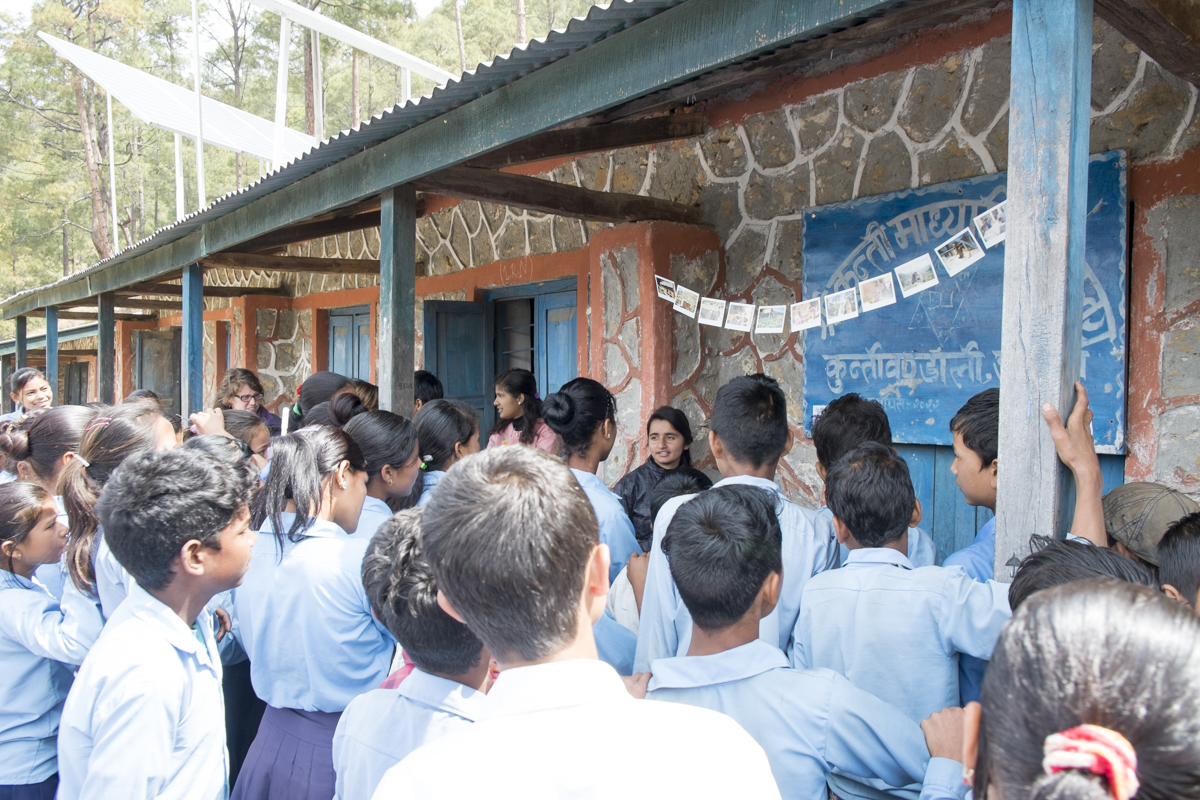
    All the photos in this mail were made by the girls during the Participatory Photography workshop #BreakTheSilence #MaunataTodau. Soon we will put them on sale, and the money will be for the authors.

    We have not been in touch for a while, but time flies and work has been pressing, both in Nepal and in Barcelona.
    We are writing a short notice to let you know we have you in mind and that we will soon post about everything that has been going on in the past really intense  months.

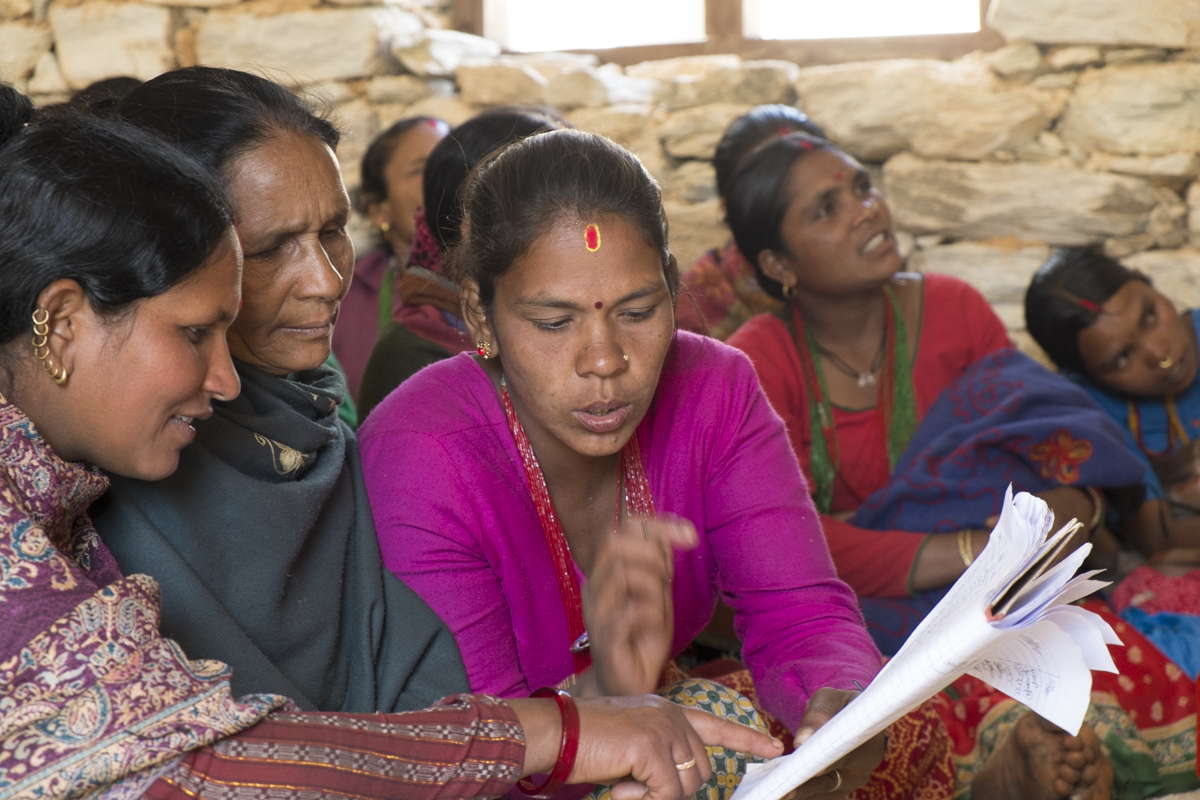
    For now, just a quick recap: the volunteer Spanish nurses, the Nepalese staff and Clara have already brought the project in 2 towns of Achcham (Nepal). It has been a complete success: women are especially satisfied with the menstrual hygiene training. Girls are really grateful for the menstrual cups donated by Ruby Cup – which we have been distributing in a pilot project. There is even a waiting list for the next batch! Both girls and women were really excited about the participatory photography workshops. They really needed to talk about Chhaupadi! We did not mention the word once, they were the ones who started bringing pictures of the huts and the deprivations they suffer when they menstruate.
    After the workshops, many of them decided to change some of the things they did up until now. We are sure that – slowly but surely –  change will happen.

    Alba, together with the rest of the volunteers, has been working on social media management and translations, as well as setting up an exhibition which opened on March 17th.
    For those of you in or around Barcelona, in case you are interested in visiting it and buy a picture or two, it is held at Greenage Club Barcelona: ​​Rosello, 254, 08037 Barcelona. Both Àsia 14-16 and the winner of the Photogenic Festval 2016 – SPECIAL are exhibited there. Since this is a private club,you must become members in order to get in. The good news is, however, that if you say you are going to visit the exhibition you will get a 50% discount on the annual membership: it will only cost you €10 and €5 out of these will be donated to be artsy! So by visiting the exhibition you will be donating to us!

    For those of you who have not donated yet, a friendly reminder: there are only 9 days left for our fundraiser. We still need funds for the next villages in Karnali Zone, at the Kalikot Disctrict. Would you please consider donating today? 🙂

    For the rest of you: could you please share the link to the fundraiser on social media in order to help us get the final momentum? We need as much help as we can get!

    Thank you very much for everything. We will keep in touch!

    Remember the donation link in English is this one: http://www.migranodearena.org/en/challenge/13821/higiene-menstrual-en-nepal—chhaupadi/

    The link to the English-version website is as follows: http://beartsy.org/rato-baltin-project-chhaupadi-red-bucket-project/
    Web: http://beartsy.org/
    Facebook: https://www.facebook.com/beartsyNGO/

    Written by Clara Go - Translate to english by Alba Miquel - Photos ©: Its authors, Girls from Basti and Kunti Bandali