Tag: Far-west

  • Project 2020: promoting local leadership, facing the changes

    Project 2020: promoting local leadership, facing the changes

    The Rato Baltin Project is on site since the beginning of 2017, working to eradicate the Nepalese cultural practice establishing that during the menstruation, girls and women are considered impure, and are deprived of their basic needs. This practice is penalized since 2018, but they will never denounce, because that would be denouncing their mother, their father, their mother-in-law… Nobody in be artsy uses the term ‘Chhaupadi’ without the participants mentioning it before: menstruation, different from the tradition. Be artsy – Nepal shall take a leadership role in the evaluation of the project, in order to ensure a non-biased perspective on the results, and determine the efficacy of the project.

    We have also 🦠 COVID19  response project (Masks 4 Health) 😷  🙏🏽

    The project has been a success in Achham, and apart from the activities, it must ‘make noise’, to discuss menstruation and Chhaupadi in a context of change. In this link you can see the results from the year 2019, and we will continue in this line to set the project, to strengthen the impact in the areas we have already worked in, involving the community, also with boys groups. In new schools as well, located near the villages where we may have already worked.

    Photography allows girls to showcase their own thoughts and experiences

    We want to stimulate a critical dialogue on their worries, and it enables them to display and reflect their experiences in their communities. Be artsy and the Rato Baltin Project, being relatively new endeavours, has limited capacity for its implementation at a bigger scale.

    The 2020 project is adapted to the lessons learned with the 2017, 2018 and 2019 projects, and taking into account the important new factors that have taken place this year worldwide.

    We shall emphasize on the implication of the local communities of Achham, and working with local entities: eradicating the practice should not be by a foreigner cultural judgement. This would inhibit the efforts in matters such as hygiene, health and menstrual sexual education, and would finally have a negative impact. The local be artsy partner is formed by women so committed to the project that they themselves have created a social company. They are three Nepalese women who worked with be artsy last year, with studies in cooperation, business administration, and gender studies. Also, local girls do conform the  trainers group, and they can be future managers. ROKPA International and Ruby Cup continue being our strategic partners.

    Some members of be artsy are interested in a parallel project, and during some follow-up months, they will prepare with our local mentors a social theatre piece against the Chhaupadi.

    Six collaborators do benefit from the Edufem project, read about this new project here!

    They will have the opportunity of having a better future and avoid an early marriage. They  remember that they were our students and now are working with us. For those ready to continue studying but whose families were not able to pay their way through high school, we pay for that, and for the housing, uniform, food, etc. to avoid them being married too soon.

    The total sum needed for the project is €74,230, without including the Edufem Project. It is higher this year because we want that two girls, in each village, do work throughout the year as social facilitators to attack directly the issue of the Chhaupadi, apart from the trainers. A single person cannot, with the existing social pressure, keep her mind strong against the tradition. If we do not have all the money we need, we shall do this every two months, but it would not be that effective. The expense for each of the 4 teams we have is €18,557.

    We shall work on the social distancing and hand hygiene messages

    We part from the idea that in Nepal, the peak of the Covid-19 shall arrive at the start of this next winter; we wanted to have a network of women sewing face masks, but that is complicated; it should be the Town Halls themselves facilitating the resources. Our contribution will mostly be to pass on comprehensible messages about the precautions, social distancing, hand hygiene, and clear information about the real dangers.

    Conferences with film screenings and exhibitions in several Catalan towns

    We have started working to create awareness, with conferences and exhibitions in several Catalan towns, on the problems relating to the Chhaupadi, avoiding ethnocentric and patronizing arguments, to inform about our need for collaborations. We do still need support, from more people!

    You can read here our project for 2020. Thanks!

    Text by Josep Marín, photos by Clara Garcia i Ortés.
    Translation by Tere Salinero.

    For just €1.80 a day you can change the future of a girl and prevent her from being forced to marry at 14 years old!

    There are several ways in which you can get involved and sponsor a girl in Achham:

    Teaming Group: 1 euro a month – become part of Rato Baltin Project!

    Teaming Group: 1 euro a month – become part of the team and get your friends to help you sponsor her and avoid early marriage!!

    Regular donation: to https://donorbox.org/againts-chhaupadi

    Become a member: https://beartsy.org/associate/

    🙂 Thanks!

  • Conversation with Clara G.O. about the Rato Baltin Poject.

    Conversation with Clara G.O. about the Rato Baltin Poject.

    Here is the link to listen the interview to Clara G.O at Radio Santvi.

  • 2017- Rato Baltin Pilot Project Impact Evaluation

    2017- Rato Baltin Pilot Project Impact Evaluation

    We hope 2018 has begun with joy and harmony.
    The whole be artsy team has started the year with great enthusiasm, as we have been working hard over the last few months to analyze the data collected during our last trip to assess the impact of the 2017 Rato Baltin project. We have been encouraged by what we have found, and are more committed now than ever in the fight against chhaupadi using sexual education, participatory photography and menstrual cups.

    2017 was a great success!
    You can read about it here:

    Project Impact Evaluation rato baltin 2017 be artsy ngo nepal


    DESCRIPTION

    In West Nepal, the lack of safe sanitary options often results in health problems and school absenteeism. Menstruation is a topic touched by embarrassment, insecurity, and degrading traditions for women like chhaupadi.

    Chhaupadi is characterised by the banishment of women during menstruation from their usual residence, due to supposed ‘impurity’. It has been criticised for violating the basic human rights of women, and for associated physical and mental health impacts. Despite having been outlawed and criminalised, it continues to exist.

    The Rato Baltin Project run by the NGO be artsy is a Menstrual Health Management (MHM) and sexual education program that aims to eradicate this practice. The Project includes girls, boys, women and their communities in its design.Atb eartsy ,webelievethateducationistheonlywaytochangethesedeeplyheldbeliefs.

    The project has a four-tiered approach:

    1. Workshop which provide sex education to both male and female teenagers in local schools of targeted communities
    2. Hygienic education delivered through workshops to all women in targeted communities
    3. Menstrual cups and training provided to volunteer girls attending school in targeted communities
    4. Participatory photography workshops utilised to showcase how girls and women feel about chhaupadi and their periods, and what they would like to change about the experience

    An important component of the Rato Baltin project is the distribution of a healthy and environmentally friendly solution to MHM in rural areas of Nepal: menstrual cups. Ruby Cup, a UK based company, are the manufacturers and donors of this life changing, medical grade silicone menstrual cup of the same name.

    Twice a year, we visit remote villages to distribute menstrual cups and conduct hygiene and sexual education training. We also revisit villages to check in on those who have already received training and a cup to see what (if anything) has changed, and evaluate the results of the program.

    We have already distributed more than 250 menstrual cups to school girls in remote villages. Each girl received a cup and training in how to use it. They are also given a metal bucket (baltin) to prepare clean water, and have somewhere to boil the cup.

    Intended use of the evaluation

    The intended use of the Rato Baltin project evaluation is to measure any changes in the lives of individual participants and communities targeted in the program, and assist in reaching new project donors for be artsy to achieve its aims in::

    • ●  Educating women, girls, boys and communities on sex, biology and HMH practices
    • ●  Reducing school absenteeism of girls in targeted remote communities of West Nepal
    • ●  Providing girls and women with tools to facilitate menstrual dignity
    • ●  Achieving long term project sustainability of the programFocus of the evaluationThe principal focus of the evaluation is to address the question of:

    – What changes have occurred around the practice of chhaupadi in the lives of girls and communities after the implementation our program?

    To ensure the program is based on best practice methodology and lessons learnt, the evaluation also aims to address the questions of:

    1. How culturally accepted and sustained is the use of menstrual cups in the targeted remote communities of West Nepal?
    2. What (if any) aspects of our program can be improved in design and/or implementation?

    Data sources and methodology

    Throughout the 2017 project implementation period, we have conducted monthly telephone follow-up calls with the volunteer menstrual cup users, as well as participating volunteer local teachers and nurses.

    The be artsy Staff Nurse and volunteers have travelled to the targeted communities twice in 2017 to conduct face-to-face follow-up with the girls, in order to measure how implementation of the cup is progressing. During these trips, girls have completed surveys about changes they have experiences around chhaupadi since our first visit, and initial use of the ruby cup. Informal conversations with community members were also used to discern impressions of the use of menstrual cups and the impact of workshop training and education.

    Girls that participated in the survey are users of the donated menstrual cups. However, our program has delivered workshop training and education to more than 1000 people since its commencement, in 4 villages: Basti, Kunti Bandali, Rachuli and Chilkhaya.

    The results

    CHHAUPADI:

    Only 9 girls reported no change in their experience of the chhaupadi tradition after our program. The rest of the Ruby Cup users experienced some changes.

    Some girls reported changes concerned access to food. Indeed, some girls reported they are now allowed to eat vegetables, some can eat fruits, and some can drink milk. A number of girls reported that after participating in our workshops, their mothers allowed them to have a warm blanket in the chhaugot (Hut), while some reported that they now sleep inside the house but in a separate room or space to other members of their family. A few girls reported that since the workshop trainings they are no longer required to participate in the exclusionary practices of chhaupadi, including being able to cook food.

    Girls communicated that because they no longer bleed outside of the body when using the cup, everything is

    cleaner, and both their families and themselves feel more self-confident. They attend school during their cycle, reducing their absenteeism, and actively try to help other girls in things related with menstruation.

    Girls that did not report changes related to chhaupadi have seen their lives improve in other areas:

    “ For me it is a positive experience. In my life this has brought some changes. My blood is not smelly also it is not bleeding out. And going to school is also easy with the cup.” ~ Bhawana Upadhya (Chilkhaya)

    MENSTRUAL CUPS:

    Of the 111 cups distributed between March and June 2017 to school girls in Achcham and Kalikot, 8 were confirmed as non-users. We were unable to personally contact 14 girls, but on their last follow-up call over the phone they reported they were still using their cups. A minimum of 2 of these girls have been married and now reside in India.

    “I am happy that i got the opportunity to use the ruby cup.” ~ Binda B.K. (Rachuli)

    REASONS FOR USING THE CUP:

    • –  No fear of staining clothes
    • –  No feeling that they are menstruating
    • –  They do not have to worry about drying rags
    • –  They do not feel self-conscious of having a bad smell
    • –  It is easier to attend school as they do not need to carry any pads or replacement materials, nor hide anyrubbish
    • –  Nobody knows they are menstruating, so they can engage in regular activities such as touching tapwater
    • –  They feel cleaner than when using traditional methodsREASONS FOR NOT USING THE CUP:
    • –  They are pregnant, but after the baby’s birth they want to begin using it again
    • –  Some reported slight pain/feelings of discomfort
    • –  Having lost it
    • –  Superstitions at home:

    ▪ The house of one of the girls collapsed; a chaman told the family it was due to a bad spirit, and the family was not allowed to reenter. They were forced to leave the house, and in turn left the village. The cup user could not go inside to take their cup. When her family left she had already been married to someone in the village and now resides there. She asked us to provide her with another cup, which we did. She will continue going to school until she finishes grade 10.

    EMERGENT MYTHS:

    • –  A mother from Kunti Bandali communicated that she believes the cup will prevent girls from being raped during their menstruation, both when they are in the chhaugot and when they have to go into the jungle alone
    • –  In Basti, some people were telling users not to use the cup because it might cause cancer when it is inside themWhat the girls think about our program:All girls feel more comfortable with their bodies after our workshop. They understand the biological processes and reasoning for what is happening, and many feel that they are now able to help other girls understand.

      Most of the girls considered their participation in the program to have been a positive experience, and that their lives have changed for the better in using the cup.

      In response to the question of “What would you change about Rato Baltin?”, most girls communicated that they would not change anything. Girls also rated the workshops on a scale of 0 – 10, with 0 being bad and 10 being excellent. Respondents rated the workshops with an average score of 9.

      BUDGET EVALUATION

    Description

    Pr evist Cost

    Total Cost

    Salaries – Local staff

    Rs 243.000,00

    Rs 269.280

    Supplies and workshop resources

    Rs 121.280,00

    Rs 184.967

    Utilities

    Rs 180.000,00

    Rs 299.092

    Transportation

    Rs 227.436,00

    Rs 288.741

    Total NPR

    Rs 771.716,00

    Rs 1.042.080

    Total Euro

    6.710,57 €

    9061,56 €

    General expenses – 10% of total Euro

    671,06 €

    906,15 €

    Grand Total

    7.381,63 €

    9967,71 €

    Exchange Rate: 1 Euro = 115 NPR (Rs)

    The 2017 budget exceeded the initial proposed expenditure by 2,586 Euros. This was the case for several reasons:1.b eartsy receivedanunexpectednewdonationof160menstrualcupsfromRubyCups

    2. This donation led to the doubling of the expected amount of work and needed complementary resources, particularly in terms of the menstrual kits

    3. Difficulty in finding volunteers to travel to West Nepal without financial compensation

    4.TheneedtoprovideKathmandu-basedvolunteerswithfundsfortravelandfoodrelatedto beartsya ctivities

    5. Difficulty in contracting a staff nurse for only three to four months of the year requiring higher than expected remuneration

    Great care was taken to adjust the budget and account for the increase in work and resources required by the unexpected donation, but a substantial increase was unavoidable to deliver the new cups.

    Discussion and plan for the future

    The results of the evaluation lead us to the conclusion that project is working well. Findings from the survey reveal our initial idea that the cups can break the taboos surrounding menstruation and chhaupadi was correct. However, our evaluation of the program also illustrates a need to implement some changes in the future.

    We have seen the need to design a workshop component aimed at the men in targeted communities, in order to holistically disseminate MHM knowledge and education. We will pursue the design of a men’s group workshop to be delivered in 2018.

    To see the full scope of the impact of the project among non-Ruby Cup users in communities, we will design a survey for all girls in participating schools, as well as the participants of the women’s group. This will be implemented in 2018.

    be artsy is also aware of a large gap in the delivery of the program. The menstrual cups donated by Ruby Cup are to be disseminated among girls that attend school, as a way of addressing absenteeism and MHM. However, not every girl in targeted communities are able to attend school. For instance, some girls are married, must stay at home to assist their families with housework, or tend to family owned fields. be artsy will work to make the program and provision of menstrual cups more inclusive of all girls and their contexts. be artsy is considering implementing a chhaupadi and menstrual cup education program on college and university campuses to raise awareness of this issue, and fundraise for this component of the 2018 project. This will require the hiring of one or two persons for the entirety of 2018 to successful and sustainably implement.

    We experienced problems working with our Nepali partner organisation, the Starts Foundation, throughout every stage of the 2017 Pilot Project. These difficulties in communication and delivery of agreed human and material resources rendered the implementation and evaluation phases difficult. Although the 2017 Pilot Project was successful thanks to the hard work of be artsy volunteers and President Clara Garcia Ortes, present in Nepal for 11 months of the year, it is necessary to consider other options to ensure effectiveness and accountability.

    We have been working to establish a strong volunteer team assembled under the banner of a new Nepali NGO. This new Nepali NGO will be named: be artsy Kalaa Shakti Nepal (be artsy, the power of art).

    In conclusion, in August of 2017, the Government of Nepal passed a law that punishes those forcing women to adhere to chhaupadi-mandated exile while menstruating with a fine of 3,000 Nepalese rupees or three months jail-time. Yet we believe that these advances will not have a significant impact on its prevalence. The practice of chhaupadi is strongly embedded in social norms and cultural practices. However, it is a significant step forward in the right direction on the political level, and represents a developing social change in opinion. Combined with programs such as Rato Baltin that address education on the local grassroots level in remote areas where the practice is still prevalent, we believe that there is significant potential for change into the future.

    🙂
    Thank you very much for being with us, we will soon send you exciting news about the 2018 Rato Baltin project.

    —
    The team of be artsy’s volunteers .
    Clara Go

    Now you can contribute for paying one month salary to the nurse, or for some hygiene kits easily from : https://www.gofundme.com/menstrual-cups-in-nepal-chhaupadi

    Or If you feel like it, you can Donate:

    Banc Sabadell
    IBAN: ES23 0081 0900 8200 0430 1934
    BIC: BSABESBB

    NepalYou can follow us on  Facebook or Twitter.
    Thank you for making this possible!

    Written by kristy Davies and Clara Go.
  • Life experience

    Life experience

    Writing and Photos © por Alba Parrado Puente, Spanish Nurse and Midwife, Volunteer of be artsy in Achcham.

    From one of the most chaotic Indian cities (Varanasí)  to one of the most peaceful little villages in Nepal there are around 800 km. and a four days journey by local bus, a bus as hellish as enjoyable.

    Crossing hundreds of small villages, looking through the window, sharing seats with several local people, exchanging smiles, listening to raucous and happy music, smelling a varied range or everything, tasting the dust… you can really approach to this country.

    Basti is the first village we have chosen and the one with which we want to collaborate. Basti means “city” or a similar concept in Nepalese. It is a magical place in the mountain chain of the HImalayas that not even the roads do reach… Not even the infamous Coca-Cola!

    This valley, only accesible on foot, counts with hundreds or thousands of farming terraces that picture a telltale landscape.

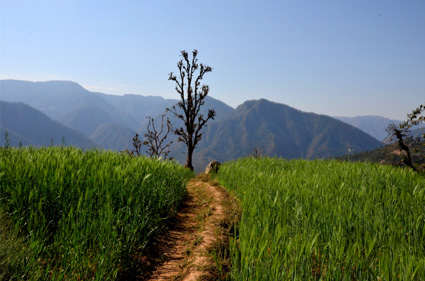
    A pure and far away place apart from progress and globalization, one of the thousands that exist here in Nepal.

    This area particularly, the Far-West,  is one of the most rural, both for being of difficult access as well as for the lack of tourists, and thanks to that it still keeps is essence.

    We don’t know exactly how many inhabitants does the village have, but we know that it is divided in 9 “bastis” or groups of dwellings that are scattered (like all villages in Nepal) and that around 150 boys and girls do assist to school, from which the main majority must walk approximately three hours to get there, as they live in those shacks you can spot far away, in the mountains…

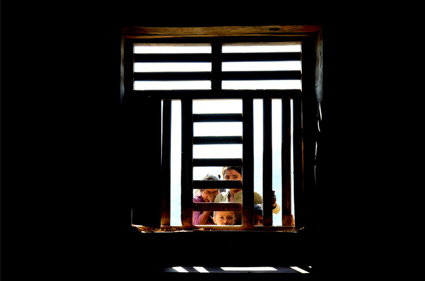
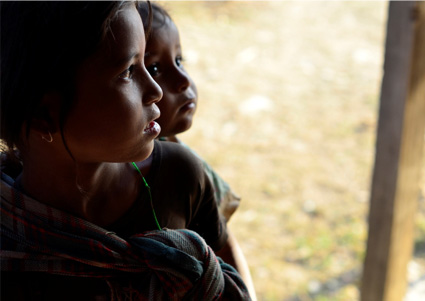
    Of the children that don’t come to school and who we see daily taking care of the goats or carriying around their younger siblings, peering curiously through the wooden windows of the class, nobody spokes, nor do they know about the percentage they suppose.

    The Government grants a financial support of 300 rupees a year (around 3 euro) to promote their assistance to school, but that does not seem to be very effective, maybe due to the petty amount that really is.
    When you accommodate to their lifestyle, eat what they eat (which is exactly the same every day, dalbat – lentils with rice -, takari – vegetables – and chapati – bread/flattened dough -), take a shower in the village fountain fully dressed (to wash it at the same time) the four hours a day that there is water, sleep like they sleep (to 4 people in frigging wooden planks!), learn to wipe your bottom without toilet paper (white gold for me from now on) and clean your nose just blowing out (like when you are in the shower), you realize the quantity of water we waste and all the things we don’t really need. And you think even harder about all the distractions and excess information, all the adverts and consumerism we just swallow without being aware. You start to surprise yourself by thinking that the three trousers and sweatshirts you carry in your backpack are even too much!

    Without really knowing what we would find in this new adventure, we came up here, six people (3 Nepalese and 3 foreigners).

    Asking for the nurse, the teachers and groups of women, we started little by little knowing the villagers. It was a nice surprise to see how do the women organize themselves here and see that apart from getting up a 4 in the morning, cook, take care of the children, and work hard chipping and carrying stones, they also allocate some of their time to share their worries and to improve their lives. This has no other name: they are SUPERWOMEN! (Point that I consider important for it is incredible: it is more than 50 kg. what they carry, and they bear it on their heads!!).
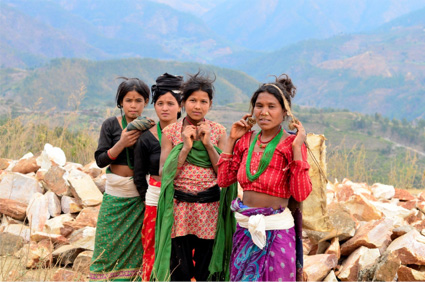
    They have also created a group of volunteers that help in the health care area and they were always open to share.

    As we could see by ourselves, the few men around (most of them are working in India) just play cards and get as drunk as possible with roxy (a Nepalese spirits). Here they do not punch but they cut! Why must it be that the women give all the money they earn to them?

    One of the details that most strikes me is that the life expectancy of the women in this region is of around 52 years, lower than the men, contrary to most countries. The day I decided to share with them the recipe for the Spanish omelette and went to cook, I started to cry. Because the smoke that the sticks they used to heat up the saucepan produced was really awful. The room they use as kitchen-lounge-bedroom has not ventilation… Now I understand that the first cause of death at such early ages is breathing problems!

    I think that the people here quickly understood why we were there, although we only spoke about sex education and critical photography. This eased that they would open up to us to share what they felt about their menstruation, the Chhaupadi and what this tradition means for them, without us having to bring up the subject.

    Our intention has always been to come and give information and resources that would enable the girls and women to empower themselves in their decisions, and not to impart precooked and westernized ideas about anything, as incomprehensible their customs may seem to us.

    In a world where most of the ONGs are bought, because the grants and financing come from international companies with very specific financial interests, where it does not mind what are you going for, but the fact that you do go… where people are not important, but the figures, and where they believe that progress, such as we understand it, must be brought to every corner of the planet. In a world where the human being has fallen so many times into the error of subduing the local population and destroying its customs and where we are still doing the same.  In a world where the commercial spirit prevails and where material success is the main moral standard, there should not really be ground for finding it surprising that the human relationships follow the same exchange frame that rules the assets and work market. In such a world, we have to tread very carefully not to fall in the trap and create colonisations of the XXI century,  because, despite the best of intentions, this can happen.

    Class with the teenagers were much better than we imagined, although I must say that with a translator, they seem a bit awkard. This about the language barrier, is a real challenge! It is one of the things that most frustrated us, because the trust we created or wanted to create was very limited. But it also had good things, like Nepalese nurses, without experience in this field, learning to trust in themselves and to love teaching as a basic pillar.
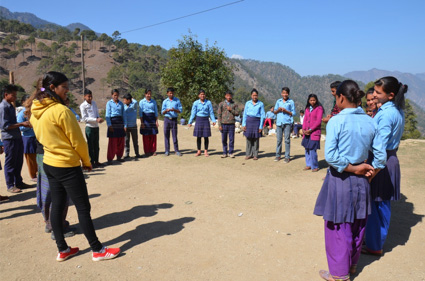
    Despite certain limitations, the women and girls could elaborate telling about their experiences with the Chhaupadi; how are they forced to sleep outside their homes when they have their period, from barns without a door in the best of cases, to corners covered with a bit of straw. How they have to undertake the works entailing more physical effort (as they cannot work in the kitchen during those days). How they are handed over the water because they are not allowed to take it themselves. How are they deprived of some food or of going to sacred places and temples.
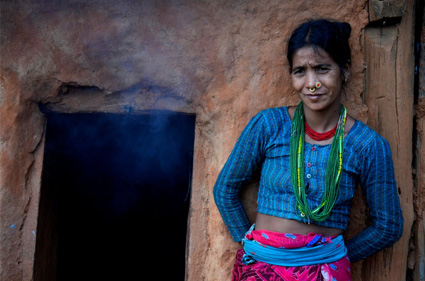
    The girls at school used to say that they did not like doing all that and that they did not want to continue and the boys said that they did not believe that anything bad would happen if they didn’t. The women said that they were all for leaving this practice… And… then? Where is the problem? Society and the old guard (usually called grandmothers) seem to be the main reason, as the men don’t seem to have nothing to do with it. Maybe the next generation would never live this and they may only hear old stories about a tradition already fallen into oblivion. That only depends on the women themselves.
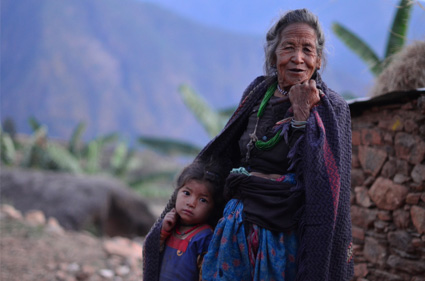
    On evening they took us to visit some of these “Chhau houses” and it surprised us to see how some of them would pose for a picture, as if doing the real thing. Apparently somebody else before us had been there to make a photograpic report about this… Now I understand how some journalists do to “catch” this crucial scenes! But, what about the women? Why would they do something like this? Do they want the outside world to know about this?

    On Women’s Day we thought about doing some event. We were very surprised when we asked and they said that they already had a program. And even more when we saw dozens of them shouting in the “village square”: We don’t want more Chhaupadi! We don’t want more violence! In the midst of it, amongs them, we spent the whole day… I don’t know very well how did we understand each other because we barely speak a couple of works in Nepalese, but the thing is that we became really excited and we danced with them, supporting them in their claims.
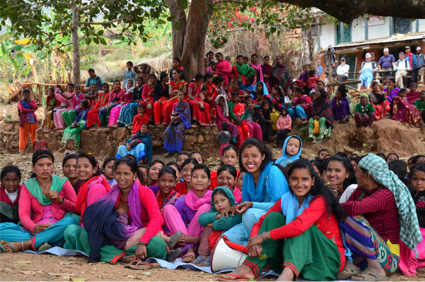
    The Government prohibited the Chhaupadi in 2005 and since then till now they have been going around the villages doing seminars and putting up signs in the “squares” that say: “Village free from Chhaupadi”, although this practice is still on in some areas in Nepal. On another hand, I thought that it was done in some very specific places, but judging by some Nepalese women from different districts with whom I have spoken, they have told me their personal experience from when they had their first periods. They were closed up in a room wihtout light for seven days, with just enough to eat and drink. Apart from may other beliefs, like that if they eat bananas during that time they became barren. And if you think about it, this last part, it is not that different from the beliefs in Spain at the time of my grandmother, when you should not water the plants or prepare certain meals.
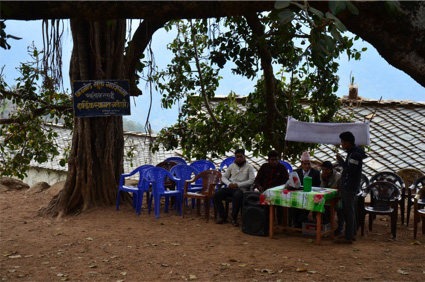
    The last day in Basti was intense… the nurses that are usually in each “health point” had left the village and we not only had one “accident” but two. Between blood and sweat, without gloves or dressings, we stiched the finger of one of the most strong women I have ever met. I had never seen anything like it and I wish we had had a hospital nearby with a real surgeon… but here there was no other option. A little later they came searching for us because a small child had been hit in the head with a stone… here the difficult part was to stich the wound in the middle of all the screams and cries, dirty blankets and smoke, inside a small mud hut and with 12 women or so around. When we were done and we went to bed, Alba and me we held hands and then was when we gave ourselves permission to express everything. It is not only the fact of living a stressful situation like that one, for me it was more to think what would these people have done or what is it what they usually do when they are in this situation. Going to the nearest hospital means at least 6 hours walking and clearly it is not an option for the majority from a financial point of view.


    Kunti Bandali was the second village we went to. I could not say why, but when I arrived I felt that something very different to Basti was expecting us. Looking closely, I understood what the reason was: the place where we were staying, more than a village, is a bazaar-village-road (although I would say more path than road), where lived mostly men whose main objective was to keep an optimum level of alcohol in their blood, and some women and children ou of school who do what the men should be doing… an atmosphere where you can see, hear, smell and even touch this reality is difficult to digest.

    In this school, the classes flowed in a totally different manner from each other, so our improvisation habilities were really tested. From interactive classes and open to discussion to classes where passivity and indiference ruled. Where they would speak about their menstruation freely and where they would not even mention it despite our efforts.

    We found out that Unicef had been here the previous year teaching about the VIH (as this region quite suffers its effects) and about contraceptive methods. They had the knowledge that it is passed by maintaning sexual relationships but they had no idea what sexuality is or what is a relationship, much less about using a condom. All our classes were based on the expression of the feelings and emotions that the growing into adulthood provokes in them, and the importance of expressing ourselves and having a good communication.
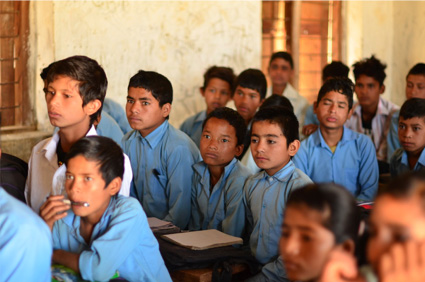
    The meetings with the women were not easy mainly for two reasons.

    When Unicef and other big ONGs came to this place, they paid for each session to each woman a certain amount of money so all of them would assist. Maybe to increase their statistics, not minding if the women were or not interested or maybe just so they would leave their hard work and would attend. We were not going to do the same.

    On another hand, contrary to Basti, they are more entrenched with the Chhaupadi and they are not in the way of changing, so the dialogue was little to that regard. It is curious to see the two faces of the coin and more curious still that the village more in touch with the rest of the world and with more options to information, is the one who more wishes to stay as it is.

    The menstrual cup offered to girls and women of both villages I think was well received. We believe that when the whole family lives in the same space, where they also undertake all the daily activities, the problem of menstruating without having more than a dirty cloth as sanitary pad, can be the reason why, nowadays, they still sleep outside the house. In any case, that quality of life that they can have for one week a month and that the cup can give, is simply great, as it was in my case in the case of many other.

    Regarding the picture part as the way of expressing themselves before their families and their community, did seem to me a very useful tool and with which, in some way, they could get rid of their inhibitions and enjoy themselves.

    From my point of view, we have been too little time in each village, as when we started to build confidence and to became part of their lives, we just went away. And that has not allowed us to take the maximum advantage of what both us and the others had to offer.


    Many people tells me that it is brilliant that I come and help and that I am caring and altruist… but it is not as the majority sees it. In my opinion, when you give, you also receive, and all the people who do this kind of thing is because it gives them something, even if only because they can just learn something else about the world, because it goes with their principles or for their personal growth.

    What I know is that I learn, learn and learn to unlearn, to not judge anything, to love…

    The way of travelling has changed for me or, better said, has changed me, allowing  me to see the light more clearly, what I am and I have always been. Like the song from the Nepalese Hymn that all the children must sing every morning says: “We are from the East or the West, from different casts or races, but we are all equal and part of the same, connected we are part of a precious necklace”. (I must say that I frowned at the “streching exercises” that they do in the rows before singing the hymn, as to my eyes it looked like a military service, but must also say that after knowing its meaning, my “eyesight” became more tolerant).

    For all this, to go visiting monuments, restaurants or markets full of tourists, now seems too little and uncomplete, as if you only get to that when you travel, you lose the spirit of the place, its culture, its people… and with that the comprehension and the understanding of what is around you wherever you go. The wonders you find when you look closely is not a passive action, however, it requests that we leave out our own learnings not to fall into the error of judging instead of loving.

    To have the opportunity to be here, drinking from this culture, earning in life experiences, is something that money can’t pay, indispensable and unique.

    Maybe this is not for everybody, but it sure is for me. Do travel! Follow up roads, paths and mountains! Do have a bath in sacred rivers, salt lakes, thermal waters and coral reefs.

    Do tastes and, dust and earth!

    Do climb the highest and most beautiful mountains and go down the deepest and unexplored seas!

    Do not judge! Break your limits! Love! Dream! Fly!


    West Nepal girls need this kind of program. And we need help to continue the project!

    Now you can donate for paying one month salary to the nurse, or for some hygiene kit or for the menstrual cup control in September: http://beartsy.org/get-involved-with-rato-baltin

    Or If you feel like it, you can donate via bank transfer at: Banc Sabadell IBAN: ES23 0081 0900 8200 0430 1934 BIC: BSABESBB (your recurring donation will help us have a better planning of our budget to carry out the projects undertaken).

    Or take a look others ways to donate in http://beartsy.org/donate/

    Thank You! 🙂

    Translated to English by Tere Salinero
  • Travel log – Basti – Achcham

    Travel log – Basti – Achcham

    Whenever one gets to a town in such remote areas – in spite of their beauty – the first thing coming to mind after seeing the life conditions waiting for us for the next few days is: I would go away right now.

    Basti was no different.

    Despite being aware such hard conditions were awaiting, the first moments were of total panic anyway. A big bed for the 5 women and a bed for the man. A dirty place for Western standards. Not enough blankets, or mattresses, or anything we were promised would be there. But this is Nepal and they can’t say no and you can’t complain. They give you (sell you) whatever they have. We made do with 4 people in one room and 2 in the other one (fortunately, I had advised the Spanish nurses to bring their sleeping bag and mat).

    The following day (March 2nd) we went to the school and decided we were starting the workshops right then: the 2 Spanish nurses and one of the Nepalese nurses started with grade 9.

    The other nurse (Susmila), the Nepalese project manager (Kamal) and I (Clara) met with the local nurse and health centre staff in order to get to know them personally and ask for help to gather the various women’s groups present in the VCD (municipality).

    In the afternoon we held the first Ruby Cup Training with 2 teachers and one nurse, who will be in charge of monitoring and following up on the girls using the cups. They all think it’s an excellent solution.
    One of the teachers told us that, when younger, she didn’t practice Chhaupadi but felt forced to follow the tradition when she got married. First surprise! We thought nobody amongst teachers and educated people would follow the tradition.

    After that, we met with the chairwomen of the women’s groups and health volunteers, and arranged an appointment for the following day at 3 pm.

    The day after that (March 3rd), the girls were off school. A mourning day had been declared due to a girl dying after not getting over a cancer treatment, but they all went to school anyway to hold a minute of silence for the late girl.

    At 10 am women started getting to school unexpectedly. Since some of the VCDs were more than 3 hours away, they decided 3pm was not suitable and they got there earlier. This is Nepal! 🙂 They told us that, instead of attending the workshop with the girls at 3pm, they would rather do it at 7:30am. Once over initial panic, we ended up doing the introductory workshop on menstrual hygiene, explained the photography workshop and gave them 5 cameras to take pictures of what they did not like when they were menstruating – or what they would change. At no point did we mention the word Chhaupadi.

    Shortly after the women left, the girls turned up to school. Since many of them came from Basti 3 – which is 3 hours away – they asked we held the lesson right then so they could go home. (K garne?). We also held #RatoBaltin’s Photo Project first session with the girls. We explained the 4 basic rules of photography and the Photovoice method, and invited them to take 5 cameras with them to take pictures of what they would like to change when they menstruate.

    March 4th was a Saturday, the day Nepalese children don’t go to school. We spent it walking around town and unsuccessfully trying to get an internet connection. We planned the lessons for the week and rested.

    March 5th, 8:30 am (we had been waiting for them since 7:30 – Nepalese time): 65 women in class, we got tea and biscuits for everyone, they had come a long way to listen to us.
    We started the MHM (menstrual hygiene management) lesson with a rather physiological lesson. What is menstruation? How does it happen? and so on. We showed an amazing video called Monthlies, where they were exposed to the different ways women around the world experience menstruation. Then, the big “surprise”: their pictures. Chhaupadi huts, foods they were banned from eating while menstruating, and their huge need to discuss it.

    The two Spanish nurses (Alba Maria Campos and Alba Parrado ) together with Samita (our Nepalese nurse) were teaching sex ed up until 3pm in grade 8.

    At 3pm, the girls in secondary school came to our classroom: brief explanation on menstrual physiology, introduction to the menstrual cup, the Monthlies video, and watching and listening to their explanations of the pictures they took. Same as with the women’s group: Chhaupadi and a huge willingness to talk about it and understand related issues.

    March 6th: 7:30 am: we got them to be on time. 🙂 Menstrual hygiene, how women around the world deal with the issue, Menstrupedia’s video in English with Hindi subtitles (we have not been able to finish the audio recording in Nepalese, it takes a long time and studios charge NPR8,000 to do it and our budget is not enough). Our project manager, Kamal, is doing it voluntarily whenever he has time (which is not often). We had a look and analysed the pictures they brought to us.

    The nurses went on with sex ed to children of 6th and 7th grade and at 3pm we continued with the girls at secondary school. We already asked how many girls want to try the menstrual cup in order to know whether we can offer cups to non-schooled girls who attend with the women’s group.

    March 7th: 7:30 am. We continued with menstrual hygiene and a first introduction to the menstrual cup. We had 7 cups available for young girls who are not schooled. We showed them a video on the importance of men supporting and helping with menstrual hygiene and kept checking out the pictures they brought us. Some of the results were striking. This was the last day we had lessons with the women. At the end of the lesson, the leaders of different groups wanted to talk to everyone else: they all invited the rest to change things. There is a monster in town called society, who forces them to practise Chhaupadi. Women are a majority in said society, so they are the ones who can kill the monster. 🙂
    The nurses taught boys and girls of grades 6 and 7 together.
    At 3pm we held the first cup training for girls and ended by boiling and sterilising all the cups. We wanted to make sure they understood exactly what they had to do. We also asked them that, at home, they tried to insert the cup even if they were not menstruating. We have been really insistent on the importance of washing hands with soap before inserting the cup, using the bucket to get clean water to wash their Menstrual Cups – as long as it comes straight from the fountain’s tap or the water is previously boiled (in Nepal they usually boil drinking water, they only need a glass to rinse the cup when they change it) – and boiling the cup for at least 5 minutes after and, if possible, before its use. This is an area where red dust gets stuck everywhere, and these recommendations are to make sure they don’t get infections.

    March 8th: Kamal and I already told about the impressive day we had from there, you can read about it here
    Before the above, we had been strolling around the nearest towns. Together with the girls who had taken the original pictures with digital cameras, we took the pictures again with the Instax Wide that Fuji had donated to us for the project. People were amazed that they could have the pictures in their hands instantly. We could not resist gifting their pictures to some of the families who had been helping us. Such is the magic of photography! 🙂 However, even though Fuji donated 60 pictures and we bought 20 more, we are afraid that we will run out of photographic paper before we finish the project. Buying more paper in Nepal will be, we think, mission impossible.

    March 9th: Ruby Cup training with the girls and women who had not been able to attend the previous day, and Q&A round with the rest.

    March 10th: At 10am opening of the exhibition; there was a slideshow of the pictures that girls and women had taken a all day long; and finally, we projected a Nepalese film to secondary school boys and girls. It deals with Chhaupadi, its consequences, its introduction in Achcham, the attempts at demolishing the huts, and what is done in the rest of the country when women menstruate. Teachers, boys and girls listened to the film intently and sternly. They all were adamant that things had to change during the talk that followed the film. 🙂

    We hope so!
    We said farewell to all the students and thanked them for their help. We then met the teachers (men and women) and offered them a Ruby Cup training – which they had asked for – so they know how to help the girls.
    At night a group of girls came to tell us about their experience with the cup, and the older girls (16yo) committed to help the 2 youngest ones (12yo), as well as to keep in touch with us via phone (we are still in touch).
    The following day we left this amazing town, which stole the hearts of everyone in the expedition, looking forward to September to come back again to check on the girls.

    Let’s go for the 3-hour uphill trek towards Kunti Bandali! Piece of cake!

    Please remember we still need your help to raise funds to continue with our project. You can donate at: https://www.migranodearena.org/en/challenge/13821/rato-baltin-nepal—facing-chhaupadi-with-menstrual-education/

    Written by Clara Go - Translate to english by Alba Miquel - Photos ©: Clara Go
  • Women empowerment in Basti. Chhaupadi: yes or no? You choose.

    Women empowerment in Basti. Chhaupadi: yes or no? You choose.

    Written by Alba Maria Campos, Spanish volunteer nurse, specialised in family and community health
    Translate to english by Alba Miquel
    Photos from X-pro1 © Clara Go - Phone Pic form Alba Mª Campos.

    Menstruation is not a passive experience, it is not something that “our body produces for us”; it is something in which we actively play a role in harmony with the cosmic rhythm

    A few months ago, a friend told us about a project in one of the most remote places in Nepal: the Far West. He explained a bit about what exactly the project was and the subject took my interest. I had never heard about it before: Chhaupadi.

    We said yes immediately. Afterwards, I started reading about the matter, and the more I read, the more interested I became – and more contradictions appeared. Chhaupadi is an Indian tradition which, despite being banned in Nepal since 2005, it is still being practiced in some areas of the country.

    Said practice consists of isolating women from their family home for two, three, seven, or even – in some places and castes – up to ten days, during their period. They can’t go into the kitchen, so they are forced to work for longer hours outside their homes. They can’t use the bathroom either, so they have to relieve themselves wherever they are able to. They are not allowed to pray or go to a temple, touch the cows or milk them. They can’t eat fruit, vegetables, meat or dairy products, and handling water is an absolute no-no: they depend on other people every time they need to drink. If they don’t follow these rules, they will be made responsible for any misfortune that may happen to them or their environment. All of this is due to a malediction cast by the God Indra, resulting in women being considered impure and unfavourable for their families every time they menstruate.    

    I tried to find arguments to support this tradition, to avoid judging it from a Western point of view which would lead me to develop my volunteer work in a “neocolonialist” way – something big NGOs tend to do. When I became aware of the complexity of the issue we were going to tackle, I started to wonder who was I, really, to try and change such deep-rooted customs. Does our Westerness give us the opportunity to live our period the way we would like to? Of course not, but I could not still find the logic in this tradition from a perspective different from patriarchal oppression which oppresses women all around the world. Afterwards, I was surprised that it was the women themselves who made each other go with and through it. Men, apparently, kept aside from it all.

    After lots of research, I got hold of an article which somewhat explained some of the pillars supporting this tradition.

    From a pranic or energetic point of view, we have five prana, or five types of energy, in our body. One of them is in charge of getting rid of the “impure” – both physically as well as emotionally. I thought that that perspective was very interesting, but it did not justify such a violent attitude. According to such idea, us women were allowed to rest, go away from our entourage and be able to take some days for ourselves, to move our unconscious emotions into the conscious, without judging or analysing them, and thus become in touch with our most inner self.  This is a much needed space which is not usually granted in many cultures. During this time, the Shakti (feminine energy) flows throughout our bodies with more intensity, making us more sensitive to the stimuli in our environment, and, likewise, the environment is more affected by it.

    Obviously, there is no justification for such mistreatment, defended mainly by older women, and so I decided to focus the program on a self-assessment perspective. They would be the ones to question their way of living menstruation. This would empower them to become free from the superstitions that their families had imprinted in them – which incidentally were not much different from those my grandmother had 50 years ago.

    The fear to “recolonise” via volunteering was not the only one crossing my mind. I knew that the trip was not going to be easy: the local buses were mere tin cans with people crammed inside like sardines in a box, and the roads, despite their beauty, were bend after bend, never mind rocks and potholes threatening to roll us over any time. We had been warned, but no obstacle could stop us. Alba and I would start a new adventure.

    Another of our fears was the language. Were we going to be able to teach something like this in English? Deep inside, we knew we would get by. But, what would happen with the translations into Nepalese? Who would take care of that?

    Two volunteer nurses came with us. In the beginning it was not easy to co-ordinate with each other but, in the end, we ended up quite proud at how we had been able to manage ourselves.   

    Thanks to the reflections made with the help of the group on health self management – Salut entre Totxs–  whom I am very grateful to for their attention, capacity, ponderation, fight and constant critic; as well as to Marta – my lifetime friend whom I had deep conversations about the matter with-, and Julen – an anthropology student who  bombarded me with information-, I decided to design the first draft of the program in Barcelona without knowing yet what we would encounter, when or where, until the very last minute. 

    As we were travelling through India, Alba and myself designed the program we would hand over in schools. We included work in the physical and emotional changes during teen years, stressing the emotional ones, with the idea of encouraging consciousness and emotional expression. We also wanted to explain the working of the male and female reproductive systems, highlighting the three orifices and the clitoris. Important too to insist on considering the menstrual cycle as something natural, comparing it to the water and moon cycles, and stressing the more and less fertile days to promote “decision-making capacity” when it came to pregnancies.      

    We also included a workshop to have the groups explain what was it that girls liked less about their periods, whilst at the same time offering a guided meditation with the boys where they would have to put themselves in the girls’ skins during their period.  Afterwards, each group spoke about their feelings before the class. It seemed crucial to us that they would freely talk about and explain the subject in order for them to draw their own conclusions.  As a final point, we elaborated on sexual relationships; encompassing love, pleasure for both sexes and reproduction, as well as contraceptive methods. We wondered at the beginning how to tackle this last issue as we did not know how well placed they were to access those methods, and it did surprise us greatly that they themselves raised the subject with questions. At the beginning of the workshop we gave a sheet to each of the attendants so that they could write down all their queries and doubts anonymously so we could reply to all of them.

    Finally the moment for us to start our adventure arrived. From Varanasi we went to Lumbini, Danghari and Mangalsen. It took us more than three days to get to Basti. A real overdose of public transport! 

    We had quite assumed the idea of different rhythms and unexpected events in Nepal, and to be honest everything went quite well. The trip from Mangalsen to Basti was impressive, both for the views as well as for the difficulties. The jeep left us as near as possible. So much that they had to hoist it out with a crane. Then, we walked down a mountain path for three hours accompanied by a group of superwomen, able to carry up to 50 kg. over their heads, whilst their husbands drank, played cards or – many of them – had run away. We were really amazed with the porters, who, in the same way they carry rocks, are burdened with their families and bear the burden of a culture that oppresses them greatly. The first thing we were asked in one of the breaks was if we had a fiancée, if we were married or if we had children.  When we said no, they said “that’s very good, discovering the world and enjoying life. We don’t have that opportunity”. Emotions were starting to run high already. 

    Basti is a village divided into nine districts, and to some it is more than a four hour walk to school, an important fact to bear in mind. Moreover, there are no means of transport other than that, as in the village there are no streets nor is the ground even: it is all mountain field, with hills here and there and rocks that, sometimes, make do as stairs. 

    The views, wherever we looked, were amazing. There were eagles everywhere. We slept four people in the same bed, we had water only for a few hours a day, electricity depending on sunlight, and we had practically the same food every day. No internet, napkins, toilet paper or hot showers. It was quite funny in fact to shower fully dressed in the village fountain at the same time that we washed our clothes quickly because the water was running out. A real experience worth repeating, even if many would not think the same.

    The worst for me was the language barrier. I felt impotent to communicate without a translator. I did not like it either to see only women, and occasionally some young boys and girls, doing all the hard work, besides keeping their homes and taking care of their children. They breast-feed them until rather grown up and spend a lot of time with them. In fact, some even take them to work. The children were free, happy creatures, playing in the streets; dirty and unkempt but with a big smile in their faces, and they always came to take a closer look at us. Where are the screens that so hypnotise children in the West? This is a different world… 

    The first class we imparted was the photography workshop. We gave them some cameras to take around and make pictures of what they liked less about menstruation to show it to the outside world. A group of women arrived, each from a different female association, which quite moved me. They were very organised, the sort of change generators we needed! In the following session, more than 40 women – many of them breastfeeding their babies on the spot and with their toddlers waddling around – attended the class before going to work. I really enjoyed it! In other lessons we showed them a globe of the Earth and a video explaining the way menstruation is experienced in other parts of the world, and they clapped enthusiastically when we finished. It was also very exciting for us. Moreover, we were careful not to mention the word Chhaupadi at any moment, they themselves were the ones expressing it through their pictures. I made the most of the class on the following day to delve deeper into it with the girls. After they said what they liked the least about menstruation and the boys did the meditation, we drew up conclusions and I asked: do you think something would happen if you didn’t do what you don’t like, if in other parts of the world they can do it in a different way?  The boys replied NO unanimously; the girls, after knowing the way of living in other places, started to question what their culture had ingrained in them. The word Chhaupadi was still not being mentioned; we were on the right path! As children very well said, and as everything is always in Nepal: vistare, vistare…

    On the 8th of March – Women’s Day -, they made a special cultural program in the village centre with a sign in the background reading: “A Chhaupadi-free village”. You only needed to take a walk around the village to see the huts, where a woman could barely fit, even lying down. And at times there had to be five of them inside. Sometimes, they light fires to warm themselves and there have already been several deaths due to smoke inhalation, not to speak about the sexual violence they suffer, not being able to close the door of the huts from the inside; even if there is a door.

    The people of the village were perfectly organised in castes and ages, distributed all around the square. The politicians and the “elite” presiding over the event, the women with their offspring sitting on the floor and the men behind them, in the foreground. Some women were also at the back. Alba and myself, we decided to sit on the floor with them. I was near tears when I saw all that. I would have never imagined that they would organise anything similar. I spent the whole afternoon surrounded by girls who wanted to play the Dholak, very similar to the Madded that a boy was playing in the background, and I felt happy “teaching” them to make noise, with the main objective of attracting the interest of any of them and that the music stopped being just “a men’s thing”. We ended up dancing with them in a big circle to close the event and we went back home exhausted, really excited, and with a great feeling of frustration at not being able to communicate as we would like to.

    The last day in Basti was especially intense. A small group of girls arrived to talk about the menstrual cup. One of the girls most interested in the classes and workshops – and who had already tried the menstrual cup, and to whom with entrusted with the task of helping the others if they had any problems with it – arrived. I felt that it would be too complicated having the nurse or the teachers do it themselves: they looked very shy at the subject. It pleased us a lot to share that space with them outside school, they told us a lot of things about their lives and expectations and, to be honest, we were quite amazed. One of them is 16 years old and her parents both work in India, so she lives alone with her younger sister and brother. Her grandmother lives in the house next door and controls that, when they have got her period, they go out from the house and fulfill the tradition. That forced her one time to take contraceptive pills so her period would not happen at the same time as her sister’s, because otherwise none of them could cook or milk the cow. They would not have been able to drink water either, as nobody was there to hand them over a glass. We were quite affected by it and we thought that it was probably just one of many testimonials. Ten days is not enough to really know the reality of a village.

    That same day we were faced with two difficult situations that made us go deeper into the reality of these people. The woman who cooked for us had injured her finger with the collar of a cow and hadn’t stopped bleeding since the morning. When we saw it in the afternoon, we saw no option but to stitch it together with the limited equipment we had, and without anaesthetics. Once again, we were amazed by the resilience of these superwomen.

    That same night, the son of one of our porters on the first day, had his head injured by a rock thrown at him. He had a very deep gash which would not stop bleeding, and they came to fetch us. We gathered the equipment and again stitched the wound with the last remaining suture thread. This time, we didn’t have gloves either. The house consisted on a single room serving both as kitchen and bedroom, with the only light coming from a fire that filled everything with smoke. There was barely space for the women who were inside. All women. We were in deep shock. What did they usually do in these situations? The nearest hospital was 6 hours away walking across the mountain. I am sure that we were more scared than them, experts in handling adversity and in carrying on with their lives.

    The girl that came to talk to us in the house was very clear that she wanted to be a nurse. We felt very proud and encouraged her to do so. Just that same afternoon I had told Alba how happy I was to have followed this career and even more specialise in the family and community area. There is nothing that satisfies me more than to be able to use my skills in any environment and in any place in the world.

    Thus has been how, promoting the verbal and artistic expression through photography , by enabling them to picture what they don’t like and giving them basic biopsychosocial information – which is omitted in schools because it is taboo-, we succeeded in having both women and men of all ages question themselves about what they were doing and why. We tried to use different dynamics from those employed by other NGOs that had been in the area, who intended to enforce change using “Western culture invasion” techniques that fall short of being adequate. 

    Please remember we still need your help to raise funds to continue with our project. You can donate at: https://www.migranodearena.org/en/challenge/13821/rato-baltin-nepal—facing-chhaupadi-with-menstrual-education/

  • Travel log: On our way to Nepal’s Far West

    Travel log: On our way to Nepal’s Far West

    We set off Kathmandu on February 26th at 3pm: Kamal, our Nepalese project manager; Susmila, the nurse we hired to deliver the Ruby Cup and menstrual hygiene trainings, and I (Clara GO).

    After getting the 40 buckets and suitcases full of material we were carrying on the bus, we set out to Dhangadhi, feeling both excited and nervous. We had been working towards this moment for so many months that the trip became longer and rougher than usual.
    Leaving Kathmandu tends to be difficult, depending on the time of day it can take as much as 6 or 7 hours… which is how long it took us that day. The road to Chitwan, which was under construction 6 months ago, has barely progressed. It looks set to become one of the many unfinished roads in this country.

    When we finally made it to Chitwan, at the end of the roadworks, the bus’ windscreen broke after being hit – nobody really knows how – by a lorry driving the opposite way – which sped away. The Nepalese are usually very calm and quiet, but this day we had a driver who, without giving it a second thought, u-turned and started chasing the lorry for one hour… heading back to Kathmandu! Eventually, after stopping a few times and talking to several police officers, the lorry was found hiding, its driver agreed to pay for the windscreen and the bus turned back towards Dhangadhi, where we got after 12pm the following day. A 22-hour bus ride.

    We then headed to the hotel where we had arranged to meet another local nurse and the volunteer Spanish nurses:  one midwife, and one specialised in family and community health. Together, we had a meeting with one of the teachers at the Seti Makali Nursing Campus. Once the whole team had gathered, we started planning how to carry out all the work we intended to do.

    The following day, February 28th, after a terrifying 12-hour Jeep ride – in which most of us got sick – we got to Mangalsen. There a journalist friend of mine and his family were waiting for us. They had kindly prepared dinner for us and let us sleep in their home (in their own bed: Thank You, Krishna and Maya).

    March 1st: Mangalsen woke up cloudy. The way to Basti are 8 hours on foot; or 2 by jeep plus 2 more walking. We opted for the jeep. The rain made us consider staying there one more day, but it eventually stopped raining and we set off by jeep until the point where 4 women porters were waiting for us to help us with all our luggage. After a 3-hour descent along a very steep path, we made it to Basti: a town that seemed to have been taken out of a film. Beautiful and genuine. But we all knew life there was not as ideal as it seemed.
    Please remember we still need your help to raise funds to continue with our project. You can donate at: https://www.migranodearena.org/en/challenge/13821/rato-baltin-nepal—facing-chhaupadi-with-menstrual-education/
    Rato Baltin Project.


    Written by Clara Go - Translate to english by Alba Miquel - Photos from different cameras and phones ©: Clara Go
  • #RatoBaltin’s First stage has been a total success

    #RatoBaltin’s First stage has been a total success

    All the photos in this mail were made by the girls during the Participatory Photography workshop #BreakTheSilence #MaunataTodau. Soon we will put them on sale, and the money will be for the authors.

    We have not been in touch for a while, but time flies and work has been pressing, both in Nepal and in Barcelona.
    We are writing a short notice to let you know we have you in mind and that we will soon post about everything that has been going on in the past really intense  months.

    For now, just a quick recap: the volunteer Spanish nurses, the Nepalese staff and Clara have already brought the project in 2 towns of Achcham (Nepal). It has been a complete success: women are especially satisfied with the menstrual hygiene training. Girls are really grateful for the menstrual cups donated by Ruby Cup – which we have been distributing in a pilot project. There is even a waiting list for the next batch! Both girls and women were really excited about the participatory photography workshops. They really needed to talk about Chhaupadi! We did not mention the word once, they were the ones who started bringing pictures of the huts and the deprivations they suffer when they menstruate.
    After the workshops, many of them decided to change some of the things they did up until now. We are sure that – slowly but surely –  change will happen.

    Alba, together with the rest of the volunteers, has been working on social media management and translations, as well as setting up an exhibition which opened on March 17th.
    For those of you in or around Barcelona, in case you are interested in visiting it and buy a picture or two, it is held at Greenage Club Barcelona: ​​Rosello, 254, 08037 Barcelona. Both Àsia 14-16 and the winner of the Photogenic Festval 2016 – SPECIAL are exhibited there. Since this is a private club,you must become members in order to get in. The good news is, however, that if you say you are going to visit the exhibition you will get a 50% discount on the annual membership: it will only cost you €10 and €5 out of these will be donated to be artsy! So by visiting the exhibition you will be donating to us!

    For those of you who have not donated yet, a friendly reminder: there are only 9 days left for our fundraiser. We still need funds for the next villages in Karnali Zone, at the Kalikot Disctrict. Would you please consider donating today? 🙂

    For the rest of you: could you please share the link to the fundraiser on social media in order to help us get the final momentum? We need as much help as we can get!

    Thank you very much for everything. We will keep in touch!

    Remember the donation link in English is this one: http://www.migranodearena.org/en/challenge/13821/higiene-menstrual-en-nepal—chhaupadi/

    The link to the English-version website is as follows: http://beartsy.org/rato-baltin-project-chhaupadi-red-bucket-project/
    Web: http://beartsy.org/
    Facebook: https://www.facebook.com/beartsyNGO/

    Written by Clara Go - Translate to english by Alba Miquel - Photos ©: Its authors, Girls from Basti and Kunti Bandali