Tag: sexual education

  • Travel log – Preparation of the follow-up trip: holidays do not exist…

    Travel log – Preparation of the follow-up trip: holidays do not exist…

    By the end of June, after our trip back from Kalikot, I was impatient, for September to arrive and go back to Achham and Kalikot to check on the results.

    Each time we return to the villages, the accumulated tiredness there, and all the things I have seen and experienced do take their toll. Many times I feel depressed because I can’t do more, physically exhausted and thinking in all the work that still remains to be done.

    This time, I decided that I would take 10 or 15 days to lay back. That afterwards I would write and prepare the pictures and that I would have a quiet month of August, a quasi-holidays period. To remain at home, at rest during the rainy season. I rented a room in a guesthouse (a cheap one) in Patan, as I wanted to try if I would like to live in that area, full of expats and maybe with more connections and means for the NGO, and in my first night there I called a friend from the Putali Nepal NGO and fixed with her going to a concert, where we talked about work and our trip all the time! 🙂

    But, from the following day, yes: about ten days doing “practically” nothing. Then we start doing the follow-up of the girls via the telephone, and with the little money we had I started preparing the trip for September. Susmila, our first nurse, recovered from her surgery, was ready to come with me to Achham and Kalikot and that was the plan. To go both of us by ourselves just to do the follow-up. I wrote to Ruby Cup to tell them how things had been. I told them that we had a waiting list of 140 girls and they offered a new donation of 160 units. I jumped for joy! The girls would have their cups this year! I had told them that I could not promise anything, but that we would try to have them for spring and it happens that we would have them way before! Great!

    Ah! But wait… my happiness was short-lasted: 160 cups, that would be 160 buckets, and soaps and towels and more people to carry all… My quiet August had just gone up in smoke! Now to get money to buy all the materials! Furthermore, as if we didn’t have enough to do, we decided to buy cups to Ruby Cup to sell them here. That way we could offer here the promotion “Buy one and we will donate one for free to a girl in need”.

    The idea is to be able to give cups to those girls of 13, 14, 15, 18 years, who can’t go to school because they are too poor to pay the 300 rupee that cost the school every month, or because they were pushed to marry or they have children.

    So the whole of August and the most part of September was even more stressful than the first phase, but with the selling of cups we made contacts, we met wonderful people and we have big hopes.

    Nothing comes for free in this life, it is needed to fight hard to get anything and that’s what we did, and what we are doing. Working hard to be able to improve the quality of life of those girls who suffer the terrible tradition of the Chhaupadi, and little by little to create awareness about in those remote places in West Nepal.

    Thus arrived the 22nd of September and we went out charged with buckets, cups and materials, towards West Nepal, this time with an expedition fully made up of women! 🙂

    We will be back soon with more!

    Written, and photos with Fujifilm XT20, © by Clara Go.


    Now you can contribute for paying one month salary to the nurse, or for some hygiene kit : https://www.gofundme.com/menstrual-cups-in-nepal-chhaupadi

    Written by Clara Go. Translation by Tere Salinero

    West Nepal girls need this kind of program. And we need help to continue the project!

    Or if you feel like it, you can donate via bank transfer at: Banc Sabadell IBAN: ES23 0081 0900 8200 0430 1934 BIC: BSABESBB (your recurring donation will help us have a better planning of our budget to carry out the projects undertaken).

    Or take a look others ways to donate at http://beartsy.org/donate/

    Thank You! 🙂


  • Travel log – Women’s group in Chilkhaya

    Travel log – Women’s group in Chilkhaya

    21-8-17. Because in as Rachuli we couldn’t work  with the  group of women, here, in chilkhaya I didn’t accepted a no as answer, and i propose to do it,  even if it was only for 2 days and  at the the time that they wanted, and they accepted.

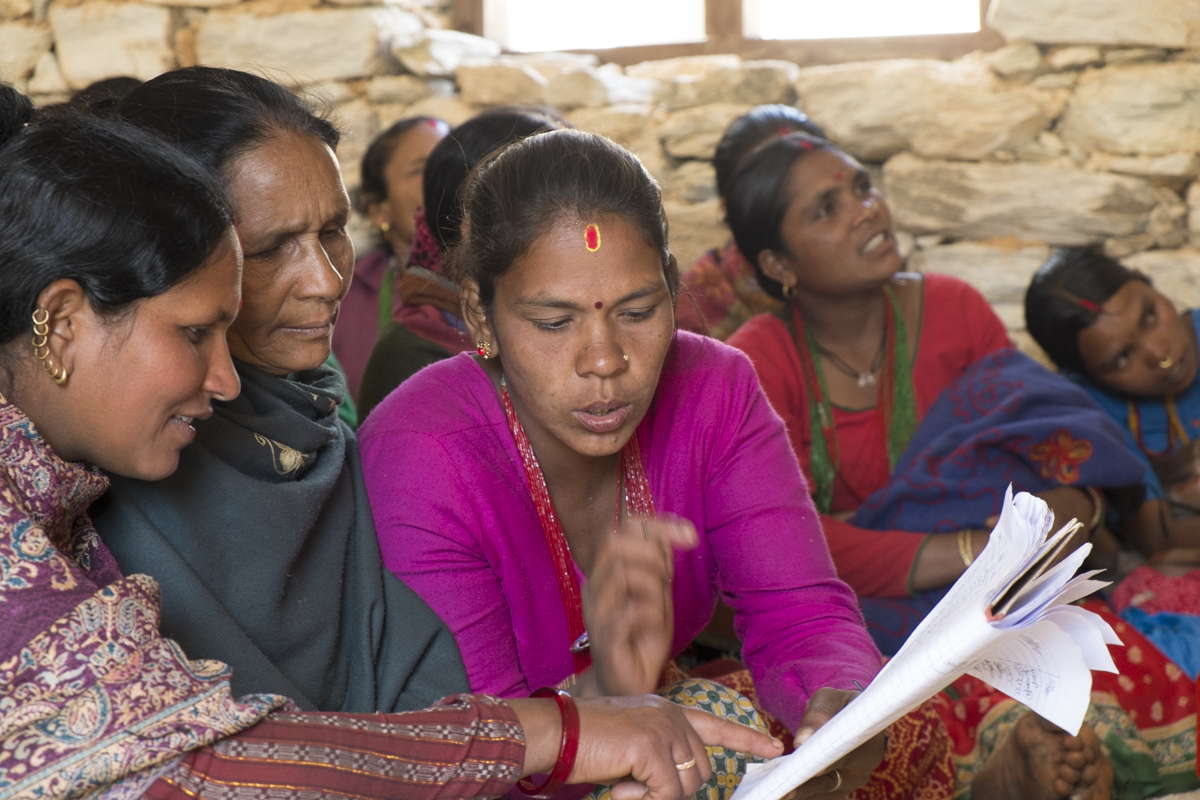
    It was not very numerous, because it was a really work time for women, it was the rise planting moment,  but it was very interesting, we were talking about measures of menstrual health and we were astonished to see the hight number of girls of 14, 15, 16 years that came to this group, ie, they were not in school.

    Just as in Rachuli we realized the need to make a group of men the next time we go to teach the full progra, (from April) Here we realized the need to get menstrual cups for these girls not schooled

    It is very hard to see that because parents do not have money to continue studying and/or they got married, they are not entitled to the same sexual hygiene as the others. They sleep in the stables of the cows like the others, they do not have access to the water like the others …. there is no right that we give menstrual cups to the girls who are lucky to study, and to those who do not have this luck, the we punished without a cup. Remember that the donations we got from ruby cup are only for school girls, to keep girls in school.

    And It is for this reason that we have launched a new part of the project. We want to get “extra” money to give these women menstrual cups, too.

    We are selling menstrual cups in Kathmandu for next year to be able to distribute menstrual cups among the youngest girls in the women’s group, and besides, we have already launched a crowdfunding so that whoever wants to collaborate in the continuity of the project can do it already and whenever they want .

    Thank you! 🙂

    Written, and photos with Fujifilm XT20, © by Clara Go. Correction by Phumzile Mpofu

    West Nepal girls need this kind of program. And we need help to continue the project!

    Now you can contribute for paying one month salary to the nurse, or for some hygiene kit : https://www.gofundme.com/menstrual-cups-in-nepal-chhaupadi

    Or if you feel like it, you can donate via bank transfer at: Banc Sabadell IBAN: ES23 0081 0900 8200 0430 1934 BIC: BSABESBB (your recurring donation will help us have a better planning of our budget to carry out the projects undertaken).

    Or take a look others ways to donate at http://beartsy.org/donate/

    Thank You! 🙂

  • Travel log –  Group of girls and Ruby cup training in Chilkhaya (Kalikot)

    Travel log – Group of girls and Ruby cup training in Chilkhaya (Kalikot)

    If at all anywhere, we had a list of girls who wanted menstrual cups, from way back, it has been in Chilkhaya.
    As we explained in the last article, the classes were a minimum of 70 participants, the majority of these being girls. In this case though, each day we had a minimum of 100 participants. We were never able to write down all the participants in the register, as they was never enough time in the one hour.

    In this village, we clearly saw, more than in any other place, the great power of the high castes above those considered to be of the lower castes. Girls from the higher castes were always at the top of the lists, while the lower caste girls, would not approach until the higher caste group was finished.

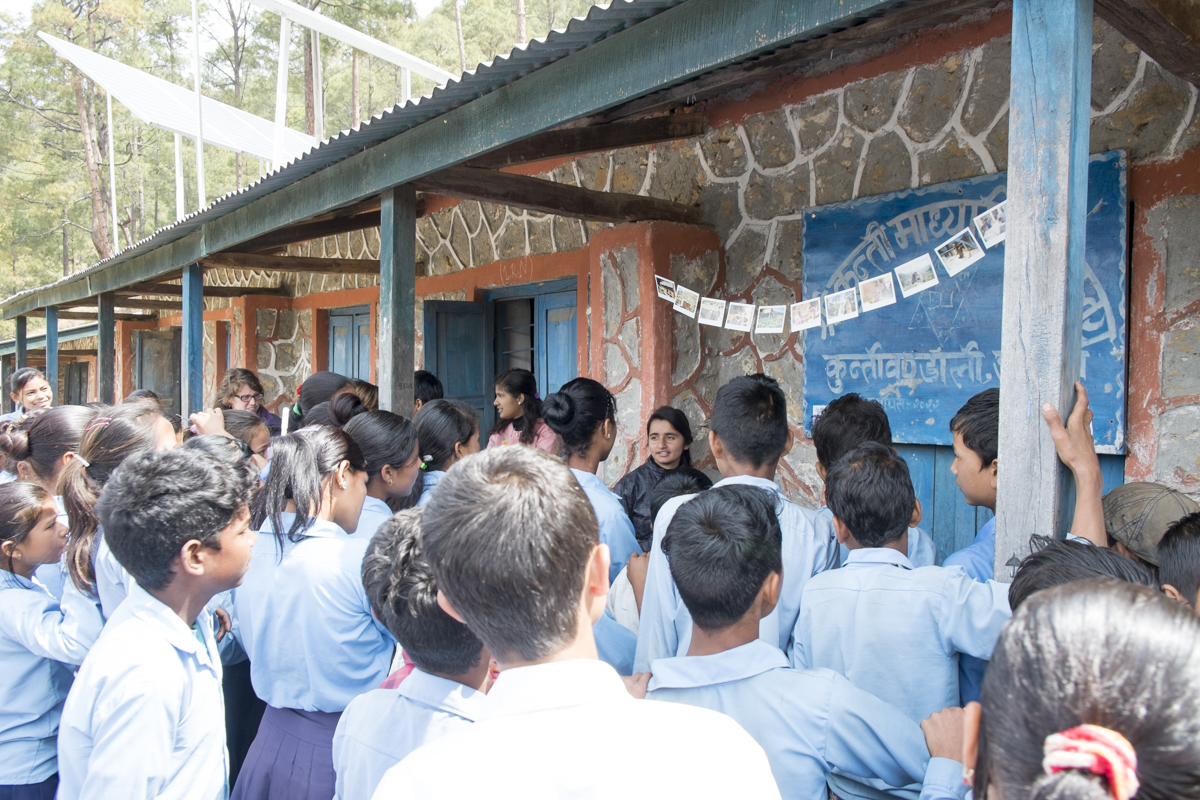
    The raffle system was absolutely necessary and we chose the class with the most boys to do it. The boys were pulling out numbers not knowing who or what they were choosing. Luck made few girls of that class have a menstrual cup, but at least they saw that the system was totally clear, and they are on the waiting list.

    The training was held at the health post, where we were able to boil the Menstrual Cups easily as they was gas to use. Anuja, the nurse, thanked it, in Rachuli had a really bad time with the smoke!

    Written, and photos, © by Clara Go. Correction by Phumzile Mpofu

    Now you can contribute for paying one month salary to the nurse, or for some hygiene kit : https://www.gofundme.com/menstrual-cups-in-nepal-chhaupadi

    West Nepal girls need this kind of program. And we need help to continue the project!

    Or if you feel like it, you can donate via bank transfer at: Banc Sabadell IBAN: ES23 0081 0900 8200 0430 1934 BIC: BSABESBB (your recurring donation will help us have a better planning of our budget to carry out the projects undertaken).

    Or take a look others ways to donate at http://beartsy.org/donate/

    Thank You! 🙂


  • Travel log – #RatoBaltin at the Chilkhaya school

    Travel log – #RatoBaltin at the Chilkhaya school

    20-7-17

    During the 10 days we have been in Chilkhaya, what has surprised us most is the number of students attending the secondary school  (from class 6 to 10).


    We attended classes with 70 students, “luckily” missing 70 or 80 more. That is, the list of students for these classes was up to 140, 150. Yet the classrooms are not big enough to accommodate all of the students if they happen to all attend class together.

    As are came at the rice planting time, many children do not go to school and instead work in the fields.

    Another thing that has surprised us about the school is that it is probably the best organized we have found so far. It looks clean, and it is easy to see that they have organised every detail. The teachers have helped us a lot, even taking notes of our classes so they can continue them when we are not there. I wish all schools were like this.

    One factor that we have not managed to schedule properly is the “extra” time for girls. Some days they ask us to hold the sessions at the school during school hours, but on others they request us to do it in the health post after school.

    However, everything has went very well and everyone was very happy to have us there.

    On our last day we had a nice homage, and received touching farewell speeches.

    They are already waiting for us to return!

    Now you can contribute for paying one month salary to the nurse, or for some hygiene kit : https://www.gofundme.com/menstrual-cups-in-nepal-chhaupadi

    Written by Clara Go. Correction by Kristy Davies

    West Nepal girls need this kind of program. And we need help to continue the project!

    Or if you feel like it, you can donate via bank transfer at: Banc Sabadell IBAN: ES23 0081 0900 8200 0430 1934 BIC: BSABESBB (your recurring donation will help us have a better planning of our budget to carry out the projects undertaken).

    Or take a look others ways to donate at http://beartsy.org/donate/

    Thank You! 🙂


  • Travel Log – Chilkhaya

    Travel Log – Chilkhaya

    10-6-17. 

    Moving 4 personal rucksacks, 2 suitcases full of materials, 1 bag of cameras and 23 metallic buckets from one village to another in these remote areas can be really complicated! From Rachuli to Cnilkhaya, according to Googlemaps, there are just 9 km. and a slope of 400 m.

    First we had to get somebody to help us bring everything down to the road (30’ downwards, between rice fields and small creeks): 3 alumni from class 10 gave us a hand. Then, we waited for a bus to pass by, with room enough to accommodate us and our junk. We were, once more, lucky, and half an hour later we were on a bus towards Chilkhaya. The bus left us in Galje and there we ate, and contracted two carriers who, to our surprise, could haul all our baggage and resources. Supposedly we needed three people, but they could not find a third one.    

    We started then our way to the village.

    Depending on who you would ask, they said it was an hour walk, or that it would be 3 hours and a half… (this is Nepal… Nobody knows…). We were quite made up to the idea that we would walk for at least 5 hours. The route was really pretty. Kalikot is full of hills from which water sprouts everywhere. And full of fruit trees and paddy fields. We went up and down the hills, stopping to chat with the girls we found along the way, and to eat plums and drink water, taking it really easy, for more than 5 hours.

    On arrival, we popped in to the Health Centre, who were already aware that we were coming, also passed by to say hello to the headmaster of the school, and went to the place which would be our home for the next 10-12 days. The feeling when arriving to that village, located amongst green terraces, was of like being in a dream. The curiosity we arose in the people, the questions, the smiles… The doubts of what would this village hide behind their façades. A while before getting there we had been already hearing music from drums. A child had been born (a male) and they were celebrating. This country will never cease amazing me.

    What we did not know is that he would be the first of 4 children (all male) who would be born during our stay in the village; the second day another was given birth, we saw the kind of rudimentary stretcher they had prepared to carry the midwife to the Health Centre, the woman in pain, in the middle of all the people celebrating the birth of the child.

    And it pained us particularly to know that that woman, together with her newborn, would pass the following 7 days in the stable. If she would have given birth to a baby girl, it would have been 10 days. That’s the Chhaupadi, this matter that impels us to continue with our educational work. So these kind of injustices and violations of the most basic women rights stop happening.


    Written by Clara Go. Photos done with FUJIFILM X-Pro1 © Clara Go.
    Translated to English by Tere Salinero.

    West Nepal girls need this kind of program. And we need help to continue the project!

    Now you can donate for paying one month salary to the nurse, or for some hygiene kit or for the menstrual cup control in September: http://beartsy.org/get-involved-with-rato-baltin

    We also have opened a funding help line at http://www.gofundme.com/menstrual-cups-in-nepal-chhaupadi

    Or If you feel like it, you can donate via bank transfer at: Banc Sabadell IBAN: ES23 0081 0900 8200 0430 1934 BIC: BSABESBB (your recurring donation will help us have a better planning of our budget to carry out the projects undertaken).

    Or take a look to others ways to donate in http://beartsy.org/donate/

    Thank You! 🙂

  • Child marriage and young mothers in West Nepal. #RatoBaltin

    Child marriage and young mothers in West Nepal. #RatoBaltin

    Another of the problems that we are facing during our Rato Baltin workshops is seeing 13 years girls who are married and with children. Everybody (some may not agree) find this practice “normal” in west Nepal (actually in all rural area of Nepal). In Nepal  the legal age for marriage without parental consent is 20 years and with parental consent it’s 18.
    Child marriage is another consequence of the poor sexual education, and is another subject we try to explain and teach in out workshops.

    Child marriage means disempowerment for life

    Doctors say it is biologically possible for a girl to become pregnant as soon as she begins ovulating. By and large, medical experts agree that carrying and delivering a baby at age 15 or younger can come with life-threatening complications, including anaemia, high blood pressure and haemorrhaging.

    Also noted, pelvic bones do not fully develop until girls reach their teens. Before that point vaginal births and full-term pregnancies are dangerous, and even Caesarean sections present significant risks, they say. Such problems, along with complications from unsafe abortions, were the top cause of death among female adolescents in 2015, according to the World Health Organisation.

    http://www.who.int/mediacentre/news/releases/2017/yearly-adolescent-deaths/

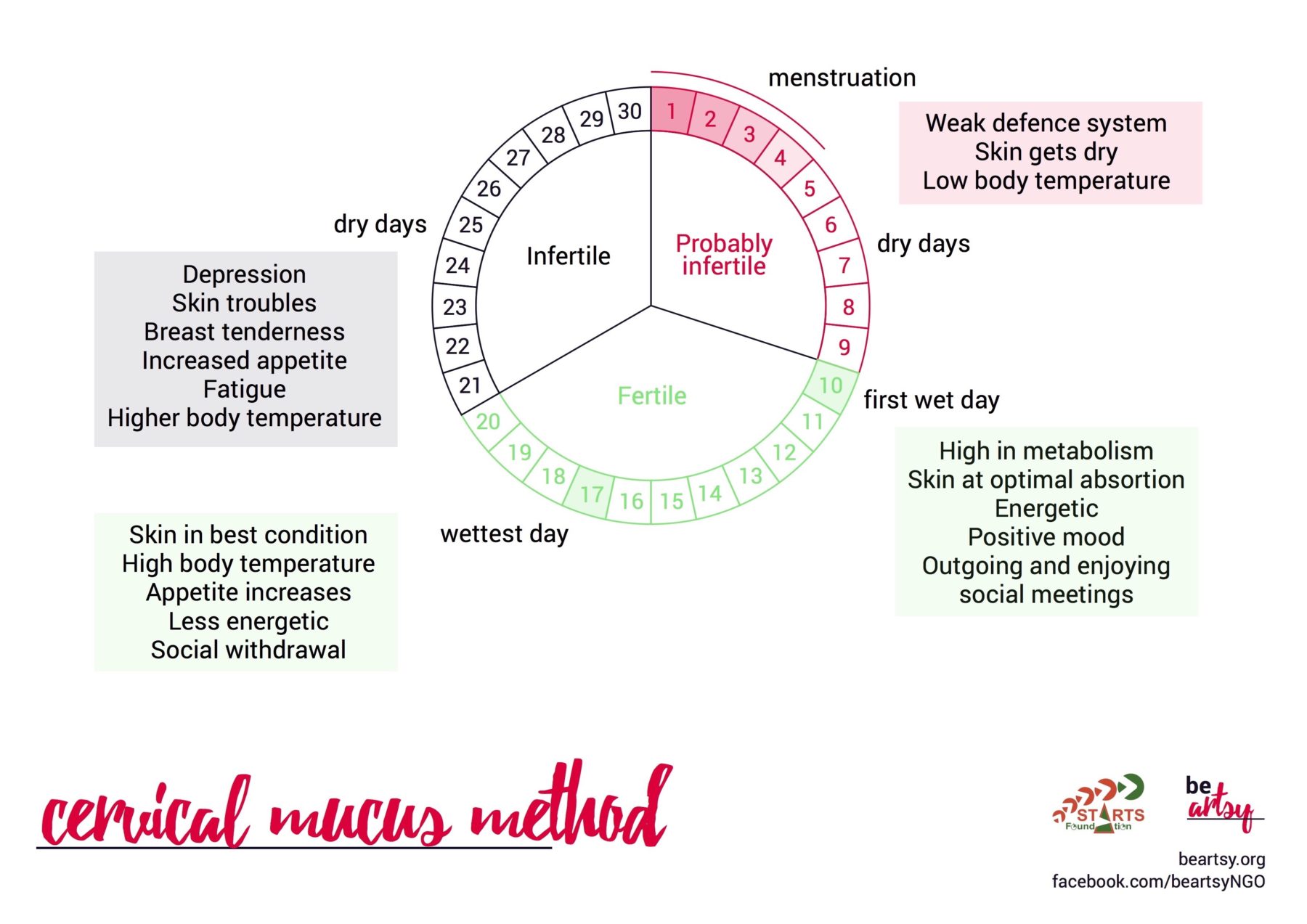
    As well, in our workshops, we explain how to use a condom, or how to use the Cervical Mucus Method to control the fertility window every month, although, we emphasize, in such young ages, it is not reliable.

    We believe that, it is really important, that both boys and girls, learn how to use a condom. This is reinforced by statistics in some places such as Achcham, that have a very high rate of HIV infected people. Both boys and girls, have easy access to condoms, in west Nepal, as they are freely given at every health post.

    Cervical Mucus Method
    Cervical Mucus Method © be artsy – Salvador Subarroca
    Write by Clara Go corrected by Phumzile Mpofu 
  • Travel log – Chhaupadi in Rachuli – Kalikot – Karnali Zone – Nepal

    Travel log – Chhaupadi in Rachuli – Kalikot – Karnali Zone – Nepal

    Photographies made by the students of the participatory photography workshop #breakthesilence © of each student.

    7-6-2017

    We have not yet found in Kalikot anybody referring to the tradition using this name, they call it “Chuii” “Chuiigoath” or “Chuiighar”. But as to existing, it does exist the same. Maybe the conditions seem better (in Rachuli, so do they think), because depending of the houses the women are in a separate “room”, on the lower floor. But it is usually an old cowshed without door or any safety measures. Some dispose of a bed, but those are the chosen few. The most usual is that they sleep in the shed on straw, next to buffalos and cows.

    Kalikot is very different to Achcham, Karmali Zone is full of men, it is not like in Achcham where most of the men head of the families work in India. Here they work at home, and the traditions regarding the women are kept by them. Male chauvinism is even more present and noticeable than in Achcham.

    We have held several conversations with fathers who said that they didn’t like what we were doing at the schools. That to explain that the girls, during their period, have to eat better and not to deprive themselves from dairy products, was against what the gods wanted and was absolutely no good.

    At school we tried to teach class without giving out our opinion. When they explain that they don’t like going to the shed, the maximum we do is to have them thinking hard about what would happen if they wouldn’t. The ideal is that they reach the conclusion themselves that this, is a superstition.

    What we actually did talk about in class is women’s rights, equality, of how not to let them enter a temple, for example, is a breach of human rights, as they are not allowed the freedom of worship and religion that men do enjoy.

    The sensation remaining from Rachuli is that we have not been able to go deeper in this matter in this villaje. We haven’t been able to form a group of women, just the one of girls, because of the high amount of work they have at this time of the year, and we have got it clear that there are many things that the girls ignore.

    In our next visit, we know that we have to do better. Now we know how the Karnali Zone works. It is clearer that, apart from the women and girls groups, we have to speak with the men. Would it be folly to prepare a workshop for them? Something to think about. Tomorrow, on our way to Chilkhaya! 🙂

    Written by Clara Go. Photographies made by the students of the participatory photography workshop #breakthesilence © of each student.
    Translated to English by Tere Salinero

    West Nepal girls need this kind of program. And we need help to continue the project!

    Now you can donate for paying one month salary to the nurse, or for some hygiene kit or for the menstrual cup control in September: http://beartsy.org/get-involved-with-rato-baltin

    Or If you feel like it, you can donate via bank transfer at: Banc Sabadell IBAN: ES23 0081 0900 8200 0430 1934 BIC: BSABESBB (your recurring donation will help us have a better planning of our budget to carry out the projects undertaken).

    Or take a look to others ways to donate in http://beartsy.org/donate/

    Thank You! 🙂


  • Travel log – Kunti Bandali – Mangalsen Municipality – Achcham

    Travel log – Kunti Bandali – Mangalsen Municipality – Achcham

    We had it very clear that getting out from Basti wasn’t going to be easy, the descent we did the day we arrived had as all quite scared.
    On my side, I found a walking stick and decided not to follow the same path we used to go down; following the blood track left by a wounded buffalo, I started to climb the same way the animals use to go down. A real winner. Much more kind on my knees and legs. We took around two hours to reach the top (less than going downhill).
    When we arrived to the Kunti Bandali track, we saw a tractor that had come to bring fuel for the bulldozer they are using to build the road, and the Spanish nurses saw it clear: to the tractor! It had to go back to Kunti Bandali, so despite the reluctancy on the part of Kamal and the Nepalese nurses, the asked the driver. He said yes, and, furthermore, then arrived some of our students from Basti who were going to Mangalsen to celebrate Holi, who of course joined the party.
    We were lucky for the tractor, it would have been three more hours walking our feet off!


    On arrival there were Krishna and Maya waiting for us, in the house where we would sleep, and it was more or less the same scenario as in Basti. Very few beds, and very few blankets. The place where we would take our meals was a little way up and we had to cross the bazaar area, where every day we passed by the same drunken men, any time of the day. At that moment, we had it clear that Basti was really good compared to this.
    In Kunti Bandali the atmosphere was bleaker and cold, more difficult than in Basti. Except for the girls, who are a real love in any place! 🙂


    About the women group, the first day we were all thinking that the Health Volonteers and the presidents of the different women groups would attend, but more than 70 arrived. At that moment we thought that we should prepare several workshop groups with the women, but a little bit later we discovered what was happening: they asked us how much were we going to pay them to assist to our classes. And we went like What? Paying? :-O Unicef and other big ONGs do play that game in order to be able to show later pictures of workshops full of people. They pay from 500 to 1000 rupees per day. They can show photographs of classes bursting with people that are not really listening or anything, they are just there for the money they will receive at the end of the day.
    We told them very clearly that we were not going to pay anything, and in fact, in Kunti Bandali we didn’t even offer them some tea. If they wanted to come to the workshops, it should be because they wanted to teach.
    The following day, the women were less, just around 45/50, but all quite eager to learn.
    For the pictures, it was similar to Basti, only some of them did make videos and we could see that the Chhaupadi was different: they could not go to any water source and they always depended on others to drink, have a shower or go to the bathroom (if they wanted any water).
    At the school, everything went fine. The girls were very keen in learning and they were very excited with the pictures project and the menstrual cups. Same as in Basti, we have a waiting list to obtain a Ruby Cup.
    For us, to be nearly for a month in the Far-West was hard; during the last day we looked at the tractors whilst we waited for our jeep, which was late, wishing for it to arrive so we could get out of there. To be surrounded by drunken men the whole day is nobody’s cup of tea. Next time we go back to Kunti Bandali, we have to find a better place to sleep, even if that means to walk long every day to get to school.

    Written by Clara Go. Photos done with FUJIFILM X-Pro1 © Clara Go
    Translated to english by Tere Salinero
    Edited by Josep V. Marín

    West Nepal girls need this kind of program. And we need help to continue the project!

    Now you can donate for paying one month salary to the nurse, or for some hygiene kit or for the menstrual cup control in September: http://beartsy.org/get-involved-with-rato-baltin

    Or If you feel like it, you can donate via bank transfer at: Banc Sabadell IBAN: ES23 0081 0900 8200 0430 1934 BIC: BSABESBB (Your Recurring donation will help us have a better planning of our budget to carry out the projects undertaken.)
    or take a look others ways to donate in http://beartsy.org/donate/

    Thank You! 🙂

  • Online Supportive group for Nepal #sintabumenstrual

    Online Supportive group for Nepal #sintabumenstrual

    Written by Clara Go.
    Translate to english by Tere Salinero


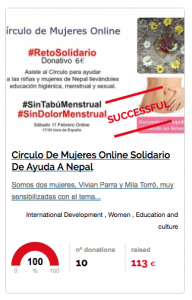
    A few days before returning to Nepal, I participated in a women’s group organized by Mila Torró (From Círculo Afrodita) together with Vivian Parra, to help us gather funds for the Rato Baltin Project.

    For me it was a very special day, the last one I was going to be with my family: I remind you that I had just arrived from Chile and I spent only four days with them.

    The event was organized online, using a program with which a lot of women could connect to the meeting. The donations for the project were arranged through migranodearena and that way the money arrived straight to us.

    It was a very touching and special moment.

    I want to thank to all the people who contributed with donations and to the women who participated in the event, and I hope to see all of you soon in some other activity of this kind. Do count with me for anything!

    Thanks a lot!

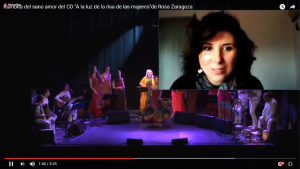
    I leave here the video that so kindly they posted in their youtube channel, if you want to enjoy the experience!


    And I remind you that if you want you can organize your own event in you area to help with the Rato Baltin Project, which, as you know, is a long term project and we expect to work on it for some years. In https://www.migranodearena.org/en/create-your-challenge

    We still need your help to raise funds to continue with our project. You can donate at: https://www.migranodearena.org/en/challenge/13821/rato-baltin-nepal—facing-chhaupadi-with-menstrual-education/

    You may make a one-off donation or become a regular contributor by making regular transfers (monthly, quarterly or annual) for the amount you wish.

    Bank transfer to the following bank account:

    Account Holder: Associació be artsy

    Bank: Banc Sabadell

    IBAN: ES23 0081 0900 8200 0430 1934

    BIC: BSABESBB

    Re: One-off donation / Regular donation (whichever applies).
    (Your Recurring donation will help us have a better planning of our budget to carry out the projects undertaken.)


    Thanks a lot!