Tag: education

  • Emergency: maintenance – subsistence of the project ‘Rato Baltin’ in Nepal

    Emergency: maintenance – subsistence of the project ‘Rato Baltin’ in Nepal

    We work against the extreme discrimination suffered by many girls and women in Nepal. We can talk about extreme violence, too. We also educate their communities, also boys and men. Our projects – with Rato Baltin, as the principal – has its continuity in danger. We need you to continue.

    We have educated, protected and feed more than 43,000 people – most of them women and girls – since 2017. We have been educating and empowering women and girls in Nepal for more than 6 years. Will you help us continue? That is why we launched this urgent need for help to be able to continue with the project. We share the link to Migranodearena -crowdfunding, from €5 to…- that we need to be able to continue with the project.

    Please help us to ensure the continuity of the project in Nepal from January 2023.

    With your support, the project will not have to close and the network and the work done in these almost 7 years will not be lost.

    Please donate now and continue to help women in remote western Nepal. Thank you very much!

    We need your help, please

    -Associate: – https://beartsy.org/associate / 

    -Donate: – https://beartsy.org/donate/


    -Migranodearena Foundation

    RatoBaltin: https://www.migranodearena.org/en/cause/emergencia-mantenimiento-proyecto-rato-baltin-en-nepal-

    -Teaming – 1 euro/month:

    RatoBaltin: https://www.teaming.net/ratobaltinproject
    Edufem to prevent early marriage: https://www.teaming.net/edufemproject

    -Donorbox – Choose your own currency!

    RatoBaltin: https://donorbox.org/against-chhaupadi

    Edufem to prevent early marriage: https://donorbox.org/edufem

    Thanks!

  • We still need collaboration to continue ahead with the EDUFEM 2021 project. Below the detail of what has happened during 2019 and 2020

    We still need collaboration to continue ahead with the EDUFEM 2021 project. Below the detail of what has happened during 2019 and 2020

    According to UNICEF, Nepal has got the third-highest ratio of child marriage in Asia

    Although child marriage is illegal in this country since 1963, this practice is very common in remote villages. The minimum legal age to be married is 20, but in these remote areas there is still a majority of teenagers getting married at between 15 and 19 years. The reasons for child marriages in Nepal are complex. Poverty, the low value granted to female offspring and the lack of access to education are factors that contribute, when at the same time the caste system and the patriarchal culture also play an important role. It seems that with each passing day more teenagers are able to choose their partners and can even run away. In some cases, fathers and mothers encourage their sons or daughters to initiate their own marriage in order to avoid the high costs related to the dowry or the wedding. They can also choose to run away, as the sexual expression outside wedlock is not acceptable, to avoid a forced or arranged marriage, or just to flee from the difficulties at home.

    This is the report of the years 2019 and 2020 of a project that still needs a last effort to keep on going

    Our objective is to find more sponsors that are ready to participate in the program, in order for us to offer more opportunities to girls and young women to continue with their studies. The more donors we have, the more opportunities we can give our students. University can be very expensive and even unaffordable, and the girls who are ready to keep on with their studies will need to cope with those expenses. The challenges we are facing in the implementation of the project 2020 were due to the Covid-19 pandemics. The girls took their school exams late, because in April, which is when in principle should have taken place, there was a strict confinement. Even in this exceptional situation and having confronted them later, the girls passed all their exams. However, some of them decided not to pursue B. A. degrees.

    Can we succeed in them deciding by themselves, without feeling coerced by external factors?

    -Associate: – https://beartsy.org/associate / 

    –Migranodearena: https://www.migranodearena.org/en/cause/fighting-chhaupadi-the-taboo-that-is-leading-to-the-deaths-of-young-girls-

    -Teaming (1 euro/month):

    RatoBaltin: https://www.teaming.net/ratobaltinproject
    Edufem to prevent early marriage: https://www.teaming.net/edufemproject

    -Donorbox:
    https://donorbox.org/againts-chhaupadi
    https://donorbox.org/edufem

    Thanks!

  • Rokpa: a Tibetan word meaning ‘help’ and ‘friend’

    Rokpa: a Tibetan word meaning ‘help’ and ‘friend’

    There are areas with difficult accessibility that only organizations like ROKPA have been able to reach. Since its founding in 1980, Rokpa (A Tibetan word meaning ‘help’ and ‘friend’) is present today in Nepal, Zimbabwe, and South Africa. Rokpa was also established in the Tibetan areas of China from 1990 to 2016 and provided education, medicine and food for disadvantaged populations.

    ROKPA understands that education is a way to help overcome the barriers of poverty, and they are committed to educational plans that allow the empowerment and training of individuals. This includes: preparing children and adults for school and professional education, assisting in finding work for women through training workshops, and conducting family support programs on HIV / AIDS in Zimbabwe and South Africa.

    In addition, ROKPA is committed to bringing urgent medical aid to the communities they serve, while also covering the costs of food and subsistence for the most vulnerable families.

    Because of ROKPA’s concern for the education and health of communities and the women of Nepal in particular, ROKPA has become a wonderful “friend” who “helps” us to help others, wherever it is most needed.

    Thank you very much, ROKPA, for being an essential part of be artsy projects!!

    Text by Luisa Tejada, translation Clara Garcia i Ortés, corrections by Teresa Marx

    We need your help, please.


    Associate: – https://beartsy.org/associate / 


    Teaming (1 euro/month)

    RatoBaltin: https://www.teaming.net/ratobaltinproject

    Edufem to prevent early marriage: https://www.teaming.net/edufemproject

    Donorbox:
    – https://donorbox.org/againts-chhaupadi
    – https://donorbox.org/edufem

    Thanks!


  • Edufem Project report

    Edufem Project report

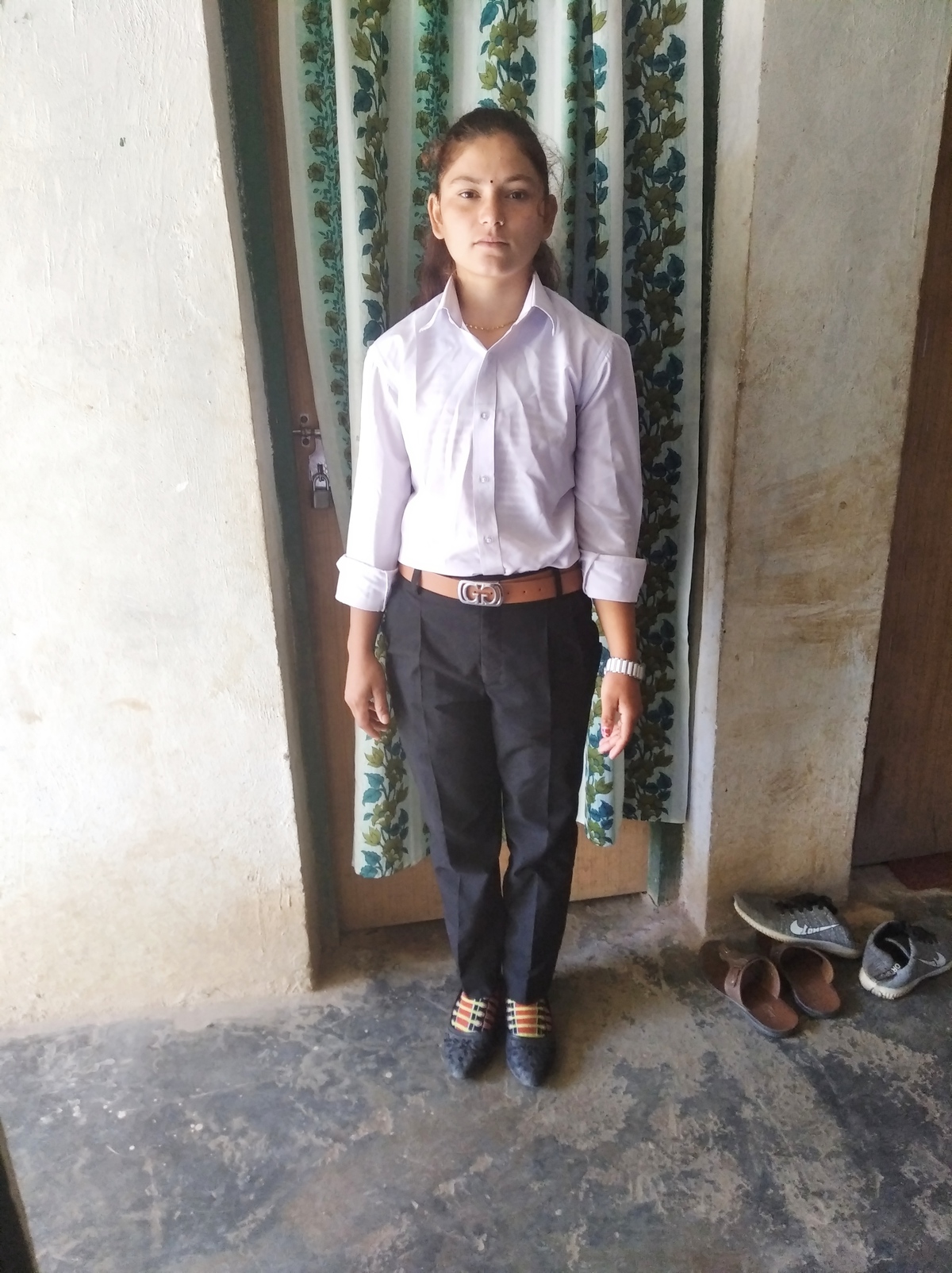
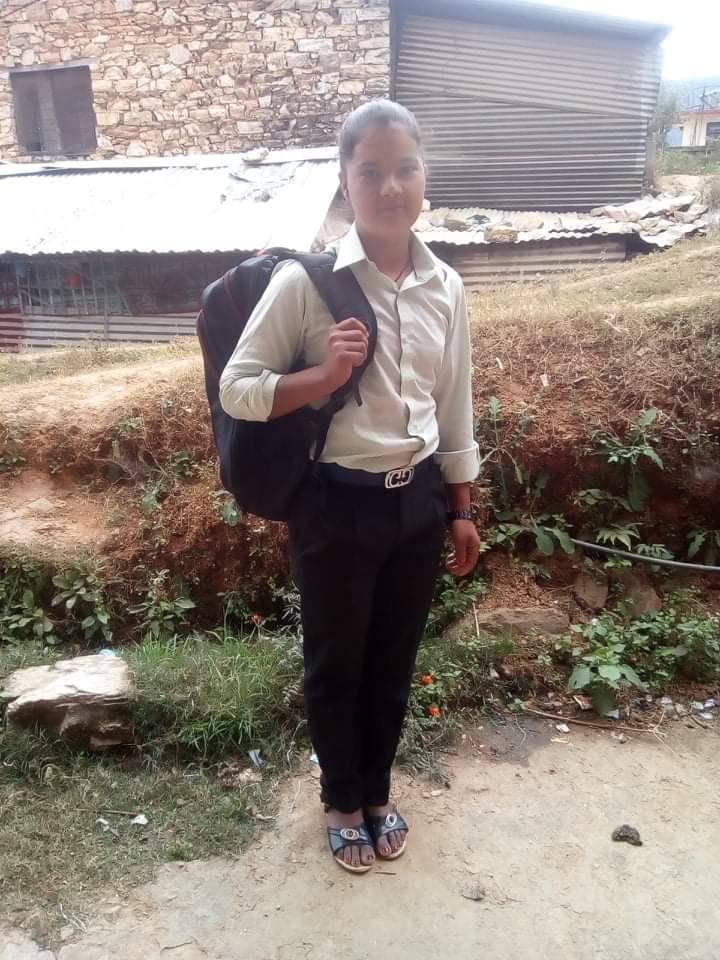
    It is very common for the girls in Achham, a remote zone in far-west Nepal, to be out of the school system because of the financial situation of the families – most men have to go to India to work and the daughters are asked to stay at home to help with the household chores and field work-. For the same reason, underage marriage is still prevalent in this part of Nepal. Because of lack of awareness and superstitious beliefs, parents don’t hesitate in marrying their teenage daughters. For those adolescent girls, marriage can seem to be the only option to change their lives because they haven’t grown up in an environment where they are encouraged to study and go to school.

    The EDUFEM project was established in the year 2018 to help girls from Achham to continue their education for their better future, and so they would stay in school. Our objective is to give opportunities to teenagers to stay in high school and eventually attend college.

    We provide them with the education fees (tuition, stationery, etc.), a room for them to stay as well as food and elements for their basic needs. As they will be in an environment where they can focus on their studies, they will be able to perform in school and won’t have the pressure of being a burden for their parents. Since English is not compulsory in Government schools, we also provide extra English classes so that they can improve their language skills. Our management team in Kathmandu will keep regular contact with them in order to check their progress and help them in any situation they may face.

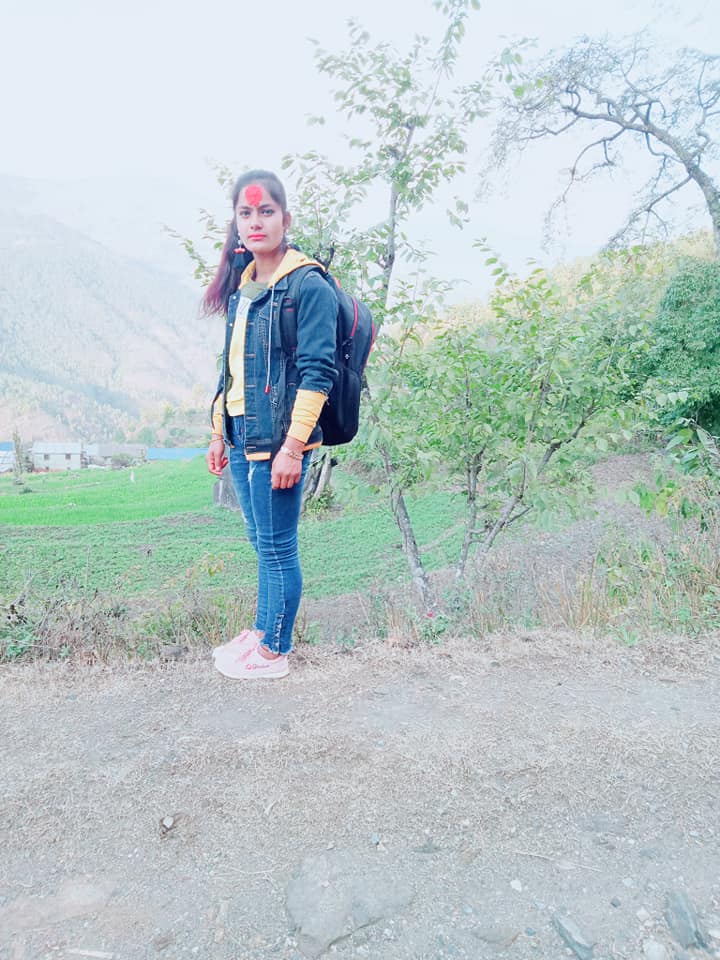
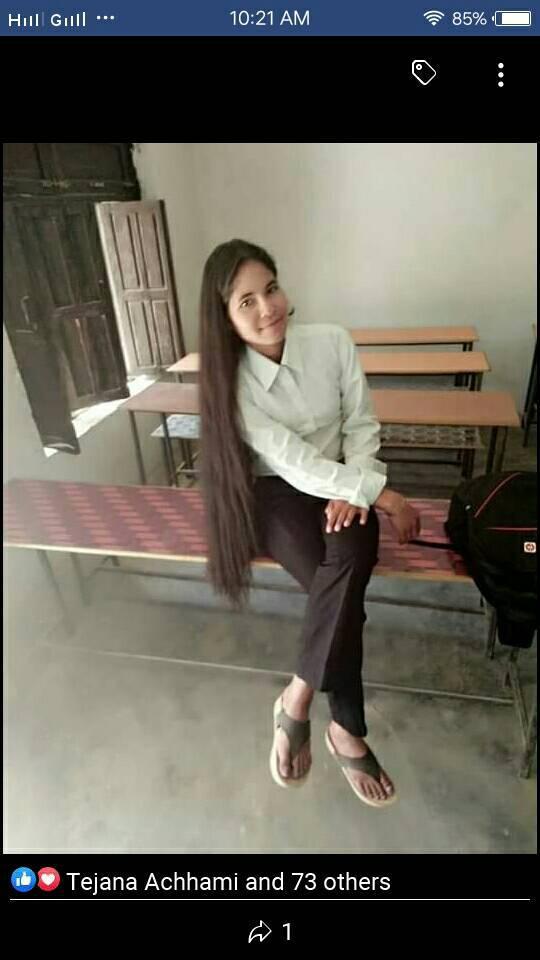
    In this report we explain the situation of the project and the budget for  sponsor them. And how Manisha Nath and Tejana Khanal, the beneficiaries in the 2018-2020 period, have developed their studies. Both  have chosen to study staff nurse. The cost is 6,000 euros, so they are deciding which studies they will take in other possibilities such as a bachelor’s degree, after they finish high school. They are also coordinators and mentors for our Rato Baltin Project.

    In the period 2019-2020, the beneficiaries are Tulashi Bhandari, Manisha Bhandari, Kamala Bhandari and Sangita Nath. they were mentors in the implementation of the Rato Baltin project during 2019, being free and independents as roommates in their own apartment in Mangalsen, being free and independent: is a new experience for those four young women. Their major subjects are journalism, accounting, Nepalese literature. According to their teachers, they have made progress in their studies. Because of the COVID-19 pandemic, they had to go back to their parents’ house during lock down, from March 22nd to June 15th. In the remote areas where their villages are located there isn’t internet or electricity, so online classes were not an option.

    You can become part of the Edufem Project and help them to have a better future. To them and also to the girls whom they can help.

    Text by Rupa Pandey.

    There are several ways in which you can get involved with our projects and help girls in Achham:

    Teaming Group: 1 euro a month – become part of Rato Baltin Project!

    Teaming Group: 1 euro a month – become part of the team and get your friends to help you sponsor her and avoid early marriage with our EDUFEM project!!


    Regular donation: to https://donorbox.org/againts-chhaupadi

    Become a member: https://beartsy.org/associate/

    🙂 Thanks!

  • Conversation with Clara G.O. about the Rato Baltin Poject.

    Conversation with Clara G.O. about the Rato Baltin Poject.

    Here is the link to listen the interview to Clara G.O at Radio Santvi.

  • Malnourishment in West Nepal

    Malnourishment in West Nepal

    One significant problem that we have seen in our travels throughout West Nepal is the extent of childhood malnourishment.

    Sometimes this can be associated with very young mothers with little nutritional information support, but in other cases cannot. Though there are some nutritional programs that run throughout West Nepal, it can be difficult for mothers to provide the breadth and quantity of recommended food and vitamins when they only have direct access to the food grown in their fields.

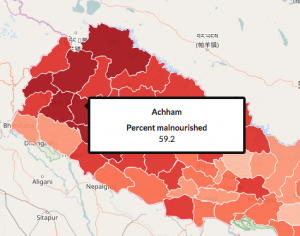
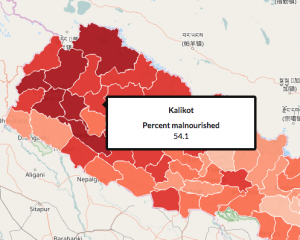
    The districts in West Nepal with the highest rates of malnourishment in children under the age of five are:

    Humla        65.7%
    Bajhang     63.2%
    Achham     59.2%
    Baitadi       59.2%
    Doti            57.6%
    Surkhet     57.9%
    Kalikot       54.1%
    Jumla         54.1%

    To find out the malnourishment rates of children under five in other districts, check out this interactive map:


    Maps and numbers from: www.nepalmap.org


    In Achham, for example, the amount of food grown and accessed by mothers is usually insufficient for the number of children they care for. The father is usually in India or abroad elsewhere working to send money back to their families, and women often don’t have the knowledge and resources to manage the crisis.


    My dear friend Dr Keshav Bhattarai, who passed away last December at 31 years, was the one who introduced me to the world of women in West Nepal. He was really upset because on average, every month six women in Achham committed suicide. These women had large families with many children that they were unable to provide with sufficient food, and often did not want to use contraception, or have access to the choice or relevant education about it. In this situation, women suffer a lot of stress and pressure.

    I don’t think anything has changed in the district since he left last year to work in Humla, before his death.

    Children are the foundation that the future of Nepal rests upon. Only a proper investment in today’s children will bring us to a better tomorrow.

    But a quick glance at the child nourishment data on www.nepalmap.org shows that 40% of children under the age of five in Nepal are malnourished. This means that today, almost half of children in Nepal under five do not receive a well-balanced meal, which not only hampers their development, but in turn the nations.

    In our workshops we teach the importance of proper nutrition, balanced meals, and hydration to the girls. Although this becomes increasingly essential once their menstrual periods start, proper hydration and nutrition is critical every day of the year, from early childhood into adulthood.

    And so we wait, hoping that little by little things are changing.

    Now you can contribute for paying one month salary to the nurse, or for some hygiene kit or for the menstrual cup control in September: https://www.gofundme.com/menstrual-cups-in-nepal-chhaupadi

    Written by Clara Go. Correction by Kristy Davies
    Maps and numbers from: www.nepalmap.org

    West Nepal girls need this kind of program. And we need help to continue the project!

    Or if you feel like it, you can donate via bank transfer at: Banc Sabadell IBAN: ES23 0081 0900 8200 0430 1934 BIC: BSABESBB (your recurring donation will help us have a better planning of our budget to carry out the projects undertaken).

    Or take a look others ways to donate at http://beartsy.org/donate/

    Thank You! 🙂

  • Online Supportive group for Nepal #sintabumenstrual

    Online Supportive group for Nepal #sintabumenstrual

    Written by Clara Go.
    Translate to english by Tere Salinero


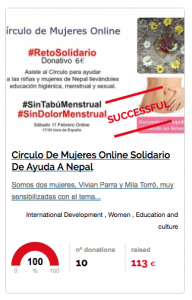
    A few days before returning to Nepal, I participated in a women’s group organized by Mila Torró (From Círculo Afrodita) together with Vivian Parra, to help us gather funds for the Rato Baltin Project.

    For me it was a very special day, the last one I was going to be with my family: I remind you that I had just arrived from Chile and I spent only four days with them.

    The event was organized online, using a program with which a lot of women could connect to the meeting. The donations for the project were arranged through migranodearena and that way the money arrived straight to us.

    It was a very touching and special moment.

    I want to thank to all the people who contributed with donations and to the women who participated in the event, and I hope to see all of you soon in some other activity of this kind. Do count with me for anything!

    Thanks a lot!

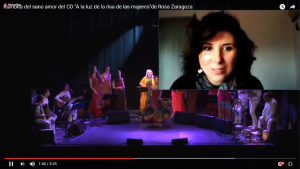
    I leave here the video that so kindly they posted in their youtube channel, if you want to enjoy the experience!


    And I remind you that if you want you can organize your own event in you area to help with the Rato Baltin Project, which, as you know, is a long term project and we expect to work on it for some years. In https://www.migranodearena.org/en/create-your-challenge

    We still need your help to raise funds to continue with our project. You can donate at: https://www.migranodearena.org/en/challenge/13821/rato-baltin-nepal—facing-chhaupadi-with-menstrual-education/

    You may make a one-off donation or become a regular contributor by making regular transfers (monthly, quarterly or annual) for the amount you wish.

    Bank transfer to the following bank account:

    Account Holder: Associació be artsy

    Bank: Banc Sabadell

    IBAN: ES23 0081 0900 8200 0430 1934

    BIC: BSABESBB

    Re: One-off donation / Regular donation (whichever applies).
    (Your Recurring donation will help us have a better planning of our budget to carry out the projects undertaken.)


    Thanks a lot!